Who Is Liable in a Pedestrian Accident?
 Fact Checked By Our Attorneys

Pedestrian accident liability can be complex, but you don’t have to face it alone. If you’ve been injured or involved in a pedestrian accident, understanding your rights and who is responsible is crucial. Don’t wait get the expert guidance you need today. Click the button below to receive a free case review from a trusted pedestrian accident attorney and take the first step toward getting the compensation you deserve.

No Win, No Fee. Let the Best Motor Vehicle Accident Attorneys Fight for your Compensation!
Table of Contents:

Understanding Pedestrian Accident Liability
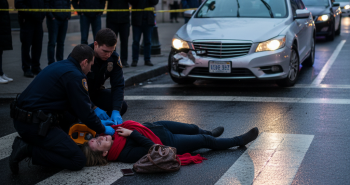
When a pedestrian and a motor vehicle collide, liability generally refers to which party is legally responsible for the accident. In many cases, driver negligence is the primary cause, such as reckless driving or not paying attention to the road. Drivers are expected to yield to pedestrians in marked crosswalks and must obey traffic laws, including speed limits and avoiding distractions. Distracted driving is a major contributor to pedestrian accidents, and speeding diminishes a driver’s response time and worsens the severity of pedestrian accidents. Low visibility situations, such as incidents at night or in inclement weather, increase pedestrian accident rates. Drivers must also stop immediately at the scene of an accident, render aid, and report the incident to the police. New regulations effective in 2026 in California require drivers to slow down or move over for any stopped vehicle with hazard lights.
Yet, pedestrians can be held liable if they disregard crosswalk signals, jaywalk, or otherwise fail to exercise reasonable care and compromise their own safety. Pedestrians can contribute to accidents by ignoring traffic signals or entering the road suddenly. Environmental and road conditions, such as poor lighting and obstructed signage, can contribute to pedestrian accidents. Pedestrians must exercise reasonable care to protect their own safety while walking. Liability may shift to the pedestrian if they crossed outside a designated crosswalk, ignored traffic signals, or were impaired. These principles apply in a range of circumstances, including crashes with cars, motorcycles, and even commercial vehicles.
Our perspective is that achieving full clarity on pedestrian accident liability requires examining each party’s obligation to act reasonably on the road. Drivers have a duty of care to look out for pedestrians, adhere to posted speed limits, and remain alert. Pedestrians, in turn, must also exercise caution and comply with traffic signals. To prove liability in negligence claims, it must be established that the driver owed a duty of care, breached that duty, caused the accident, and the pedestrian suffered damages. Any negligence contributed by either party may open the door to legal consequences and insurance complications. In many states, if a pedestrian is found to be partially at fault, a driver may still be liable if they had the last clear chance to avoid the accident. Most jurisdictions use comparative negligence to divide fault between parties in accidents involving pedestrians, with some states following pure comparative negligence and others modified comparative negligence, which permits damages recovery only if the pedestrian’s fault is below a certain threshold, typically 50% or 51%. Contributory negligence in some states may completely bar a pedestrian from recovering compensation if found even slightly at fault.
Recent discussions on road safety suggest that pedestrian-related collisions remain an ongoing issue nationwide. Even with specific rules designed to protect those on foot, accidents still happen for many reasons. Factors like driver distraction, pedestrian distraction, and road design can play a role. For people involved in a collision, understanding liability is a key step in seeking an accident claim or defending against one.
When a Pedestrian May Be Found Liable in a Car Accident
Although drivers are often presumed to hold most of the responsibility, there are situations where a pedestrian may be found partly or fully at fault. Circumstances vary by state, but there are key actions that commonly lead to pedestrian fault findings.
For instance, if a pedestrian chooses to cross the street without using the designated crosswalk or is ignoring traffic signals, the courts or insurance companies may see that as a negligent act. Similarly, jaywalking into oncoming traffic or crossing the street unexpectedly can put the pedestrian at greater fault. In many jurisdictions, right-of-way does not automatically default to a person on foot once the pedestrian has violated local traffic regulations.
These liability findings sometimes result in reduced or denied compensation, making it harder for an injured pedestrian to recover damages such as medical treatment, property damage, lost wages, and medical expenses. Compensation for pedestrian accident injuries can also include non-economic damages such as pain and suffering, emotional distress, and loss of enjoyment of life. Economic damages in pedestrian accident cases can be calculated using evidence such as medical bills, pay stubs, and work schedules. Non-economic damages are more challenging to prove than economic damages, requiring skilled legal representation to establish their impact. Punitive damages may be awarded in pedestrian accident cases if the defendant’s conduct is found to be particularly egregious, such as in cases of drunk driving. Some people assume they have absolute legal protection whenever they walk near a roadway, but this isn’t accurate. If you or a loved one has been involved in such an incident, it can help to consult a pedestrian accident attorney who understands local safety statutes and can clarify whether the pedestrian or driver bears the majority of fault.
Common Scenarios Where Pedestrians Share Fault
We often see certain recurring situations that trigger a shared liability outcome. While every case is different, the following examples illustrate some of the most common ways pedestrians and drivers can each bear partial blame:
- Crossing outside a marked crosswalk.
- Jaywalking into oncoming traffic.
- Walking at night in dark clothing without reflective gear.
- Distracted walking, such as texting or wearing headphones at unsafe volumes.
If a pedestrian runs out into the street unexpectedly, even a reasonable person behind the wheel could be powerless to avoid a collision. Similarly, reckless drivers who speed or text while behind the wheel increase the chance of striking a pedestrian who is otherwise following the rules. In these mixed-fault scenarios, the final determination often hinges on who contributed more significantly to the accident. Courts and insurance companies rely on traffic camera footage, accident reconstruction reports, and witness statements to evaluate evidence in pedestrian accident claims.
We also see instances where pedestrians might have consumed alcohol or drugs, impairing their judgment. In such cases, an insurance adjuster or judge could place the pedestrian at an even higher percentage of fault. Evaluating shared fault depends on viewing the entire context. If you suspect you share any blame in your collision, it’s still vital to explore pedestrian accident compensation possibilities, as laws vary, and partial fault does not always negate your right to financial recovery.
How Comparative Fault Affects Your Claim
Comparative fault, sometimes called comparative negligence, is a legal principle that allows for damages to be awarded even when multiple parties share responsibility. In states that follow a system of pure comparative negligence, an injured party can still recover compensation proportional to the percentage of fault assigned to the other party. For example, a pedestrian found 40% responsible for an accident would still be entitled to 60% of the potential settlement.
But not all states treat comparative fault the same way. Some operate under modified comparative negligence, which might prevent recovery if the pedestrian is found to be 50% or more at fault. Others may have contributory negligence rules, where being even 1% responsible could bar compensation altogether. Understanding which doctrine applies in your location is crucial for determining what, if any, significant compensation you might receive.
Our recommendation is to consult legal professionals who understand your state’s rules, especially before you contact insurance companies. Insurance providers frequently attempt to argue that the pedestrian contributed to the accident. This tactic can significantly reduce or deny your settlement if you are unprepared. We have witnessed drivers rely on minor missteps by the pedestrian, such as stepping off the sidewalk moments too soon, to shift blame. A thorough understanding of comparative fault ensures you can push back effectively when filing a pedestrian accident claim.
Evidence Needed to Establish Liability in Pedestrian Accidents
Determining fault and proving liability in a pedestrian car accident requires solid proof. Police reports often serve as important initial documentation because they include the officer’s observations, witness interviews, and any citations issued. However, a thorough investigation usually involves several layers of evidence collection.
First, eyewitness accounts are critical. Bystanders or nearby property owners can speak to whether the pedestrian was crossing legally or whether the driver was speeding or engaging in reckless driving. Second, photographs or video from traffic cameras can make a substantial difference in reconstructing the accident scene. Where possible, we also encourage collecting dashcam footage or security camera recordings from local businesses.
Some accidents occur around busy intersections, so requesting municipal camera footage is another viable route. For severe incidents leading to pedestrian’s injuries, medical records offer essential clues about the angle and force of impact. That information can corroborate eyewitness testimony or help illustrate the severity of injuries tied to the collision.
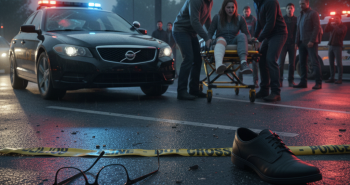
Finally, digital evidence such as cellphone data might show if either party was texting or using apps at the time of the crash. This level of detail can shift liability if it proves distracted driving or distracted walking. Documentation of the scene, vehicle damage, and any visible injuries is critical for future legal claims after an accident. Gathering evidence is the first step in building a solid pedestrian accident case, including collecting accident scene photos and witness statements. Our best advice is to gather as much information as possible, preserving even seemingly minor details. This thorough approach can strengthen a claim for fair compensation or refute an unfounded allegation of wrongdoing.
No Win, No Fee. Let the Best Motor Vehicle Accident Attorneys Fight for your Compensation!
Liability in Accidents Involving Children or Vulnerable Pedestrians
Collisions involving children, older adults, or individuals with mobility limitations often introduce unique liability considerations. Courts and insurance companies generally recognize that some pedestrians have diminished capacity to protect themselves. Children may lack the judgment needed to gauge vehicle speeds, while older adults or people with mobility aids may not navigate crosswalks as quickly as the average adult.
Because of these factors, drivers are expected to exercise an even higher standard of care around vulnerable pedestrians. For instance, speeding in a school zone or failing to anticipate children at a playground can shift most of the liability to the driver. Nevertheless, if a child darts into the road at the wrong time or from behind an obstruction, partial fault could still be assigned to the pedestrian.
These cases require particularly attentive legal support. Whenever a crash involves children or vulnerable individuals, nuanced local regulations come into play. At times, special protections for minors may dictate how damages are calculated. If you find yourself in this situation, consulting with a pedestrian accident law firm that has experience in these scenarios is an important step.
Insurance Considerations and Pedestrian Fault
Liability determinations almost always impact how an insurance company will respond to an insurance claim. If a pedestrian is found partially at fault, their coverage options might look different. In general, the at-fault driver’s auto insurance policy covers medical expenses, lost wages, and other damages for injured pedestrians. An injured pedestrian can file an insurance claim with the insurance company covering the negligent driver who caused the collision. But when both parties share blame, insurers may reduce payouts based on each party’s level of responsibility.
Sometimes, a driver may be uninsured or underinsured, complicating the path to recovery. In such cases, it’s important to explore coverage under your own auto insurance policy, particularly if you have uninsured motorist protection. For instance, a pedestrian accident uninsured driver claim could hinge on the specifics of your policy’s language. Gathering proper documentation and filing all required paperwork within tight deadlines is essential for a smooth claim process. Under Wisconsin’s statute of limitations, you typically have three years after a pedestrian accident to file a lawsuit against an at-fault driver. If you miss the filing deadline for a pedestrian accident claim, you will lose your right to sue the driver who hit you.
We recommend not providing a recorded statement to any insurance adjuster until you have a clear understanding of your potential liability. Adjusters might try to downplay the driver’s fault or seize upon minor pedestrian errors to decrease their payout. A well-prepared approach can help preserve your legal and financial interests, especially when medical bills start to pile up.
Real Case Studies of Pedestrian Accident Liability
Consider a scenario where a pedestrian, distracted by a phone call, walks against the signal and into the path of a vehicle whose driver was driving five miles per hour over the limit. In that case, the court could assign fault to both parties. The pedestrian bears responsibility for ignoring the light, and the driver also shares liability due to reckless driving. The resulting compensation might be split proportionately based on the severity of each party’s legal violation.
In another example, a person walking in a designated crosswalk during a “Walk” signal might still be partially at fault if they step out unexpectedly from behind a commercial truck parked illegally. The driver could argue they had no line of sight until it was too late, and a dashcam video could prove that the pedestrian was obscured. Though the driver may hold most of the liability in that scenario, the pedestrian’s share could be higher if they should have noticed the vehicle’s limited visibility.
Stories like these underscore the need for meticulous investigation. We often see how a single piece of evidence—like a bystander photo or a store’s security camera feed—can reshape the entire case. Consulting with a professional personal injury attorney can help you identify the documents and testimony you need to present the strongest possible argument in a personal injury lawsuit.
Steps to Protect Your Rights After a Pedestrian Accident
Acting swiftly after a pedestrian hit by car incident can make a significant difference in the outcome of your accident claim. Taking prompt action after getting hit by a motor vehicle as a pedestrian can help you recover compensation in an insurance claim. We generally encourage following a careful sequence of actions that help strengthen your position:
- Obtain immediate medical treatment. Document every exam, test, and procedure.
- Call law enforcement to file an official police report. Request a copy once available.
- Collect contact information from witnesses. Preserve pictures or videos of the accident scene.
- Avoid discussing fault or providing detailed statements to insurance companies until you have finalized your legal strategy.
Prompt medical attention accomplishes two things. First, it protects your health, ensuring any hidden or delayed injuries are taken seriously. Second, it establishes a formal record tying your pedestrian’s injuries directly to the accident. Meanwhile, an official police report can later serve as essential backing for your version of events. If you have reason to believe your injuries may worsen, or if the driver’s insurance company starts to pressure you, seeking pedestrian accident legal advice from a qualified personal injury lawyer is an excellent next step.
How a Pedestrian Accident Lawyer Can Help Determine Liability
Figuring out liability in pedestrian accident cases can become overwhelming, especially when conflicting stories or partial fault accusations emerge. A pedestrian accident attorney helps by gathering the right evidence, consulting experts like accident reconstruction specialists, and negotiating with insurance providers on your behalf. We have seen countless cases where an attorney’s involvement led to a fair settlement or successful verdict that might have been out of reach otherwise.
An experienced legal professional will review all the information, from police reports to medical records, and then craft a strategic approach suited to your state’s negligence laws. They also assist in obtaining supporting statements from eyewitnesses or relevant experts. If negotiations stall, a lawyer can represent you in court, ensuring your side of the story is presented with clarity and backed by solid evidence. Since many attorneys work on a contingency-fee basis, seeking counsel typically comes at no upfront cost.
Pedestrians who have been injured can rely on a seasoned personal injury lawyer to handle every stage of the legal process and seek maximum compensation. Having an experienced pedestrian accident attorney matters for your case, as they can handle the legal issues while you focus on recovery. Meeting with a personal injury lawyer can help you understand your options and how to protect your legal rights after a pedestrian accident. Filing a pedestrian accident claim involves several crucial steps. A pedestrian accident attorney is crucial in helping victims navigate the legal process and secure fair compensation.
At Legal Claim Assistant, our mission is helping accident victims gain clarity on their potential personal injury claims. We connect you with professionals who handle a variety of cases, including more complex pedestrian collisions, pedestrian accident broken bones, and even pedestrian accident wrongful death. By securing skilled representation, you improve your chances of holding the responsible party accountable and obtaining the maximum compensation you deserve.
Ultimately, every accident scenario has its own unique set of facts, witnesses, and legal considerations. The best way to protect yourself is to stay informed and gather evidence that supports your position. Whether you’re a pedestrian seeking to recover damages or a driver facing a potential claim, understanding pedestrian accident liability empowers you to make the right decisions for your healing and financial recovery, including whether to file suit and pursue punitive damages when appropriate.
No Win, No Fee. Let the Best Motor Vehicle Accident Attorneys Fight for your Compensation!