Broken Bones After a Bicycle Accident What Can You Claim?
 Fact Checked By Our Attorneys
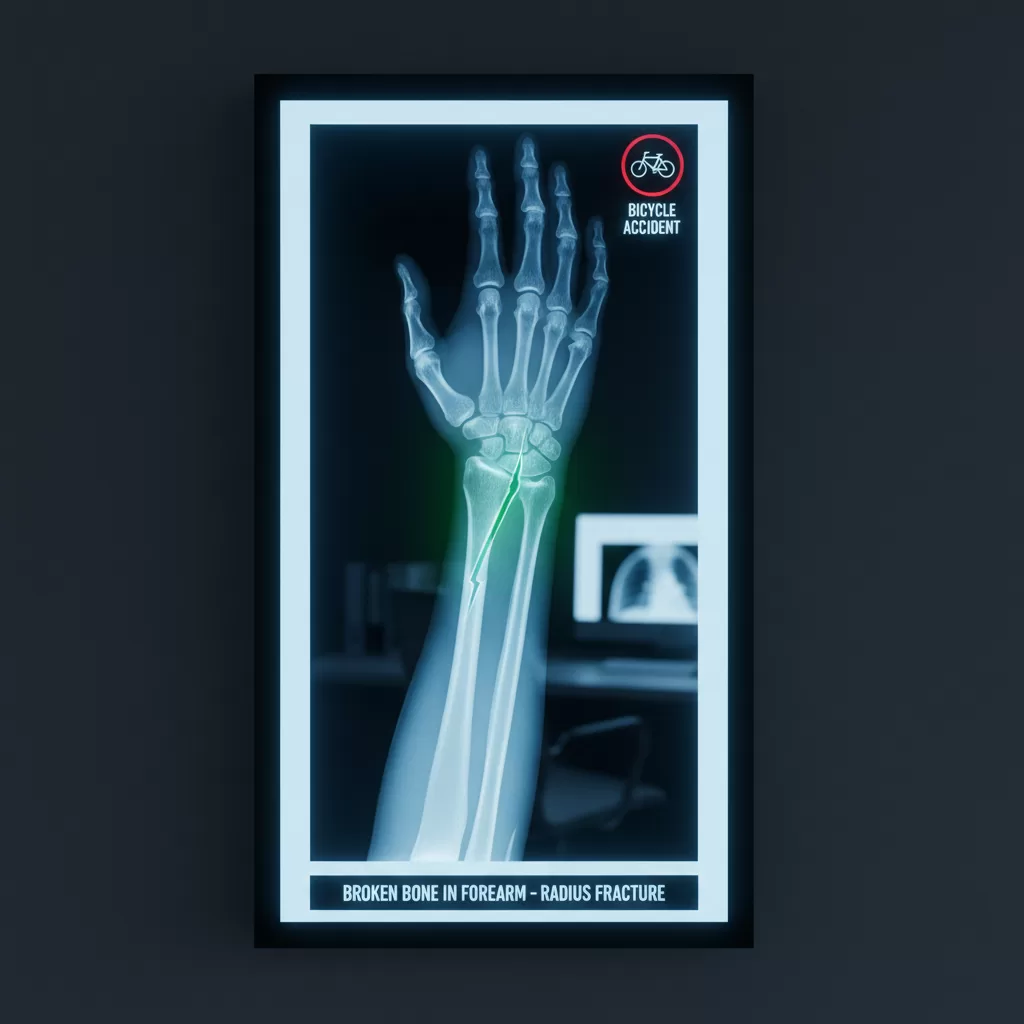
Bicycle accident broken bones can drastically change your life, but you don’t have to face the challenges alone. If you’ve been hurt in a bike accident and suffered broken bone injuries, now is the time to take action. Get a free case review today to understand your legal rights and discover how much compensation you may be entitled to. Don’t wait click the button below to connect with experienced attorneys ready to fight for you and help you get the justice you deserve.

No Win, No Fee. Let the Best Motor Vehicle Accident Attorneys Fight for your Compensation!
Table of Contents:

Common bicycle accident broken bones
Bone fractures vary significantly depending on how the impact occurred, what protective gear was worn, and the body parts that made contact with the ground or a vehicle. While any bone can break, certain fractures surface more frequently in bicycle collisions. The most common breaks in bicycle accidents are fractures to the arms and legs. Specifically, fractures of the collarbone, wrists, and ankles are commonly seen in cyclists involved in accidents.
Injuries from bicycle accidents can include soft tissue injuries, fractures, and traumatic brain injuries. Putting hands out to break a fall frequently results in broken wrists or collarbones. Complex or displaced fractures often require surgery and may not heal sufficiently to restore full function.
One common type of broken bone in bicycle accidents is the collarbone (clavicle). A sudden fall onto the shoulder often causes this type of fracture. Wrist and forearm breaks, including simple fractures, are also prevalent, particularly when we instinctively use our arms to brace for impact. Rib fractures affecting the chest area are another frequently encountered injury and can make breathing difficult in the days or even weeks that follow.
In more severe collisions, multiple fractures may occur, including fractures of the spine or pelvis. Spinal cord injury and spinal cord damage are serious risks when the neck or back is involved, often requiring immediate attention by medical professionals. Pelvic injuries can severely limit mobility, often requiring extended rest or surgical intervention. The long bones of the leg, such as the femur or tibia, can also be injured if the bicycle is sideswiped, pinned, or run over by a car. Injuries to the ankle are also common since this area is vulnerable during a crash. While less common, open fractures and transverse fractures to the skull or facial bones may occur if a rider is thrown forward without adequate head protection, potentially leading to permanent disability and other damages.
How bicycle accident injuries occur
Bicycle crashes happen in many ways. Sometimes, a vehicle driver fails to see us in a bike lane. In other circumstances, a driver might open a car door directly into our path. Adverse roadway conditions—like potholes, debris, or slick surfaces—can also cause us to lose control and tumble to the ground, often resulting in painful injuries to the skin and underlying bones.
A high-impact collision typically involves sudden deceleration. When a car bumps us off our bicycle, harmful forces are transferred directly to our bones and body parts like the neck, chest, and limbs. Even if we reduce some force by landing on a softer surface or wearing protective gear, broken bones can still occur when the angle or speed of the impact is significant. The severity may depend heavily on the speed of the vehicle, our reaction time, and environmental factors like road texture or weather conditions.
In metropolitan areas, traffic congestion often increases the likelihood of side-impact collisions or rear-end crashes when drivers do not maintain a safe distance behind cyclists. We also see a considerable number of “right hook” incidents, where a driver makes a right turn without noticing a cyclist heading straight.
Medical treatment and recovery for broken bones
Any suspected fracture following a bicycle accident requires prompt medical attention. Fracture injuries often present with severe pain, swelling, deformity, or an inability to move the affected limb. An examination for a bone fracture normally includes a physical exam, an oral history, and diagnostic imaging tests such as X-rays and CT scans to confirm the break’s location and severity and to identify the type of fracture, such as open fractures or transverse fractures.
Once diagnosed, the doctor will decide on the most effective treatment. Treatment options may include immobilizing the affected area with a cast or splint, using external hardware such as pins and screws, or performing open reduction and internal fixation surgery. The bone must be positioned appropriately so it heals, which may involve the use of plates and screws. For moderate fractures where the bones remain well aligned, casting or a closed reduction is sufficient. Severe fractures that require surgical intervention may keep patients in the hospital for several days or more.
Recovery from a fracture typically takes several weeks, but serious breaks may require much longer. Simple wrist fractures might heal in a few weeks, whereas a compound fracture of the femur can take months. After the initial healing phase, many patients benefit from physical therapy to regain flexibility, strength, and balance. Throughout this process, close monitoring by healthcare providers helps prevent complications such as infections, malunion, nonunion, or bone infection.
Impact of fractures on work and daily life
When a broken bone disrupts our ability to work, the financial fallout can be considerable. We might need to take a leave of absence, reduce hours, or change roles entirely to accommodate mobility restrictions or persistent pain. Lost income can place extra strain on household budgets already stretched thin by medical costs and everyday expenses.
Daily tasks often become difficult too. In the case of arm or wrist injuries, something as simple as picking up groceries requires careful maneuvering. Leg fractures can limit our mobility, making even short walks an ordeal. Some people experience psychological effects, including fear of remounting a bicycle or driving near busy streets. Others might struggle with anxiety about how their injuries will alter future career plans or caregiving duties.
Many of us handle these challenges by reaching out for support from friends and family, or by seeking professional guidance from healthcare teams and mental health counselors. We wisely remind ourselves that rest, therapy, and a proper medical plan can help us get back on our feet, but the process often feels draining without a proper support structure in place.
Economic and non-economic losses from bicycle injuries
Beyond the immediate medical bills, broken bones caused by bicycle accidents often lead to extensive financial losses and intangible setbacks. Economic damages typically include hospitalization fees, surgery costs, ambulance expenses, medication, medical devices (like crutches or wheelchairs), and long-term rehabilitation sessions. We might also face the need for specialized care if the injuries are severe or chronic.
Meanwhile, non-economic losses address the emotional and psychological burdens caused by our injuries. Chronic pain, limited mobility, mental anguish, and the loss of enjoyment in activities we previously loved can significantly affect our well-being. We also need to consider the strain placed on our relationships when family members must assume caregiving roles.
When it comes time to seek compensation, both economic and non-economic factors may come into play. California law allows the victim of an auto accident to claim compensation for pain and suffering along with other damages like medical bills and lost time from work. Compensation is not just about covering bills—it also recognizes the way injuries change our day-to-day lives. We have the right to ask for fair compensation that addresses the full scope of what was lost. The amount of compensation a victim gets for a broken bone in an auto accident depends on the severity of the break, the amount of medical treatment, and the ability of the person to fully recover. In many cases, the claim will settle before the deadline, but that’s not guaranteed, and victims have a limited time to file a personal injury claim based on negligence.
Evidence needed to support a bicycle accident claim
Before we can pursue any compensation, we must gather the right evidence to substantiate our claim. This process often begins at the accident scene, where taking photos of damage to our bicycle, the road conditions, and any visible injuries—such as wounds to the skin or deformities from fractures—can be helpful. If we are physically unable to collect this information, we should ask someone else—such as a friend or a bystander—to help.
Police reports are often vital because they capture details about the scene, possible traffic violations, and immediate witness statements. In some cases, the investigating officer’s observations can strengthen our argument regarding who was at fault. Medical records and doctor’s notes further corroborate the extent of our broken bones, treatments, and long-term prognosis. Obtaining any related hospital bills and receipts becomes important to show the exact financial impact.
Witness testimonies can give further perspective on how the accident occurred. When combined with police and medical documentation, these statements can paint a fuller picture for insurance adjusters, settlement negotiations, or a court if the dispute escalates to a bicycle accident lawsuit. It is in our best interest to preserve evidence and communicate regularly with a legal professional if we consider filing such a claim.
No Win, No Fee. Let the Best Motor Vehicle Accident Attorneys Fight for your Compensation!
Role of a bicycle accident lawyer in broken bone cases
In many situations, seeking guidance from a bicycle accident lawyer can remove a great deal of stress from our shoulders. Skilled attorneys understand the complexities that follow a severe crash, from navigating insurance company red tape to handling negotiations with at-fault parties. As we focus on healing, a legal professional can compile our evidence, document our financial losses, and formulate a clear argument for fair compensation.
We may also decide to work with a lawyer who has deep experience in similar cases and who knows local laws and court procedures inside out. Such familiarity can be especially important if an insurance company pushes back against our claim or if fault is disputed. By securing legal advice early, we reduce the risk of losing documents, missing filing deadlines, or saying something that might harm the claim.
Above all, an attorney can help us answer crucial questions, such as how much compensation to expect, whether to settle or pursue a trial, and how to handle communication with insurance providers. These pivotal decisions can significantly affect our long-term outcomes. Although we can attempt handling a claim independently, partnering with a legal expert often yields a more favorable and expedited resolution.
Case studies: Real-life bicycle accident injuries
Consider a 35-year-old cyclist who was sideswiped by a car turning right without checking the bike lane. He sustained a forearm fracture that required surgical pins. The accident forced him to take two months off work and endure ongoing physical therapy. By diligently collecting medical bills, workplace documentation of lost earnings, and the at-fault driver’s information, he successfully reached a settlement with the driver’s insurance company. A portion of his compensation reflected not only immediate costs but also projected future rehabilitation expenses.
In another instance, a college student commuting to campus was hit head-on when a vehicle swerved into the bike lane. She suffered a broken femur and spent several weeks in the hospital. With the help of a legal team, the student assembled thorough medical records, proof of tuition refunds for classes she was unable to complete, and statements from eyewitnesses. Ultimately, she recovered damages that covered her surgeries, physical therapy, and partial compensation for her interrupted academic program.
These real-life examples underscore the importance of proper documentation and skilled legal assistance. While individual outcomes vary, we regularly see that the combination of strong evidence and expert representation allows many injured cyclists to recoup the majority of their financial and non-financial losses.
Calculating compensation for bicycle accident broken bones
Compensation amounts can differ widely based on the type of break, the complexity of medical interventions, and how the injuries alter our life path. In a typical calculation, we assess both economic and non-economic damages. Economic factors capture measurable costs—hospital stays, doctor appointments, physical therapy, and any assistive devices for mobility. We also account for lost wages and potential loss of future earning capacity, in case our injuries remain long term.
Non-economic damages can be more challenging to quantify. They may include physical pain, emotional distress, anxiety, or reduced quality of life. If we can no longer participate in activities we once enjoyed, or if we experience prolonged mental distress after the accident, these losses also deserve recognition. Additionally, some cases warrant compensation for permanent disfigurement or ongoing disability.
When assembling an amount to request, it helps to rely on medical experts, vocational specialists, and financial analysts who can estimate the full costs. This ensures we do not overlook future treatments or therapy sessions. Once we have a strong sense of our claim’s worth, we can negotiate with insurers for an appropriate settlement or present the argument in court if necessary. In this step, working with a bicycle accident attorney greatly enhances clarity around the legal and financial frameworks at play.
Preventing future bicycle accidents and injuries
Although not all crashes are avoidable, we can reduce the likelihood of broken bones and other serious injuries by following best practices for safe cycling. Wearing a correctly fitted helmet is critical to prevent skull fractures and severe head trauma. Chest and back protectors can prevent broken ribs for mountain bikers or those riding high-risk terrain. Elbow and knee pads are essential for absorbing impact to the joints. Padded gloves protect against abrasion and help absorb impact, reducing the risk of broken hand or wrist bones. Closed-toe, slip-resistant shoes or boots protect the feet and ankles.
To avoid going over the handlebars, shift your weight back during hard braking. Pulling your arms close to your chest protects them and reduces the risk of broken ribs during a fall. Tucking your chin into your chest and trying to roll with the impact can help mitigate injury during a fall. A strong core helps with balance, preventing falls in the first place. General strength training helps strengthen bones and muscles, making them less susceptible to fractures. Regularly inspecting brakes, tires, and gears is important to ensure the bike is in top working condition.
Tensing up before impact increases the likelihood of breaking a bone. By practicing fall techniques and wearing appropriate safety gear, cyclists can better protect themselves from severe injuries.
How Legal Claim Assistance can help you
At Legal Claim Assistant, we focus on supporting individuals who suffer from bicycle accident broken bones and similar injuries. We understand that navigating insurance claims, gathering evidence, and finding the right bicycle accident law firm can feel daunting, especially while you are in recovery. That is why our network is designed to connect you with skilled legal professionals, ensuring your case is handled with care and precision.
When you reach out to us, we can help you figure out your eligibility for compensation and guide you to the resources you need. We work with attorneys who can evaluate the specifics of your case, including the nature of your injuries, any available evidence, and local legal deadlines. We also stay committed to helping you understand each step along the way—whether that means explaining the importance of medical documentation or interpreting your insurance coverage options.
Our focus is on empowering you to secure a fair outcome by clarifying your legal rights and possible next steps. If you decide to work with a lawyer, we connect you with a dedicated professional who can negotiate with insurance carriers, gather testimony from experts, and represent your interests if the case needs to proceed to litigation. Throughout it all, we strive to uphold your best interests and streamline the path toward recovery and compensatory relief.
Above all, we believe that no one should face the aftermath of a serious bicycle accident alone. By partnering with Legal Claim Assistant, you gain access to a supportive team trained to help you secure the resources necessary for healing, both physically and financially. If you are dealing with broken bones following a bicycle crash, do not hesitate to explore your legal options. We encourage you to seek clarity on your situation and stand up for the compensation you deserve—because your well-being should always come first.
No Win, No Fee. Let the Best Motor Vehicle Accident Attorneys Fight for your Compensation!