


Key Takeaways:
You can take legal action if a nursing home causes harm through abuse or neglect. Signs may include injuries, poor care, or unsafe conditions.
Strong evidence is important. Medical records, witness statements, photos, and facility reports help prove nursing home negligence and support a claim.
Compensation may cover medical bills, emotional distress, and long-term care needs, but every case depends on the facts and severity of harm.
What Qualifies as a Nursing Home Abuse or Neglect Claim
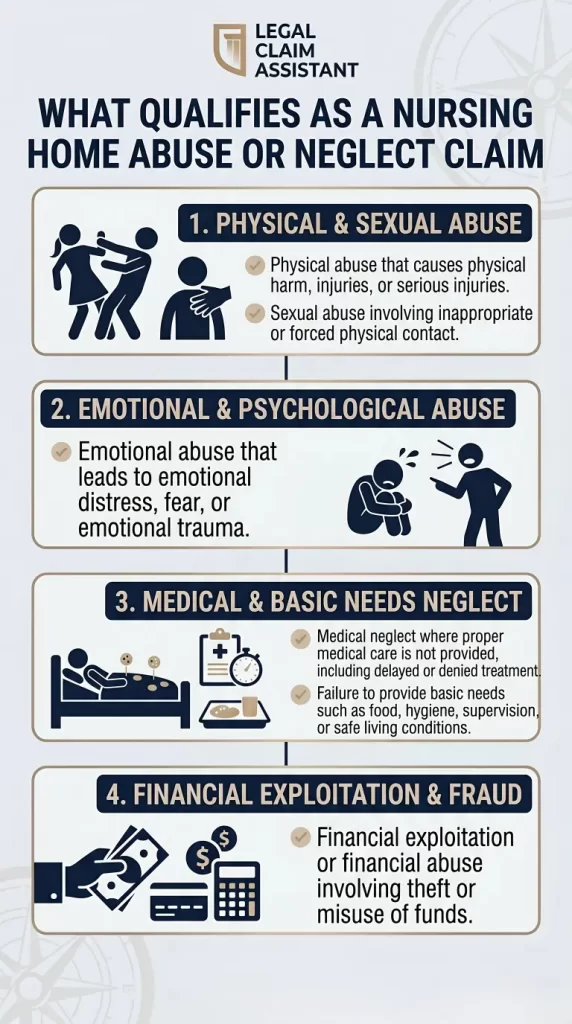
A nursing home abuse claim exists when a facility causes harm through abuse, neglect, or failure to meet basic care standards. In some nursing home abuse cases, harm is intentional, while in others it happens because of nursing home negligence, poor supervision, or failure to follow basic care standards in a nursing home setting or assisted living facility.
A claim can also exist when a nursing home fails to meet the required standard of care under state and federal laws. Even if a facility claims it is meeting minimum requirements, it can still be held responsible if negligence leads to serious harm or further harm to elderly residents. Falls in nursing homes often result from neglect, such as poor supervision or unsafe conditions, and can lead to serious injuries like fractures or head trauma.
Common forms of abuse or neglect include:
Physical abuse that causes physical harm, injuries, or serious injuries
Emotional abuse that leads to emotional distress, fear, or emotional trauma
Sexual abuse involving inappropriate or forced contact
Financial exploitation or financial abuse involving theft or misuse of funds
Medical neglect where proper medical care is not provided, including delayed or denied medical treatment
Failure to provide basic needs such as food, hygiene, supervision, or safe living conditions
Neglect-related injuries are common in nursing home abuse cases. These often include bedsores, fractures, dehydration, infections, rapid weight loss, chronic pain, and other medical conditions that worsen due to lack of care. In severe situations, harm caused by negligent nursing homes can lead to medical malpractice concerns or long-term disability.
If suspected abuse is confirmed, families may pursue financial compensation to cover medical expenses, medical costs, emotional distress, physical pain, and other losses. In many cases, nursing home abuse results from poor supervision or systemic neglect, making it important to take legal action quickly to prevent further harm.
Signs Your Loved One May Have a Valid Nursing Home Abuse Claim
Warning signs of nursing home abuse often appear slowly, but they usually point to abuse or neglect in a nursing home facility or assisted living facility. Families should pay close attention to changes in both physical condition and behavior, especially when nursing home residents cannot clearly explain what is happening.
Common warning signs include unexplained bruises, burns, or fractures that do not match normal daily activities. Untreated bedsores or infections are also serious indicators of inadequate supervision or nursing home neglect, especially when basic medical care is not being provided. Poor hygiene, malnutrition, or sudden weight loss may suggest that proper care and nutrition are being ignored.
Behavioral changes are often one of the earliest signs of emotional abuse or neglect. A loved one may become fearful, anxious, withdrawn, or show sudden discomfort around staff members. These changes can signal ongoing emotional abuse or stressful conditions in the nursing home setting.
Financial irregularities or missing funds may point to financial abuse, especially when a resident cannot account for withdrawals or changes in financial activity. Unsafe or unsanitary living conditions, such as dirty rooms or lack of basic safety measures, can also indicate systemic negligence within the facility.
Environmental cues are equally important. Understaffing and inadequate supervision often lead to missed care, delayed medical treatment, and increased risk of harm. In many cases, these conditions are early warning signs that abuse or neglect is occurring and may require immediate reporting abuse to adult protective services or other authorities.
How to File a Nursing Home Abuse Claim Step by Step
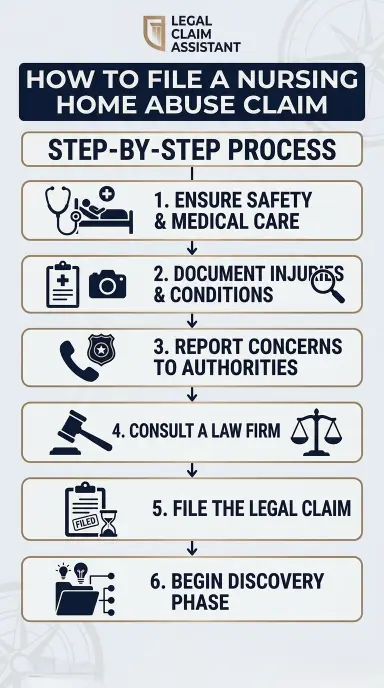
Filing a nursing home abuse claim follows a clear legal process designed to protect residents and hold facilities accountable for abuse or neglect in a nursing home facility or assisted living facility. Acting quickly is important, especially when there is immediate danger or suspected elder abuse affecting a loved one.
Ensure the resident’s immediate safety and medical care
The first step is to remove the resident from harm and make sure they receive proper medical care. Medical professionals should evaluate any suffered injury, including physical harm or signs of emotional mistreatment or neglect leads.Document injuries and facility conditions
Take photos, save medical bills, and record anything that shows abusive behavior or unsafe conditions. This early documentation becomes important vital evidence in a nursing home abuse lawsuit or nursing home negligence claim.Report concerns to Adult Protective Services or the Long-Term Care Ombudsman
Reporting suspected abuse to adult protective services helps create an official record. This step also helps protect other residents and supports efforts to hold facilities accountable.Consult a nursing home neglect law firm
A law firm or personal injury lawyer can review the situation and explain the legal process. They can help determine if you may seek compensation for medical expenses, emotional distress, and other damages.File the legal claim or lawsuit within the statute of limitations
A nursing home abuse attorney files the lawsuit within the legal deadline, which varies by state and case type. Most states require claims within a limited time period, often 2 to 3 years, depending on the case and jurisdiction.Discovery phase begins after filing
Once the lawsuit is filed, attorneys begin gathering evidence through discovery. This includes requesting internal records, medical records, and conducting depositions to prove facility’s failure and support the claim.
Taking early action is important. Delays can weaken evidence and make it harder to hold nursing homes accountable or seek fair compensation for harm caused.
Gathering Evidence Is Critical to a Strong Nursing Home Abuse Claim
Gathering evidence is one of the most important parts of building a strong nursing home abuse claim. In many nursing home abuse cases, the outcome depends on how well evidence is preserved and documented after suspected abuse or neglect occurs in a nursing home setting or assisted living facility.
Key evidence may include:
Medical records showing treatment, diagnoses, or unexplained changes in health
Photographs of injuries, unsafe conditions, or signs of abusive behavior
Witness statements from staff members, visitors, or other residents
Staffing schedules and care logs showing poor supervision or understaffing
Incident reports filed by the facility
Video footage, when available, showing neglect or unsafe conditions
Gathering evidence early is essential because negligent facilities may later change records, hide documentation, or correct conditions after the fact. This can make it harder to prove what actually happened and protect residents from further harm.
Strong evidence helps establish the key legal elements of a nursing home abuse claim, including duty of care, breach of duty, causation, and damages suffered by the resident. Medical professionals often review records to confirm injuries, identify patterns of neglect, and explain how nursing home negligence contributed to the condition.
The quality of evidence can strongly affect the outcome of the case. It directly affects settlement value, the ability to seek compensation for medical bills and emotional distress, and the strength of the case against the facility. Solid documentation also helps personal injury lawyers and elder abuse attorneys hold facilities accountable and pursue justice for families seeking accountability and protection for residents.
How Nursing Homes Can Be Held Liable for Elder Abuse
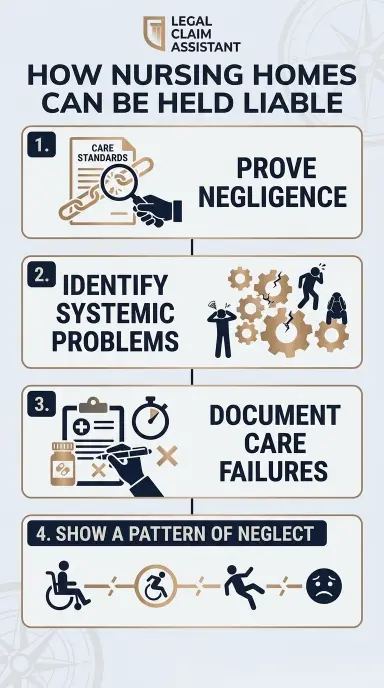
Nursing homes are held liable when their negligence or failure to provide proper care causes harm to a resident. In many elder abuse cases, liability is based on abuse or neglect that occurs in a nursing home facility or assisted living facility, leading to serious injury or worsening medical conditions.
Nursing home liability often comes from systemic problems inside the facility. Common causes include understaffing, improper training of staff members, ignored medical needs, unsafe living conditions, and violations of elder abuse laws. These issues can affect daily care and increase the risk of preventable harm to nursing home residents. Nursing home neglect is reported in some studies, though rates vary by source.
A nursing home can also be responsible when neglect leads to falls, medication mistakes, untreated infections, or other preventable medical complications. In these situations, the facility may have failed to provide proper supervision or timely medical care, resulting in further harm to the resident.
Serious cases involving gross negligence may justify additional damages. This is especially true when a pattern of abuse or repeated failures shows a disregard for resident safety. In these situations, families often work with a nursing home abuse lawyer or experienced attorney to seek justice and build a strong case through the legal process.
Compensation Available in a Nursing Home Abuse Claim
Compensation in a nursing home abuse claim is designed to help cover both financial losses and the emotional impact of abuse or neglect. When a nursing home is found responsible, damages are typically divided into economic, non-economic, and sometimes punitive categories.
Economic damages cover measurable financial losses. These may include medical expenses, ongoing medical costs, medical bills, relocation expenses, and rehabilitation or therapy needed after suffering injury in a nursing home setting. These costs often increase when long-term medical care is required. In cases where neglect leads to medical complications such as infections or fractures, the claim’s value often increases due to ongoing treatment costs and long-term care needs.
Non-economic damages focus on the personal impact of the harm. This includes emotional distress, pain and suffering, loss of dignity, and reduced quality of life for the resident. These damages reflect the physical and emotional toll experienced by elderly residents and their families.
In some cases, courts may also award punitive damages. Courts may award punitive damages in cases involving particularly egregious abuse or gross negligence, designed to punish the nursing home beyond compensating the victim. These are used when there is severe abuse, reckless neglect, or intentional misconduct by the facility. Punitive damages are meant to punish wrongdoing and discourage similar behavior in other facilities.
Cases involving fractures, infections, chronic conditions, or long-term complications often result in higher compensation due to increased medical costs and long-term care needs. Families often pursue these claims with help from an experienced attorney or nursing home abuse lawyer, and many start with a free case evaluation to understand their options while seeking justice.
Why Working With a Nursing Home Abuse Law Firm Makes All the Difference
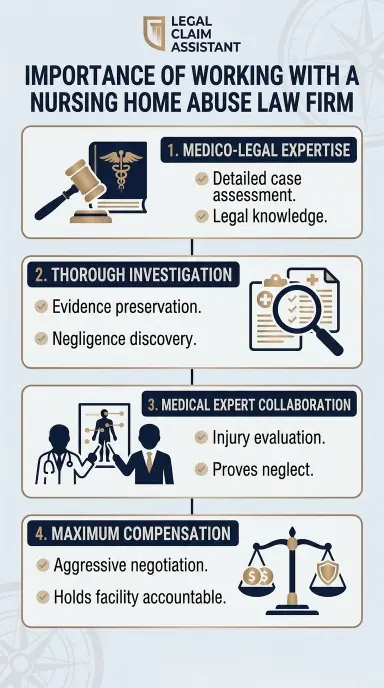
Nursing home abuse cases are medically and legally complex, especially when they involve abuse or neglect in a nursing facility or assisted living facility. A nursing home abuse claim often requires detailed review of medical records, facility policies, and staff conduct to understand how the harm occurred and who is responsible.
An experienced law firm can support families by investigating neglect thoroughly and identifying signs of nursing home negligence that may not be obvious at first. They work quickly to preserve evidence before it disappears, including medical records, staffing logs, and incident reports that are critical to proving the case.
A strong legal team also works with medical experts to evaluate injuries and explain how proper medical care should have been provided. This helps connect the facility’s actions to the harm suffered by the resident. In many cases, they also negotiate aggressively with insurance companies that represent negligent facilities.
Because these cases often involve regulatory violations, corporate ownership structures, and complex medical issues, experienced legal representation can make all the difference in the outcome of a nursing home abuse claim. Families who work with a law firm are often better positioned to pursue fair compensation and hold facilities accountable for the harm caused to a loved one.
Most firms handle these cases on a contingency fee basis, meaning families do not pay upfront costs and only pay if compensation is recovered.
Nursing Home Abuse Settlements and Claim Value
The value of a nursing home abuse claim depends on several important factors. Each case is different, and settlement amounts are based on the specific facts, evidence, and level of harm caused by abuse or neglect in a nursing home setting.
Key factors that affect settlement value include the severity of injuries, the strength of evidence, long-term medical costs, emotional harm suffered by the resident and family, and whether the neglect led to permanent disability or death. Cases with clear documentation of nursing home negligence and strong medical records often result in higher compensation.
According to available studies and case data, average nursing home neglect settlements and verdicts are around $400,000. However, this number can vary widely depending on the circumstances of the case.
Claims involving serious physical injuries, ongoing medical care, or severe emotional distress often lead to higher settlement amounts. In the most serious cases, where neglect results in long-term harm or wrongful death, compensation can increase significantly due to medical expenses, ongoing care needs, and emotional impact on families seeking justice.
Frequently Asked Questions About Nursing Home Abuse Claims
Families often have urgent questions when they suspect abuse or neglect in a nursing home facility or assisted living facility. These answers explain how a nursing home abuse claim works, what evidence is needed, and what legal options may be available to protect a loved one and seek compensation.
How do I prove nursing home negligence?
You must show the facility had a duty of care, breached it, and caused harm. This is often proven using medical records, witness statements, and facility documentation.
What evidence is needed for a nursing home abuse claim?
Key evidence includes medical records, photographs of injuries or unsafe conditions, witness statements, incident reports, and staffing logs. These help show what happened and support the nursing home abuse claim.
How long do I have to file a nursing home abuse claim?
Most states allow about 2 to 3 years to file a claim, but the exact deadline depends on state law. Acting quickly helps protect evidence and strengthens the case.
Can I sue a nursing home for emotional distress?
Yes. Emotional distress damages are often included in nursing home abuse cases, especially when the resident suffers fear, trauma, or mental suffering caused by abuse or neglect.
Should I hire a nursing home abuse law firm?
Yes. An experienced law firm can help with evidence collection and case preparation. This often leads to better overall claim value.
Speak With a Nursing Home Abuse Lawyer Today
If you suspect abuse or neglect in a nursing home facility or assisted living facility, speaking with a nursing home abuse lawyer can help you understand your legal options quickly. A lawyer can investigate what happened, gather critical evidence such as medical records and facility reports, and evaluate the full extent of harm caused to your loved one.
An experienced legal team can also review medical expenses, medical bills, and other damages to determine what compensation may be available. They work to pursue accountability for unsafe conditions, nursing home negligence, and any abuse that led to injury or suffering.
Taking action early is important. It helps preserve evidence, strengthens the nursing home abuse claim, and protects your legal rights before records are lost or changed.
You Deserve Justice. Let Us Help.
Speak with a trusted Nursing Home Abuse Attorney who will stand by your side, protect your rights, and fight for the compensation you deserve.
No Win, No Fee. Let the Best Nursing Home Abuse Attorneys Fight for your Compensation!

Under 1 Minute

100% Free

Expert-Reviewed

Private & Secure
© 2025 Legal Claim Assistant. All Rights Reserved.
Terms of Service | Privacy Policy | Contact Us | Marketing Partners
Related Article
Share this article:


