How Do You Get Compensation After A Car Accident?
 Fact Checked By Our Attorneys

Car accident compensation is crucial when a car accident victim suffers injuries due to another driver’s negligence. Don’t wait to seek reimbursement for your medical bills, lost wages, and property damage get the fair compensation you deserve. Click the button below now to connect with an experienced attorney for a free case review and take the first step toward securing your rightful car accident settlement. This type of auto accident can result in overwhelming financial losses, especially when medical treatment and vehicle damage occur at the same time.

No Win, No Fee. Let the Best Motor Vehicle Accident Attorneys Fight for your Compensation!
Table of Contents:

How does car accident compensation work for not-at-fault injuries
When we are injured in a car accident caused by someone else’s negligence, we may have the right to receive financial compensation. This not-at-fault compensation typically addresses costs such as medical expenses, including immediate treatment, doctor’s visits, surgeries, physical therapy, as well as vehicle repairs. Lost income if our injuries prevented us from working also falls under economic damages. In serious cases, ambulance fees and other emergency response charges may also be included as part of the compensation request.
An insurance claim or a legal claim for damages usually drives the process. As the injured party, or car accident victim, we must show evidence that we sustained genuine injuries and that the at-fault party’s gross negligence caused the accident. This includes proving the injuries sustained and demonstrating how they directly resulted from the crash. When successful, the compensation can be paid by the other driver’s insurance company or, in some cases, through our own policies such as uninsured or underinsured motorist coverage. Some policies also include personal injury protection, which may cover certain medical expenses regardless of who was at fault. Consulting a car accident attorney or an experienced personal injury attorney can help us understand the exact car insurance coverage available under our insurance policy and guide us in gathering all necessary proof.
How to claim car accident compensation step by step
Navigating the insurance claim process often feels complex, but breaking it down into smaller steps can keep us organized:
- Document the accident scene and our injuries. Immediately note the accident date, location, and any visible injuries. Take photos and videos of vehicle damage, license plates, road conditions, and injuries to document everything after a car accident. Be sure to photograph each driver’s license and insurance card for accurate identification. Gather information from the other driver and potential witnesses.
- Notify insurance companies. Even if we are not at fault, we should inform our insurer of the crash. If your vehicle is not drivable, you may also ask about coverage for a replacement vehicle while repairs are being completed.
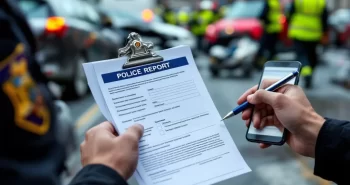
- Collect evidence. Obtain medical records, police reports, and photos of property damage or injuries. An official accident report from the police is crucial evidence for seeking compensation. The quality of evidence, including documentation like police reports and witness statements, affects negotiating leverage in car accident claims.
- File the car accident claim. This may involve either the at-fault party’s driver’s insurance company or our own policy, depending on insurance coverage, including whether collision coverage or comprehensive coverage applies to the situation.
- Negotiate or pursue legal action. The negotiation process with insurance companies often begins after you file your claim and can involve justifying why you want a higher settlement amount. In many cases, your attorney may prepare a formal demand letter outlining your damages and the amount you are seeking. If the insurance settlement offer is too low, we may need to hire a car accident lawyer to negotiate or file a car accident lawsuit. If a settlement cannot be reached with the insurance company, your attorney and legal team will represent you in court to pursue compensation.
Staying organized and maintaining good communication with all parties will speed up resolution. To build a strong foundation, review relevant details about what to do after a car accident not your fault, so everything is properly documented.
When can I make a car accident compensation claim and what deadlines apply
We can typically bring a personal injury claim as soon as we realize we suffered injuries or damages due to another driver’s negligence. For many of us, that is immediately after the crash, once we have sought medical attention and obtained a police report following the motor vehicle accident. Deadlines—known as statutes of limitations—can vary by state, but we often have a limited window to start a car accident claim. Every state has a statute of limitations, a legal deadline for filing a lawsuit after a car accident, which typically ranges from 2 to 3 years. Missing this filing period can bar us from seeking compensation, no matter how strong our car accident case is.
In some states, such as maryland north carolina, we might have up to two or three years to file suit, though there are exceptions. For instance, claims involving government entities or more complex motor vehicle collisions can have different timelines. It is wise to confirm any deadlines early by reviewing statute of limitations car accident guidelines or consulting a reputable law firm. Acting promptly also helps preserve evidence and witness statements, which can fade over time.
How much car accident compensation can I expect based on my injuries and losses
Every case varies, but compensation awarded is typically linked to the severity of our injuries, the medical costs we endure, the extent of lost wages, and the level of pain and suffering compensation, including non economic damages. More severe injuries, such as fractures, concussions, or debilitating neck and back trauma, may produce higher car accident settlements that account for future medical care or long-term rehabilitation.
Since the amount can differ significantly, many variables come into play, including:
• Past and estimated future medical expenses\
• Income lost due to temporary or permanent disability\
• Emotional distress or reduced quality of life, including post traumatic stress disorder
Pain and suffering damages are awarded for the mental anguish or physical distress resulting from a car crash. Emotional distress claims can include anxiety, depression, and post-traumatic stress disorder (PTSD) following a car accident. In addition to medical damages, compensation may also reflect repair costs and whether the vehicle’s fair market value before the crash exceeds the cost of fixing it. Those of us who sustained minor injuries might expect a lower amount than if we faced surgery or catastrophic injuries and long recovery periods, but there is no one-size-fits-all formula. Also, each insurer or court has its own methods of valuation when determining fair market estimates for damaged property. Reviewing examples of an average settlement for car accident back and neck injury can offer a sense of typical ranges, but only a personalized case evaluation can consider all the specific facts.
How long does car accident compensation take from filing to settlement
The length of time needed to resolve a car accident compensation claim depends on factors such as the complexity of our injuries, the willingness of the insurance company to negotiate, and whether the case goes to trial. Straightforward claims, where liability is clear and the injuries are well documented, may settle in a few weeks or months. More complicated situations, such as multi-vehicle collisions or disputes over insurance coverage, can take longer.
If insurers dispute who is at fault or disagree on the value of our injuries, the process can stretch out further. In that scenario, having a legal representative such as a personal injury lawyer often helps us expedite settlement negotiations. Many personal injury attorneys work on a contingency fee basis, meaning they only get paid if you win your case or settle. To get a sense of typical timelines, we can look at resources on how long does a car accident settlement take. We should remember that standing firm for a fair settlement might mean a longer negotiation, but it can result in compensation that more accurately reflects our needs.
How to maximize car accident compensation with proper documentation and treatment
Thorough records and consistent medical follow-ups can make a substantial difference in the final settlement amount. If we choose to skip or delay care, it may allow insurance adjusters to argue that our injuries are less severe. Delays in seeking medical help can be used by insurers to argue that injuries were not serious or unrelated to the accident. By seeking immediate medical attention and following doctor recommendations, including physical therapy, we show that our injuries are genuine and require ongoing care.
It is also beneficial to keep all medical receipts, bills, prescriptions, and any communication with healthcare providers. These records clearly demonstrate the medical bills incurred and the overall impact on your finances. If we switch providers, such as going to a car accident chiropractor for additional treatment, we should ensure those out of pocket costs are documented as well. Detailed photos and personal notes about our daily pain levels or mobility limitations can further demonstrate how the accident has impacted our life. Lastly, approaching each step with clarity and choosing to seek legal advice early can help us when adjusting or supplementing our car accident legal advice.
No Win, No Fee. Let the Best Motor Vehicle Accident Attorneys Fight for your Compensation!
What role do medical records, police reports, and witness statements play in securing compensation
Evidence is at the heart of every successful car accident injury claim. Medical records show how serious our injuries are, when they occurred, and what treatments we received. They paint a picture of cause and effect, connecting the crash to our physical injuries and ongoing recovery. Police reports often establish which driver was at fault, incorporating details from the accident scene that may otherwise be lost over time. These reports also note traffic law violations or witness statements that add credibility to our claim.
Witness testimony provides a neutral perspective on how the accident happened. When a third party testifies or provides a statement supporting our version of events, an insurance company or court is more likely to find our claim valid. To secure these statements effectively, it helps to gather contact information as soon as possible and tie any witness account to the official record. If we are missing a police report, checking reliable resources on how to get a police report for a car accident can help us fill that gap quickly.
Common mistakes that reduce car accident compensation and how to avoid them
Insurance adjusters will often look for gaps in our documentation or potential missteps to downplay our claim. Here are two errors that can sabotage our compensation:
Delaying medical care. Not seeking immediate treatment weakens the link between the accident and our injuries, giving the other side grounds to question the severity of our pain.
Accepting the first settlement offer too quickly. Early settlements can be far lower than what our case may genuinely be worth, especially if we have not completed medical treatment or fully understood future costs, including legal fees.
To avoid these pitfalls, we should seek professional car accident legal advice and let medical experts guide our treatment plan. By being patient and having a clear understanding of our injuries, we can negotiate or litigate from a position of strength, increasing our chances of a reasonable settlement.
Additional considerations about fault and damages
If you are partially at fault for a car accident, your compensation may be reduced based on the degree of your fault as determined by your state’s laws. In states that follow the modified comparative negligence rule, a plaintiff can still collect damages as long as they are less than 50% or 51% at fault, but their damages will be reduced by their percentage of fault. Conversely, in contributory negligence states, if a plaintiff is found to be even slightly at fault, they can be barred from recovering any compensation.
There are two types of compensation available when pursuing a car accident claim: economic damages and non-economic damages. Economic damages are calculable losses that include medical bills, property damage, lost wages, and other financial losses. Non-economic damages are losses that do not have a clearly ascertainable cost, such as pain and suffering and emotional distress. Punitive damages may be awarded in cases of gross negligence or intentional misconduct by the at-fault driver. These damages are designed to punish the at-fault party and are not awarded in all cases.
The calculation of compensatory damages involves various factors, including medical costs, severity of injuries, and insurance coverage. The multiplier method is often used by insurers to estimate car accident settlements, multiplying economic damages by a factor based on injury severity.
Typical settlement amounts and factors affecting compensation
The average settlement for a car accident can range from $14,000 for minor injuries to over $1 million for cases involving catastrophic injuries or wrongful death. Minor accidents with minimal injuries and property damage may result in settlement amounts ranging from a few thousand dollars to tens of thousands of dollars. Severe accidents involving catastrophic injuries or fatalities can lead to settlements in the hundreds of thousands or even millions of dollars.
Car accident compensation can include medical expenses, vehicle repair or replacement costs, lost wages, rehabilitation expenses, and pain and suffering damages. In some situations, if the vehicle is declared a total loss, the insurer may compensate you based on its fair market value at the time of the crash rather than the cost to repair it. Insurance companies often aim to minimize settlements, making it crucial to have a skilled car accident attorney to negotiate on your behalf. Consulting a personal injury attorney to calculate the value of a claim and handle negotiations after a car accident is highly recommended.
Compensation for property damage includes repair or replacement costs for damaged vehicles and personal property. Depending on your coverage, you may need to decide whether to repair the car or accept a payout and apply it toward purchasing a replacement vehicle. Car accident victims can claim specific damages for medical expenses, lost wages, and pain and suffering. Lost wages can be claimed if serious injuries prevent the victim from working.
Hiring an experienced attorney is crucial for navigating the complex process of negotiating with insurance companies after a car accident. Documenting and preserving evidence is essential to prove that your injuries and damages resulted from the other party’s actions.
To seek compensation after a car accident, get medical help, call the police for a report, exchange information, gather evidence, and report to your insurer.
Case studies showing successful compensation outcomes for clients with serious injuries
Real-world scenarios often highlight how thorough evidence, strong medical documentation, and timely filings can yield substantial settlements or verdicts. For example, one accident victim who sustained multiple fractures due to a head-on impact received a six-figure car accident settlement when they proved that the at-fault driver had a history of reckless speeding. The victim’s medical records outlined multiple surgeries, rehabilitation, and missed work, forming the basis of a convincing personal injury claim.
In another situation, a passenger who suffered neck and spine injuries from a t bone car accident secured better compensation after their original offer was challenged. By presenting clear X-rays, ongoing treatment reports, and a witness statement from a bystander, they showed the driver’s insurance company that the injuries were both acute and likely to cause significant future expenses. These examples remind us that no matter the severity of our injuries, detailed documentation and consistent advocacy can help us achieve fair compensation.
How Legal Claim Assistant helps you manage and optimize your car accident compensation
At Legal Claim Assistant, we streamline the search for justice by connecting you with the right car accident law firm and ensuring all necessary paperwork is properly prepared. Many individuals are unsure how to file paperwork within strict deadlines, collect essential documents, or complete formal settlement negotiations with insurance companies. We take that burden off your shoulders, so you can focus on recovery.
In addition, we coordinate communication between doctors, insurance adjusters, and attorneys, ensuring no critical details are overlooked. This support can save you from missing deadlines or misplacing vital records. By having expert input at every turn, you are more likely to secure the compensation your car accident case genuinely deserves. From filing a claim swiftly to following up on settlement discussions, you benefit from having a knowledgeable partner on your side.
Getting a fair outcome after a not-at-fault motor vehicle accident starts with timely action and strong proof of your injuries. With the right guidance from a personal injury attorney or car accident lawyer, you can stand your ground, document every expense, and hold the at-fault party responsible. Seeking help from Legal Claim Assistant or an experienced car accident attorney can make the difference between struggling with bills and achieving a compensation package that enables you to move forward confidently.
No Win, No Fee. Let the Best Motor Vehicle Accident Attorneys Fight for your Compensation!