Statute of Limitations for Drunk Driving Accident Claims
 Fact Checked By Our Attorneys
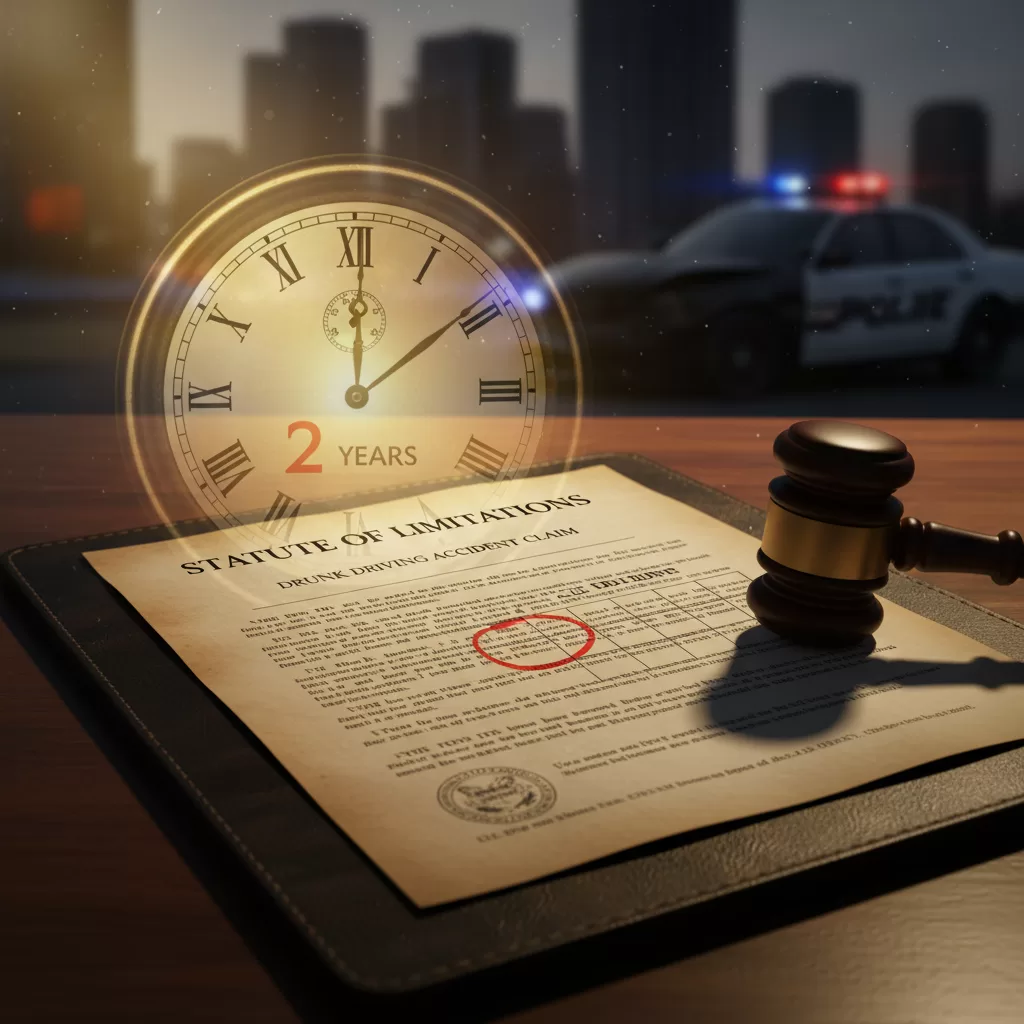
Understanding the statute of limitations drunk driving accident victims must abide by is critical to preserving your right to file a claim. When we face injuries, damages, and emotional stress after being hit by an intoxicated driver, time can slip away faster than we realize. The statute of limitations sets the official window in which legal action may be taken, and it varies by state. Failing to meet that deadline can leave us without a legal remedy, even if the evidence is strong. In this article, we clarify how these laws are structured, what exceptions may apply, and how taking decisive action can protect our claim.

No Win, No Fee. Let the Best Motor Vehicle Accident Attorneys Fight for your Compensation!
Table of Contents:

Understanding the statute of limitations for drunk driving accident claims
The statute of limitations is the legal deadline that compels us to file a lawsuit within a set period after suffering harm. For a drunk driving accident, this typically begins on the date the crash occurs or the date injuries become apparent. Once the deadline passes, our right to file often vanishes. This is why we emphasize prompt consultation with a professional. If we suspect the at-fault driver was impaired, our claim may involve specific DUI-related evidence that can swiftly fade over time. Official police reports and breathalyzer results are essential, but medical records and witness statements also help strengthen our claim.
In practical terms, the timeline can range widely by jurisdiction. Some states allow plaintiffs two years from the accident date to begin legal proceedings, while others offer more or less time. Regardless of the state’s deadline, it is best to start the process as soon as possible. Even if we file months before the clock runs out, we allow our drunk driving accident attorney more time to gather evidence, negotiate with insurers, and build a strong case.
Typical time limits by state for filing a DUI accident lawsuit
No universal, one-size-fits-all statute of limitations exists for every drunk driving accident lawsuit, and that is why knowing our state’s rules is vital. In many states, the limit stands at two years for personal injury claims. Other states impose three years, while some require legal action in as little as one year. A handful may extend up to five or six years, often depending on factors like insurance policies and local legal statutes.
We see that confusion frequently arises when injuries seem minor at first but turn more severe later on. If we wait too long and the standard deadline passes, it may be too late to take further action. Additionally, we might need to consider the time required to process insurance claims, medical evaluations, and financial records. Working with a drunk driving accident law firm early helps avoid any inadvertent missteps, especially when multiple legal deadlines coincide.
Differences between personal injury and wrongful death claims
In a typical personal injury claim, the individual who suffered harm pursues compensation for medical expenses, lost wages, pain, and suffering. When the victim tragically does not survive the crash, the claim often transitions to a wrongful death action, filed by surviving family members or designated representatives. These two case types may have overlapping timelines, but some states provide a specific wrongful death statute of limitations that starts on the date of the death rather than the date of the accident.
These distinctions matter. If we lose a loved one in a drunk driving collision, we may need to research “statute of limitations drunk driving accident wrongful death” laws, sometimes found under drunk driving accident wrongful death claims. Having a thorough understanding or working with legal counsel can help us ensure no filing deadlines are missed. State laws also vary on which family members can bring a wrongful death lawsuit and whether punitive damages may apply.
How property damage claims differ from injury claims
When we think of accident claims, we often focus on injuries and medical bills. However, damage to our vehicle or personal property may be addressed under different rules. In many jurisdictions, property damage lawsuits share the same or slightly different filing deadlines compared to personal injury lawsuits. For instance, some states enforce a shorter period to file for repair or replacement costs, while others let these claims run parallel to injury claims.
Nevertheless, it is best to treat our property damage claim with the same urgency as a personal injury lawsuit. The evidence supporting a property damage case can be straightforward, like repair estimates and photographs of the damage. Yet, insurers and at-fault parties may still delay or dispute the extent of the damage. By documenting everything early and consulting a drunk driving accident attorney who knows state-specific rules, we can maintain a stronger position throughout negotiations.
Exceptions and extensions that can affect deadlines
Even if standard statutes of limitations appear strict, some exceptions or extensions might apply. For instance, minors involved in DUI accidents can often benefit from extended time limits that start once they reach the age of majority. Mental incapacitation—whether from the accident itself or a preexisting condition—can also pause the clock until the individual is deemed competent to file suit. Similarly, if a defendant purposefully conceals evidence or evades legal service, the time limit may be temporarily suspended.
Still, relying on exceptions can be risky. Courts often interpret deadline extensions narrowly, and we bear the burden of proving the exceptional circumstance. That is why promptly consulting with a drunk driving accident lawyer helps us assess whether any such tolling provisions apply. If they do, we will know the exact financial and medical documentation we need to verify a strong case.
No Win, No Fee. Let the Best Motor Vehicle Accident Attorneys Fight for your Compensation!
Case studies: Filing just before the deadline
Real-life examples show how critical timing can be. Imagine we wait until the final weeks of the statute before reaching out to a legal team. Even our best intentions might collide with logistical delays—difficulties locating important medical records, unresponsive witnesses, or an overburdened court system. In one case, a victim waited until roughly a month before the statute ran out. By then, the key witness had relocated, and critical evidence was lost. Although the lawsuit eventually proceeded, the increased pressure on investigators and attorneys made every step more challenging.
In contrast, victims who contact professionals soon after saying, “I got hit by a drunk driver, and I need help,” have a smoother experience. Key evidence is secured early, and negotiations can begin sooner. Filing near the deadline does not necessarily doom a case, but it does pile on stress and risk. Whenever possible, we want to give our legal team the necessary breathing room to build a robust claim.
Consequences of missing the statute of limitations
Allowing the statute to expire usually blocks our path to recovery entirely. Courts often dismiss any late-filed claims, leaving us with little recourse for compensation. Even if the defendant was clearly at fault or heavily intoxicated, missing the deadline typically hands victory to the at-fault driver and their insurer. This lingering uncertainty can hamper our ability to move forward financially and emotionally.
In addition to losing our right to sue, we may lose negotiation power with insurers when the deadline is close or has already passed. Insurance companies might refuse settlement talks altogether if the window closes, forcing us to borne all medical costs and lost wages. To avoid this, it is essential we keep track of our personal timeline and seek professional input well before the last possible moment.
Steps to take immediately after a drunk driving accident
Acting swiftly from day one lays the groundwork for a strong claim. Securing medical treatment is always our top priority—even if injuries seem minor. Promptly calling the police to document the accident is also key. Gather contact details from all involved parties and any witnesses who might later be hard to find. If we feel uncertain, reviewing what to do after a drunk driving accident can help us stay organized.
We also want to notify our insurance carrier, while carefully preserving any photos, videos, or medical invoices related to the collision. These records provide concrete evidence of the crash and prove our expenses. By compiling these materials and cooperating with law enforcement, we not only meet our immediate responsibilities but also strengthen our case when we reach out to a drunk driving accident attorney.
How legal representation ensures timely filing
Partnering with an experienced drunk driving accident law firm or attorney can be the difference between a solid claim and a missed deadline. Knowledgeable legal teams track state-specific filing rules, gather expert testimony, and manage the interplay with insurance companies. We benefit from an attorney’s in-depth understanding of local regulations, so we do not accidentally allow vital deadlines to expire.
Attorneys also help evaluate settlement offers and advise when a potentially low offer fails to cover our full expenses. With timely filing, we maintain leverage to pursue a lawsuit if negotiations stall. Likewise, lawyers can monitor any unique factors that might grant us more time, such as if the driver fled the scene, or if we needed months of ongoing treatment that unveiled hidden injuries. By staying one step ahead, we keep our claim viable throughout the legal process.
How Legal Claim Assistant helps you protect your rights
At Legal Claim Assistant, we guide victims through the many complexities of drunk driving accident cases. From verifying what deadlines apply to identifying the right legal allies, our goal is to streamline the process and eliminate guesswork. We understand how confusing it feels to deal with insurance forms, police statements, and medical bills all at once. By contacting us early, we help secure essential evidence and confirm whether you still have time to file. Then we can connect you with a qualified attorney who knows how to navigate your state’s specific statutes.
We believe no one should miss out on rightful compensation because of a technical deadline or legal confusion. By prioritizing clarity and efficiency, we help keep your path to recovery open. Remember that the statute of limitations for a drunk driving accident may seem strict—but with the right support, prompt action, and a clear plan, you can protect your future. Let us help you meet every critical deadline so you can focus on your well-being and long-term recovery.
No Win, No Fee. Let the Best Motor Vehicle Accident Attorneys Fight for your Compensation!