When Does a Hit and Run Accident Lawsuit Make Sense?
 Fact Checked By Our Attorneys

We often hear that a hit and run accident lawsuit is the best path to recovering losses after a driver flees the scene. In many states, leaving the site of an accident is a serious offense that carries both criminal and civil consequences. If we have been involved in a hit and run accident and suffered injuries or property damage, we naturally want to know whether a lawsuit can genuinely help us receive compensation. In this article, we will walk through the essentials of when a hit and run lawsuit makes sense, how the process works, and what factors strengthen our claim.

No Win, No Fee. Let the Best Motor Vehicle Accident Attorneys Fight for your Compensation!
Table of Contents:

Understanding hit and run accident lawsuits
A hit and run accident occurs when a driver involved in a collision fails to stop, provide identification, or offer aid to the other party. In a normal car accident, individuals can rely on each other’s insurance information to cover damages. However, when we have no contact details for the at-fault driver, the claims process becomes more complicated. Filing a lawsuit against a specific defendant might seem difficult if the driver remains unknown, but our uninsured motorist coverage or other specialized policies may still offer a viable avenue for compensation.
Criminal charges for leaving the scene and civil claims for damages overlap in these accidents. Even if the at-fault driver is charged criminally, we still have the right to pursue compensation through a civil action. Sometimes, a hit and run attorney can help us pursue parallel paths: cooperating with law enforcement and building a strong civil case to address our medical bills, lost wages, and pain and suffering.
When a hit and run lawsuit makes sense
A hit and run lawsuit can make sense if we have enough evidence to identify the driver or if we can fall back on our own insurance coverage. Often, victims feel unsure of their rights when there is no known defendant, but insurance-based lawsuits can effectively address a hit and run accident not at fault scenario. In these cases, our attorney might help us file a claim against our policy’s uninsured or underinsured motorist coverage.
It is also critical to consider the severity of our injuries. If we faced serious medical issues, multiple doctor visits, or ongoing therapy, the impact on our finances could be substantial. In such situations, filing a lawsuit is more likely to yield compensation that reflects our total losses. Conversely, if expenses remain minimal or we have fully recovered without significant costs, pursuing a lengthy legal process may not be ideal.
Key factors affecting hit and run lawsuit success
Several details determine whether we can achieve a positive outcome. First, the extent of our injuries and the documented medical treatments play a vital role in establishing case value. Second, locating eyewitnesses or surveillance footage can help strengthen our claim. Third, the clarity of fault matters too. If we have a clear police report or photos showing the other driver’s responsibility, our position becomes easier to prove.
Insurance coverage levels also come into play. We may be able to leverage our uninsured motorist policy if the at-fault driver remains unidentified. In other instances, if law enforcement locates the driver and they have sufficient coverage, we can pursue a claim through that policy. Retaining a hit and run law firm may help us identify the right insurance strategies and file the necessary paperwork promptly.
Common injuries and damages in hit and run accidents
Hit and run accidents often need careful medical evaluation, even if we initially feel fine. Victims can suffer:
- Whiplash or soft-tissue injuries
- Concussions or traumatic brain injuries
- Broken bones, lacerations, and bruises
- Spinal cord damage
Beyond physical harm, we may face psychological trauma and anxiety about future travel. Financial losses pile up in the form of medical bills, ongoing therapy, prescription costs, lost wages, and property damage. Since the at-fault driver is often unknown, receiving adequate compensation requires a thorough claim supported by proper evidence and documentation.
How evidence impacts your hit and run case
A well-documented case stands the best chance of success. Gathering solid evidence right after the collision can make or break our lawsuit. Police reports, medical records, photographed vehicle damage, and witness statements all help build our narrative. If the accident was captured by a nearby security camera or dashcam footage, we boost our chances of identifying the fleeing driver.
We must avoid delaying medical treatment or skipping follow-up care. Consistent healthcare records verify the seriousness of our injuries and link them to the hit and run incident. Whenever possible, we should also document the scene with photos of skid marks, debris, and the location in which the collision occurred. These steps support our credibility and underline the legitimacy of our claim.
Filing a hit and run lawsuit: Step by step
Although each state’s laws can differ, most hit and run lawsuits follow a general process:
- Report the crash: We notify law enforcement and our insurance provider immediately. A police report often serves as a cornerstone of our case.
- Investigate: Working with an investigator or our insurer, we try to identify the fleeing driver if possible, and we compile medical, vehicle damage, and witness details.
- File the claim: We submit a claim either against the at-fault driver’s insurance (if identified) or through our own policy’s uninsured motorist coverage.
- Negotiate or litigate: Settlement discussions with insurers or potentially filing a lawsuit in court occur during this stage. A settlement can still happen even after litigation begins.
- Resolve or proceed to trial: If we do not get a fair offer, we may take the lawsuit to trial. A judge or jury then examines the facts and renders a verdict on damages.
How lawyers help in hit and run accident cases
Entrusting a legal professional early can help us navigate the complexities of a hit and run accident case. Lawyers often coordinate with private investigators, gather essential records, negotiate with insurers, and advise on whether insurance policy limits are sufficient. They also manage the legal paperwork and set realistic expectations for the process. Sometimes, consulting a hit and run accident lawyer prevents us from accepting inadequate settlement offers that barely cover our costs.
Moreover, lawyers can clarify legal concepts such as whether is a hit and run a felony in a specific jurisdiction. If the at-fault driver faces criminal charges, that evidence can strengthen our case for damages. Ultimately, partnering with the right advocate keeps us informed and protects our interests.
Typical hit and run lawsuit settlements
Financial outcomes in hit and run lawsuits depend on the scope of injuries, available insurance coverage, and the strength of our evidence. Minor accidents with only property damage tend to settle quickly, often for amounts that cover car repairs and a small portion of medical bills. More severe cases involving extensive hospital stays, surgeries, or long-term disabilities can bring higher awards.
While it is tempting to look for a universal hit and run compensation amount, there is no single formula covering all scenarios. Settlements range from a few thousand dollars to well into the six-figure territory for life-altering injuries. The more documented and verifiable our damages are, the greater our likelihood of securing a fair settlement.
No Win, No Fee. Let the Best Motor Vehicle Accident Attorneys Fight for your Compensation!
Real case studies: Hit and run lawsuit outcomes
Results vary widely, but we often see two types of successful outcomes. In some instances, police track down the at-fault driver, allowing victims to pursue a straightforward insurance claim. This might include cases where the fleeing driver’s license plate was recorded or bystanders took photos.
In other situations, no trace of the driver exists, which prompts an uninsured motorist claim. For example, individuals in a hit and run pedestrian accident or a hit and run bicycle accident may successfully recover damages by proving coverage applies and that their injuries clearly stem from the collision. Collaboration with an experienced attorney remains critical in either scenario to maximize the final outcome.
Maximizing compensation in a hit and run accident
We can take a few strategic steps to strengthen our claim. Seeking medical attention right away, following all recommended treatments, and keeping accurate records of expenses helps substantiate our losses. It is also helpful to acquire statements from witnesses, who can provide crucial insight into how the driver fled and confirm our version of events.
We recommend consulting an attorney to ensure we communicate effectively with insurers and avoid common mistakes. If we try to negotiate on our own, we risk undervaluing our claim or missing key legal arguments. A well-prepared claim package is more likely to compel insurers to offer a reasonable settlement without prolonged litigation.
Time limits and statute of limitations for hit and run lawsuits
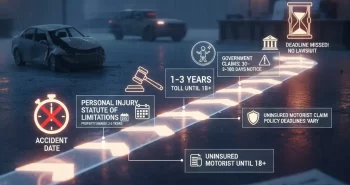
In most states, personal injury statutes give us a specific time window to file a lawsuit, often ranging from one to three years. We encourage everyone to confirm these deadlines with legal counsel or by reviewing local statutes. Missing the filing window usually means forfeiting compensation. The specific limit for how long after a hit and run can you sue can vary, so asking an experienced lawyer about the clock is important.
We aim to start the claims process as soon as possible. Delays in pursuing our case may give insurers or the at-fault driver’s defense team ammunition to argue that our injuries are not severe or not connected to the accident.
What to do after a hit and run to protect your legal rights
Protecting our rights begins at the accident scene. We should call law enforcement promptly and precisely document what happened. If possible, obtain photos or video clips that may capture the driver’s license plate. We also need to gather names of any witnesses willing to provide a statement. Seeking medical care is essential, even if injuries are not immediately apparent.
Connecting with a legal advocate helps us determine what to do in a hit and run situation. Our lawyer can guide us through insurance questions, potential claims, and next steps. For example, we may ask, “can you file a claim after a hit and run if the driver is never found?” In many instances, the answer is yes, as long as our policy includes the right coverage.
Getting a free consultation with an experienced hit and run lawyer
The trauma of a hit and run can be daunting, but we are not alone. By seeking professional legal counsel, we can learn our options and figure out if a lawsuit is worth pursuing. Reputable attorneys often provide complimentary case assessments, so we can discuss our accident details and gauge our potential success with no risk.
At Legal Claim Assistant, we strive to connect individuals with the legal support they need and help them determine the best path forward. If you or a loved one are dealing with the aftermath of a hit and run incident, we encourage you to reach out for a free consultation. By taking action now, we can protect our legal rights and potentially secure the compensation we deserve.
No Win, No Fee. Let the Best Motor Vehicle Accident Attorneys Fight for your Compensation!