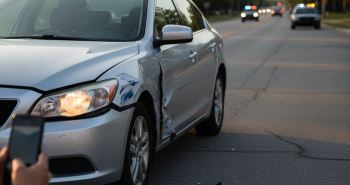
Is a Hit and Run a Felony and How Does It Affect Your Case?
 Fact Checked By Our Attorneys

If you have recently been involved in a motor vehicle accident where the at-fault driver fled the scene, you may wonder, “Is a hit and run a felony?” This question is at the heart of how your case may proceed, how your injuries will be addressed, and ultimately, how you can seek the compensation you deserve.
We understand this period can be upsetting and confusing. Unanswered questions about legal definitions, potential criminal penalties, and your own rights can make it difficult to know your next step. In the following sections, we will explain whether a hit and run is classified as a felony under state law, how it differs from misdemeanors, and how these classifications can impact your personal injury claim.

No Win, No Fee. Let the Best Motor Vehicle Accident Attorneys Fight for your Compensation!
Table of Contents:

Is a hit and run a felony under state law
Most states take hit and run offenses seriously. While the specifics vary by jurisdiction, many states classify leaving the scene of an accident as a felony if there has been bodily injury or death. However, smaller collisions that only involve property damage may lead to misdemeanor charges. The legal system seeks to protect victims by treating severe injuries or fatalities as higher-level offenses, thereby imposing stricter penalties on the driver who fled.
In some areas, just failing to stop at the scene of any crash can result in criminal charges. The driver is expected to provide identification, render reasonable assistance to injured parties, and notify law enforcement. When these obligations are not met, the authorities have strong grounds to define the violation as a hit and run. Ultimately, whether it is classified as a misdemeanor or felony depends on local statutes and the severity of the harm.
Hit and run is it a felony or a misdemeanor
This question arises frequently when individuals want to compare the potential legal consequences of different types of hit and run offenses. In general, a hit and run may start as a misdemeanor, especially if only property damage occurred. But if the accident causes physical injuries requiring medical attention, the charge is more likely to escalate.
For instance, a bumper-to-bumper collision that leaves no one harmed typically remains in the misdemeanor category. On the other hand, a seriously injured victim can transform a case into a felony, requiring the driver to face possible prison time, heavy fines, and a permanent mark on their criminal record. Our aim is to clarify these differences so that you can better understand your potential legal options if you or a loved one has been hurt in a hit and run accident.
What is a felony hit and run explained with real case examples
A felony hit and run typically involves leaving the scene knowing, or having reason to know, that someone was injured. For example, imagine a driver who collides with a car in an intersection, sees that the other driver cannot get out of the vehicle, but speeds off anyway. That act of knowingly abandoning someone who is clearly in need of medical help can lead to felony charges.
Real-world instances often highlight the unthinkable consequences of fleeing a crash site. Some drivers, possibly under the influence or lacking proper insurance, make a poor, impulsive decision to leave. The result can be steep penalties or, in severe cases, incarceration. While each state’s requirements are slightly different, the unifying factor is the presence of injury or fatal harm at the scene and the driver’s failure to fulfill their legal duty to stay and assist.
When is hit and run a felony based on injury or death
When a pedestrian, passenger, or driver sustains serious bodily harm, many state laws automatically empower prosecutors to charge the fleeing driver with a felony. The key element is usually the level of injury the victim endures. Severe fractures, long-term disabilities, and life-threatening conditions often fall under this umbrella.
In fatal accidents, felony charges are even more likely. Leaving the scene of a fatal accident signals a disregard for human life and can prompt the court to pursue the highest charge possible. Penalties may include years of imprisonment, substantial fines, and long-lasting impacts on the at-fault party’s driving record and criminal history. From our perspective, we have seen how such charges not only reflect the gravity of the offense but also affect the victim’s right to seek adequate compensation.
When is hit and run a felony for pedestrians and cyclists
Pedestrians and cyclists are especially vulnerable to catastrophic injuries if a driver flees an accident. Many states treat hit and run pedestrian accident cases and hit and run bicycle accident cases separately because these incidents often involve more serious harm to the victim. A driver who leaves a cyclist severely injured on the shoulder of the road can face harsh felony charges because the risk to life and limb is so high.
Even if the driver claims they did not see the injured party, the courts may not be lenient. Failing to remain on site, exchange information, and help arrange for immediate medical care underscores the criminal nature of the act. Felony classification is particularly prevalent here because pedestrians and cyclists generally have minimal protection against high-impact collisions.
No Win, No Fee. Let the Best Motor Vehicle Accident Attorneys Fight for your Compensation!
How felony hit and run charges impact your injury claim
A felony hit and run carries legal consequences that may boost your chances of recovering appropriate damages in a civil personal injury claim. When a driver is charged with a felony, their reckless behavior and failure to stop can become strong evidence of negligence. This can translate into a more robust foundation for seeking compensation for medical bills, lost earnings, rehabilitation, and pain and suffering.
We have encountered numerous cases where felony charges helped solidify the victim’s position in settlement negotiations or court proceedings because the at-fault driver’s liability becomes more evident. However, a criminal case does not automatically guarantee a successful civil lawsuit. You still need to prove the extent of your injuries and connect them directly to the crash. Working with a hit and run attorney or hit and run law firm is a critical step toward building a thorough case.
What evidence helps prove a felony hit and run case
Convincing evidence is essential for showing that a defendant knew or should have known they caused harm, yet chose to flee. Key pieces of evidence often include:
- Police reports and official crash scene documentation that detail the location, vehicle damage, and witness statements
- Surveillance or dashcam footage capturing the collision or showing the driver’s attempt to leave
- Eyewitness accounts describing the immediate aftermath, including the at-fault driver’s behavior
- Medical records that detail the level of injury sustained and the potential need for long-term care
Gathering this evidence can be challenging, especially if you are focusing on recovering from serious injuries. Our recommendation is to contact law enforcement, keep records of your own medical visits, and consult legal professionals. Timely action can prevent essential details from getting lost or overlooked.
What to do if you are injured in a felony hit and run accident
After a felony hit and run accident, your priority should be your health and safety. Seek immediate medical attention for any injuries. Then, if you are able, try to document the scene and gather any pertinent information from bystanders or security cameras. We also recommend reviewing what to do in a hit and run for additional steps.
As quickly as you can, notify your insurance company or contact a hit and run accident lawyer who can manage communication on your behalf. Engaging an attorney early helps ensure you meet critical deadlines, including those related to insurance claims and potential legal action. If the other driver cannot be found, you may still have options to file an uninsured motorist claim, depending on your coverage.
How insurance and uninsured motorist coverage apply in felony hit and run cases
Many drivers rely on standard liability policies to cover damages they cause. However, in a hit and run scenario, you might not immediately know the at-fault party’s identity or insurance provider. This is where uninsured or underinsured motorist coverage, known as UM/UIM, can offer a safety net. If your policy includes UM/UIM, you can file a claim for your medical expenses and other losses even if the other driver is never found.
Keep in mind that UM/UIM coverage differs from state to state, and your policy may have specific limits. If your injuries exceed your coverage, you may need to pursue other avenues, such as civil litigation once authorities identify and arrest the at-fault driver. The fact that the driver faces felony charges can influence your negotiations with insurance adjusters but does not automatically guarantee a settlement. We often advise reviewing your insurance policy details in advance to ensure you know exactly where you stand.
How Legal Claim Assistant helps victims of felony hit and run accidents
We understand that navigating a personal injury claim after a felony hit and run can be daunting. Our team at Legal Claim Assistant helps by analyzing the details of your accident, evaluating your eligibility for compensation, and connecting you with the right legal support. We want to relieve you of the burden of endless paperwork and complicated filings so you can focus on recovering.
From ensuring that medical records are in order to helping you understand can you file a claim after a hit and run, our process aims to simplify every step. We work closely with experienced legal professionals who have handled felony hit and run cases. If you choose to proceed, these attorneys can advocate on your behalf and pursue the settlement or verdict you deserve.
Should you have lingering questions, remember that time is of the essence. State laws impose specific time limits regarding how long after a hit and run can you sue. We are here to help you navigate your options, and we stand ready to walk you through every phase of your legal journey.
No Win, No Fee. Let the Best Motor Vehicle Accident Attorneys Fight for your Compensation!