


Key Takeaways:
You can report suspected nursing home abuse without proof. Agencies like Adult Protective Services, ombudsmen, and state health departments can investigate.
Clear signs such as injuries, bedsores, poor hygiene, behavior changes, or financial issues should be documented and reported quickly.
Speaking with a nursing home lawyer early can help preserve evidence, guide reporting, and may support legal action.
What To Do Immediately If You Suspect Elder Abuse in a Care Facility
If you suspect elder abuse in a care facility, taking quick action can help protect the nursing home resident from further harm. Abuse or neglect can get worse over time. This is especially true with injuries, dehydration, infections, or emotional trauma. Families should focus on resident safety, evidence preservation, and proper reporting procedures.
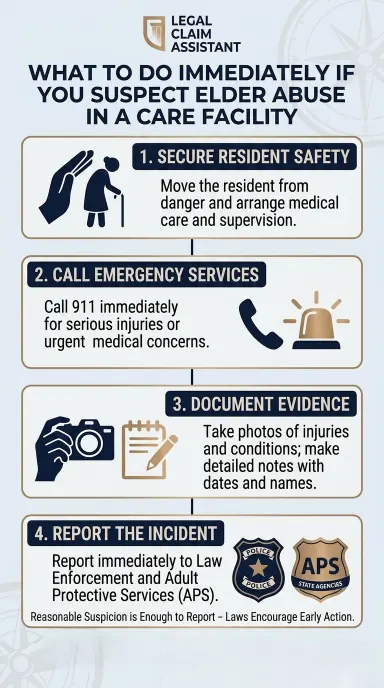
Ensure the resident is safe
Check whether the resident is in immediate danger. If possible, move them away from unsafe staff members or conditions while arranging proper medical care and supervision.Call 911 for emergencies
If there are serious injuries, signs of physical abuse, or urgent medical concerns, contact emergency services immediately. Immediate danger situations should always be treated as emergencies.Remove the resident from unsafe conditions if possible
In severe cases involving suspected abuse, family members may decide to transfer the resident to another care facility or hospital for safety and medical evaluation.Begin documenting signs of abuse or neglect
Take photographs of visible injuries, poor living conditions, restraint marks, or other warning signs. Keep notes about conversations with staff members, dates of incidents, and changes in the resident’s condition. Strong documentation can support future investigations and legal action.Report the incident to the appropriate authorities
Report immediately to law enforcement if there is danger or serious injury. Report to Adult Protective Services or state agencies for investigation of suspected abuse or neglect. In many states, health and human services agencies also investigate complaints involving older adults in nursing homes and assisted living facilities.
You do not need absolute proof before reporting abuse. Reasonable suspicion of elder abuse, neglect, or mistreatment is usually enough to begin an investigation. Laws protecting older Americans encourage early reporting to help prevent further harm in negligent facilities.
Families often contact a nursing home lawyer after reporting abuse to better understand the legal process and protect the rights of their loved one.
Signs of Physical Abuse, Neglect, and Other Nursing Home Mistreatment
Recognizing the warning signs of elder abuse can help families protect older adults living in a care facility. Abuse or neglect may involve physical harm, emotional mistreatment, financial exploitation, or failure to provide proper care. In many cases, nursing home residents are unable or afraid to report what is happening, making it important for family members to watch for changes in health or behavior.
Physical abuse warning signs may include bruises, cuts, fractures, restraint marks, or repeated unexplained injuries. Frequent falls, sudden hospital visits, or unexplained injuries may also point to abuse.
Neglect warning signs are often linked to poor daily care. Bedsores, dehydration, malnutrition, poor hygiene, and untreated infections are common indicators of abuse or neglect in negligent facilities. A nursing home resident who appears unwashed, weak, or medically ignored may not be receiving proper supervision or treatment.
Psychological abuse can be harder to identify but may still cause serious harm. Fearfulness around staff members, sudden withdrawal, anxiety, depression, or unusual mood changes can all signal emotional mistreatment. Some residents may become quiet, isolated, or visibly distressed when certain caregivers enter the room.
Financial abuse warning signs may include missing belongings, unusual banking activity, unexplained account changes, or sudden financial transactions involving older adults who may be vulnerable to manipulation.
Detailed documentation of these warning signs can strengthen future investigations by Adult Protective Services, health and human services agencies, or law enforcement. These warning signs often connect directly to signs of nursing home abuse that families should watch for early.
It may also help nursing home lawyers build stronger legal claims if families later pursue legal action related to reporting abuse or nursing home neglect.
How To Document Nursing Home Abuse Before Reporting Abuse
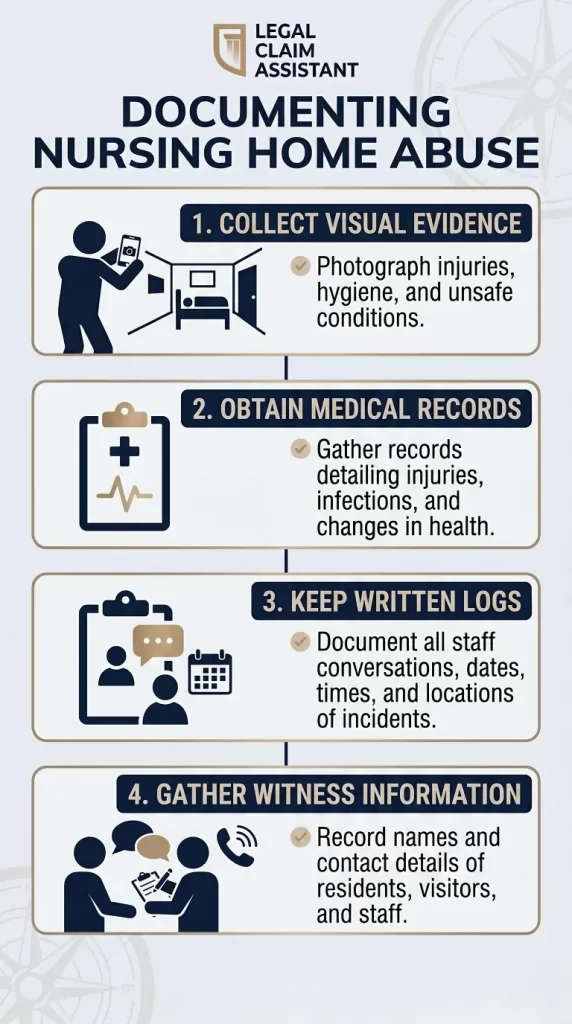
Before formally reporting abuse, gather as much information and evidence as possible. Careful documentation can help authorities determine what happened and may strengthen future legal claims involving abuse or neglect in a nursing home or assisted living facility.
Helpful documentation may include:
Photographs or videos of injuries, poor hygiene, unsafe conditions, restraint marks, or other signs of neglect
Medical records showing injuries, infections, dehydration, malnutrition, or changes in health condition
Written logs of conversations with nursing home staff, administrators, or medical providers
Dates, times, and locations connected to incidents or suspected abuse
Names and contact information for witnesses, including residents, visitors, or staff members
Try to keep records organized and updated. For example, families may use a notebook, secure phone app, or digital file to track concerns and incidents over time. This information can help investigators identify patterns of neglect, poor treatment, or possible facility cover-ups.
Detailed evidence is especially important when residents suffer repeated injuries, emotional harm, or declining quality of life inside negligent facilities. Proper documentation may also help police, Adult Protective Services, or nursing home lawyers determine whether legal action should be taken against responsible parties.
How To Report Abuse at a Nursing Home to Adult Protective Services and State Agencies
You can report nursing home abuse to Adult Protective Services, state health departments, ombudsman programs, or local law enforcement. Reporting abuse quickly can help protect victims, prevent further harm, and may lead to accountability for negligent facilities.
Reports can usually be filed through:
Adult Protective Services (APS)
Local APS offices investigate reports involving elder abuse, neglect, or exploitation affecting older adults. Many states allow reports by phone, online complaint forms, or hotline systems.State Department of Health
The state’s department of health may investigate complaints involving nursing home staff, unsafe conditions, poor care quality, or violations affecting resident safety and quality of life.Long-Term Care Ombudsman offices
Ombudsman programs advocate for residents living in long-term care facilities. They help families understand resident rights, investigate complaints, and guide them through the reporting process.Online complaint portals
Many states provide website complaint systems where individuals can file reports electronically. Some systems also allow people to anonymously report concerns if they fear retaliation.Local law enforcement
Police should be contacted immediately if there is immediate danger, physical abuse, sexual abuse, financial exploitation, or suspicious death connected to a care facility.
Most states also provide reporting assistance through the Eldercare Locator, a federal resource created under the Older Americans Act. This service helps families connect with local APS agencies, ombudsman offices, and community support resources.
When filing a report, agencies usually ask for basic information about the resident and the incident. This often includes the resident’s name and age, the facility name and address, descriptions of what happened, the dates of incidents, and any witness names or contact information available.
Providing detailed information helps investigators review evidence, identify responsible parties, and determine whether additional action is necessary. In many states, reports can be submitted by phone, through a website complaint portal, or by requesting assistance directly from local Adult Protective Services offices.
How To Anonymously Report Nursing Home Abuse
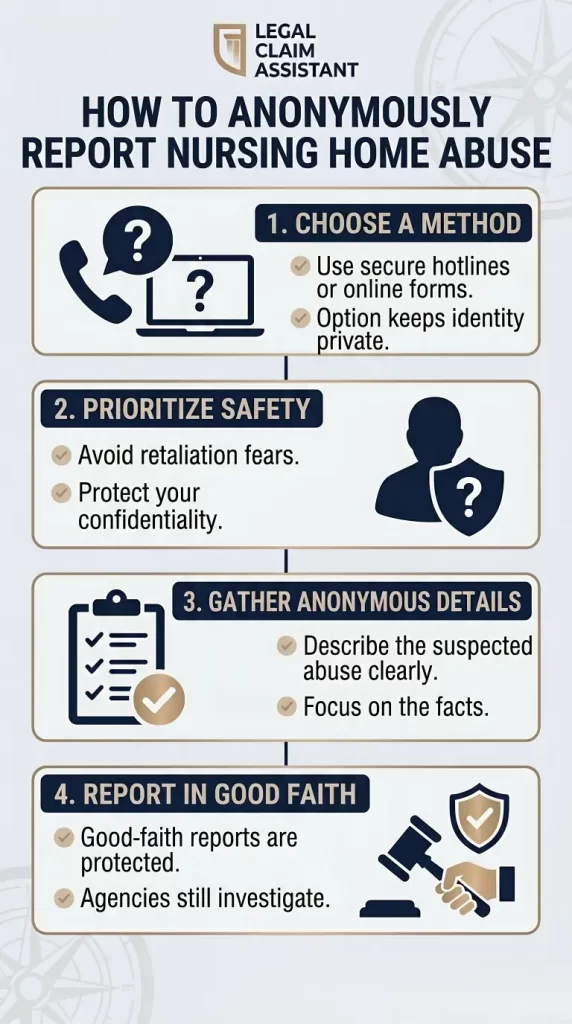
Many states allow anonymous reports of nursing home abuse through hotlines or online systems. This option helps protect privacy for people who fear retaliation from nursing home staff or worry about how a care facility may respond after a report is made.
Anonymous reporting can be useful when family members or employees suspect abuse or neglect but want to keep their identity private. It allows concerns about a nursing home resident to be shared without directly identifying the person making the report. In many cases, this helps start an investigation while keeping information private.
However, providing contact details can sometimes improve the investigation. Agencies may need follow-up questions to better understand what happened, gather more evidence, or determine the severity of the situation. Even so, anonymous reporting is still accepted in many situations involving suspected abuse or neglect.
Most states also protect people who report in good faith. This means that even if abuse is not confirmed, individuals are usually protected from legal consequences when they report concerns honestly. Reporting systems are designed to encourage people to come forward when they believe older adults in a care facility may be suffering harm.
The Role of the Long-Term Care Ombudsman in Elder Abuse Complaints
The Long-Term Care Ombudsman plays an important role in protecting nursing home residents and advocating for their rights in long-term care facilities. Ombudsmen act as neutral advocates who focus on improving safety, dignity, and quality of life for older adults living in nursing homes or assisted living facilities.
Ombudsmen help by investigating complaints related to suspected abuse, neglect, or poor care conditions. They also explain resident rights under federal protections and help families understand how to take the next steps when concerns arise. In many cases, they guide people through reporting abuse and connecting with local protective services or state agencies.
Unlike law enforcement, ombudsmen do not make arrests. Their main focus is resolving problems, mediating disputes between families and facilities, and ensuring that nursing home staff are held accountable for care standards. They may work with state agencies and health departments when needed.
Families often contact an ombudsman as one of the first steps when they suspect a nursing home resident is being harmed. In some situations, they may also work alongside legal professionals or organizations like Sokolove Law to help families understand options for seeking justice and protecting loved ones in care facilities.
When To Contact a Nursing Home Lawyer After Reporting Abuse
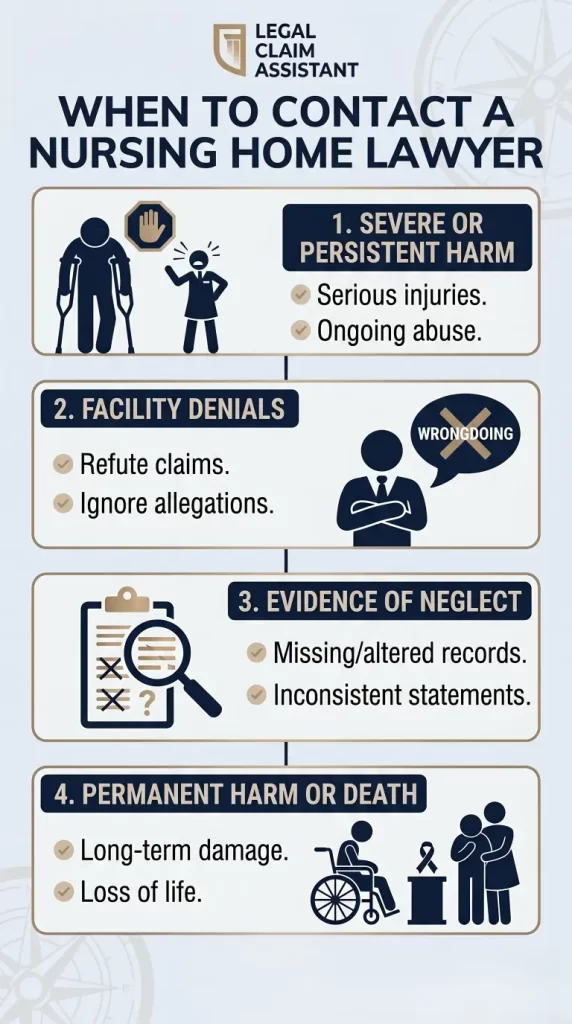
Families often contact a nursing home lawyer after reporting abuse when the situation involves serious harm or ongoing concerns in a care facility. Legal support becomes important when injuries are severe, when abuse or neglect continues despite prior reporting, or when nursing home staff or administrators deny wrongdoing.
A lawyer is also often involved when there is clear evidence of neglect or possible cover-ups inside the nursing home. This can include missing or altered medical records, unexplained injuries, or inconsistent statements from staff members. In more serious cases, families may reach out when a nursing home resident suffers permanent harm or death linked to suspected abuse or neglect.
An experienced nursing home lawyer can help preserve key evidence, request and review medical records, and communicate with investigators during the legal process. They may also work with protective services or other agencies to help support proper handling of the case and communication with investigators.
Legal representation can also help protect families from pressure or retaliation from the facility. In many cases, nursing home abuse claims require careful handling of documentation, witness statements, and medical evidence to build a strong case.
How Long Do You Have To Report Abuse in a Nursing Home
The time frame to report nursing home abuse depends on state reporting laws, agency procedures, and whether the case involves criminal conduct or civil claims. There is no single deadline that applies in every situation, and rules can vary depending on the type of abuse or neglect involved.
Under the Elder Justice Act, federally funded nursing facilities are required to report serious abuse allegations within 2 hours in emergency situations. This rule is designed to ensure quick response when a resident is in immediate danger or has suffered serious harm.
For civil cases, statutes of limitations apply. These deadlines determine how long families have to file legal claims related to abuse or neglect. Time limits vary by state and type of claim, and some cases follow different deadlines based on when harm was discovered.
Acting quickly is important. Early reporting helps investigators respond faster, preserves critical evidence such as medical records, and improves the chances of holding negligent facilities accountable.
Frequently Asked Questions About Reporting Nursing Home Abuse
Families often have urgent questions when they suspect abuse or neglect in a nursing home or care facility. These answers explain how reporting works, who investigates cases, and what evidence may be needed. The goal is to help families take the right steps quickly while protecting the safety and rights of nursing home residents.
Can I report nursing home abuse without proof?
Yes. You do not need full proof to make a report. You can report suspected abuse based on reasonable concern, warning signs, or changes in a resident’s condition.
Who investigates nursing home abuse reports?
Reports may be investigated by Adult Protective Services, ombudsman offices, state health departments, or law enforcement depending on the situation and severity of the abuse or neglect.
Can nursing home abuse be reported anonymously?
Yes. Many states allow people to anonymously report concerns through hotlines, online systems, or protective services programs. This helps protect privacy when reporting suspected abuse.
What evidence helps prove nursing home neglect?
Helpful evidence includes medical records, photographs of injuries or unsafe conditions, witness statements, staffing logs, and incident reports from the care facility.
Should I contact a nursing home lawyer before reporting abuse?
In serious cases, speaking with a nursing home lawyer early can help protect evidence, guide the reporting process, and ensure the resident’s rights are protected throughout the legal process.
Speak With a Nursing Home Lawyer About Abuse or Neglect
If you suspect abuse or neglect in a nursing home or assisted living facility, speaking with a nursing home lawyer can help you understand your options and take the right next steps. Legal support can help when a resident is at risk or showing signs of serious harm in a care facility.
A nursing home lawyer can help report abuse properly, gather medical records and other evidence, and communicate with state investigators or protective services. They also help families understand whether the situation may support a legal claim against negligent facilities.
In many cases, lawyers can help seek compensation for medical costs, injuries, and emotional harm that may result from abuse or neglect. Many firms offer a free consultation or lead evaluation so families can understand their legal options without upfront cost.
If you are unsure what to do next, getting legal guidance early can help protect your loved one and ensure the situation is handled correctly.
You Deserve Justice. Let Us Help.
Speak with a trusted Nursing Home Abuse Attorney who will stand by your side, protect your rights, and fight for the compensation you deserve.
No Win, No Fee. Let the Best Nursing Home Abuse Attorneys Fight for your Compensation!

Under 1 Minute

100% Free

Expert-Reviewed

Private & Secure
© 2025 Legal Claim Assistant. All Rights Reserved.
Terms of Service | Privacy Policy | Contact Us | Marketing Partners
Related Article
Share this article:


