Pedestrian Accident Wrongful Death Claims Explained
 Fact Checked By Our Attorneys
Pedestrian accident wrongful death claims can be overwhelming, but you don’t have to face them alone. If you’ve lost a loved one due to a negligent driver, act now to protect your family’s rights and seek the compensation you deserve. Our team is here to provide a free case review and guide you through every step of the legal process with care and expertise. Don’t wait click the button below to get your free, no-obligation case evaluation and start your path to justice today.

No Win, No Fee. Let the Best Motor Vehicle Accident Attorneys Fight for your Compensation!
Table of Contents:

Understanding Pedestrian Accident Wrongful Death
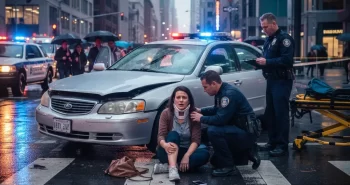
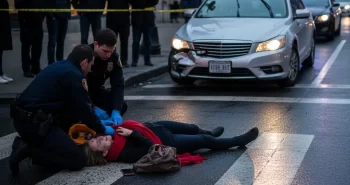
A pedestrian accident wrongful death occurs when negligence or intentional misconduct leads to a collision that ends a person’s life. While any fatal accident involving a motor vehicle is a tragedy, these cases involve a specific set of facts and legal considerations. Under state laws, eligible survivors—such as spouses, children, or other close relatives—can file a wrongful death claim to recover compensation for medical costs, funeral expenses, lost wages, and loss of financial support. In many states, only certain family members or the deceased person’s estate can file a wrongful death lawsuit, often through the personal representative of the victim’s estate.
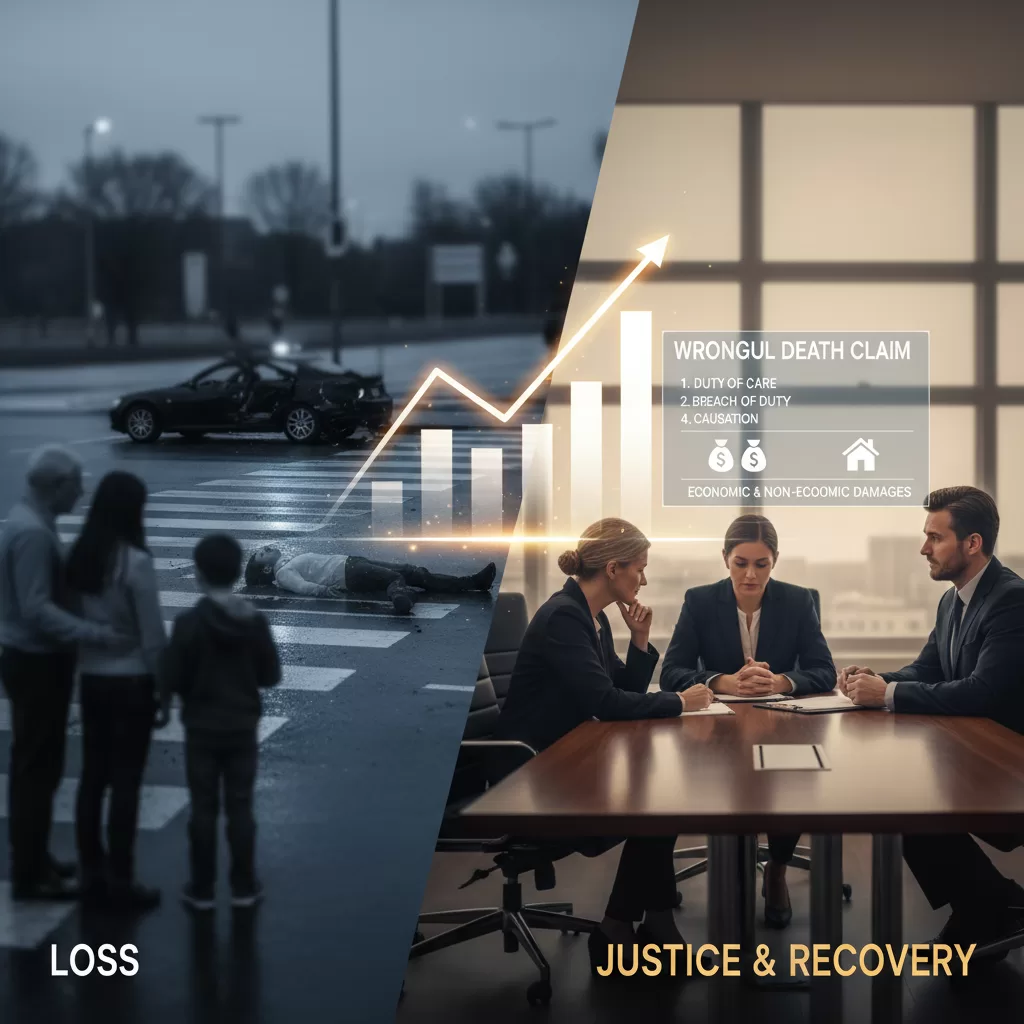
Our role is to help families navigate this difficult territory. We work quickly to identify the at-fault party and gather evidence that may include vehicle crash reports, witness testimonies, surveillance video, or traffic camera footage. Proving wrongful death often requires establishing that the driver had a duty of reasonable care, breached that duty through the driver’s failure to act responsibly, and directly caused the pedestrian’s death. To succeed in a wrongful death lawsuit, the plaintiff must prove four key elements: Duty of Care, Breach of Duty, Causation, and Damages. Causation refers to the direct link between the breach of duty and the fatal injuries. With so many factors at play, a thorough review of the accident scene and events is crucial to hold the responsible party accountable in civil court.
When a Wrongful Death Pedestrian Accident Applies
Wrongful death claims particular to pedestrian accidents apply when the surviving family can demonstrate that the driver’s recklessness or negligence resulted in a fatal impact. This can happen in a variety of scenarios, such as a vehicle pedestrian accident at a crosswalk, a high-speed collision on a highway shoulder, or a residential street where the driver failed to stop at a sign. Failure to yield the right of way by drivers is a common cause of severe or fatal pedestrian accidents.
Sometimes, families are unsure whether their loss qualifies as wrongful death. We generally look at factors like driver impairment, violation of traffic rules, and any evidence that the driver failed to comply with safety regulations. Even if a victim was partially at fault—perhaps crossing outside a designated walkway—most states generally allow some form of compensation if the driver’s negligence was a significant factor. Comparative negligence laws can complicate wrongful death claims, as a pedestrian’s actions may be scrutinized to determine their level of fault in the accident. If you are uncertain about how these rules apply in your situation, speaking with a pedestrian accident attorney, an experienced attorney, may be the best first step in clarifying your options.
Common Causes of Fatal Pedestrian Accidents
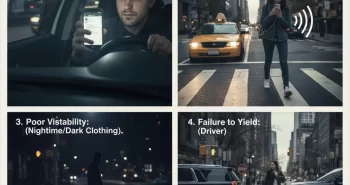
Fatal pedestrian accidents can occur under many different circumstances, but certain behaviors and conditions tend to be involved repeatedly. While each incident is unique, we often encounter:
- Distracted driving, such as texting or adjusting in-car electronics
- Speeding that reduces a driver’s braking time
- Intoxicated or drug-impaired driving, which can lead to criminal charges such as vehicular manslaughter or vehicular homicide
- Fatigued drivers prone to negligence, increasing the risk of pedestrian accidents
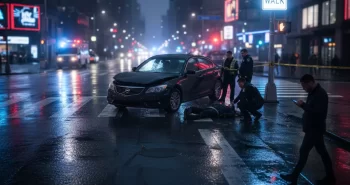
- Poor visibility, like nighttime conditions or failure to use headlights
- Ignoring traffic signals, stop signs, or crosswalk rules
Infrastructure deficiencies like missing sidewalks and faded crosswalk markings also contribute significantly to fatal pedestrian accidents. These and other dangerous actions create a recipe for tragedy. Our experience shows that a moment of inattention or a decision to speed can cost someone their life. Identifying the root cause of a collision is a key factor in proving a wrongful death claim, which is why detailed investigations are central to any successful case. If you would like to learn more about what commonly leads to these crashes, we invite you to read our separate article on what are the main causes of pedestrian accidents.
Determining Liability in Pedestrian Wrongful Death Cases
Liability in a pedestrian accident wrongful death case usually turns on which party, or parties, had a duty to exercise reasonable care and whether that duty was breached. Although drivers must generally yield to pedestrians, that duty is not absolute. In certain jurisdictions, pedestrians are also obliged to follow crosswalk signals or avoid darting into roads. If both the driver and the pedestrian shared fault, states may apply comparative negligence rules that impact the final compensation.
Claims can be filed against various defendants, including the driver, vehicle owner, or municipal entities responsible for road design. Establishing liability begins with gathering details about the crash scene. We often start by reviewing police reports, eye-witness statements, and any available surveillance video footage. Surveillance footage can be crucial in pedestrian wrongful death cases, as it may provide evidence of the accident and the actions of both the driver and the pedestrian. Depending on the specifics, entities like local governments or private property owners could share responsibility too—especially if poor road design or broken traffic signals contributed to the crash. By outlining all responsible parties, we help families build a solid foundation for their claims. You can find more details on how liability shapes legal actions in our resource about pedestrian accident liability.
Key Evidence in Pedestrian Accident Wrongful Death Claims
Strong evidence helps you prove the essential elements of wrongful death in a pedestrian accident. This evidence may consist of:
Police and crash investigation reports confirming the cause and circumstances.\
Medical records detailing the victim’s serious injuries and, ultimately, the cause of death.\
Photographic or video documentation illustrating the collision scene, vehicle damage, or intersection conditions.\
Witness testimonies that describe how the accident occurred.\
Driver’s cellphone records or toxicology results, when relevant, to confirm distracted or impaired driving.
Securing all of this in a timely manner is vital, because many forms of evidence can degrade over time. Our team has found that obtaining crash scene data, for instance, can be challenging once it is cleaned up or if local businesses overwrote surveillance footage. Acting promptly can preserve key details that support your claim. For more on how injuries connect to these claims, read about pedestrian accident injuries to understand the impact on your loved one’s wrongful death case.
No Win, No Fee. Let the Best Motor Vehicle Accident Attorneys Fight for your Compensation!
How Investigations Support Your Case
Investigations are the backbone of any successful pedestrian accident wrongful death claim. When you bring your case to Legal Claim Assistant, we begin by examining every detail surrounding the accident. We may coordinate with specialists such as accident reconstruction experts to piece together the chain of events. Skid marks, vehicle damage, and even the time of day can add up to a compelling narrative about who is responsible.
A thorough investigation may involve retrieving phone records from carriers, collecting data from the vehicle’s electronic systems, and interviewing local residents or store owners who saw the crash. By confirming exactly how and why the collision occurred, we gather the evidence that makes your claim stronger. These investigations are especially important if the driver disputes their level of fault or if the insurance carrier denies liability. Insurance companies often attempt to minimize compensation in wrongful death lawsuits, making it essential to have legal representation. Laying out the facts in a concise, logical manner can dramatically improve your chances of securing fair compensation.
Calculating Pedestrian Wrongful Death Settlements
A wrongful death settlement aims to compensate the victim’s family for both tangible and intangible losses. The law traditionally allows recovery of medical bills, burial and funeral expenses, lost wages, and other medical costs. Yet monetary damages often extend further. The surviving family may also pursue compensation for emotional pain, loss of companionship, and loss of guidance—damages that carry a profound personal importance.
Beneficiaries who may receive compensation include surviving spouses, children, and dependent relatives. Families may recover economic damages like funeral expenses and lost future earnings, as well as non-economic damages like companionship loss and emotional distress. A wrongful death claim can provide compensation for the full value of the life of the deceased, which includes lost future earnings and support. In wrongful death cases, the estate of the deceased can seek damages for pain and suffering experienced before death.
We recognize that each case is unique. Some claims reflect a lifetime of lost financial support, particularly if the deceased was a primary wage earner. Other cases center on the emotional trauma that children suffer when they lose the daily care of a parent. Calculating these damages takes time and requires an in-depth understanding of the victim’s life, occupation, and family circumstances. By partnering with qualified experts, our team can estimate a fair settlement range and present a claim that accurately reflects your financial and emotional reality.
Steps to Take After a Pedestrian Fatality
When a pedestrian accident results in the loss of a loved one, you may feel overwhelmed. We recommend wholeheartedly that you address both your immediate emotional needs and any legal steps required. Though every situation is unique, families often consider:
- Reporting the accident to law enforcement and requesting a copy of the police report.
- Retaining any evidence—like eyewitness contact information or photos of the scene—that might be lost in the aftermath.
- Notifying relevant insurance providers, especially the at-fault driver’s auto insurance policy carrier. The pedestrian’s family can typically file a third party car insurance claim with the at-fault driver’s insurance company after a pedestrian’s death.
- Consulting a pedestrian accident lawyer or similar professional for legal guidance. Hiring an attorney is crucial because wrongful death lawsuits involve specific legal procedures and deadlines.
- Documenting expenses and losses, including funeral costs and any medical bills.
By taking these steps, you set the stage for a more organized and thorough claim process. We deeply understand that families are in mourning and may find it difficult to manage documentation and communication. However, saving receipts and gathering information early on can significantly impact the strength and value of your eventual wrongful death claim.
Legal Challenges in Pedestrian Wrongful Death Cases
Wrongful death claims can be complicated, especially when multiple parties argue over responsibility. Insurance companies sometimes seek to reduce or outright deny payouts by pointing to shared negligence or inadequate proof of fault. If the driver who caused the collision was uninsured or underinsured, families may need to explore other avenues like their own available insurance or alternate defendants. You can read more about these issues in our guide on pedestrian accident uninsured driver.
Another challenge is meeting time limits. Every state has a statute of limitations that sets a limit on when a wrongful death lawsuit must be filed. There is a strict deadline for filing a wrongful death lawsuit that typically varies by state, often being two to three years from the date of death. The timeline for filing a wrongful death lawsuit is strictly enforced, and missing the deadline can result in losing the right to pursue a claim. We encourage you to check local guidelines or see our article on how long after pedestrian accident can you sue for more details. You might also face delays when insurance companies request extensive documentation or demand repeated investigations. Our team’s familiarity with these hurdles allows us to prepare strong, well-structured claims that maintain momentum and avoid unnecessary setbacks.
How Legal Claim Assistant Can Help You Secure Justice
We understand that losing a loved one in a pedestrian accident is a life-altering event—no settlement figure can truly make up for the loss. Yet, we believe that holding the responsible party accountable and relieving some financial strain can help your family move forward. At Legal Claim Assistant, our goal is to guide you with compassion, clarity, and a commitment to practical results.
Our process starts with evaluating your case for free consultation. We look at the crash facts, the evidence you have gathered, and any insurance coverage details you possess. Then, we connect you with lawyers who have the right background for your specific claim, whether you need support with a pedestrian accident lawsuit or general pedestrian accident compensation guidance. Attorneys can assist families in navigating the complexities of wrongful death lawsuits and can help determine who is eligible to file a wrongful death lawsuit based on state laws. We coordinate with legal professionals who know how to assess negligence, calculate wrongful death damages, and negotiate with insurers or take your case to court. A wrongful death attorney can help maximize compensation for the deceased’s family.
Ultimately, our mission is to stand alongside your family during one of the hardest experiences you will ever face. By drawing on our knowledge of pedestrian accident wrongful death claims, we streamline the journey toward a resolution that honors your loved one’s death and alleviates financial pressures. If you need reassurance about your legal options, we are here to help you evaluate your pedestrian accident claims and work toward a just outcome. Feel free to reach out today for personalized support—together, we can try to rebuild life after tragedy.
Important Statistics
The number of annual pedestrian deaths reached a 40-year high in 2023. In 2021, there were 7,624 pedestrian fatalities in the United States. Pedestrian and bicycle accidents make up about 19% of all traffic deaths, with approximately 76,000 pedestrians injured on the roads yearly. Most pedestrian deaths are the result of accidents caused by driver negligence, including distracted driving, driving under the influence, and fatigued driving. Pedestrians should only cross at intersections or in crosswalks to avoid accidents, as failure to do so can increase risk.
Pedestrian and Bicycle Accidents
Pedestrian and bicycle accidents are closely related, with bike accidents also contributing significantly to fatal traffic incidents. Safe infrastructure for both pedestrians and cyclists is a top priority for communities aiming to reduce these tragic losses.
No Win, No Fee. Let the Best Motor Vehicle Accident Attorneys Fight for your Compensation!