


What Is a Rear End Collision?
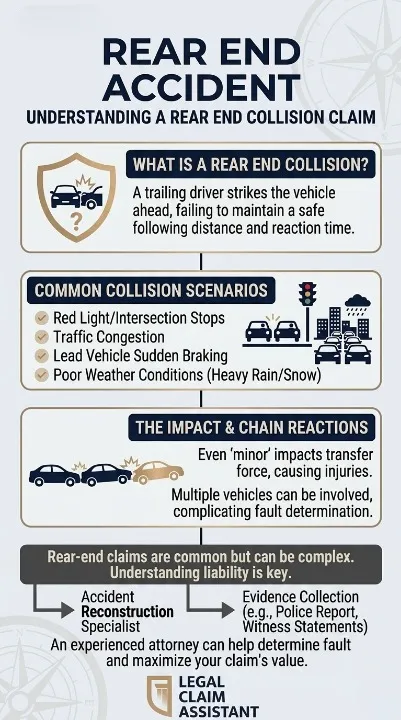
A rear end collision occurs when a trailing driver hits the vehicle ahead. In most cases, the following vehicle fails to maintain a safe following distance, leaving not enough space to react to sudden stops or unexpected obstacles. Rear end collisions are among the most common crash types reported by the National Safety Council.
These accidents often happen at a red light, in traffic congestion, or when the lead vehicle must brake abruptly. The initial impact may seem minor, but the force transferred through the steering wheel and seat can cause significant injuries.
Rear end crashes can also create a chain reaction involving multiple vehicles. For example, if one driver rear ends another vehicle at high speed, the force can push the lead vehicle into another car ahead. In these situations, determining fault becomes more complex and may require accident reconstruction specialists.
Understanding how these accidents occur helps clarify liability and strengthens insurance claims.
Other Motor Vehicle Accident Types
Why Rear End Collisions Happen
Rear end collisions happen because many drivers fail to maintain a safe distance or pay attention to traffic laws. Distracted driving, including texting or adjusting vehicle controls, significantly increases the likelihood of a crash. Even a few seconds of distraction can prevent a driver from reacting in time.
Common causes of rear end accidents include following too closely, speeding, brake checking, mechanical failures, and sudden movement by another vehicle. Heavy rain, snow, and poor road conditions also reduce reaction time and increase risk.
In many cases, the trailing driver’s negligence is clear. However, other issues can complicate liability. For example, if brake lights were not functioning properly or if a lead vehicle made a sudden stop without reason, insurers may attempt to shift blame.
Understanding the causes of rear end collisions is essential for determining liability and proving fault.
Determining Fault in a Rear End Crash
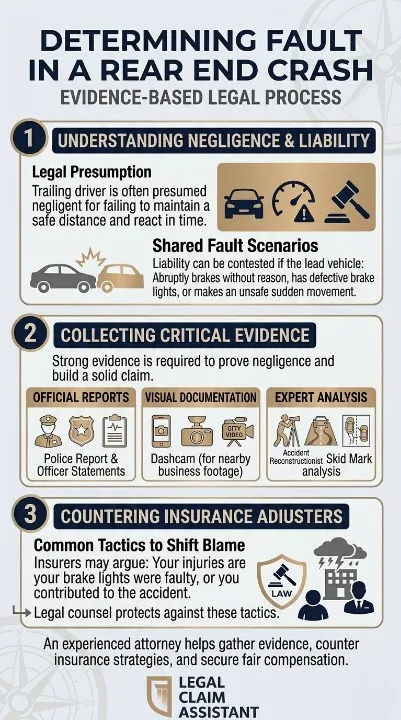
Determining fault in a rear end crash often begins with the presumption that the trailing driver is responsible. Traffic laws require drivers to maintain a safe following distance and allow enough space to react to sudden stops. When a driver rear ends another vehicle, negligence is typically assumed.
However, fault in a rear collision is not automatic in every case. If the lead vehicle brake abruptly without reason, had defective brake lights, or made an unsafe sudden movement, shared fault may apply. Insurance adjusters often look for ways to shift blame to reduce payouts.
Proving fault may require accident reports, witness statements, dashcam footage, and video footage from nearby businesses. Accident reconstruction specialists may analyze skid marks, reaction time, speed limit compliance, and vehicle damage patterns.
An experienced attorney can help gather evidence, protect your claim, and ensure you receive fair compensation instead of a reduced settlement.
Common Injuries in Rear End Collisions
Rear end collisions can cause a wide range of injuries, even at low speeds. Whiplash is among the most common types of injuries, occurring when the neck snaps forward and backward during impact. Victims may suffer neck pain, headaches, and chronic pain lasting months or years.
More severe cases involve traumatic brain injuries, concussions, and head injuries caused by hitting the steering wheel or headrest. Traumatic brain injuries may lead to long term effects including memory problems and cognitive impairment.
Spinal cord injuries and herniated discs are also common injuries in rear end crashes. In severe cases, victims may suffer partial or complete paralysis. Broken bones, facial injuries, internal injuries, and soft tissue injuries frequently occur.
Soft tissue damage can produce delayed symptoms. Victims may feel fine immediately after the accident scene but develop stiffness, pain, and limited mobility days later. Immediate medical attention and proper medical documentation are crucial.
The Importance of Immediate Medical Attention
After a rear end collision, seeking immediate medical attention is essential, even if you believe your injuries are minor. Delayed symptoms are common in rear end accidents, particularly with soft tissue injuries and traumatic brain injuries.
Medical evaluations help identify internal injuries, spinal cord damage, concussions, and other severe injuries that may not be immediately visible. Medical records also create a documented link between the accident and your suffered injuries.
Insurance companies often argue that delayed treatment indicates the injuries were not serious. Immediate medical attention strengthens your claim and protects your right to recover damages.
If you experience headaches, neck pain, back injuries, dizziness, or chronic pain after being hit from behind, seek medical treatment right away. Proper medical documentation supports your claim and ensures your health is prioritized.
The Claims Process After a Rear End Crash
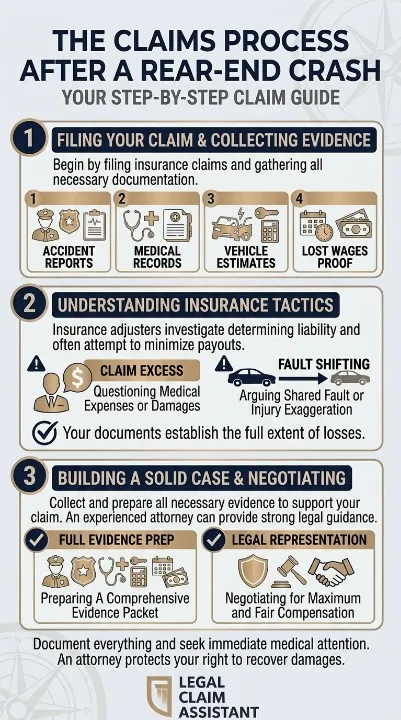
The claims process following a rear end collision begins with filing insurance claims against the at fault driver’s insurance company. This includes submitting accident reports, medical records, vehicle damage estimates, and proof of lost wages.
Insurance adjusters will investigate determining liability and attempt to minimize payouts. They may argue shared fault, claim injuries are exaggerated, or question medical expenses.
To recover damages successfully, you must document the full extent of your injuries and financial losses. This includes medical bills, missed work, vehicle repairs, and non economic damages such as pain and suffering.
An experienced car accident attorney can provide legal representation during this process. Personal injury attorneys understand how insurers attempt to shift blame and reduce compensation. Strong legal guidance increases the likelihood of receiving a fair settlement.
Proving Negligence and Liability
Proving fault in a rear end collision requires establishing driver’s negligence. This involves showing that the trailing driver failed to maintain a safe following distance, was distracted, or violated traffic laws.
Evidence is crucial. Police reports, accident reconstruction specialists, witness statements, dashcam footage, and video footage can demonstrate how the crash occurred. Skid marks, brake failure analysis, and speed limit calculations may also support liability claims.
In many cases, the following vehicle’s inability to react in time suggests negligence. For example, following too closely reduces reaction time, increasing crash likelihood.
Determining liability may become more complex if multiple vehicles are involved or if a chain reaction occurs. Legal representation ensures evidence is preserved and presented effectively.
Compensation Available in Rear End Collision Claims
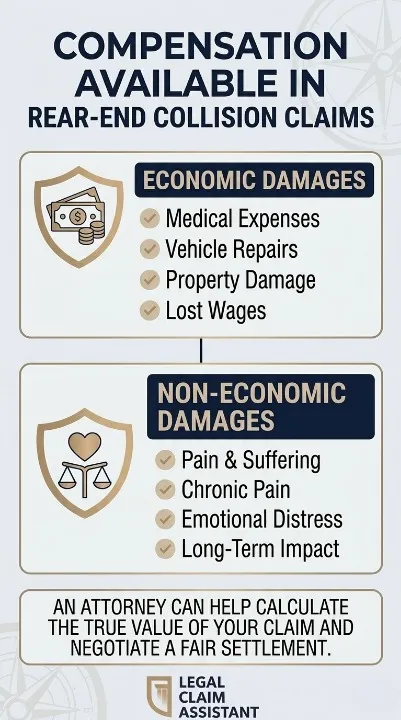
Victims of rear end collisions may pursue compensation for economic and non economic damages. Economic damages include medical expenses, vehicle repairs, property damage, and lost wages from missed work.
Medical bills for spinal cord injuries, traumatic brain injuries, herniated discs, and soft tissue damage can be substantial. Severe injuries may require ongoing medical treatment and future medical evaluations.
Non economic damages compensate for pain, suffering, chronic pain, emotional distress, and long term effects that impact quality of life. In severe cases involving complete paralysis or permanent disability, maximum compensation may be necessary.
To receive fair compensation, you must document the full extent of losses. An experienced attorney can help calculate the true value of your personal injury claim and negotiate a fair settlement.
When Insurance Companies Shift Blame
Insurance companies often attempt to shift blame to reduce paying claims. They may argue that the lead vehicle brake abruptly or that the injured person admit fault at the accident scene.
Insurance adjusters may also claim that brake lights were defective, or that the victim contributed to the accident occur. These tactics are common in many cases.
Proving fault requires strong evidence. Witness statements, police reports, dashcam footage, and expert testimony can counter attempts to shift blame.
Legal representation protects victims from unfair tactics. An experienced car accident attorney understands how insurers minimize payouts and can advocate for maximum compensation.
Long Term Effects of Rear End Injuries
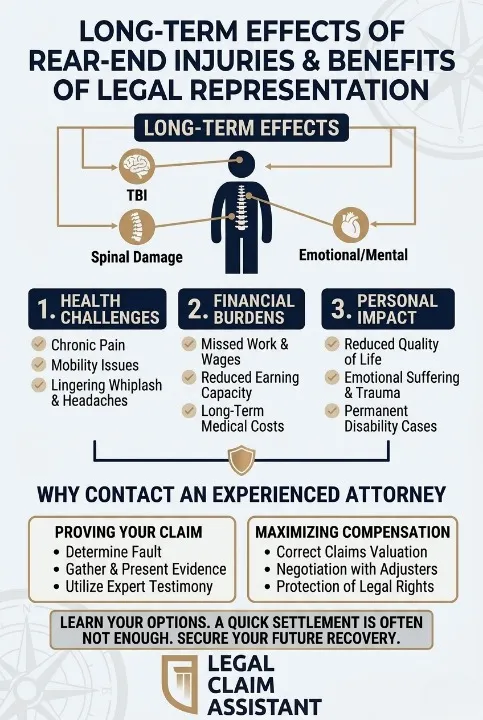
Rear end collisions can significantly impact a person’s life. Traumatic brain injuries, spinal cord damage, chronic pain, and soft tissue injuries may cause long term effects that extend far beyond the initial impact.
Victims may experience missed work, reduced earning capacity, and permanent disability. Severe cases involving complete paralysis or spinal cord injuries can change a person’s life entirely.
Even whiplash can cause lingering neck pain and headaches lasting months. Emotional suffering and psychological trauma are common in rear end crashes.
Understanding the severity of injuries helps victims pursue full compensation rather than accepting a quick settlement that fails to cover future losses.
Why You Should Contact an Experienced Attorney
If you were injured in a rear end crash, contacting an experienced car accident attorney can make a significant difference. Personal injury lawyers understand determining fault, proving negligence, and negotiating with insurance companies.
Legal options include filing a personal injury claim or pursuing court action if necessary. An attorney can help protect your rights, collect evidence, and support your claim with expert testimony.
Many personal injury attorneys offer a free consultation. During this meeting, you can review your case, discuss liability, and understand your legal options.
Having experienced legal representation improves your chances of receiving fair compensation for medical expenses, lost wages, property damage, and pain and suffering.
Final Thoughts on Rear End Collision Claims
Rear end collisions are among the most common types of car accident cases. Although many drivers assume these crashes are minor, the injuries sustained can be severe and life altering.
Rear end collisions happen due to distracted driving, following too closely, speeding, and sudden stops. Determining fault and proving negligence require strong evidence, medical documentation, and legal guidance.
If you suffered injuries in a rear end crash, prioritize medical attention, preserve evidence, and consult an experienced attorney. Insurance companies may attempt to minimize payouts, but with proper support and legal representation, you can pursue maximum compensation.
Protect your health, protect your rights, and take action to recover damages after a rear end collision. Get in touch with a rear end accident law firm to get the best possible compensation you deserve.
You Deserve Justice. Let Us Help.
Speak with a trusted Rear End Accident lawyer who will stand by your side, protect your rights, and fight for the compensation you deserve.
No Win, No Fee. Let the Best Rear End Accident lawyers Fight for your Compensation!

Under 1 Minute

100% Free

Expert-Reviewed

Private & Secure
© 2025 Legal Claim Assistant. All Rights Reserved.
Terms of Service | Privacy Policy | Contact Us | Marketing Partners
Related Article

I Got Hit by a Drunk Driver What Should I Do Next?
What to Do After a Drunk Driving Accident Step by Step
Share this article:


