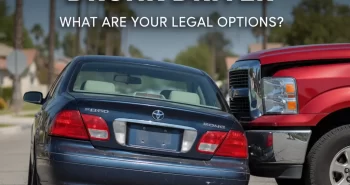
When Does a Rear Ended Lawsuit Make Sense?
 Fact Checked By Our Attorneys
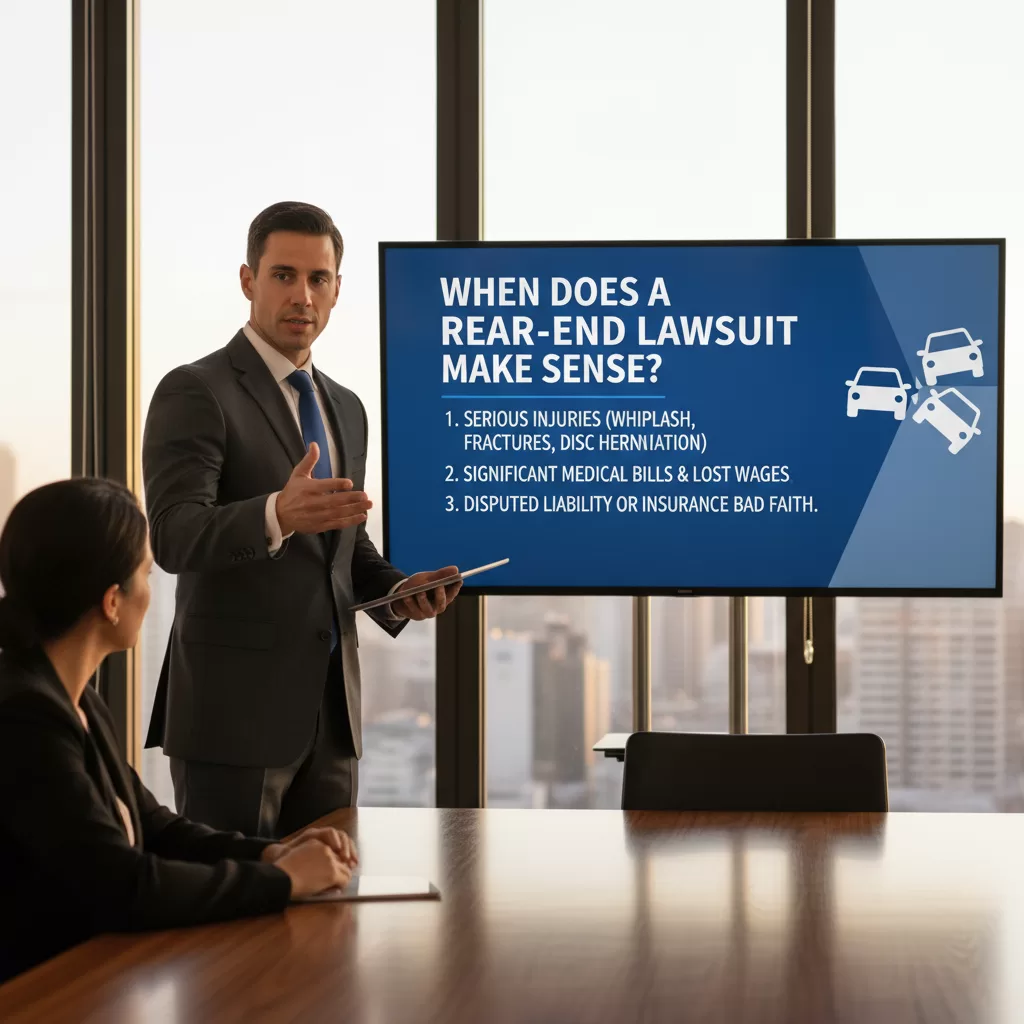
At Legal Claim Assistant, we understand how a split second during your daily commute can alter your entire life. If you have been forcibly jolted from behind in traffic, you know firsthand the shock, pain, and confusion that can follow. When mounting medical bills, vehicle repairs, and lost wages begin to pile up, a rear ended lawsuit may become your strongest ally in recovering meaningful compensation.
Rear-end collisions represent one of the most common types of car accidents on the road, yet each incident can yield a unique set of challenges. We often receive questions about when it makes sense to pursue a formal legal claim and how the process unfolds. In this article, we share essential insights to help you decide if a rear ended lawsuit is the right route for your situation.
Throughout our discussions, we will explore common injuries associated with rear-end accidents, different lawsuit types, and the legal strategies typically involved. We will also cover crucial steps to take immediately after the collision and examine real-world case studies that shed light on potential proceeds. By the end, you will have a clearer picture of what a rear ended lawsuit truly involves and how it can help you move forward.

No Win, No Fee. Let the Best Motor Vehicle Accident Attorneys Fight for your Compensation!
Table of Contents:

What does a rear ended lawsuit mean?
A rear ended lawsuit is a civil claim lodged by the injured party against the individual or entity responsible for the accident. The main objective is to recover financial damages for medical costs, lost income, property damage, and emotional distress. While many accidents settle through insurance negotiations, a lawsuit can be vital when the at-fault party’s insurer disputes liability, refuses a fair payout, or delays resolution.
In practical terms, filing this lawsuit initiates a formal process where evidence gets collected and presented to prove negligence and the extent of your damages. The court can then determine liability and issue a judgment or encourage a settlement. This route not only ensures your rights are protected, but also provides a structured framework for holding the negligent driver responsible for any lasting impact on your health and livelihood.
Common injuries and damages in rear-end accidents
Rear-end collisions often inflict injuries that range from mild muscle strains to severe spinal trauma. The force of impact can throw your body forward and backward in mere seconds, straining neck ligaments and causing whiplash. In some cases, the collision leads to persistent nerve damage, dislocated discs, or ongoing migraine issues that interfere with daily life and require prolonged medical care.
Unfortunately, many victims underestimate the long-term repercussions of these collisions. We encourage anyone who experiences stiffness, unrelenting headaches, or persistent discomfort to seek medical attention early. Ignoring initial pain can worsen your condition and complicate any potential legal claim later. Some of the most frequent rear ended injuries include:
- Whiplash and neck strains
- Lower or upper back pain
- Headaches or migraines
- Cuts, bruises, and broken bones from direct impact
Types of rear ended lawsuits
Depending on how the accident occurred, you may have multiple avenues for legal action. Personal injury claims are the most common. These involve demonstrating that the other driver’s negligence directly caused your injuries and associated financial losses. In other scenarios, you might pursue a property damage lawsuit if your vehicle was significantly affected and the at-fault party’s insurance coverage proves insufficient.
Various special circumstances can also influence your claim. For instance, if you were rear ended by a drunk driver, you may seek punitive damages in addition to the usual compensation. If you were rear ended by a company vehicle, the employer might share responsibility, particularly if the employee was on duty. And if you were rear ended while pregnant, additional medical evaluations and specialized care may come into play. Each of these unique factors can alter how your claim is structured and how settlement negotiations unfold.
Determining fault in rear-end collisions
In most rear-end collisions, the trailing driver is presumed to be at fault for following too closely or failing to maintain control. However, fault is not always straightforward. Sudden brake checks, hazardous road conditions, or malfunctioning brake lights can make it difficult to pinpoint liability. Still, insurance companies commonly assume that drivers have a duty to keep a safe stopping distance, regardless of traffic flow or unpredictability.
When fault is disputed, gathering evidence becomes crucial. We often recommend consulting a rear end accident lawyer or rear end accident attorney to investigate the collision scene, review police reports, and interview witnesses. These steps can help prove not only that the other driver acted negligently, but also that their negligence directly caused your injuries. Expert testimony from accident reconstruction specialists can also bolster your case if negotiations escalate to court.
How much compensation can you expect from a rear ended lawsuit settlement?
Compensation in a rear ended lawsuit varies widely. Factors such as the severity of your injuries, the cost of ongoing treatments, and the extent of property damage all play a role. Generally, settlements are designed to reimburse your financial losses and recognize your pain and suffering. The figure can escalate if you require long-term rehabilitation, if you missed significant work, or if the at-fault driver’s behavior was especially reckless.
Because every collision is unique, it is nearly impossible to predict an exact dollar amount from the outset. That said, speaking with an experienced attorney can help you form an estimate by examining cases with similar circumstances. You can also explore our guide on i got rear-ended how much money will i get for more insights on typical settlement ranges.
No Win, No Fee. Let the Best Motor Vehicle Accident Attorneys Fight for your Compensation!
Steps to take after being rear-ended
The minutes and hours following a rear-end collision can be stressful, yet prompt action is critical for your safety and any potential lawsuit. First, move to a safe location if possible and check for injuries. Contact law enforcement so an official report can be filed, and exchange information with the other driver. Even if your injuries seem minor at first, seeking immediate medical evaluation helps document your condition for any eventual legal claim.
From there, keep thorough records of medical treatments, doctor recommendations, and any expenses you incur, such as prescription fees. Share updated information with your insurer and follow proper procedures after the crash. We cover these steps in more depth in our detailed guide on what to do when you get rear ended. By following the right protocol from the beginning, you make it easier to build a strong case down the road.
Legal challenges and common defenses in rear-end lawsuits
Rear-end cases often seem straightforward, but several legal hurdles can arise. The defense may argue that your injuries were preexisting or aggravated by other factors unrelated to the collision. Alternatively, the at-fault driver might claim that you engaged in sudden braking or failed to signal a turn. Insurance companies sometimes employ these strategies to reduce or deny payouts, shifting blame back onto the victim.
We suggest gathering as much evidence as possible early on. Maintain photographs of your injuries, vehicle damage, and the accident scene. Keep a journal describing any pains, expenses, or emotional struggles you experience after the crash. Having consistent records makes it more difficult for the opposing side to question the validity of your injuries or your version of events.
Factors that affect rear ended by the police lawsuit amount
Being rear ended by the police can introduce additional complexities to your lawsuit. Government entities often have unique legal protections, meaning you may face strict notice deadlines and procedural requirements. If you fail to file a timely claim, you could lose your chance to seek compensation. Similarly, the presence of state or municipal immunity statutes may limit the types of damages you can recover.
However, governmental immunity does not give law enforcement a free pass to drive negligently. Officers still must operate their vehicles with reasonable care, and you have the right to challenge reckless or improper driving on their part. To navigate these specialized hurdles, many people consult personal injury attorneys or a rear end accident law firm with a proven record of handling claims against public agencies.
Case studies: Real rear-end lawsuit outcomes
Real-life cases offer valuable insight into the range of potential outcomes for a rear ended lawsuit. While individual results vary, learning from earlier scenarios can help you understand the factors that shape settlement figures and verdicts. Below are some examples that illustrate differences in injuries, liability, and compensation.
| Scenario | Injury severity | Approx. settlement amount |
|---|---|---|
| Rear ended while stopped at a red light | Moderate whiplash | $15,000 – $25,000 |
| Rear ended by a drunk driver | Severe back injuries | $50,000 – $100,000+ |
| Multi-car rear-end collision involving 3 drivers | Neck & shoulder sprains | $30,000 – $60,000 |
These figures are for educational purposes only. Some plaintiffs settle for millions if they sustain permanent disabilities, while others agree to modest sums for minor injuries. Every accident is unique, making personal legal advice an essential part of pursuing a fair resolution.
How Legal Claim Assistant helps you with rear-end accident claims
At Legal Claim Assistant, we offer a straightforward path to determining whether pursuing legal action is worthwhile. Our platform guides you through the key eligibility requirements, including proof of recent medical treatment, a clear link between the accident and your injuries, and evidence of the other driver’s liability. We connect you with the right legal resources to ensure your claim is thoroughly reviewed and approached with the best strategies possible.
Whether you have questions about your eligibility or need help filing a lawsuit, we are committed to supplying the knowledge and support you need. From clarifying basic definitions, such as rear ended meaning, to steering you toward an i was rear ended should i get a lawyer resource when professional representation is essential, we stand ready to guide you. We believe every injured victim deserves a clear understanding of their options and a fair opportunity to rebuild their life.
No Win, No Fee. Let the Best Motor Vehicle Accident Attorneys Fight for your Compensation!