


When you experience motor vehicle accident injuries, the impact on your life can be profound and long-lasting. Don’t wait to get the help you deserve click the button below now for a free case review with experienced car accident lawyers who can guide you through your recovery and compensation process. Whether you’re facing serious injuries like whiplash, head trauma, or spinal cord injuries, expert legal support is just one click away to protect your rights and maximize your claim.
Understanding injuries that often need long-term care
Not all injuries from a motor vehicle crash will resolve within a few days or weeks. Some can persist for months or even years, especially if they involve critical areas like your brain, spinal cord injuries, or joints. The reason these injuries demand long-term care is that they often affect multiple layers of tissue, require specialized treatments, or depend on consistent rehabilitation to recover fully.
When you think about ongoing care, consider factors such as how deeply the injury affects your daily routine, whether it impacts your ability to work, and if it causes lasting discomfort. You might need repeated imaging tests, physical therapy sessions, or changes to your lifestyle. By staying informed, you can be proactive in seeking the right level of medical treatment for as long as your body needs it.
It is critical to seek medical attention after a car accident to address any injuries properly. Symptoms of injuries may not be immediately apparent after a car accident, making it essential to seek medical attention even if one feels fine. Immediate medical attention is crucial for diagnosing and treating car accident injuries, including hidden internal issues and brain trauma. Calling 911 immediately after a car accident is important for ensuring that emergency services are dispatched. Initial care for minor injuries typically includes the RICE protocol: Rest, Ice, Compression, and Elevation.
Common motor vehicle accident injuries requiring ongoing treatment
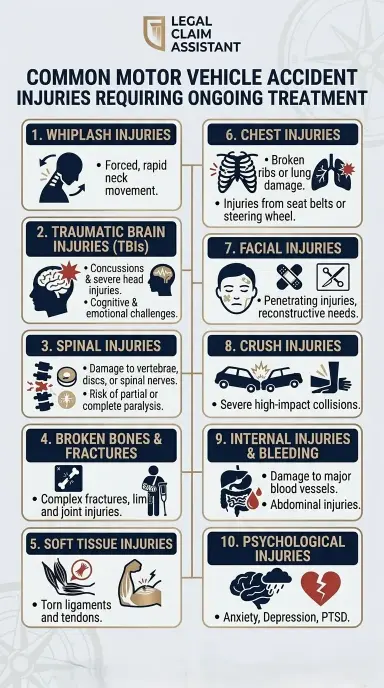
Certain types of physical injuries stand out for the extended recovery they often require. Below are some examples of common car accident injuries that frequently demand follow-up care and potentially months of rehabilitation:
Whiplash injuries: These neck injuries occur when your head jerks suddenly during impact, often in rear end collisions. Whiplash is the most common type of car accident injury, resulting from forceful, rapid back-and-forth neck movement caused by sudden vehicle movement. Symptoms of whiplash may develop within six hours to three days after an injury. If left untreated, they can lead to chronic neck pain and stiffness. You can learn more about it at whiplash motor vehicle accident.
Traumatic brain injuries (TBIs): Head injuries are among the most serious injuries in auto accidents and can range from relatively minor to quite severe, often caused by passengers hitting their heads on hard surfaces inside the car. A concussion is a type of head injury that causes temporary loss of normal brain function. Concussions and more severe head injuries might result in persistent headaches, cognitive challenges, or emotional changes. Advanced medical evaluations and therapy can be crucial for a healthier recovery.
Spinal injuries and spinal cord injuries: Damage to vertebrae, discs, or spinal nerves may require physical therapy, chiropractic care, or surgery. These treatments must be carefully managed and monitored over time to prevent partial or complete paralysis. Neck and back injuries are common in motor vehicle accidents and can range from mild strains to severe injuries like herniated discs.
Broken bones and fractures: Complex fractures, especially around joints, can lead to long-term mobility issues if not rehabilitated fully. You might need ongoing physical therapy, bracing, or additional surgeries. These fractures may include broken ribs, other broken bones, limb injuries, arm and leg injuries, knee injuries, and leg injuries. Orthopedic injuries may include fractures, dislocations, and ligament tears in various body parts due to MVAs.
Soft tissue injuries: Torn ligaments and tendons often require extended rest, targeted exercises, or specialized care so that scar tissue does not affect your range of motion. Soft tissue injuries are injuries to the body’s soft parts, such as muscles, tendons, and ligaments, and include contusions, strains, and sprains. Symptoms of soft tissue injuries may not be visible immediately after an accident.
Chest injuries: Injuries to the chest, such as broken ribs or damage from the seat belt or steering wheel during a serious accident, can require ongoing medical care. Chest injuries from a motor vehicle accident can range from contusions to broken ribs or internal organ injuries. Chest injuries can range from bruises to broken ribs and lung damage.
Facial injuries: Penetrating injuries and other facial injuries may need reconstructive surgery and long-term treatment.
Crush injuries: These severe injuries from vehicle strikes or high-impact collisions can cause extensive tissue damage and require emergency medical treatment and prolonged recovery.
Internal injuries and internal bleeding: Hidden injuries inside the body, including damage to major blood vessels or abdominal injuries, require immediate medical attention and sometimes emergency medical care. Internal injuries can occur when a car crash forces the body into an object or debris.
Psychological injuries: Psychological injuries, such as anxiety, depression, and post-traumatic stress disorder (PTSD), can arise after a traumatic collision. Post-Traumatic Stress Disorder (PTSD) may manifest as flashbacks, nightmares, and hypervigilance in survivors of MVAs. Psychological trauma from MVAs can result in conditions like PTSD, anxiety, and depression. Psychological support through therapy is important to address emotional toll and PTSD after MVAs.
These examples highlight why a single hospital visit is sometimes only the first step in a much longer process of healing. Even if symptoms feel mild, it is wise to keep an open line of communication with your doctors until you are sure you have made a full recovery.
Factors that determine the need for ongoing treatment
You might wonder why some car accident victims bounce back quickly while others require months of therapy. Several factors play a role in determining how long your treatment may last:
Severity of the injury: Generally, the more extensive or severe the injuries, the more involved and longer-lasting your recovery will be. Severe injuries from car accidents often require ongoing medical care and rehabilitation. Car accident injuries can lead to long-term consequences such as chronic pain and permanent disability. Chronic pain, nerve damage, and cognitive problems can persist after motor vehicle accidents. Motor vehicle accidents can lead to profound physical and psychological long-term complications.
Overall health: Pre-existing conditions like diabetes or arthritis can slow down your body’s natural healing process and complicate treatments.
Timely intervention: Getting care promptly can reduce complications. If you delay medical evaluation or fail to seek medical attention immediately, minor injuries can become more serious over time.
Treatment approach: Each rehabilitation plan is unique. Some people respond well to traditional methods like physical therapy, while others need specialized interventions such as nerve blocks or reconstructive surgery. Treatment for MVAs often involves a multidisciplinary approach including physical therapy, pain management, and psychological counseling.
Consistency of follow-up: Attending therapy sessions and following medical advice can shorten recovery duration. Missing appointments can set your healing back. Attending all medical appointments after a car accident increases the chances of a full recovery and creates a record of injuries.
Understanding these key elements can help you and your medical team devise a plan that addresses your specific needs. As you move forward, keep track of your progress so you can adjust your care strategy if necessary.
Typical treatment plans for long-term recovery
A well-structured treatment plan can make a world of difference in your daily comfort and long-term health. Your plan might involve one or more of the following:
Physical therapy: Targeted exercises rebuild strength, flexibility, and balance.
Chiropractic care or orthopedic support: Adjustments can realign the spine or joints and relieve stress on the affected areas, often used for persistent back and neck injuries. You might consider exploring motor vehicle accident chiropractor services if these areas are a concern.
Pain management: This could include medication, injections, or holistic approaches depending on the severity and nature of your discomfort.
Occupational therapy: Helps you adapt everyday tasks, so you can continue to perform your job duties and maintain your independence.
Mental health support: Psychological effects of a collision, such as anxiety or post traumatic stress disorder, often benefit from counseling or therapy.
These solutions can be integrated into a single care plan or used separately, depending on your condition. You might begin with intensive sessions and gradually scale back as you improve, but be prepared for periodic reviews to keep you on track.
How ongoing treatment impacts legal and insurance claims
Long-term treatment does not just affect your health, it can also influence the outcome of any legal or insurance claims you make. Insurers often want detailed documentation of your injuries and the treatments you receive. This can include medical bills, therapy records, and evidence of how your injury affects your personal and professional life, including medical expenses.
From a legal standpoint, ongoing treatment can demonstrate the seriousness of your injuries and justify higher compensation amounts. If you are pursuing a car accident claim, your medical history might serve as strong proof of the continued impact on your well-being. Additionally, being consistent with follow-up care may show the insurance company that you are taking sensible steps to recover.
You might also qualify for compensation that covers extended therapy, prescription medications, or specialized equipment if these are deemed necessary for your recovery. For more details, check out potential motor vehicle accident compensation guidelines and see how claims are handled for longer-term injuries.
Working with a skilled car accident lawyer or personal injury attorney can help you navigate the complexities of your case and ensure you receive the compensation you deserve. Insurance companies often look for ways to deny or devalue claims, making it important to have an experienced attorney. Seeking legal advice after a car accident can help you understand your rights and the compensation you may be entitled to. It is advisable to seek help from a personal injury lawyer after a car accident to handle claims effectively. Victims of car accidents can recover damages for medical expenses, income losses, suffering and pain, and loss of consortium. The law allows victims to recover for pain and suffering experienced as a result of car accident injuries. In Virginia, all drivers must have liability coverage as part of their auto insurance policies. In Florida, victims must seek care within 14 days of the accident for their personal injury protection insurance to cover costs.
Steps to ensure proper care and recovery
Your actions in the days and weeks following an auto accident can set the stage for how well and how quickly you heal. Here are some key steps you can take:
Seek prompt medical attention: Even if symptoms seem mild, early intervention can catch problems before they worsen. Always seek medical treatment immediately after a vehicle crash.
Follow your treatment plan: Consistency in attending physical therapy, taking prescribed medications, or following home exercise instructions is crucial.
Keep detailed records: Maintain copies of your medical reports, bills, and any other relevant documents. This information will help your medical providers and can also support your motor vehicle accident claims.
Ask about additional resources: Your doctor might suggest mental health support, nutritional advice, or workplace adjustments if needed.
Stay aware of deadlines: Keep in mind that legal and insurance processes have specific timelines. Prompt action ensures you do not miss important cutoffs.
By making these steps part of your routine, you give yourself the best chance for a smoother recovery process. It may feel overwhelming at first, but each step brings you closer to regaining your health and financial stability.
How our expertise helps in managing long-term injury cases
Navigating a long-term recovery journey is not something you have to do alone. Our team at Legal Claim Assistant is here to help you identify next steps so you can focus on healing. We assist you in connecting with medical providers who specialize in the type of treatment you need. This can include physical therapists, surgeons, or psychiatrists who understand the complexities of your condition.
We also guide you through the legal aspects of your ongoing care, especially if you are seeking compensation. Whether you need help with motor vehicle accident lawyers or have questions about how to strengthen your case, we can point you in the right direction. By clearly organizing your medical documentation and explaining your options, our goal is to relieve some of the stress so you feel more in control.
Contact Legal Claim Assistant for guidance and support
If you believe your injuries require ongoing treatment, do not let confusion stand in your way. Reach out to us at Legal Claim Assistant, and we will evaluate the specifics of your case to see if you qualify for additional help. Our experience with motor vehicle accident injuries means you can trust us to understand the ins and outs of prolonged recoveries.
From verifying your eligibility to connecting you with knowledgeable attorneys for a free case review, we are committed to ensuring you have the support system you need. Taking the first step today could set you on a more secure path toward a full recovery. Our aim is to help you move forward with peace of mind, knowing you have a dedicated team on your side every step of the way.
You Deserve Justice. Let Us Help.
Speak with a trusted Motor Vehicle Accidents lawyer who will stand by your side, protect your rights, and fight for the compensation you deserve.
No Win, No Fee. Let the Best Traffic lawyers Fight for your Compensation!

Under 1 Minute

100% Free

Expert-Reviewed

Private & Secure
© 2025 Legal Claim Assistant. All Rights Reserved.
Terms of Service | Privacy Policy | Contact Us | Marketing Partners
Related Article

Should I Get a Lawyer After a Drunk Driving Accident?

When Does a Drunk Driving Accident Lawsuit Make Sense?
Share this article:


