Why Is A Motor Vehicle Accident Report Important For Your Claim
 Fact Checked By Our Attorneys
A motor vehicle accident report is essential for establishing the facts of your crash and protecting your right to fair compensation. If you’ve been involved in a motor vehicle accident, don’t wait get a free case review now to see how you can maximize your claim. This official crash record provides the critical evidence insurance companies and attorneys need to support your injury claim and ensure you receive the settlement you deserve. Click the button below to connect with experienced legal professionals who can guide you through the process and fight for your rights.

No Win, No Fee. Let the Best Motor Vehicle Accident Attorneys Fight for your Compensation!
Table of Contents:

Understanding the importance of a motor vehicle accident report
A motor vehicle accident report plays a vital role in clarifying the details of a crash, especially when injuries are involved, and you need to show that another party was at fault. Think of this report as a snapshot of the incident from an objective standpoint. It often includes diagrams, photographs (when available), and eyewitness accounts that together paint a picture of what unfolded.
Because insurance companies, law enforcement officers, and legal teams rely heavily on these reports, your ability to obtain and use one correctly can make a big difference in your claim. You may discover that it supports your request for compensation or helps you dispute inaccurate accounts of the accident. If you are injured in a motor vehicle accident and hope to recover costs for medical treatment, vehicle repairs, and lost wages, a thorough accident report ensures you have written proof of your side of the story.
Without a formal record, it is your word against others, including the at-fault party’s insurance. Having documentation that includes times, dates, weather conditions, police officer observations, and other information can confirm whether negligence played a part. Although it is not the only factor in determining fault or settlement amounts, it adds heft to your case and helps you present a clear, organized argument for the damages you deserve.
It is important to note that access to motor vehicle accident reports is subject to legal restrictions such as the Driver’s Privacy Protection Act (DPPA). The DPPA restricts public access to personal information held in motor vehicle records and prohibits disclosure of such information without the individual’s express consent. As a result, traffic crash reports are exempt from public disclosure except for parties involved in the crash and other specific parties outlined in the statute. Unlawful disclosure of confidential personal information from crash reports carries criminal penalties.
How to report a motor vehicle accident immediately after a crash
Reporting a motor vehicle accident soon after it happens is both a legal requirement in most places and a practical step to protect yourself. Right after a crash, you will naturally check for injuries and call emergency services if someone is hurt. But once immediate safety concerns are addressed, you should contact local law enforcement to come to the scene. A police officer will gather statements, examine damage, and record observations in an official report.
You must report a crash to law enforcement if it results in injury, death, or property damage exceeding a certain amount. While waiting for the police to arrive, exchange basic information with the other driver, including contact details, driver’s license numbers, and insurance providers. Take photos of the scene if you can do so safely. These quick snapshots of vehicle damage, road placement, and any visible injuries or skid marks can later prove vital for your insurance negotiations and your motor vehicle accident report.
If, for some reason, police are unable to respond (such as in minor collisions without injuries), you can still file an accident report yourself at the nearest police station or self-report online or by mail in some states if it is a minor crash. This preserves your account of what happened in an official capacity. It is also a good idea to reach out to your insurance company, so they are aware of the incident. Even if you are not at fault, starting the claims process early ensures you have coverage for medical assessments and any urgent vehicle repairs.
Key details to include when filling out a motor vehicle accident report
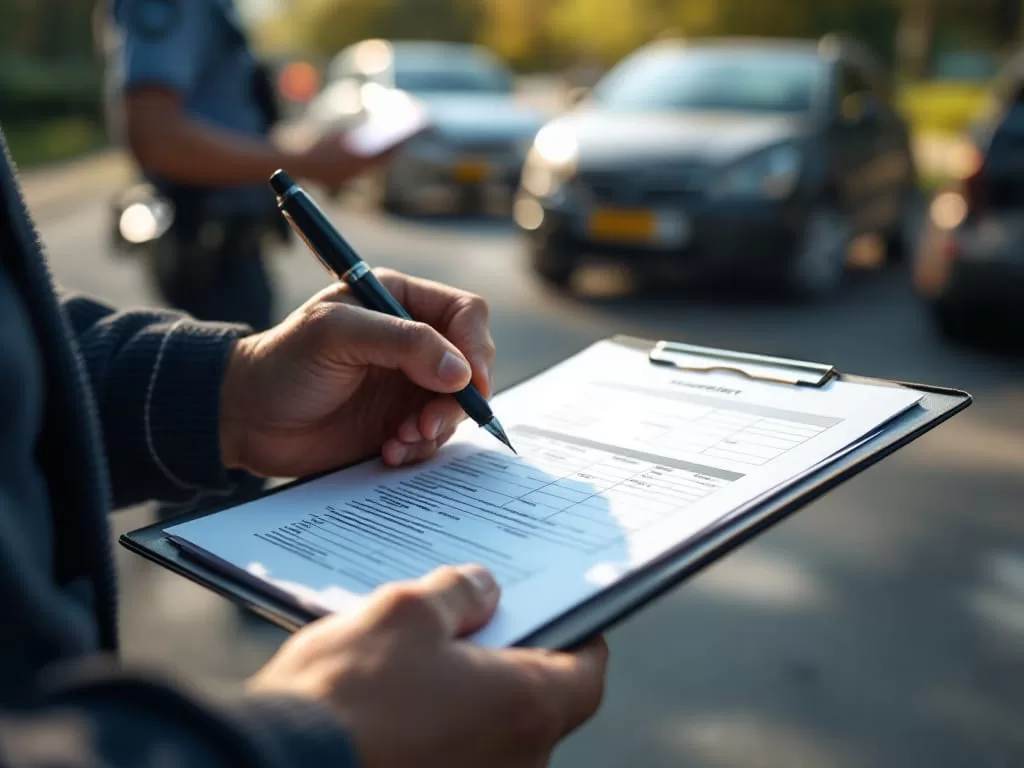
When you fill out a motor vehicle accident report, clarity and accuracy are crucial. The more precise your details, the more helpful the record will be for insurance adjusters, legal teams, and anyone else examining the incident. While the form or online portal may prompt you for certain information, here are some key elements you will want to confirm you have covered:
- Date, time, and exact location of the crash
- Names and contact details for all drivers, passengers, and witnesses
- Insurance and vehicle information for each driver and every vehicle involved in the crash
- Descriptions of injuries and property damage
- Weather, lighting, and road conditions
- Any specific actions or statements made by the other driver(s)
By taking the time to provide accurate data, you lessen confusion later. Inconsistencies or missing information can slow down your insurance claim or complicate a potential legal case.
Step-by-step guide on how to fill out a motor vehicle accident report accurately
Understanding the process for filling out a motor vehicle accident report will help you avoid expensive missteps. Although each jurisdiction may have slight variations in their forms or requirements, the steps outlined below typically apply:
- Gather essential info: Collect driver’s license numbers, insurance details, and license plate numbers from everyone involved. Remember to collect contact details from any witnesses.
- Note the environment: Pay special attention to the weather, lighting, and road conditions. Include anything relevant, such as a broken streetlight or a slippery surface.
- Describe the sequence of events: Start by stating what you were doing before the accident. Then provide a concise, factual account of what happened, moment by moment.
- Document injuries and damage: Write down all visible injuries, even if they may seem minor. Also take note of damage to all vehicles involved, not just your own.
- Review and submit: Double-check spelling, dates, and addresses. If possible, wait a few minutes, reread your report, and confirm it matches your memory. Once you are satisfied, file it with the proper department or police station, ensuring your signature is included if required.
Completing the report carefully means fewer questions later from insurers or attorneys. And if you need to pursue motor vehicle accident compensation, your report will act as a clear reference.
No Win, No Fee. Let the Best Motor Vehicle Accident Attorneys Fight for your Compensation!
How to obtain a motor vehicle accident report from law enforcement
If a law enforcement officer or police officer arrived at your crash, you can usually obtain a copy of their official report through the local law enforcement agency that responded. Here’s what to expect:
First, you may need to wait a short time, often a few days to a couple of weeks, for the officer to finalize and file the document. Official crash records may take several days to become available after the incident. Once it is ready, you can call or visit their records department, email them, or fill out an online request form on the agency’s page. Keep in mind that most departments charge a small administrative fee or payment for copies, which typically ranges from $5 to $25 for standard reports. You will provide details such as the date of the accident, the incident number (if given to you by the officer), and the names of the involved drivers.
In some locations, you can pick up the report in person, which might be faster if you need it urgently for insurance or for a consultation with a motor vehicle accident attorney. If you do not live locally or cannot travel easily, the department may be willing to mail or email a copy to you once you pay the fee. Having a copy of law enforcement’s findings in your hands can be a major asset when negotiations with insurance or the at-fault party begin.
How to request a motor vehicle accident report online or by mail
Sometimes, you may prefer the convenience of requesting your accident report online through portals offering online traffic crash reports or need to do so by mail if you live out of the area. Many law enforcement agencies provide online system for crash reports, and some outsource report distribution to private databases. You can usually search through the online system by your name, incident number, or the date of the accident to locate your record. Expect to pay a fee and possibly handle any shipping costs if a physical copy is sent.
If you cannot find it online, mailing a written request to the records division is a reliable option. In your letter, include as many specifics about the accident as you can. Attach a check or money order to cover the cost of the report fees vary by department. Then mail it to the address given on the agency’s official site. Once processed, your report will arrive via mail. This method typically takes longer than an in-person pickup or web-based purchase, so plan ahead if your insurance claim or legal case has tight deadlines.
In Texas, crash reports are not available for online viewing by the general public due to their confidential nature. Access to crash reports in Texas is limited to individuals directly concerned in the accident or having proper interest therein. A person or entity that does not meet the criteria for accessing a crash report will receive a redacted copy of the report.
Common mistakes to avoid when completing or requesting a motor vehicle accident report
Many customers rush through the reporting process or forget to request the correct documents, which can cause delays in insurance claims or legal reviews. One common error is providing vague or incomplete information, such as forgetting the specific location or omitting the other driver’s insurance details. These omissions might lead to confusion for insurance adjusters investigating your claim.
Another mistake is underestimating damage or injuries. Always document even minor aches and pains, because seemingly small injuries can worsen over time. Similarly, do not ignore official instructions about requesting the police report. If you wait too long, your window of opportunity might shrink, and the cost or difficulty of obtaining the record could increase.
Finally, always double-check for accuracy. Typos or incorrect license plate numbers can hamper your ability to prove fault, and insurers might deny or reduce your claim. Review every section, verify you spelled names correctly, and confirm you included relevant details that back up your version of events.
How a motor vehicle accident report supports your injury claim and settlement
When you file an injury claim, your motor vehicle accident report is often among the first pieces of evidence that insurance adjusters and attorneys evaluate. This official record contains neutral information collected at the scene, making it a powerful resource for showing that you acted responsibly. It also outlines any citations or violations that police observed, which can point to another driver’s negligence.
If you plan to pursue motor vehicle accident settlement amounts or move forward with a motor vehicle accident lawsuit, having a credible record of the incident makes it harder for the opposing party to dispute what happened. The motor vehicle accident report helps illustrate the severity of your injuries and property damage, which can influence how much compensation you can justifiably claim.
In some cases, insurance companies will require an official report before they proceed with payout negotiations. Without it, they may question whether your injuries or costs stem from this crash or another event. While a motor vehicle accident report is not a guarantee of compensation, it provides essential facts that enhance the credibility of your position during settlement discussions or court proceedings.
Tips for safely storing and using your motor vehicle accident report for legal purposes
Once you have received your motor vehicle accident report, keep both a physical copy and an electronic version, if possible. Storing the document safely ensures it is accessible when you need it for consultations with your insurance company, attorney, or medical providers. You might scan the report to a secure cloud-based folder along with related files, such as medical bills, repair estimates, and witness statements. This allows you to easily share documents during an online meeting or send them via email if your attorney or insurance adjuster requests more important information. You can also download additional copies if needed.
Whenever you meet with legal counsel, bring a copy of your report so they can review it alongside any other evidence you have gathered. This helps your lawyer identify inconsistencies, strengths, or weaknesses in your case. If you ever doubt how best to present your motor vehicle accident report, ask your attorney for guidance. They can advise how to use it effectively, whether you are discussing a possible settlement or deciding to file a formal claim against the at-fault party.
By keeping the report in a secure location and referencing it whenever you talk to insurance agents or legal professionals, you will stay organized. This record also helps you stay consistent in recounting details, ensuring everyone involved understands exactly what happened and why you deserve to be compensated for your losses. Note that crash reports are typically retained for several years, but the exact retention period is defined by the local jurisdiction.
If you ever need to submit an affidavit or other legal documents related to your accident, your motor vehicle accident report can serve as a key supporting document. Always check the specific criteria and requirements for your case to ensure you have the necessary paperwork, including any required signatures and payments.
Additionally, data from accident reports helps safety agencies analyze trends involving motor vehicles to improve road conditions and public safety. Some states and agencies, such as TxDOT, maintain statewide, automated databases for reportable motor vehicle traffic crashes, and crash data can be requested in bulk by submitting an online Crash Data Request Form. Annual reporting or data extracts may be useful for individuals and organizations seeking crash data, though requests may require payment of a fee which varies by state.
No Win, No Fee. Let the Best Motor Vehicle Accident Attorneys Fight for your Compensation!