


Key Takeaways:
Economic damages in wrongful death cases cover tangible financial losses such as lost income, medical bills, funeral costs, and household services.
Calculating economic damages requires documents and financial analysis. A lawyer can help you identify and claim all losses.
Filing early with a lawyer helps families claim losses, follow state rules, and pursue compensation.
What Are Economic Damages in Wrongful Death Claims?
Economic damages in wrongful death claims are tangible, measurable financial losses that result from a person’s death caused by someone else’s negligence or wrongful act. These damages focus on the concrete impact of the decedent’s death on surviving family members and aim to provide fair compensation for financial losses.
Unlike non-economic damages, which cover intangible losses such as emotional distress, mental anguish, loss of companionship, or pain and suffering, economic damages deal strictly with monetary losses. This distinction helps in a wrongful death case, as surviving family members can recover both types of damages to address the full impact of the wrongful act.
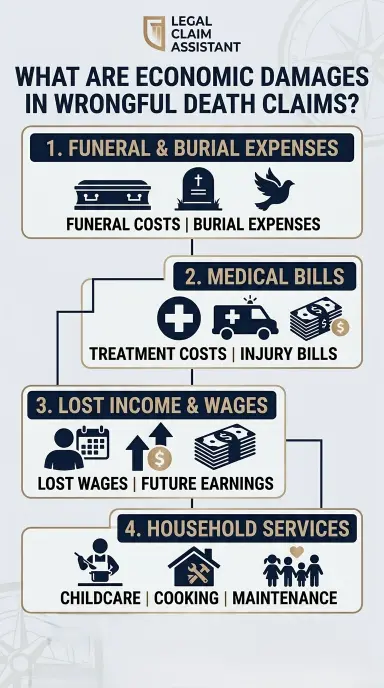
Common examples of economic damages include:
Funeral costs and burial expenses for the deceased person
Medical bills related to injuries or illness caused by someone else’s negligence or medical malpractice
Lost wages and lost future income that the decedent would have provided to the family
Household services the decedent performed, such as childcare, cooking, or home maintenance
Calculating economic damages is important for families seeking financial recovery. Proper assessment helps families pursue compensation that covers lost income, medical treatment, funeral expenses, and ongoing financial support, helping them pursue fair settlement or damages recoverable in court. Experienced wrongful death attorneys guide families in identifying all recoverable damages and building a strong claim to maximize financial compensation.
Types of Economic Damages in Wrongful Death Cases
Economic damages in wrongful death lawsuits cover several categories of financial loss. Understanding what can be claimed helps families pursue fair compensation.
Lost Income & Benefits
This includes the decedent’s salary, bonuses, career trajectory, and retirement plans. Future earnings are calculated based on life expectancy, potential raises, and benefits like health insurance. For example, a surviving spouse may claim lost income if the deceased person supported the household financially.Funeral and Burial Expenses
Funeral costs, cremation, memorial services, and burial costs are recoverable damages. Costs like caskets, headstones, and travel for family members may also be included.Medical Expenses
Pre-death medical bills related to injuries or illness caused by the wrongful act, including emergency care, ongoing medical treatment, and hospital stays, are covered. You can prove these costs with medical records and receipts.Household Services
The value of tasks the deceased person provided, such as childcare, cooking, cleaning, or home maintenance, can be claimed as lost household services. These losses affect daily life and household routines.Loss of Inheritance
Families may recover projected financial contributions or portions of the decedent’s estate that would have benefited survivors, accounting for what the deceased would have contributed financially over time.
Each type of economic damage is documented and calculated to reflect the real financial impact of the wrongful death. Consulting with an experienced wrongful death attorney ensures all categories are considered and properly claimed, helping families recover fair compensation.
How Economic Damages Are Calculated in Wrongful Death Lawsuits
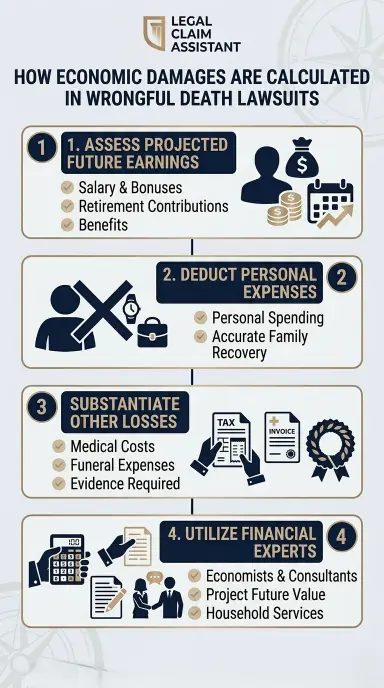
Calculating economic damages in a wrongful death case involves determining the tangible financial losses suffered by surviving family members. The process typically starts with assessing projected future earnings, including salary, bonuses, benefits, and retirement contributions the deceased person would have provided. Experts also consider the decedent’s career trajectory, life expectancy, and potential promotions.
When calculating lost income, personal expenses of the deceased, such as personal spending, are deducted to ensure accurate recovery for the family. Financial documents like tax returns, pay stubs, medical invoices, and receipts are used to substantiate claims for medical costs, funeral expenses, and other recoverable damages.
Complex cases may require economists or financial experts to project lost future income and value household services or long-term contributions. These calculations vary by state law, the nature of the wrongful act, and the individual circumstances of the decedent’s family.
Filing a Wrongful Death Claim to Recover Economic Damages
Filing early is important because each state sets a time limit to file a wrongful death claim, often between one and three years. Only certain individuals can file a wrongful death claim. Typically, this includes a surviving spouse, children, or a personal representative of the decedent’s estate.
The process usually follows these steps:
Consult an experienced wrongful death lawyer to evaluate the case and potential recovery.
Gather evidence such as medical records, funeral receipts, pay stubs, and proof of lost income.
Submit the complaint to initiate the civil lawsuit and formally claim damages.
Legal representation is important to maximize wrongful death damages. Attorneys handle negotiations with insurance companies, document economic and non-economic losses, and pursue fair settlements. Many lawyers work on a contingency fee basis, meaning families pay only if compensation is recovered.
Acting quickly helps families claim all recoverable losses, including lost future income, medical costs, funeral expenses, and compensation for the emotional and psychological toll caused by the wrongful death.
This guidance helps grieving families seek damages effectively and ensures that all financial and compensatory damages are addressed in the claim.
The Role of a Wrongful Death Lawyer in Economic Damages Cases
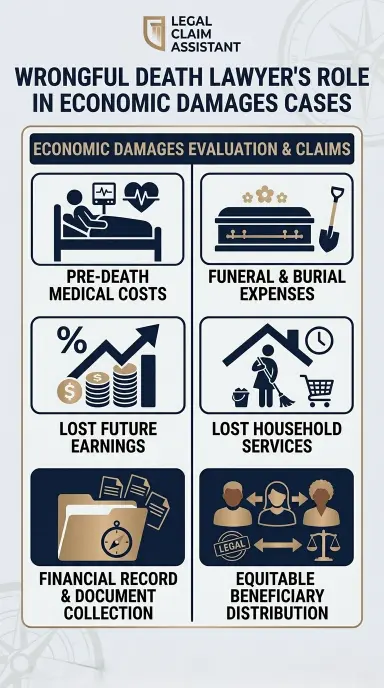
A wrongful death lawyer helps families recover both economic and non-economic damages after a loved one dies due to someone else’s negligence or intentional misconduct. Experienced attorneys evaluate all potential losses, including lost income, funeral expenses, medical costs, and household services, as well as emotional distress, mental anguish, and the emotional impact on surviving family members.
Lawyers also handle negotiations with insurance companies and opposing counsel to pursue fair wrongful death settlements. They guide families in collecting necessary financial records, medical documents, and expert testimony to support claims. Additionally, they ensure that compensation is distributed fairly among beneficiaries and that all legal requirements are met.
Working with experienced attorneys can improve case preparation and may increase the chances of a better outcome.
State Variations and Limits on Economic Damages
While economic damages in wrongful death cases are generally intended to fully compensate surviving family members. Most states allow full recovery of economic damages, but some states limit non-economic damages or apply specific rules. States differ in how they calculate lost income, benefits, and household services, as well as eligibility rules for who can file a claim.
For example, one state may allow full recovery of future earnings, while another may cap damages for certain economic losses. Consulting a local wrongful death attorney helps you with state-specific regulations and helps families seek compensation accurately.
Understanding these variations is essential when pursuing a claim, especially in cases involving punitive damages, car accidents, medical malpractice, or other incidents where a wrongful death occurs. Legal guidance helps grieving families receive the full measure of economic and non-economic damages allowed under their state’s laws.
FAQs About Economic Damages in Wrongful Death Cases
Understanding economic damages in a wrongful death case can be complex. Families often have questions about what losses are recoverable, how calculations are made, and what compensation they can expect. The following FAQs address the most common concerns to help surviving family members navigate the process and better understand their rights.
What are examples of economic damages?
Economic damages include funeral and burial expenses, medical bills incurred before the decedent’s death, lost wages, lost future income, household services, and loss of financial support.
What is the difference between economic and non-economic damages?
Economic damages cover tangible, measurable financial losses. Non-economic damages address intangible losses like emotional suffering, emotional anguish, and the personal injury impact on surviving family members.
How are funeral and burial costs calculated in claims?
Funeral and burial expenses include costs for the funeral service, casket or cremation, memorial services, and related transportation. Receipts and invoices are used to document these costs in a claim.
Can future earnings always be included?
Future earnings may be included, but calculations consider life expectancy, career path, benefits, and personal expenses of the decedent. State laws may affect eligibility and limits.
Are economic damages taxable?
In many cases, economic damages for wrongful death are not taxable, but you should confirm with a tax professional. However, consultation with a wrongful death lawyer or tax professional ensures accurate reporting.
Speak With a Wrongful Death Lawyer to Protect Your Family’s Rights
When a loved one dies due to someone else’s negligence or wrongful act, contacting an experienced wrongful death lawyer immediately is important. A lawyer helps families gather evidence, calculate economic damages, and navigate the process to file a wrongful death claim or lawsuit.
Acting early helps document all financial losses, including funeral costs, lost household services, and lost future income, are documented and recovered. Lawyers also assist in negotiating with insurance companies and pursuing fair settlement offers.
Legal representation provides guidance in identifying all recoverable damages, both economic and non-economic. This ensures families hold the responsible party accountable while pursuing full compensation for emotional suffering, emotional anguish, and the personal injury impact of the loss.
You Deserve Justice. Let Us Help.
Speak with a trusted Wrongful Death Attorney who will stand by your side, protect your rights, and fight for the compensation you deserve.
No Win, No Fee. Let the Best Wrongful Death Attorneys Fight for your Compensation!

Under 1 Minute

100% Free

Expert-Reviewed

Private & Secure
© 2025 Legal Claim Assistant. All Rights Reserved.
Terms of Service | Privacy Policy | Contact Us | Marketing Partners
Related Article


Share this article:


