


Key Takeaways:
Medical malpractice becomes a wrongful death claim when negligence directly causes a loved one’s death, allowing family members to seek damages.
Proving a case requires duty, breach, causation, and damages, supported by medical records and expert testimony.
Acting quickly and hiring an experienced attorney ensures filing deadlines are met and maximizes financial recovery for medical bills, lost wages, and burial expenses.
Legal Definition of Medical Malpractice and Wrongful Death
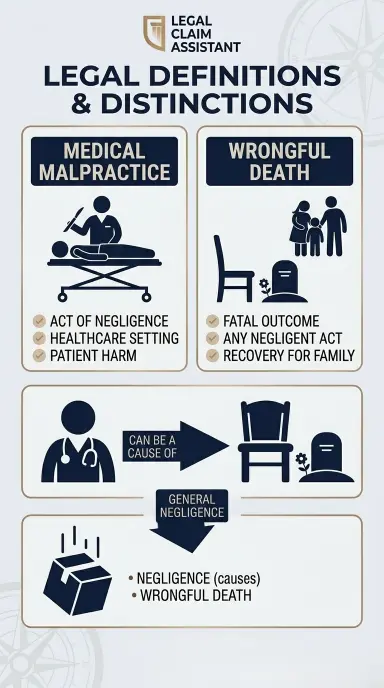
Medical malpractice occurs when a healthcare provider fails to meet the accepted standard of care, resulting in injury or harm to a patient. This can include mistakes by doctors, nurses, or other medical professionals, such as surgical errors, wrong medication, misdiagnosis, or preventable medical errors. A medical malpractice case focuses on proving that the medical provider’s negligent act directly caused harm or injury to the patient.
Wrongful death is a civil lawsuit filed when a person dies due to another party’s negligent or wrongful act. Unlike a standard personal injury claim, a wrongful death claim seeks to hold the responsible party accountable for the deceased person’s death and to recover damages for surviving family members. These damages can include medical bills incurred before death, funeral expenses, lost wages, loss of household services, and non-economic damages such as conscious pain or emotional suffering.
The key distinction between the two is that:
Medical malpractice focuses on the negligent act within a healthcare setting, while wrongful death focuses on the fatal outcome. Not every wrongful death case involves medical malpractice, but when negligence in medical care causes a loved one’s death, it becomes both a medical malpractice case and a wrongful death claim.
Surviving family members or a personal representative of the decedent’s estate can file a wrongful death lawsuit to recover damages suffered due to the death and medical malpractice. An experienced wrongful death attorney can help prove medical malpractice and guide family members through the legal process to seek compensation.
When Death and Medical Malpractice Lead to a Wrongful Death Claim
A wrongful death claim arises when medical negligence directly results in a patient’s death. For a successful wrongful death lawsuit, the plaintiff must demonstrate a clear link between the healthcare provider’s breach of duty and the fatal outcome. This requires proving that the negligent act, not the patient’s underlying condition, caused or significantly contributed to the decedent’s death.
Common scenarios include:
Misdiagnosis or delayed diagnosis that leads to fatal complications, surgical errors such as operating on the wrong site or leaving instruments inside the patient, anesthesia mistakes causing oxygen deprivation, and medication errors like administering the wrong medication. These types of cases may be part of a hospital wrongful death claim. In these cases, the decedent’s surviving family members, including a spouse or certain family members designated by law, can file a wrongful death lawsuit to recover damages.
Damages in these cases can cover medical expenses, funeral and burial costs, lost wages, loss of household services, and compensation for conscious pain or emotional suffering.
An experienced wrongful death attorney can guide the family through the legal action, helping them file suit, prove medical malpractice, and recover significant damages from the responsible party. Learning about the wrongful death litigation process provides insight into timelines, procedures, and potential outcomes.
How to Prove a Medical Malpractice Case in a Wrongful Death Lawsuit
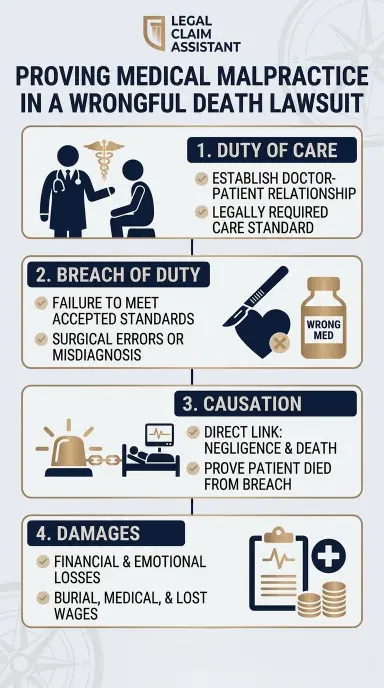
To succeed in a wrongful death and medical malpractice case, four key elements must be established:
Duty of Care
A doctor-patient relationship creates a legal obligation. The medical provider must act according to the accepted standard of care for an injured person or patient.Breach of Duty
The provider failed to meet medical standards. Examples include surgical errors, wrong medication, or misdiagnosis that could have been prevented.Causation
The breach directly caused the decedent’s death. The link must be clear between the doctor’s negligence and the fatal outcome, not the patient’s preexisting condition or unrelated health issues.Damages
The wrongful death resulted in financial and emotional losses for surviving family members. Damages may include medical malpractice results, burial expenses, lost wages, and financial support for dependents.
Supporting evidence is critical in proving a medical malpractice lawsuit. Medical records, hospital documentation, and expert testimony are commonly used to demonstrate the provider’s negligence. Expert witnesses often explain the accepted standard of care and how it was violated. Filing a medical malpractice claim requires careful collection of this evidence, often with guidance from an experienced legal team to ensure the family can recover full damages for a family member’s death.
Who Can File a Wrongful Death Claim and Take Legal Action
Eligibility to file a wrongful death lawsuit depends on state law, but it generally includes the surviving spouse, the decedent’s children, and the parents especially when the deceased was a minor. In addition, a personal representative or executor of the decedent’s estate can file the claim on behalf of all beneficiaries. Some states have a few exceptions, so verifying eligibility early is essential before taking legal action.
In many states, the personal representative must file the legal claim on behalf of all beneficiaries. Some jurisdictions allow only certain family members to pursue legal action, while others require centralized filing through the estate. Because rules differ by state, verifying eligibility early is essential.
Family members seeking damages for medical malpractice results or a loved one’s death should seek legal help promptly.
An experienced wrongful death attorney can guide the surviving spouse or other eligible parties through the legal process, ensure proper filing, and help recover compensation for medical bills, burial expenses, lost wages, and other financial losses.
Damages Available in Medical Malpractice Wrongful Death Claims
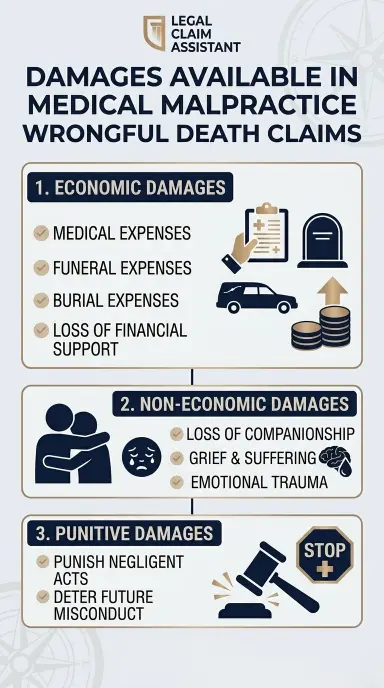
In a medical malpractice wrongful death claim, surviving family members can recover several types of damages.
Economic damages cover financial losses directly caused by the decedent’s death. These include medical bills incurred before death, funeral and burial expenses, and loss of financial support for dependents. Courts consider the deceased’s income, family responsibilities, and life expectancy when calculating these damages.
Non-economic damages compensate for emotional and psychological harm. Surviving family members may receive compensation for loss of companionship, grief, emotional suffering, and trauma caused by a loved one’s death. These damages recognize the personal impact of the decedent’s loss beyond financial loss.
Punitive damages may be awarded in cases of extreme negligence or intentional acts by a medical provider or medical facility. Punitive damages are designed to punish particularly reckless behavior and deter similar misconduct in the future.
Both malpractice claims and wrongful death claims often involve similar categories of damages, and an experienced wrongful death attorney can help ensure families recover full compensation for financial support, emotional suffering, and other losses caused by a loved one’s death.
How to File a Wrongful Death Claim After Medical Malpractice
Filing a wrongful death claim after medical malpractice involves several steps to ensure the family can recover damages:
Determine Eligibility
Confirm whether the death qualifies as a wrongful death under your state’s law.Appoint a Personal Representative
If required, designate an executor or personal representative to file the lawsuit on behalf of beneficiaries.Gather Evidence
Collect medical records, hospital documentation, and other evidence showing medical malpractice caused the decedent’s death.File a Formal Complaint
Submit the civil lawsuit in the appropriate court, outlining the claims and damages sought.Serve the Defendant
Notify the responsible medical provider or medical facility of the lawsuit to begin legal proceedings.Negotiate or Proceed to Trial
Most medical malpractice wrongful death cases settle before trial, but complex cases may require full litigation.
Most cases take 2 to 5 years depending on complexity, but many settle before trial. Early legal help is critical to preserve evidence, properly file the claim, and ensure surviving family members can recover medical malpractice damages, lost financial support, and compensation for personal injury cases caused by the loved one’s death.
Statute of Limitations and Why Acting Quickly Matters
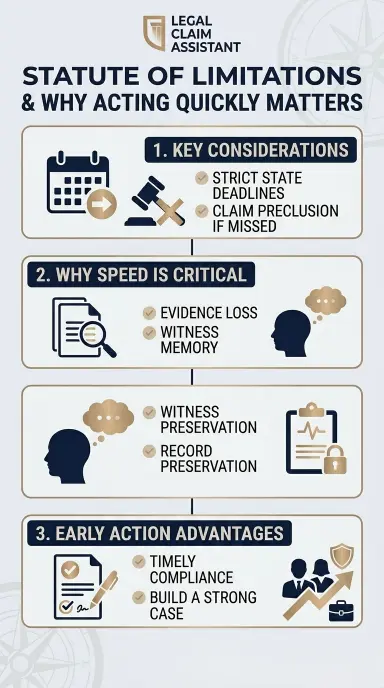
Each state sets strict deadlines for filing wrongful death and medical malpractice claims. These time limits typically start from the date of the decedent’s death. Missing the deadline can permanently prevent surviving family members from taking legal action or filing a wrongful death lawsuit.
Acting quickly is critical. Evidence can be lost, witnesses may forget important details, and medical records must be preserved to prove negligence and causation. Prompt action also ensures the legal team can build a strong case for medical malpractice damages or other financial recovery.
Consulting an attorney early allows family members to comply with filing deadlines and protect their right to seek compensation after a loved one’s death.
Legal Help for Medical Malpractice and Wrongful Death Cases
Medical malpractice and wrongful death cases are complex and require specialized legal knowledge. An experienced attorney can evaluate whether malpractice occurred, gather and analyze medical records, and work with expert witnesses to prove negligence and causation.
They can negotiate with insurance companies or represent the surviving family members in court, helping to recover medical bills, lost wages, burial expenses, and other damages. Most law firms handle these cases on a contingency fee basis, meaning you pay nothing upfront and only pay if the case succeeds.
Seeking legal help early, even for incidents like a fall accident, slip and fall accident, car accident, or sudden chest pain leading to death, ensures claims are filed correctly, deadlines are met, and potential recovery is maximized. Free consultation is usually available to review your case and outline legal options.
Frequently Asked Questions About Medical Malpractice and Wrongful Death
Families facing a loved one’s death due to medical negligence often have many questions. Understanding the legal process, requirements, and potential outcomes can help in making informed decisions. Here are answers to the most common questions about medical malpractice and wrongful death cases:
What is the difference between malpractice and wrongful death?
Medical malpractice involves negligent healthcare by a doctor, nurse, or medical facility, while wrongful death refers to the fatal outcome caused by that negligence. Not all malpractice cases result in death, but when they do, a wrongful death claim can be filed.
How long do these cases take?
Most cases take between two and five years. The timeline depends on the complexity of the medical evidence, whether the case settles out of court, or if it goes to trial.
What is required to prove a claim?
To succeed, the family must establish duty, breach, causation, and damages. Strong evidence such as medical records, expert testimony, and hospital documentation is essential to prove the medical provider’s negligence and link it to the decedent’s death.
Can both claims be filed together?
Yes. Families can often file both a wrongful death claim and a survival action to address the patient’s suffering before death. This ensures recovery for both financial losses and non-economic damages.
What damages can be recovered in a medical malpractice wrongful death case?
Families can recover medical bills, funeral expenses, lost wages, loss of household services, and compensation for emotional suffering or pain and loss of companionship.
Get Legal Help for a Medical Malpractice Wrongful Death Case
Medical malpractice wrongful death cases are legally complex and require specialized knowledge. An experienced attorney can review the circumstances, determine whether medical negligence contributed to the decedent’s death, and advise on who is eligible to file a wrongful death claim. They can also identify the evidence needed to support the case, including medical records, hospital documentation, and expert testimony.
A skilled legal team guides surviving family members through the entire process. This includes filing the lawsuit, negotiating with insurance companies, and representing the family in court if necessary. Attorneys ensure that all procedural requirements are met and that the claim is prepared to recover damages for medical expenses, burial costs, lost wages, and emotional suffering.
Many law firms handle these cases on a contingency fee basis, meaning families do not pay upfront and only owe fees if the case succeeds. Free consultations are often available to evaluate the case and outline legal options.
Acting promptly allows families to meet filing deadlines, preserve evidence, and maximize the potential recovery for a loved one’s wrongful death caused by medical malpractice.
You Deserve Justice. Let Us Help.
Speak with a trusted Wrongful Death Attorney who will stand by your side, protect your rights, and fight for the compensation you deserve.
No Win, No Fee. Let the Best Wrongful Death Attorneys Fight for your Compensation!

Under 1 Minute

100% Free

Expert-Reviewed

Private & Secure
© 2025 Legal Claim Assistant. All Rights Reserved.
Terms of Service | Privacy Policy | Contact Us | Marketing Partners
Related Article


Share this article:


