Can You File a Claim After a Hit and Run Accident?
 Fact Checked By Our Attorneys

We understand how overwhelming a hit and run accident can be. One moment, you are driving or walking peacefully, and the next, you find yourself coping with injuries, property damage, and the distress of an at-fault driver fleeing the scene. Sometimes, it feels like you have no options or support. In reality, there are paths you can follow to stand up for your rights. In this article, we answer a central question you may have: can you file a claim after a hit and run, especially if the other driver is never found?
Our team at Legal Claim Assistant works to simplify the claim process so you can focus on what matters most—your health and your well-being. We will guide you through the steps of reporting a hit and run, gathering evidence, filing a claim, and possibly taking legal action. By understanding your options, you set yourself on a more confident path to potential compensation.

No Win, No Fee. Let the Best Motor Vehicle Accident Attorneys Fight for your Compensation!
Table of Contents:

Understanding hit and run accidents
A hit and run accident occurs when one driver collides with another vehicle, pedestrian, or cyclist but leaves the scene without stopping to exchange information or assist injured parties. In most states, fleeing an accident scene is considered a criminal offense. In certain situations, it can even lead to felony charges. You can read more on this topic in our resource on is a hit and run a felony, which explores the possible legal repercussions for defendants.
Our society has strict policies against fleeing an accident because it places victims in a precarious position. If the responsible party remains unidentified, obtaining compensation for injuries, lost wages, and property damage can become more cumbersome. Fortunately, there are legal tools and insurance provisions available that can help victims pursue claims.
Common scenarios where hit and run accidents occur
Hit and run accidents can happen anywhere, but we have seen a few scenarios occur more frequently than others:
Some incidents involve a vehicle striking a pedestrian in a crosswalk or a parking lot, and then driving off. Learn more about how to handle these cases in our dedicated section on hit and run pedestrian accident. Similarly, bike riders involved in roadway collisions often face long recovery times, and you can find more details about that in our hit and run bicycle accident page.
Other times, it might take place on a busy highway, where the at-fault driver merges into a lane without looking. Occasionally, a driver who scraped or dented a parked car will leave the scene without leaving a note. In all these scenarios, the common thread is the same: you are left with damages and the sudden uncertainty of how to seek help.
Immediate steps to take after a hit and run
Remaining calm and safe should be your top priority right after the accident. Whether your vehicle has been damaged in a rear-end collision, or you have injuries needing immediate attention, focus on getting medical help and notifying the authorities as soon as it is safe.
- First, check yourself and anyone else involved for injuries. Seek medical care right away if necessary.
- Next, call 911 to report the collision. Give the dispatcher as much information as possible about the fleeing driver, such as vehicle type and partial license plate number.
- Collect details from any witnesses or bystanders—names, contact information, and what they saw.
- Photograph or record video of your vehicle’s damage, the accident scene, tire marks, and any other relevant factors.
We also encourage you to explore our resource on what to do in a hit and run. It provides a more detailed breakdown of essential actions to protect your claim and your well-being.
Reporting a hit and run to the police
Timely reporting is essential for any traffic accident, but even more so for a hit and run. The moment you suspect you have been the victim of a fleeing driver, contact local law enforcement. When the police arrive, provide them the details: the direction the driver fled, your recollection of the driver’s face, or the car’s model and color.
A police report serves as an official record of your accident, which may strengthen your potential claim. Police officers often try to locate the at-fault driver by interviewing witnesses, reviewing nearby security cameras, and checking local auto body shops where a damaged vehicle might show up. While you wait, keep your own set of notes, including timestamps and the officers’ details. These records may prove valuable later if you face obstacles seeking compensation.
Gathering evidence for your hit and run claim
Securing strong evidence is one of the most critical parts of building a successful hit and run claim. We recommend taking photos of skid marks, crash debris, and any visible injuries. Collect contact information from eyewitnesses who saw the collision or observed the fleeing driver’s actions.
If you have a dashboard camera, the footage could make a big difference in identifying the vehicle that struck you. Some businesses or homes might have security cameras with recordings of the event. Additionally, follow up with any healthcare professionals who treat your injuries, and keep copies of all medical bills, treatment records, and recommended care plans. Every piece of documentation may help you secure a more accurate settlement figure. As you work, remember that each record is evidence of what truly happened and how it affected your life.
Can you file a claim after a hit and run?
Yes. When you are injured in a hit and run, you generally have the option to file a claim, especially if you sustained injuries, property damages, or financial losses. However, the process can become complicated if the at-fault party remains unidentified. In these situations, your insurance policy’s uninsured or underinsured motorist coverage may step in to cover some, or all, of the bills. This means you can still pursue compensation, even if the driver is unknown.
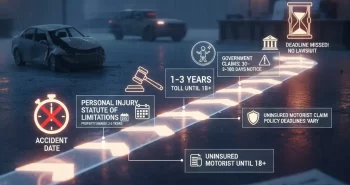
If the responsible person is later identified, you can file a more direct claim against their insurance. Keep in mind that time limits apply, so check your state’s statute of limitations. Our team has often helped injured parties file claims in complicated circumstances, including a hit and run accident not at fault scenario. The key is to act promptly, preserve evidence, and consult with professionals who understand what each step requires.
Filing an insurance claim for a hit and run
When filing an insurance claim following a hit and run, your first step is often your own car insurance provider. Even if the other driver fled, most policies include provisions for this situation. We especially encourage you to confirm whether your plan offers uninsured or underinsured motorist coverage. If it does, you may be able to collect compensation for medical bills and lost wages while the police conduct their investigation.
Be thorough when submitting your statement to the insurer. Provide the police report number, medical visit documents, and any photos of the damage. Your insurance company may try to minimize the payout, claiming insufficient evidence or conflicting accounts. That is why accurate, well-organized information is key. Should this process become stalled, you can consider filing a hit and run accident lawsuit to protect your best interests.
No Win, No Fee. Let the Best Motor Vehicle Accident Attorneys Fight for your Compensation!
Legal options if the driver is never found
An unfortunate reality is that some hit and run drivers are never tracked down. In these cases, your main resource might be your own uninsured motorist coverage. Each state has different requirements for motorists, so check if you are legally required to carry such coverage. If you have it, you can potentially receive compensation for medical bills and repair costs from your own policy.
Some victims wonder if they can still claim damages that exceed policy limits. You might worry about how you can obtain a fair hit and run compensation amount if the at-fault driver cannot be pursued for additional funds. In these situations, your legal options will rely on balancing insurance policies, any personal injury protection coverage you hold, and possibly state victim assistance programs. It may require persistent communication with insurance representatives and an in-depth review of your policy’s stipulations. Additionally, your state’s laws influence how long after a hit and run can you sue, so be mindful of any deadlines that may apply.
How a hit and run lawyer can help you recover compensation
Navigating a hit and run claim on your own can be time-consuming and frustrating. This is where a legal professional with specific experience in hit and run cases can offer substantial support. Our partners at a reputable hit and run attorney office or hit and run law firm can work to identify the driver, argue assertively with insurance companies, and file formal lawsuits if needed.
A lawyer also explains the finer points of policy coverage, helps you respond to requests for documentation, and advises you on how to handle insurers that might undervalue your claim. If you are asking yourself, “should I get a lawyer for a hit and run?” the short answer is that, in most circumstances, legal guidance can improve your chances of recovering the full scope of your damages. We have also seen attorneys gather crucial evidence from traffic cams or passersby that would be challenging for a layperson to access.
Case studies: Successful hit and run claims
While every situation is unique, we have observed common factors in successful hit and run cases. For instance, when victims immediately called the authorities, those quick actions led to better identification of the fleeing driver. In one case, a witness recorded a short phone video capturing not only the license plate but also a close-up of the vehicle’s dents, which later confirmed the driver’s liability.
We have also seen favorable results for victims who thoroughly documented medical visits and vehicle damage, then consulted with a hit and run accident lawyer early in the process. Especially in instances involving a hit and run accident not at fault, legal professionals helped confront uncooperative insurers. These examples remind us that with perseverance, the right help, and solid documentation, you can overcome obstacles and obtain financial recourse.
Tips to protect your rights after a hit and run
Because hit and run claims can be more elaborate than typical car accidents, we encourage a few additional precautions. First, keep track of your injuries and any changes in your physical or emotional health. Second, refrain from replying directly to any settlement offers from insurers without reviewing them carefully. Third, maintain organized records of all correspondence, from medical bills to insurer letters.
If an agent downplays your injuries or suggests that your policy does not cover the situation adequately, do not hesitate to ask for legal insight. We have worked in tandem with a hit and run law firm in multiple states, and we have seen consistent results for those who stay active in the process. Finally, if you need further action, a hit and run accident lawsuit might be the answer. Staying proactive is the best way to guard your rights.
Contact Legal Claim Assistant for help with your hit and run claim
We hope this overview gives you clarity on whether you can file a claim after a hit and run. Coping with injuries and replacing a damaged car should not drain every ounce of your energy. We at Legal Claim Assistant understand that these are stressful times. Our mission is to simplify the entire process—connecting you with knowledgeable professionals, verifying insurance coverage, and offering a clear path to potential compensation.
If you have further questions or are not sure about your next steps, reach out to us directly. We can review your situation, walk you through available options, and point you to professionals who know how to handle the complexities of a hit and run case. Our resources, combined with those of a hit and run attorney, can help you move forward confidently. You deserve to know your rights and to receive the support you need to reclaim stability after this unexpected ordeal. Feel free to contact our team, and we will guide you from start to finish.
No Win, No Fee. Let the Best Motor Vehicle Accident Attorneys Fight for your Compensation!