Drunk Driving Accident Wrongful Death Claims Explained
 Fact Checked By Our Attorneys
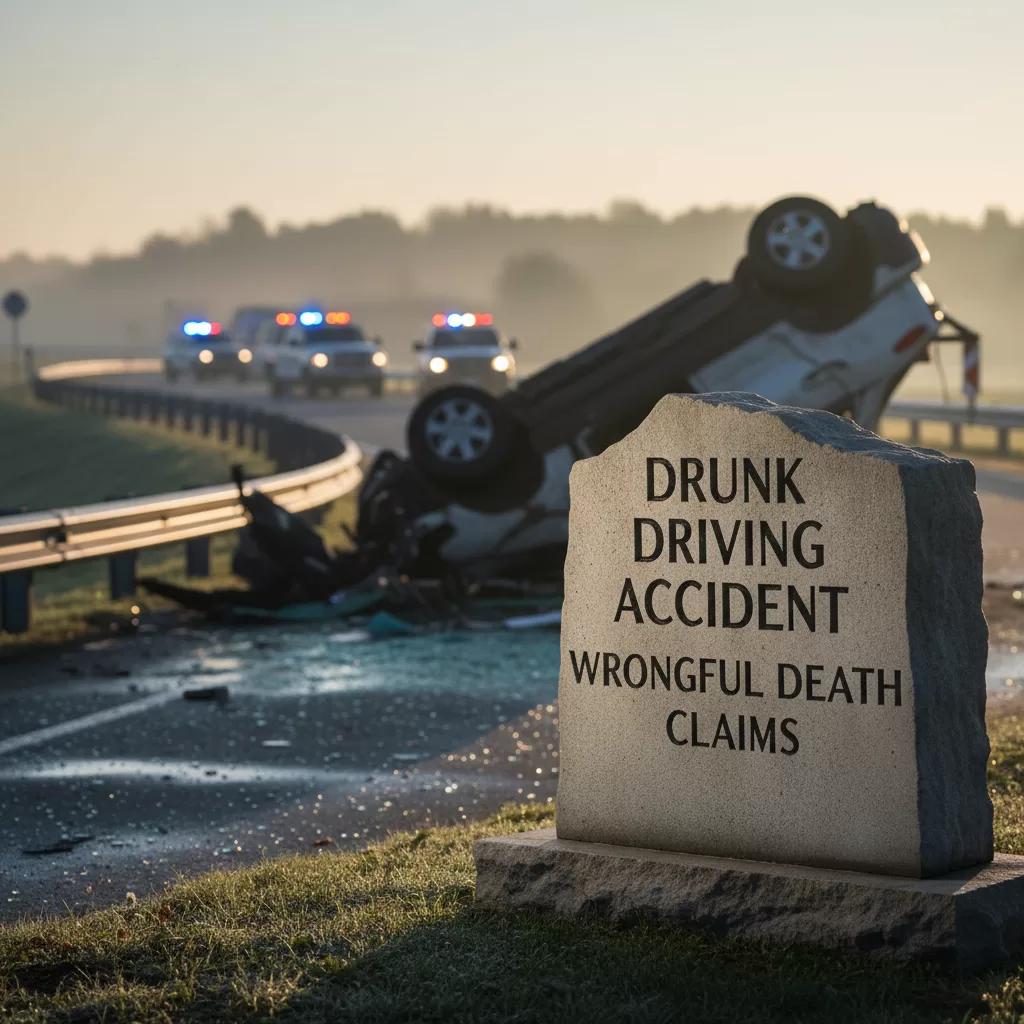
When a loved one is killed in a drunk driving accident, the emotional toll can feel overwhelming. We understand how difficult it is to grieve and manage complex questions about liability and legal options. A drunk driving accident wrongful death claim can offer a path for families to seek compensation and hold the at-fault driver accountable. At Legal Claim Assistant, we believe in providing clear, detailed information to help you understand your rights and make informed decisions about pursuing legal action.
In this article, we will walk through every stage of the process, from recognizing when a wrongful death lawsuit applies to understanding how damages are calculated. Our goal is to explain these matters in a straightforward way so that you feel empowered to explore the next steps. We will also cover who can file a claim, how timely action matters, and why working with an experienced attorney can be a turning point in seeking justice for your loved one.

No Win, No Fee. Let the Best Motor Vehicle Accident Attorneys Fight for your Compensation!
Table of Contents:

Understanding drunk driving accident wrongful death
A wrongful death refers to a loss of life caused by someone else’s negligent or reckless behavior. In the context of drunk driving, this typically means that a driver under the influence of alcohol, or another impairing substance, demonstrated a lack of care that led to a fatal crash. Wrongful death laws allow certain surviving family members or dependents to file a lawsuit against the responsible party.
We often see how easily these tragic events can unfold. Even a short drive can turn fatal when a driver’s judgment and reaction times are impaired. A family may suddenly face medical expenses, funeral costs, and profound emotional harm. By pursuing a wrongful death claim, survivors can seek compensation for these losses while also promoting accountability for impaired driving.
When a drunk driving wrongful death lawsuit makes sense
Pursuing a wrongful death lawsuit is not about placing a dollar value on a loved one’s life. Instead, it is about addressing financial hardships and losses caused by a driver’s negligent behavior. A lawsuit can make sense if there is evidence that:
• The at-fault driver was intoxicated or under the influence.
• That intoxication directly contributed to the crash and resulting death.
• The victim’s family suffered tangible and/or intangible losses due to their loved one’s passing.
Although the details differ for every case, we sometimes see scenarios where the driver was far above the legal blood alcohol limit or had a prior history of driving under the influence. If these elements are documented, and the timeline shows intoxication precipitated the accident, a drunk driving accident lawsuit could be the avenue to ensure fair compensation.
Who can file a wrongful death claim
Most states limit filing eligibility to close family members of the deceased, such as a spouse, children, or legal dependents. In some circumstances, parents or other relatives who relied on the victim for support may also qualify. If you are unsure whether you fit these criteria, it is a good idea to consult a drunk driving accident attorney who can explain your eligibility.
We often hear questions such as “Can passengers sue drunk driver?” The answer depends on how the state defines eligible survivors. Some states allow claims by those who were financially dependent on the victim or had a special relationship recognized by law. You may want to explore whether you have a potential claim by discussing the specifics with a legal professional. You can also read more about who may file by checking our page on can passengers sue drunk driver.
How the criminal case impacts your civil wrongful death claim
A driver who causes a fatal crash while intoxicated will likely face criminal charges, ranging from driving under the influence to vehicular manslaughter. However, a criminal conviction alone will not automatically provide compensation to the victim’s family. While the criminal charges are handled in criminal court, a wrongful death lawsuit follows separately in civil court.
In many cases, a criminal conviction supports a civil case because it confirms intoxication and illegal conduct. Should the defendant be found not guilty in the criminal proceeding, the wrongful death claim can still proceed. This is because the burden of proof in civil court is lower than in criminal court. The two processes often run in parallel, but the aim of a civil lawsuit is to secure financial compensation for the family, rather than to punish criminal wrongdoing on behalf of the state.
Establishing negligence and liability in drunk driving fatalities
Negligence and liability revolve around the principle that a driver must exercise reasonable care. If a driver chooses to operate a vehicle while impaired, they have violated that duty of care. We see three fundamental elements that lead to a finding of liability:
- Duty of care: The at-fault driver had a responsibility to operate the vehicle safely.
- Breach of duty: Driving under the influence breaks that responsibility.
- Causation: This breach caused the collision and the subsequent fatal injury.
When investigating a fatal drunk driving accident, it is essential to gather police reports, witness statements, and any available evidence (like dashcam footage) tying the impaired behavior to the tragic outcome. If all three elements are demonstrated, it is likely that the intoxicated driver will bear liability for wrongful death.
Proving intoxication and impairment of the at-fault driver
Clear proof of impairment is crucial in a drunk driving accident wrongful death case. Testing for blood alcohol content (BAC) often forms the backbone of this proof. If the driver’s BAC is above the legal limit, especially significantly above it, that alone can be a strong indication of impairment. Officers often conduct breathalyzer or blood tests at the scene or shortly afterward.
Even if official test results are missing or inconclusive, there may be other indicators of intoxication—slurred speech, bloodshot eyes, or an admission of alcohol consumption. We widely rely on police officers’ observations and other witness accounts to bolster the claim. If the at-fault driver refuses a breath test, the refusal itself can sometimes be used as an inference of guilt or impairment.
Assessing duty of care and shared responsibility
Although an impaired driver often carries the primary responsibility, it is possible that additional parties share some liability. For instance, a bar or establishment that continued to serve alcohol to an obviously intoxicated person may bear partial fault in certain jurisdictions. In other scenarios, a vehicle manufacturer might face claims if a defect contributed to the crash or prevented safety features from working properly.
We also see instances where a victim’s actions factor into the legal analysis. For example, if both drivers were potentially impaired, the settlement or verdict might consider relative fault percentages. However, the presence of contributory negligence does not necessarily negate compensation—it changes how damages are awarded. Understanding how duty of care applies to each party helps determine who is ultimately held responsible and to what degree.
Types of damages in a drunk driving wrongful death lawsuit
Wrongful death damages are designed to compensate families for both financial and non-financial losses. Economic harm, such as unpaid medical expenses and funeral costs, is usually straightforward. However, the law also recognizes intangible losses, including emotional suffering. Punitive damages may also come into play under certain conditions.
Depending on your situation, your attorney could seek more than one type of compensation during negotiations or a civil trial. Each family’s experience is unique, and the extent and kind of damages awarded reflect the losses caused by the incident. Many of our clients have found that a successful wrongful death claim can provide vital financial stability as they navigate grief and life changes.
No Win, No Fee. Let the Best Motor Vehicle Accident Attorneys Fight for your Compensation!
Economic damages: lost income, medical, and funeral costs
Economic damages refer to concrete, financial losses that result from the fatal accident. These typically include final medical bills, emergency care, and any surgeries that were conducted in an attempt to save the victim. Families also face funeral and burial expenses, which can be substantial.
A significant part of economic damages is the loss of income. If the decedent was the primary breadwinner, the surviving family members stand to lose future wages, benefits, and potential pension or retirement contributions. We often see expert witnesses brought in to calculate the value of these lost earnings, considering the deceased individual’s skill set, age, and life expectancy. This quantification helps the court or insurance adjusters recognize the real monetary toll a fatal crash imposes on a surviving family.
Non-economic damages: loss of companionship and emotional suffering
No dollar figure can truly represent the depth of pain a family experiences after losing a loved one. For that reason, the legal system provides for non-economic damages in a wrongful death case. These damages serve to acknowledge losses like mental anguish, loss of companionship, and diminished life enjoyment.
We frequently field questions about how the law places a value on something as profound as a spousal relationship or parental guidance. Each state and court system has guidelines for evaluating these intangible harms, but the process is not purely formulaic. A jury might consider factors such as how close the relationship was, whether the deceased was a mentor or caregiver, and the emotional significance of their presence in the household. These are deeply personal considerations that may vary from one case to another.
Punitive damages and holding parties accountable
In some drunk driving accident wrongful death claims, the court may award punitive damages. These damages do not compensate the family for losses. Instead, the purpose is to punish especially egregious or reckless behavior and deter future misconduct. When a driver’s conduct goes beyond ordinary negligence—perhaps they had an extremely high BAC or were a repeat offender—the court may deem punitive damages appropriate.
Some states have caps or other limitations on punitive damages, so not every claim will involve them. We have observed that the possibility of punitive damages can motivate a defendant—or more often, their insurance carrier—to approach settlement discussions more earnestly. By pursuing these damages, families can reinforce the message that drunk driving is unacceptable and must carry serious consequences.
Evidence needed to support a wrongful death claim
Building a strong claim requires thorough documentation and investigative work. Key evidence can include:
- Police reports indicating the driver’s intoxication or fault.
- Medical records that show the final diagnosis and cause of death.
- Eyewitness testimonies or statements corroborating the driver’s impairment.
- Surveillance or dashcam footage, if available.
- Autopsy results that confirm the deceased’s cause of death.
We also encourage families to collect any records of expenses, including hospital bills, funeral costs, or damage to personal property. Such evidence helps nail down the financial impact. In many cases, a drunk driving accident law firm will have investigators and legal staff who know how to track down and organize this information for maximum clarity.
Example case studies and real-life settlements
Over the years, we have seen families secure significant financial recoveries by demonstrating the driver’s responsibility for a fatal crash. In one widely publicized case, a victim’s family collected both economic and punitive damages from a driver who registered a .21 blood alcohol content at the time of impact. The court determined that the driver’s extraordinary level of intoxication merited harsh penalties.
Therefore, the family not only received compensation for medical expenses and lost future earnings, but also a sizeable punitive award meant to send a warning to future drunk drivers. Another instance involved a victim who was the primary caregiver for two young children. The settlement reflected not just lost income, but also the tremendous emotional void the victim’s death left behind. Through example cases, we see how wrongful death claims can ease financial strains while highlighting the societal need to discourage impaired driving.
Time limits: statute of limitations for wrongful death claims
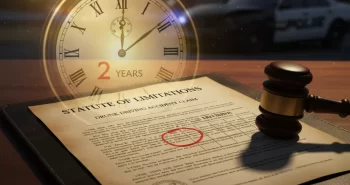
Every state has a legal deadline—known as a statute of limitations—that governs how long family members have to file a wrongful death lawsuit. This deadline differs from state to state, but in many places it ranges from one to three years after the date of the accident or death. Missing this window may prevent families from seeking any compensation at all, so time is of the essence.
We encourage you to check local requirements or speak with a legal professional regarding the statute of limitations drunk driving accident in your state. Even if you feel uncertain about proceeding with a claim, understanding these legal boundaries is crucial so you do not accidentally forfeit your right to hold the at-fault driver responsible.
How an experienced attorney can help in drunk driving wrongful death cases
Successfully pursuing a drunk driving accident wrongful death claim involves more than filing paperwork. An experienced legal team can gather evidence, notify insurance companies, engage expert witnesses, and represent your interests in settlement negotiations or court proceedings. We have seen how an attorney can serve as a steady guide, offering personalized strategies that reflect the family’s specific needs.
Your lawyer may also optimize access to resources such as accident reconstruction experts, economic damages analysts, and mental health professionals who provide testimony on emotional suffering. For many families, having an advocate at their side is invaluable when the opposing party’s insurance company attempts to minimize or deny rightful compensation. If you are wondering should i get a lawyer after drunk driving accident, we suggest considering the stakes: wrongful death matters can be extraordinarily complex, and securing professional representation can relieve you of many legal burdens at a time when you may still be healing.
By exploring a claim promptly and partnering with knowledgeable counsel, families stand the best chance of receiving fair compensation. These lawsuits do more than recoup financial losses. They also hold at-fault parties accountable and remind society that driving under the influence endangers every life on the road. We want you to know that you do not have to face this journey alone. If you have questions or believe you have a potential claim, we at Legal Claim Assistant encourage you to reach out for guidance. We are here to help.
No Win, No Fee. Let the Best Motor Vehicle Accident Attorneys Fight for your Compensation!