


Key Takeaways
Only certain people can file a wrongful death claim. This includes a spouse, children, parents, or a personal representative. State law decides eligibility.
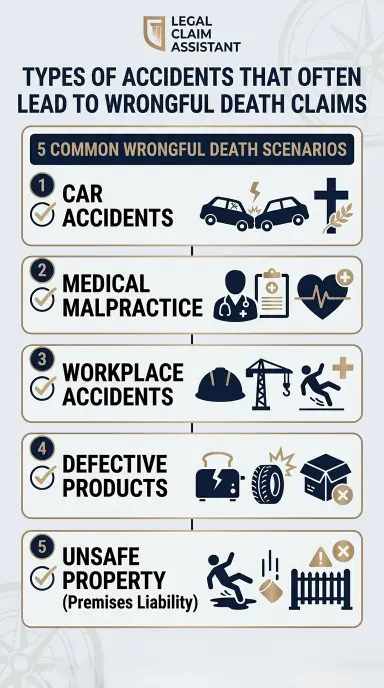
Wrongful death lawsuits often come from car accidents, medical malpractice, workplace accidents, defective products, or unsafe property.
Consulting an experienced attorney early ensures the claim is filed properly, evidence is preserved, and families can pursue full compensation while navigating complex legal procedures.
Immediate Family Members Who May File a Wrongful Death Lawsuit
In most wrongful death cases, immediate family members have the primary right to pursue legal action after a person dies because of someone else’s negligence. Wrongful death statutes in many states prioritize close relatives who depended on the deceased for financial support or who experienced direct emotional and economic losses.
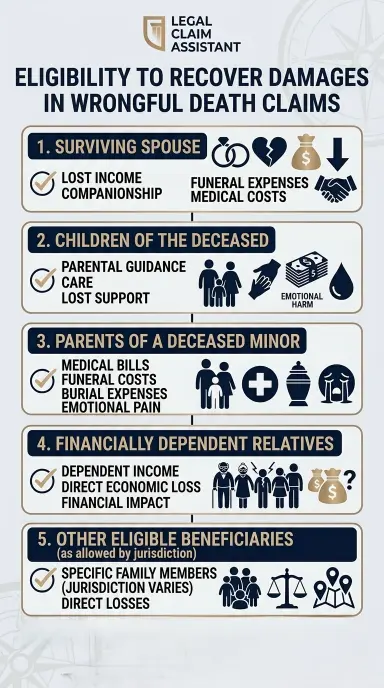
Surviving spouse: The surviving spouse usually has the strongest legal right to bring a wrongful death claim or recover compensation from a wrongful death suit. Courts recognize that the decedent’s surviving spouse often relied on the deceased’s income, companionship, and financial support. A surviving spouse may seek compensation for lost income, medical expenses related to the fatal incident, funeral expenses, burial costs, and non economic damages such as emotional pain.
Children of the deceased: Children are also commonly recognized as eligible beneficiaries in wrongful death cases. They may recover damages if the victim’s death caused the loss of parental financial support, guidance, and care. In many wrongful death claims, children can pursue compensation for lost income the deceased would have provided as well as emotional harm caused by the death.
Parents of a deceased minor: When a minor child dies due to a preventable accident such as a car accident, workplace accident, medical malpractice, or other fatal incident, the parents often have the right to pursue a wrongful death action. Parents may seek compensation for medical bills, funeral and burial costs, burial expenses, and the emotional pain associated with losing a child.
Other financially dependent relatives: If the deceased person did not have a surviving spouse or children, other financially dependent relatives may become eligible to recover damages. In some jurisdictions, siblings, grandparents, or other immediate family members who relied on the deceased’s income may qualify as a wrongful death beneficiary. Courts typically evaluate the financial and emotional impact of the decedent’s death when determining who may recover compensation.
Although eligibility rules vary across jurisdictions, courts typically prioritize immediate family members who experienced the most direct financial loss or emotional harm following the fatal incident.
The Role of the Personal Representative of the Decedent’s Estate
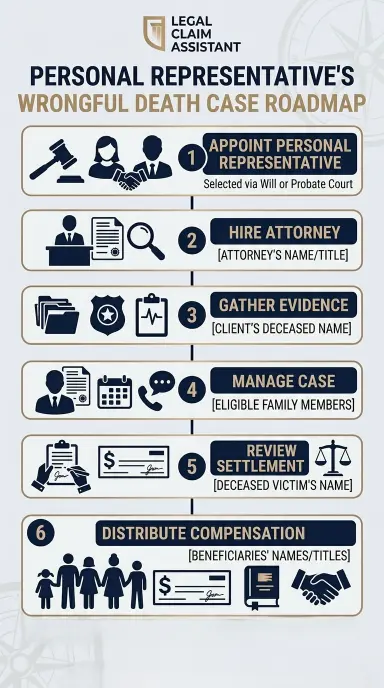
In many states, the personal representative of the estate has the legal authority to file a wrongful death lawsuit. The personal representative files the claim for all eligible family members. The role exists to ensure that one legal party manages the case and represents the interests of all beneficiaries.
The personal representative must usually be formally appointed during probate proceedings before pursuing a wrongful death action. If the deceased named someone in a will, that individual may serve in this role. If no will exists, the probate court appoints a qualified person to manage the deceased’s estate and oversee legal matters related to the victim’s death.
Responsibility | What It Involves |
|---|---|
Hiring legal representation | Selecting a wrongful death lawyer or law firm to handle the case and provide legal guidance. |
Gathering evidence | Collecting important records such as medical records, police reports, and documentation related to the fatal incident. |
Managing the legal case | Working with the attorney to monitor the progress of the wrongful death suit and review legal filings. |
Reviewing settlement agreements | Evaluating settlement offers and helping determine whether pursuing compensation through trial or settlement is appropriate. |
Distributing compensation | Ensuring that compensation awarded is distributed to eligible surviving family members according to wrongful death statutes. |
Although the personal representative manages the wrongful death suit, that person does not automatically receive compensation unless they are also a qualified heir or wrongful death beneficiary.
How to File a Wrongful Death Lawsuit
Filing a wrongful death lawsuit requires following specific legal steps to ensure the claim is valid and the defendants are properly held accountable. Most wrongful death claims begin with the appointment of a personal representative through probate court, who acts on behalf of the decedent’s estate and surviving family members.
Appointment of a Personal Representative
The probate court designates a personal representative to manage the deceased’s estate and file the wrongful death action. This person ensures the lawsuit is conducted in the best interest of all beneficiaries.Investigation of the Death
The wrongful death attorney gathers critical evidence to support the claim, including medical records, accident reports, police reports, and witness statements. In complex cases such as auto accidents or medical malpractice, accident reconstruction specialists or medical experts may be consulted to establish how the defendant breached their duty.Filing the Complaint
The attorney files a legal complaint in the appropriate civil court, naming the defendant(s) responsible for the decedent’s death. The complaint outlines how the defendant’s negligence or intentional misconduct contributed to the fatal incident.Serving the Defendants
The defendants are formally served with the complaint and summons, giving them notice of the lawsuit and the opportunity to respond.Litigation Process
Once the lawsuit is filed, both sides may engage in discovery, negotiations, or mediation. Most wrongful death cases settle before trial, but if liability is disputed or settlement offers are insufficient, the case may proceed to trial.
Throughout this process, acting promptly and working with an experienced wrongful death attorney improves the likelihood of gathering strong evidence, proving negligence, and seeking fair settlement or court-awarded damages.
How Wrongful Death Settlements Are Distributed Among Eligible Parties
Once a wrongful death claim is successfully resolved, either through settlement or trial, the personal representative ensures that compensation is distributed according to state laws and the decedent’s estate plan. The goal is to fairly allocate wrongful death damages among surviving family members who suffered financial or emotional harm.
Eligible recipients typically include:
Surviving spouse who may have lost income, companionship, and support.
Children of the deceased, especially if they relied on the decedent’s financial contributions.
Parents of a deceased minor, who may recover medical and funeral expenses as well as emotional damages.
Other financially dependent relatives in some states, depending on the decedent’s household and support network.
Damages are divided into economic and non-economic categories. Economic damages cover medical and funeral expenses, lost income, and lost financial support.
Non-economic damages compensate for emotional suffering, loss of companionship, and psychological distress. In rare cases, punitive damages may be awarded to punish particularly reckless or intentional misconduct and deter similar conduct in the future.
The personal representative works with the wrongful death attorney to ensure that compensation is distributed accurately and fairly, reflecting the financial and emotional losses suffered by each eligible survivor.
Acting quickly and consulting a skilled attorney helps protect legal options and maximize the potential recovery for grieving families.
Types of Accidents That Often Lead to Wrongful Death Claims
Wrongful death lawsuits arise from incidents where negligence contributed to a person’s death. Wrongful death cases can come from car accidents, medical malpractice, workplace accidents, defective products, or unsafe property. These cases often involve situations where someone else’s failure to exercise reasonable care directly caused the death.
Evidence such as police reports, medical records, accident reconstruction, and expert testimony is critical to proving negligence and supporting a wrongful death lawsuit.
Families pursuing compensation rely on this evidence to establish liability and recover damages for medical bills, funeral expenses, lost income, and emotional pain.
How Long Do You Have to File a Wrongful Death Lawsuit
Wrongful death lawsuits must be filed within a time limit set by state law, known as the statute of limitations. The deadline varies by state and is typically between 1 and 3 years from the date of death. Some states have exceptions that can extend or shorten this period. Missing the deadline usually results in automatic dismissal of the claim.
Acting promptly is essential because evidence may be lost, witnesses’ memories may fade, and probate proceedings for the decedent’s estate must be completed before filing.
Consulting a wrongful death attorney early helps ensure the claim is filed on time and supported with proper evidence, giving families the best chance to pursue legal action and recover compensation for their losses.
Why Legal Representation Matters to Recover Damages
Legal representation is important because wrongful death cases have strict deadlines and complex rules. An experienced law firm ensures that the claim is filed correctly and determines who has legal standing to pursue the lawsuit. Attorneys gather evidence, investigate the death, and calculate damages, including medical bills, funeral expenses, lost income, and non-economic losses.
They also negotiate with insurance companies and represent the estate and surviving family members in court if the case goes to trial. Most wrongful death attorneys work on a contingency fee basis, meaning families pay legal fees only if they recover damages, allowing grieving families to focus on healing while the legal team manages the claim.
Frequently Asked Questions
Families facing the loss of a loved one often have many questions about their legal options and understanding wrongful death lawsuits. This FAQ answers common concerns, including who can file a claim, how long you have to act, what damages may be recovered, and what to expect during the legal process.
Who can file a wrongful death lawsuit if there is no spouse?
If there is no surviving spouse, eligible children, parents, or other financially dependent relatives may file a wrongful death lawsuit according to state laws.
Can siblings file a wrongful death lawsuit?
Siblings generally cannot file unless they were financially dependent on the deceased and the state allows them to be considered beneficiaries under its wrongful death statutes.
How much does it cost to file a wrongful death lawsuit?
Most wrongful death attorneys handle claims on a contingency fee basis, so families do not pay upfront legal fees. Fees are collected only if the case successfully recovers compensation.
How long does a wrongful death suit usually take?
Most cases settle within one to three years, though complex cases or those that go to trial may take longer depending on evidence, number of defendants, and court schedules.
What happens if multiple family members want to file a wrongful death claim?
A court or the personal representative of the estate manages the lawsuit to ensure that only one claim is filed on behalf of all eligible beneficiaries, and compensation is distributed fairly among them.
Who can pursue compensation in a wrongful death case?
Eligible parties include the surviving spouse, children, parents, and sometimes other financially dependent relatives, as well as the personal representative of the deceased’s estate who manages the lawsuit.
Speak With an Experienced Attorney About Filing a Wrongful Death Claim
If a loved one’s death may have been caused by someone else’s negligence, consulting an experienced wrongful death attorney is a critical first step. An attorney can determine who has legal standing to file the claim and guide the personal representative through the filing process.
They also help gather critical evidence, including medical records, accident reports, and witness statements, which is essential to prove negligence and establish liability.
With professional legal guidance, families may pursue compensation for medical expenses, lost income, funeral costs, and emotional suffering. Acting early ensures the claim is filed correctly and within the statute of limitations, protecting your right to seek justice and financial recovery.
You Deserve Justice. Let Us Help.
Speak with a trusted Wrongful Death Attorney who will stand by your side, protect your rights, and fight for the compensation you deserve.
No Win, No Fee. Let the Best Wrongful Death Attorneys Fight for your Compensation!

Under 1 Minute

100% Free

Expert-Reviewed

Private & Secure
© 2025 Legal Claim Assistant. All Rights Reserved.
Terms of Service | Privacy Policy | Contact Us | Marketing Partners
Related Article


Share this article:


