


Key Takeaways:
These claims allow family members to seek compensation for a loved one’s death caused by medical negligence. This includes economic and non economic damages.
Filing promptly and gathering strong evidence, such as medical records and expert testimony, is essential to prove the claim and comply with state statutes of limitations.
Working with an experienced lawyer can help you take the right legal steps and handle complex medical and legal issues.
What Is a Medical Malpractice Wrongful Death Claim?
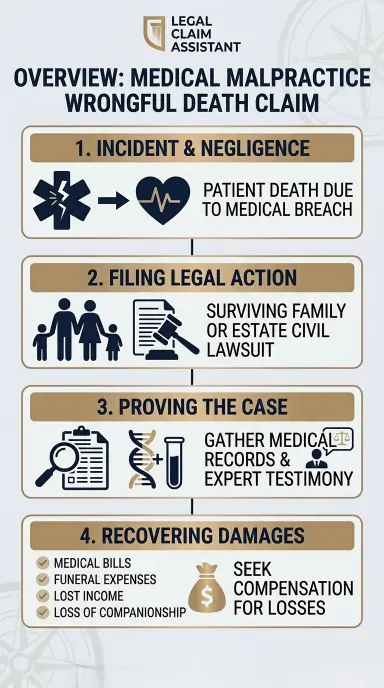
A medical malpractice wrongful death claim occurs when a healthcare provider’s negligence directly leads to a patient’s death. Medical malpractice is a form of medical negligence, while wrongful death is a civil lawsuit filed by certain family members or the decedent’s estate to seek compensation.
Surviving family members, including a spouse, children, or personal representative, may recover damages for medical bills incurred, funeral expenses, lost income, and loss of companionship. For deaths caused by accidents rather than medical errors, you may also consider consulting a personal injury wrongful death lawyer for guidance.
To prove a wrongful death claim, you must show that the medical professional breached the standard of care during medical treatment, and that breach caused the loved one’s death. This often involves gathering medical records, expert testimony, and documentation of medical errors.
Filing promptly is critical because statutes of limitations vary by state, and delays can prevent you from pursuing compensation. An experienced wrongful death attorney can help you navigate the legal process, prove medical malpractice, and file a wrongful death lawsuit on time.
Common Medical Mistakes That Lead to Wrongful Death
Medical mistakes can directly lead to a wrongful death case.
Common errors include:
Surgical errors, such as wrong-site surgery, accidental injury, or anesthesia complications.
Misdiagnosis or delayed diagnosis, which can result in fatal outcomes if critical conditions are untreated.
Medication errors, including wrong medication or overdose, causing serious adverse reactions.
Failure to monitor patients after surgery or during medical treatment, leading to preventable complications.
Hospital system errors, including understaffing, improper protocols, or negligent acts by hospital employees.
These errors may form the basis of a medical malpractice lawsuit or wrongful death claim. Surviving family members can pursue compensation for medical bills, burial expenses, lost income, and non-economic damages such as pain and suffering or loss of companionship.
To prove wrongful death, it is important to gather evidence, document the negligent party’s actions, and work with a wrongful death lawyer experienced in medical malpractice results.
How to File a Wrongful Death Claim From Medical Malpractice
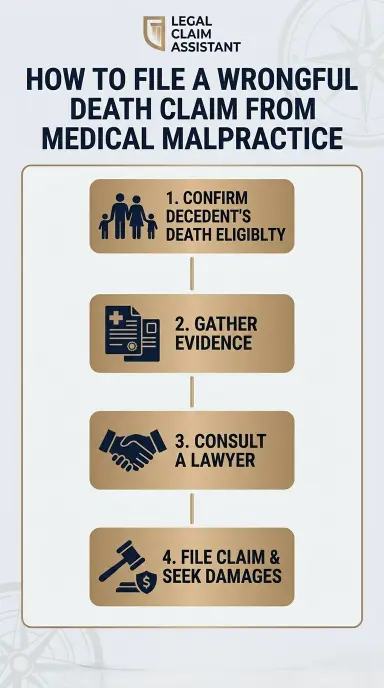
Filing a wrongful death claim from medical malpractice begins with confirming that the decedent’s death qualifies under state wrongful death statutes. Certain family members, including a surviving spouse, children, or the decedent’s personal representative, can file suit on behalf of the estate.
Next, gather evidence to support your legal claim. This includes medical records, documentation of medical expenses, expert testimony on the doctor’s negligence, and the death certificate. Evidence of a wrongful act or breach of duty by the medical provider is essential to prove medical malpractice occurred.
Consult an experienced medical malpractice wrongful death attorney to guide you through the legal action, ensure compliance with deadlines, and navigate the statute of limitations, which often begins from the date of death.
Filing promptly can help preserve the ability to pursue compensation for funeral expenses, lost income, and other damages. Your legal team can help assess whether punitive damages apply in cases of gross negligence or intentional acts.
Proving Wrongful Death in Medical Malpractice Cases
To succeed in a wrongful death and medical malpractice case, you must prove that the medical provider owed a duty of care to the patient and that this duty was breached. Evidence often includes medical records, hospital documentation, and expert testimony demonstrating how the provider’s negligence or wrongful act directly caused the decedent’s death.
Causation must clearly link the breach to the victim’s death. You also need to quantify damages, covering economic losses such as medical expenses, lost income, and burial expenses, as well as non-economic losses like physical pain, emotional suffering, and loss of companionship. In cases involving gross negligence or intentional acts, punitive damages may be awarded to penalize the negligent party.
An experienced wrongful death lawyer can help gather evidence, prove medical malpractice, and ensure the claim meets all legal requirements, which may improve the chances of recovering compensation.
Statute of Limitations for Medical Malpractice Wrongful Death
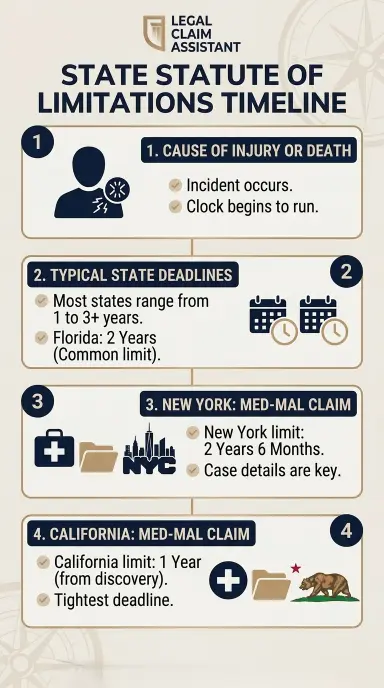
Each state sets strict deadlines, known as statutes of limitations, for filing a medical malpractice wrongful death claim. These deadlines are critical because failing to file on time can prevent surviving family members from pursuing legal action or recovering compensation. Typically, the statute of limitations ranges from one to several years, and a few exceptions may apply depending on the circumstances of the patient’s injuries or discovery of the wrongful act.
In wrongful death cases, the statute of limitations usually begins on the date of the decedent’s death. For example, in New York, many medical malpractice related wrongful death claims must generally be filed within 2 years and 6 months, depending on the case details. In California, medical malpractice related wrongful death cases often have a 1 year deadline from discovery, with additional time limits depending on the case.
State | Deadline to File | Notes |
|---|---|---|
New York | 2 years 6 months | From alleged medical error or end of treatment |
California | 1 year | Medical malpractice wrongful death |
Florida | 2 years | Statutory limit for most cases |
Understanding these deadlines is essential to protect your family member’s rights. Consulting an attorney experienced in medical malpractice claims ensures the claim is filed correctly and on time.
Compensation in Medical Malpractice Wrongful Death Cases
Compensation in medical malpractice wrongful death cases covers both economic and non-economic damages.
Economic damages reimburse tangible losses, such as medical expenses, funeral expenses, and lost income or financial support for surviving family members. Non-economic damages address intangible losses, including physical pain, emotional suffering, and loss of companionship due to a loved one’s death.
Some claims may also include survival action damages, which compensate for the decedent’s pain and suffering before death. Most medical malpractice wrongful death cases settle out of court, and settlements often exceed $1 million, although some states impose caps on non-economic damages.
Seeking legal guidance early ensures all potential damages are identified, documented, and pursued effectively. An experienced wrongful death lawyer can help gather evidence, evaluate medical records, and navigate the legal process to maximize compensation for the family.
Why You Need Legal Help for a Medical Malpractice Wrongful Death Claim
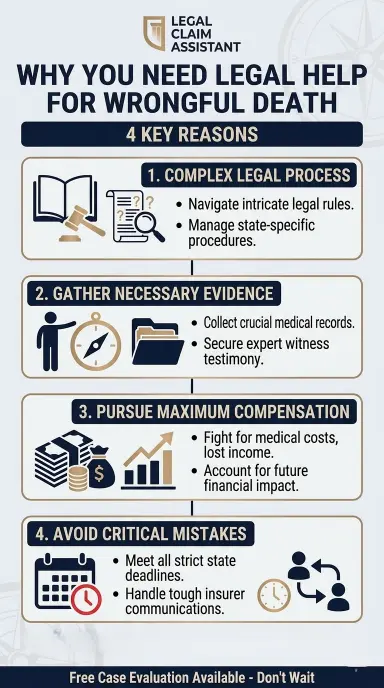
Medical malpractice wrongful death cases are complex and require specialized legal knowledge and expert testimony to prove that a healthcare provider’s negligence caused a loved one’s death. An experienced attorney guides surviving family members through the legal action, helping to gather medical records, document patient injuries, and collect evidence of a negligent act by the medical facility or doctor.
Legal representation also ensures that all wrongful death actions comply with state statutes of limitations and that negotiations with insurers or healthcare providers are handled effectively.
Early consultation with a medical malpractice wrongful death attorney can prevent mistakes that may jeopardize the claim and increases the likelihood of recovering compensation for medical expenses, funeral costs, lost income, and non-economic damages related to the family member’s death.
Frequently Asked Questions About Medical Malpractice Wrongful Death
Families facing a loved one’s death due to medical negligence often have many questions about the legal process. The following FAQs address common concerns about medical malpractice wrongful death claims, helping you understand your rights and options before filing a legal action.
What is the difference between medical malpractice and wrongful death?
Medical malpractice refers to negligence or a breach of duty by a healthcare provider during medical care. Wrongful death is a civil lawsuit filed by certain family members to recover compensation for the death caused by that negligence.
How long do I have to file a wrongful death medical malpractice claim?
Deadlines, or statutes of limitations, vary by state. Filing promptly is essential to protect your rights, as delays can prevent surviving family members from pursuing compensation.
Who can file a medical malpractice wrongful death lawsuit?
Certain family members, including a surviving spouse, children, or a personal representative of the decedent’s estate, can file suit on behalf of the deceased.
What damages can be recovered in a medical malpractice wrongful death case?
Surviving family members can recover economic damages like medical bills, funeral expenses, lost income, and non-economic damages such as emotional suffering and loss of companionship. Some cases may also include survival action or punitive damages.
How much do medical malpractice wrongful death cases usually settle for?
Settlement amounts vary depending on the severity of the negligence and damages. Many cases settle out of court, with some settlements exceeding $1 million. A legal team can help evaluate potential compensation.
Speak With a Medical Malpractice Wrongful Death Lawyer
If your loved one’s death was caused by medical negligence, speaking with a medical malpractice wrongful death lawyer is a critical first step. A qualified attorney can explain the legal definition of wrongful death and how it applies to personal injury cases, helping you understand your rights and potential compensation. Many lawyers offer a free case evaluation to review your situation and determine if you have a valid claim.
During your consultation, provide your attorney with all relevant documents, including medical records, the death certificate, and any evidence of the doctor’s negligence or mistakes during medical care. Detailed documentation helps your legal team build a strong case and accurately prove the wrongful act that led to your family member’s death.
Legal guidance ensures that all wrongful death actions are filed on time, in compliance with state statutes of limitations, and that your claim maximizes potential recovery for medical expenses, funeral costs, lost income, and non-economic damages.
Consulting early reduces mistakes that could jeopardize the claim and strengthens your chances of achieving fair compensation.
You Deserve Justice. Let Us Help.
Speak with a trusted Wrongful Death Attorney who will stand by your side, protect your rights, and fight for the compensation you deserve.
No Win, No Fee. Let the Best Wrongful Death Attorneys Fight for your Compensation!

Under 1 Minute

100% Free

Expert-Reviewed

Private & Secure
© 2025 Legal Claim Assistant. All Rights Reserved.
Terms of Service | Privacy Policy | Contact Us | Marketing Partners
Related Article

When Alcohol Plays a Role in Sexual Assault Claims

Understanding Sexual Assault and Harassment in Legal Claims
Share this article:


