


Key Takeaways:
These claims arise when neglect or abuse leads to a resident’s death. Families must prove duty, breach, causation, and damages.
Strong evidence and quick action are important. This includes medical records, witness statements, and legal guidance.
Most cases settle, but working with a law firm can help you pursue fair compensation for medical expenses, funeral costs, and emotional loss
What is a Nursing Home Wrongful Death Lawsuit?
A nursing home wrongful death lawsuit or wrongful death suit is filed when a nursing home resident dies due to the facility’s negligence, misconduct, or abuse. These cases arise when staff members or the facility fail to provide proper care, resulting in a loved one’s death.
Wrongful death nursing home claims are designed to provide surviving and grieving family members with financial compensation for economic and non-economic losses. This can include unpaid medical bills, funeral expenses, lost companionship, and emotional suffering caused by the resident’s premature death.
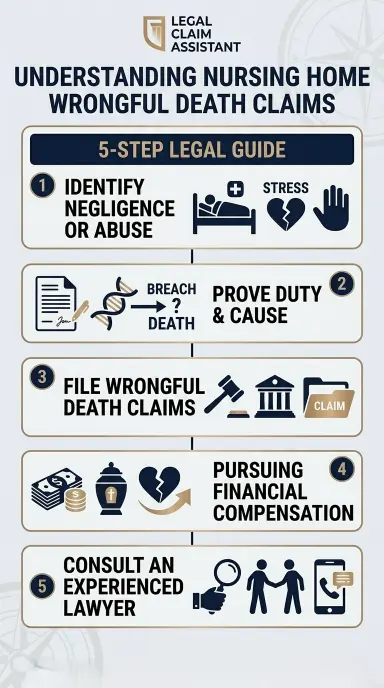
To pursue a claim, families must show that the facility owed a duty of care, breached that duty through negligence or intentional harm, caused the resident’s death, and resulted in measurable damages. Only certain family members such as spouses, children, or the deceased person’s estate through a personal representative can file a lawsuit in most states. Consulting a law firm experienced in nursing home abuse lawsuits is important to ensure the legal process is handled correctly and families affected can seek justice.
Common Causes of Nursing Home Wrongful Death
Many nursing home wrongful death cases stem from negligence or abuse that directly leads to a resident’s death. Common causes include:
Nursing home neglect: Failure to provide proper care, including inadequate supervision, poor hygiene, or ignoring medical conditions, can lead to serious harm or premature death.
Medication errors: Administering the wrong drugs or incorrect dosages can cause injury or death, especially in residents with multiple medical conditions. These situations are similar to cases involving medical negligence or malpractice, where healthcare providers fail to meet the standard of care.
Falls and broken bones: Understaffing, poor training, or lack of fall prevention measures can result in serious injuries or fatal injuries.
Untreated infections, dehydration, or malnutrition: Ignoring these conditions demonstrates a facility’s failure to meet the standard of care, often contributing to premature death.
Abuse or intentional harm: Physical or sexual abuse, emotional harm, or financial exploitation by nursing home staff members or other residents can result in wrongful death.
Each of these causes establishes a breach of duty, direct causation, and resulting damages, which are essential to pursue a wrongful death nursing home lawsuit. Families affected can seek justice, financial compensation, and hold the nursing home accountable through nursing home abuse lawsuits or settlements. Proper documentation, including medical records and incident reports, strengthens the case and can improve your chances of fair compensation.
Signs That a Nursing Home Resident May Be at Risk
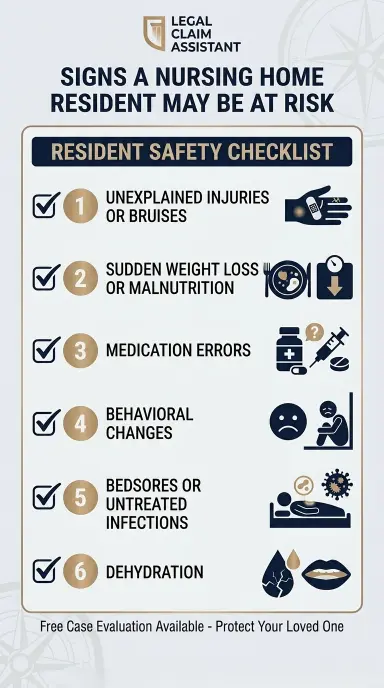
Family members should remain vigilant for warning signs that a nursing home resident may be experiencing neglect or abuse. Unexplained injuries, bruises, or burns can indicate physical abuse or unsafe conditions within the facility.
Sudden weight loss, dehydration, or malnutrition often result from poor supervision, missed meals, or failure to provide proper nutrition, reflecting nursing home neglect. Medication errors, such as incorrect dosages or missed medications, put residents at serious risk and can worsen medical conditions or interfere with proper medical treatment, leading to premature death.
Behavioral changes, including withdrawal, depression, or unusual behavior, may signal emotional abuse, fear, or neglect. Bedsores or untreated infections suggest the facility is failing to provide proper medical care or manage the resident’s health care according to required health protocols.
Observing one or more of these signs should prompt you to act quickly and consider legal advice. Families can work with an attorney to investigate the situation and gather evidence. Early recognition and action can prevent further harm and strengthen a wrongful death claim if wrongful death occurs due to neglect or abuse.
Who Can File a Nursing Home Wrongful Death Lawsuit
Filing a wrongful death claim is limited to certain individuals who have legal standing under state law. Eligible parties generally include:
Immediate family members: Spouses, life partners, children, and in some cases, parents of a minor resident. These family members are usually first in line to pursue financial compensation for the loved one’s death.
Next of kin: Individuals who were financially dependent on the deceased, such as adult children or siblings who relied on the resident’s income or support.
Personal representative of the decedent’s estate: In many states, a personal representative is required to file on behalf of the deceased person’s estate and surviving family members. This ensures proper legal procedures and distribution of any settlement or judgment.
Eligibility rules vary by state, so families should consult a nursing home abuse lawyer or legal team experienced in nursing home negligence cases. An attorney can guide families through the nursing home litigation process, help gather medical records, incident reports, and witness statements, and maximize compensation through settlements or trial.
Acting quickly is important because wrongful death claims have strict legal deadlines, and delays can affect evidence and claims. Families affected by a nursing facility’s negligence deserve financial support for unpaid medical bills, funeral costs, emotional suffering, and, in some cases, punitive damages to hold the facility accountable.
A law firm can handle the legal process for you on the family’s behalf while providing a free consultation to explain rights and options.
How to File a Nursing Home Wrongful Death Lawsuit
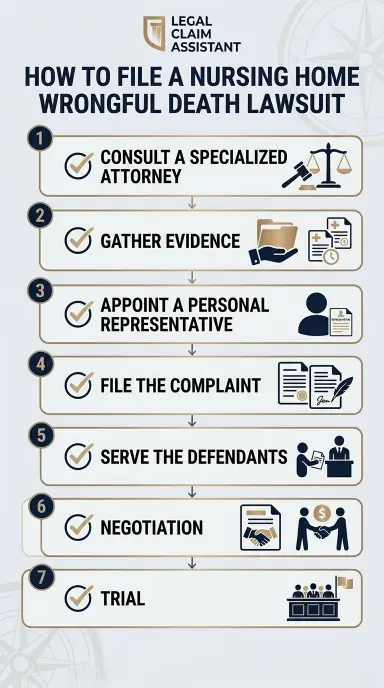
You start by consulting an attorney. Then you gather evidence, appoint a representative, file the complaint, and move through the legal process. Filing a wrongful death lawsuit against a nursing home involves a clear legal process. Taking the right steps early can help protect your claim and may improve your chances of recovering damages.
Consult a specialized attorney
Start by speaking with a lawyer who handles nursing home abuse cases. They understand state laws and deadlines and can help build a strong case against a care facility or assisted living facility. Most offer a free consultation and work on a contingency basis, so there is low financial risk.Gather evidence
Strong evidence is key in nursing home lawsuits. This includes medical records, incident reports, photographs, and witness statements. These documents help prove nursing home neglect, elder abuse, or failures by nursing home employees that led to the resident’s death.Appoint a personal representative
In many states, a personal representative must file the claim on behalf of the deceased person’s estate. This step ensures the lawsuit follows the legal system and any compensation is properly distributed.File the complaint
Your legal team will prepare and file the official complaint in court. This document outlines how the facility’s negligence caused the resident’s death and the damages being claimed, including medical expenses and other losses.Serve the defendants
The nursing home, its staff, and administrators are formally notified of the lawsuit. This step starts the legal process and gives the defendants a chance to respond.Negotiation or trial
Most nursing home wrongful death cases settle before trial. Attorneys negotiate with the facility’s insurance company to reach a fair settlement. If liability is disputed or the offer is too low, the case may proceed to court.
This process applies to many nursing home neglect cases, including those involving nursing home falls, untreated conditions, or abuse. Acting quickly helps preserve evidence and strengthens your claim.
Nursing Home Wrongful Death Lawsuit Settlements
Nursing home lawsuit settlements provide financial compensation to families after a loved one’s death caused by negligence or abuse. Most cases resolve through settlement rather than trial, allowing families to receive compensation faster and avoid a lengthy legal process.
Settlement amounts in nursing home abuse lawsuits often range from $400,000 to $600,000, while severe nursing home negligence cases can exceed $1 million.
The final amount depends on several key factors:
Age and health of the resident: Younger or healthier individuals often result in higher compensation due to longer expected life.
Severity of neglect or abuse: Cases involving serious harm, repeated neglect, or elder abuse typically lead to larger settlements.
Facility’s history of violations: A care facility with prior complaints, poor ratings, or repeated safety failures may result in higher settlements in some cases.
Compensation in nursing home settlements can cover:
Medical expenses related to the injury or illness
Funeral costs and burial expenses
Lost companionship and emotional distress for surviving family
In some cases, punitive damages to hold the facility accountable
Attorneys assist families in calculating economic damages in wrongful death claims to ensure all financial losses are covered. Many families choose settlements because they reduce financial risk and provide quicker financial support. An experienced legal team can evaluate the full value of the claim, negotiate effectively, and help the family pursue fair compensation based on the case.
Why Legal Representation Matters in Nursing Home Wrongful Death Cases
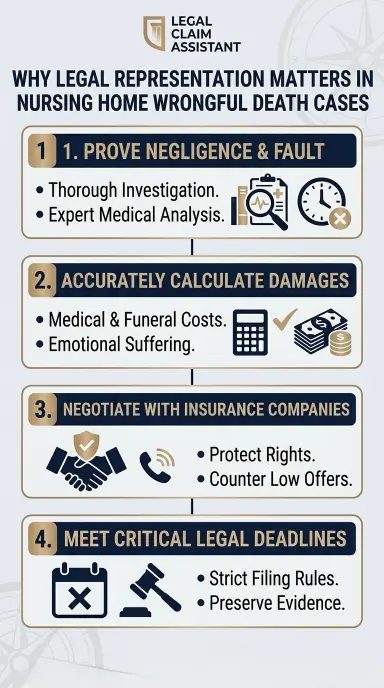
Legal representation can help families prove negligence, meet deadlines, and pursue fair compensation. Handling a nursing home wrongful death case requires strong legal knowledge and experience.
A skilled law firm understands how to navigate complex state laws, filing deadlines, and procedural rules that apply to nursing home lawsuits. An experienced attorney reviews medical records, facility reports, and witness statements to identify where the nursing home neglect resulted in harm or death. They often work with medical experts to prove how the facility’s actions failed to meet the required standard of care.
Accurately calculating damages is another critical step. This includes medical expenses, funeral costs, emotional suffering, and in some cases punitive damages. Without proper evaluation, families risk accepting less than they deserve. Attorneys also handle negotiations with insurance companies, which often try to minimize payouts in nursing home wrongful death claims.
Most lawyers work on a contingency basis, which means you do not pay upfront fees. Early consultation helps preserve key evidence, meet strict legal deadlines, and build a stronger case. For many families, having the right legal support makes the difference between a denied claim and fair compensation.
Frequently Asked Questions About Nursing Home Wrongful Death Lawsuits
Families often have urgent questions after a loved one’s death in a care facility. The answers below address common concerns about nursing home wrongful death claims and what to expect during the legal process.
How to sue a nursing home for wrongful death?
You need to file a claim through a qualified attorney. The process involves collecting evidence such as medical records, proving negligence or abuse, and filing a formal complaint in court. A lawyer guides you through each step and ensures the claim meets legal requirements.
How successful are nursing home lawsuits?
Success depends on strong evidence showing the facility breached its duty of care, caused the resident’s death, and resulted in damages. Many nursing home lawsuits are resolved through settlements rather than trial. Well-documented cases with clear negligence tend to have higher success rates.
What is an example of negligence in a nursing home?
Common examples include nursing home falls due to understaffing, untreated infections, medication errors, or failure to monitor a nursing home patient. Cases involving repeated neglect or violations, such as those reported in health affairs studies or highlighted by the world health organization, often strengthen claims.
How long do families have to file a nursing home wrongful death lawsuit?
Statutes of limitations vary by state, typically ranging from one to three years from the date of the resident’s death. Acting quickly ensures evidence is preserved and your claim is not barred by legal deadlines. An attorney can confirm the exact timeframe in your state.
Can I sue a nursing home if the death was partially the resident’s fault?
Yes, many states follow comparative negligence rules. This means your claim can still recover damages even if the resident contributed to the incident. Compensation may be reduced proportionally, but an attorney can evaluate your case and help you pursue compensation.
Speak With a Nursing Home Wrongful Death Attorney
Time matters in a nursing home wrongful death case. Acting quickly helps preserve evidence, secure medical records, and meet strict legal deadlines. Delays can weaken your claim and make it harder to prove what happened.
Working with a law firm can help your case move forward correctly.
An experienced attorney will:
Confirm who is eligible to file and guide you through the legal process
Collect and review key evidence, including medical records and facility reports
Build a case to support claims of negligence or abuse
Calculate full damages, including medical expenses, funeral costs, and emotional loss
Negotiate to help you pursue fair compensation
Most attorneys offer a free consultation, so you can understand your legal options without financial risk. Whether the case involves a local care facility or a California nursing home, having the right legal support helps protect your rights and hold the facility accountable.
You Deserve Justice. Let Us Help.
Speak with a trusted Wrongful Death Attorney who will stand by your side, protect your rights, and fight for the compensation you deserve.
No Win, No Fee. Let the Best Wrongful Death Attorneys Fight for your Compensation!

Under 1 Minute

100% Free

Expert-Reviewed

Private & Secure
© 2025 Legal Claim Assistant. All Rights Reserved.
Terms of Service | Privacy Policy | Contact Us | Marketing Partners
Related Article

When Alcohol Plays a Role in Sexual Assault Claims

Understanding Sexual Assault and Harassment in Legal Claims
Share this article:


