


Key Takeaways:
Hospital wrongful death cases involve medical negligence resulting in patient death, and families can pursue compensation for both economic and non-economic damages, including medical bills, funeral costs, lost income, and emotional trauma.
Successful claims require proving duty of care, breach, causation, and damages, often with expert testimony, and most cases settle out of court, though settlements can reach substantial amounts depending on negligence severity and victim factors.
Consulting an experienced wrongful death lawyer early improves the chances of fair compensation, ensures compliance with deadlines, guides settlement negotiations, and helps families seek justice for the significant harm caused by preventable medical errors.
Understanding Hospital Wrongful Death Cases
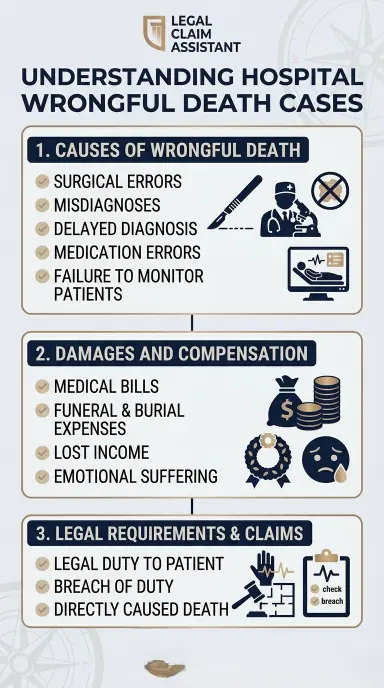
A hospital wrongful death case arises when a patient dies due to hospital negligence or medical malpractice. These cases involve medical care that falls below accepted standards, resulting in preventable deaths. Medical negligence resulting in death can take many forms, including surgical errors, misdiagnoses, delayed diagnosis, medication errors, or failure to monitor patients properly.
Families can pursue a wrongful death action to seek substantial compensation for both economic and non-economic damages, such as medical bills, funeral and burial expenses, lost income, and emotional suffering experienced by surviving family members.
Establishing a successful wrongful death claim requires proving that the hospital or medical provider owed a legal duty to the patient, breached that duty, and that the breach directly caused the patient’s death. Hospitals often defend themselves by citing accepted medical practices, pre-existing conditions, or complications that were not preventable. Most wrongful death cases settle out of court, but pursuing justice through litigation with an experienced wrongful death attorney can help families secure fair compensation, sometimes reaching million settlement amounts, depending on factors like the victim’s age, severity of negligence, and insurance coverage.
Using tools like a wrongful death settlement calculator can help estimate potential payouts, though actual amounts vary by case.
Core Legal Elements Required to Prove Negligence in a Wrongful Death Suit
To succeed in a hospital wrongful death suit, plaintiffs must prove four core legal elements:
Duty of Care: The defendant owed a legal duty to the patient, meaning the hospital or medical staff was responsible for providing competent medical care.
Breach of Duty: The provider failed to meet accepted medical standards through errors such as delayed diagnosis, medication errors, or gross negligence.
Causation: The breach directly caused the patient’s death. Expert testimony is often required to link medical negligence to the wrongful death accurately.
Damages: The death caused measurable financial and emotional losses to surviving family members, including medical malpractice damages, funeral and burial expenses, lost income, and emotional trauma. Non-economic damages, such as emotional suffering and the deceased’s pre-death suffering, are also considered.
The burden of proof lies with the plaintiff, and defenses may argue that pre-existing conditions or complications caused the death instead of negligence. An experienced wrongful death lawyer can guide families through the legal process, gather expert evidence, negotiate settlements, and maximize recovery.
Most wrongful death cases settle, but pursuing civil wrongful death claims through trial may result in higher wrongful death lawsuit payouts or even punitive damages in cases of egregious hospital negligence.
How to File a Wrongful Death Action Against a Hospital
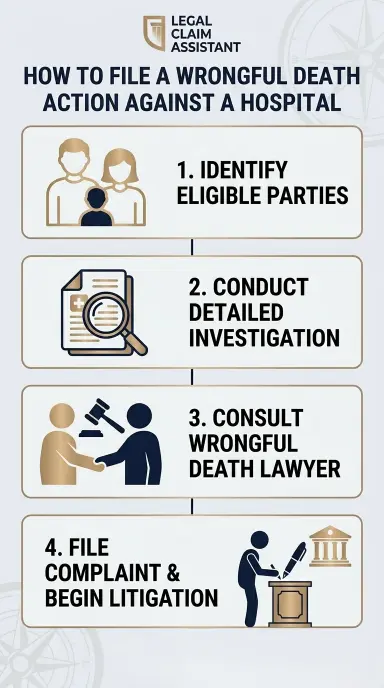
Filing a wrongful death action against a hospital involves a structured legal process. Families should follow these steps to protect their rights and maximize potential compensation:
Identify Eligible Parties: Only certain individuals can file a wrongful death claim, typically the spouse, children, or an estate representative.
Conduct a Detailed Investigation: Collect medical records, hospital reports, and other documentation to establish how the wrongful death was caused. This step is critical for proving preventable medical errors or negligence.
Consult a Wrongful Death Lawyer: An experienced attorney can evaluate the case, determine liability, and guide families through medical malpractice claims and settlements. Many attorneys offer a free consultation to discuss potential wrongful death settlement amounts.
File a Legal Complaint: The complaint outlines the hospital’s alleged negligence, the damages suffered by surviving family members, and the legal basis for the claim.
Serve the Hospital or Provider and Begin Litigation: After filing, the hospital is formally notified, and the legal process begins. Most wrongful death cases settle before trial, but pursuing court action may result in higher financial compensation.
Important considerations include meeting state-specific statutes of limitations, gathering strong evidence early, and seeking expert testimony for medical negligence resulting in death. Proper legal guidance helps families navigate settlement negotiations and pursue justice effectively.
How a Wrongful Death Settlement Calculator Estimates Fair Compensation
A wrongful death settlement calculator estimates compensation by evaluating factors such as age of the deceased, income, severity of negligence, relationship to survivors, and insurance limits.
A wrongful death settlement calculator helps estimate potential financial recovery, though actual settlement amounts vary based on case specifics. Key factors include:
Factor | Impact on Settlement |
|---|---|
Age of Deceased | Younger victims often result in higher payouts due to longer potential future earnings |
Income & Earning Potential | Major driver of economic damages; higher earning capacity increases average payout |
Severity of Negligence | Clear and preventable medical negligence raises settlement value |
Relationship to Survivors | Close family relationships increase non-economic damages such as emotional trauma experienced |
Insurance Policy Limits | Caps maximum recovery regardless of actual damages |
The calculator considers both economic damages, like lost income, medical malpractice settlements, and funeral expenses, and non-economic damages, including emotional suffering and loss of companionship.
Most wrongful death settlements are influenced by settlement negotiations, the severity of medical negligence, and insurance coverage. While a calculator can provide an estimated average wrongful death settlement, actual payouts for hospital wrongful death cases typically range based on the deceased’s age, the extent of medical malpractice resulting in death, and the legal representation involved.
Average Settlement for Medical Malpractice Claims and Hospital Negligence
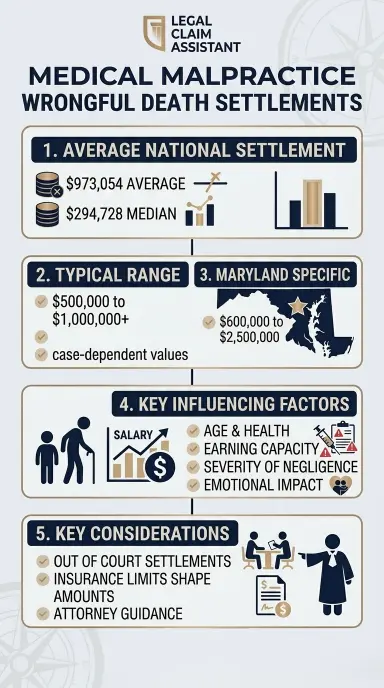
The average settlement for medical malpractice wrongful death cases and hospital negligence claims provides families with an idea of potential financial compensation. Nationwide, the average wrongful death settlement is approximately $973,054, while the median settlement is around $294,728. Typical settlement amounts often range from $500,000 to $1 million or more, and in states like Maryland, cases may reach $600,000 to $2.5 million depending on the circumstances.
Factors influencing the value of a wrongful death claim include:
Age and health of the deceased: Younger victims or those with greater earning potential often result in higher settlements.
Earning capacity: Lost future income and benefits represent significant economic damages.
Severity of negligence: Gross negligence or preventable medical errors that caused death increase compensation.
Emotional impact on family: Non-economic damages such as emotional trauma experienced by surviving family members influence payout.
Most cases involving hospitals settle out of court, with malpractice insurance limits often shaping final compensation. Settlement values differ from cases like a wrongful death car accident settlement, where liability and damages are calculated differently. Personal injury attorneys and experienced wrongful death lawyers guide families through the legal process to seek justice and ensure fair compensation for the harm caused.
Types of Compensation in Hospital Wrongful Death Settlements
Hospital wrongful death settlements can include several types of damages, designed to compensate families for both financial losses and emotional suffering.
Economic damages in hospital wrongful death settlements cover financial losses directly resulting from the death. This includes medical expenses incurred before death, such as hospital bills, treatments, and other healthcare costs. Families can also recover funeral and burial costs, which are often substantial, as well as lost income and financial support that the deceased would have provided to surviving family members. These damages aim to replace the financial contributions the victim would have continued to make.
Non-economic damages compensate for the emotional and personal impact of the death. Surviving family members may recover for emotional distress and trauma caused by the loss, as well as the loss of companionship, care, and guidance. Additionally, damages may cover the pain and suffering endured by the deceased before death, recognizing the human cost beyond financial losses.
In cases involving egregious hospital conduct or gross negligence, punitive damages may also be awarded. These damages are intended to hold the hospital accountable for particularly reckless behavior and to deter similar actions in the future. Punitive awards go beyond compensating the family and serve as a legal mechanism to enforce higher standards of medical care.
Most wrongful death cases encompass both economic and non-economic damages, with settlements influenced by the severity of medical negligence typically range, the victim’s age, and the demonstrable impact on the family.
State Laws and Deadlines for Filing a Wrongful Death Suit
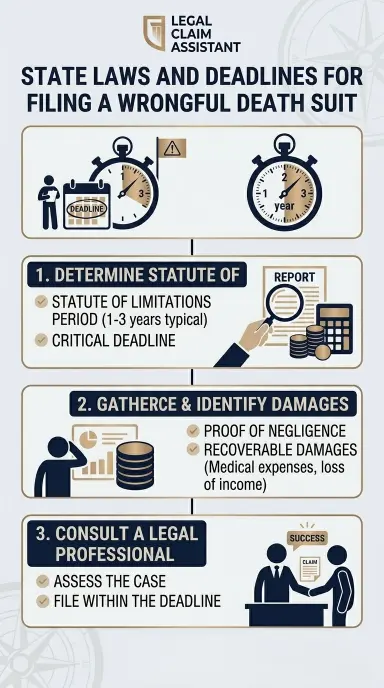
Filing a wrongful death suit requires strict adherence to state-specific laws and deadlines. The statute of limitations for these claims typically ranges from 1 to 3 years, depending on the state.
For example, Maryland allows surviving family members up to 3 years from the date of death to file a claim. Missing this deadline can permanently bar the lawsuit, making timely action critical. Some states also impose caps on damages in medical malpractice cases, limiting the amount of financial compensation available even in severe cases of hospital negligence.
Understanding these rules is essential to successfully pursuing justice and ensuring families can recover medical negligence settlements, compensation for wrongful death caused, and other losses.
Why Hiring a Wrongful Death Lawyer Improves Your Chances of Fair Compensation
Hiring an experienced wrongful death lawyer significantly increases the likelihood of obtaining fair compensation. Skilled attorneys investigate hospital negligence thoroughly, gather expert medical testimony, and compile evidence that proves the death was preventable.
They negotiate settlements with insurance companies and ensure compliance with filing deadlines, helping families avoid costly legal mistakes.
Families with legal representation often receive higher settlement amounts compared to those without. Beyond financial recovery, wrongful death lawyers manage the legal process, allowing family members to focus on emotional healing while ensuring that the medical negligence caused and the harm suffered are fully represented.
Frequently Asked Questions About Hospital Wrongful Death Settlements
Families facing a hospital wrongful death case often have urgent questions about the legal process, timelines, and their rights. The following FAQ addresses the most common concerns, helping you understand how wrongful death actions work and what to expect when pursuing compensation for medical negligence that caused preventable deaths.
How long does it take to settle a hospital wrongful death case?
Simple claims may resolve in a few months, while complex cases involving serious medical negligence can take one to two years or longer, especially if settlement negotiations are prolonged or the case goes to trial. Most hospital wrongful death cases settle out of court, but timelines vary.
Can a wrongful death claim proceed if a medical device caused the death?
Yes. If a defective or improperly used medical device contributed to a patient’s death, families can file a wrongful death action against the hospital and, in some cases, the manufacturer. These claims still require proving that the device or hospital negligence directly caused significant harm.
Are all hospital staff considered employees for liability purposes?
Not always. Only employees under the hospital’s control or agents acting on its behalf may create liability. Independent contractors or external providers may not be automatically included, but they can still be named in a wrongful death case if their actions contributed to the death.
Who files a wrongful death action if multiple beneficiaries exist?
Typically, one representative, such as a spouse, adult child, or estate executor, files the wrongful death lawsuit on behalf of all surviving family members. This ensures that compensation is fairly distributed to those impacted by the patient’s death.
What is the statute of limitations for hospital wrongful death claims?
The statute of limitations varies by state, generally ranging from one to three years from the date of death. Missing this deadline can permanently bar the claim, making it critical to consult an experienced wrongful death lawyer promptly.
Speak With a Wrongful Death Lawyer About Your Case
If your family has lost a loved one due to hospital negligence, speaking with a wrongful death lawyer can help you understand your legal rights and explore options for financial compensation. An experienced attorney can evaluate whether you have a valid wrongful death case, estimate potential settlement amounts beyond calculator tools, and guide you through the filing process.
Working with a lawyer ensures that your claim meets all legal requirements and deadlines. They can gather evidence, obtain expert testimony, and negotiate with insurers to represent significant harm caused by medical negligence effectively. Most attorneys offer a free consultation, allowing families to discuss their case and pursue justice without financial risk.
Starting the process early improves the likelihood of fair compensation and helps surviving family members focus on recovery during this difficult time.
You Deserve Justice. Let Us Help.
Speak with a trusted Wrongful Death Attorney who will stand by your side, protect your rights, and fight for the compensation you deserve.
No Win, No Fee. Let the Best Wrongful Death Attorneys Fight for your Compensation!

Under 1 Minute

100% Free

Expert-Reviewed

Private & Secure
© 2025 Legal Claim Assistant. All Rights Reserved.
Terms of Service | Privacy Policy | Contact Us | Marketing Partners
Related Article

When Alcohol Plays a Role in Sexual Assault Claims

Understanding Sexual Assault and Harassment in Legal Claims
Share this article:


