


Key Takeaways:
Wrongful death settlements pay families or the estate for financial and emotional losses. The amount depends on factors like age, health, income, and dependents.
The process includes evidence gathering, negotiations, and sometimes trial. It is often complex and may require a lawyer.
Some settlements may range from $500,000 to $1 million, but amounts vary widely.
What Is a Wrongful Death Settlement?
A wrongful death settlement is compensation awarded to the surviving family members or the personal representative of a deceased person through a wrongful death action when death occurred due to another party’s negligence, recklessness, or intentional misconduct. Unlike a wrongful death lawsuit that proceeds to trial, a settlement resolves the claim outside of court through negotiations with the responsible party or their insurance company.
What Are The Average Wrongful Death Claim Settlement Amounts?
The average wrongful death settlement typically ranges from $500,000 to $1 million, though many cases fall below this range depending on the unique circumstances of the death and the evidence available. Settlements can be paid as a lump sum or structured over time, depending on the family’s needs, the defendant’s resources, and state laws.
An experienced wrongful death attorney plays a critical role in securing fair compensation. They gather evidence such as medical records, accident reports, and documentation of the deceased person’s lost wages, medical expenses, and funeral costs.
They also ensure settlement negotiations protect the interests of all surviving relatives, including a surviving spouse and minor children, while factoring in emotional distress, emotional harm, financial support, and potential punitive damages if the defendant’s negligence was egregious.
By guiding families through this complex process, attorneys help protect legal rights, manage settlement funds responsibly, and provide emotional support during a difficult time.
Common Types of Wrongful Death Cases
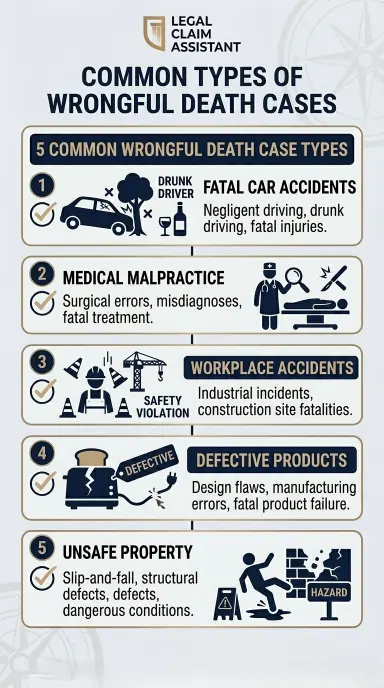
Wrongful death settlements arise from a variety of incidents where another party’s negligence contributed to a death. The most common types include:
Car accidents, including drunk driving and traffic violations. Families affected by fatal car accidents can pursue wrongful death car accident settlements to recover financial and emotional losses.
Hospital wrongful death cases often involve surgical errors or misdiagnoses, which can result in substantial settlement awards.
Workplace accidents, including construction or industrial incidents where safety regulations were ignored. Similarly, wrongful death cases in nursing homes arise from neglect or abuse, and families can pursue nursing home wrongful death settlements.
Defective products that cause fatal injuries due to design or manufacturing flaws
Unsafe property conditions, such as slip-and-fall incidents or structural hazards
Each type of case can lead to varying settlement amounts depending on the strength of the evidence, liability of the responsible party, and state laws governing wrongful death damages.
For example:
A car accident with clear police reports and witness statements may result in higher settlement funds than a complex medical malpractice case requiring extensive expert testimony. In all cases, a skilled wrongful death attorney can help families pursue fair compensation, including medical expenses, burial costs, lost earnings, emotional support, and, when applicable, punitive awards to deter similar misconduct.
Most wrongful death settlements aim to restore financial stability and address the emotional impact on surviving relatives while navigating a complex legal system.
Damages Covered in a Wrongful Death Settlement
Wrongful death settlements provide wrongful death compensation to surviving family members for both tangible and intangible losses resulting from the death of a loved one.
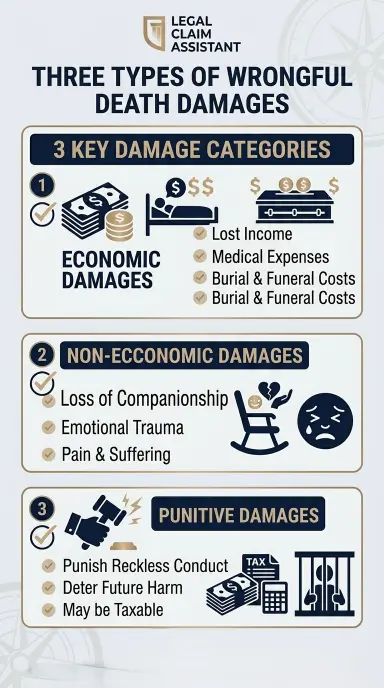
Damages are typically divided into three categories:
Type of Damage | Examples | Purpose |
|---|---|---|
Economic | Lost income, medical care, funeral and burial expenses, living expenses | Compensate measurable financial harm caused by the deceased person’s death |
Non-economic | Emotional support, loss of companionship, pain and suffering, emotional trauma | Compensate for intangible losses, including the emotional and psychological impact on surviving relatives |
Punitive | Court-awarded damages for reckless, intentional, or egregious conduct | Punish the responsible party and deter similar misconduct |
Punitive damages awarded in wrongful death cases may be subject to taxation because they are intended as a punishment for egregious conduct by the responsible party
State laws may place limits on certain damages. For example, Maryland caps non-economic damages at $875,000 in 2025. Methods like the multiplier or per diem method are commonly used to calculate non-economic damages.
Factors That Affect Wrongful Death Settlement Amounts
Several factors influence how much a wrongful death settlement will pay, and many families use a wrongful death settlement calculator for general estimates. Understanding these factors helps families set realistic expectations when filing a wrongful death claim and pursuing compensation.
Key considerations include:
Victim’s age, health, and earning potential: Younger victims with higher income or long-term financial contributions to the family often result in higher settlements.
Financial and emotional needs of surviving family members: Dependents such as a surviving spouse or minor children, and their reliance on the deceased for financial support, affect settlement value.
Strength of evidence: Well-documented cases with medical records, accident reports, witness statements, and expert testimony increase the likelihood of higher compensation.
Defendant’s insurance limits and personal assets: Settlement amounts are often capped by the insurance policy limits or available assets of the responsible party.
Settlement timing: Cases that resolve early in negotiations may result in faster compensation, while prolonged litigation or trial can impact the final settlement value.
Younger victims or those in good health often result in higher wrongful death settlements because their potential future earnings and financial contributions to the family are greater.
Every wrongful death case is unique. The right wrongful death attorney reviews these factors, documents damages, and helps guide the legal process to pursue fair compensation. They coordinate the legal team, work closely with financial advisors when necessary, and consider both emotional and financial impacts to ensure fair compensation for grieving families.
How Wrongful Death Settlements Are Divided Among Family Members
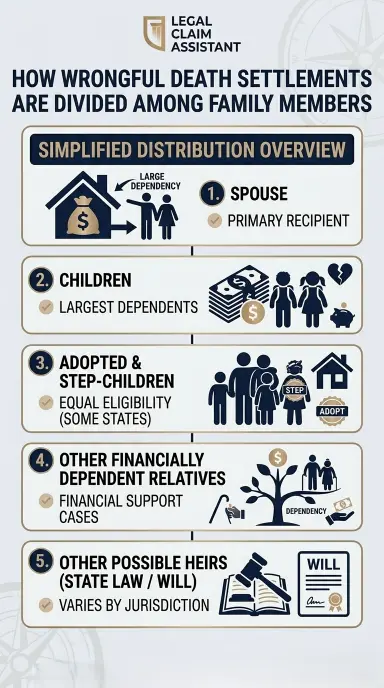
The division of a wrongful death settlement is guided primarily by state laws and the deceased person’s will. Typically, surviving spouses and children receive the largest portion of the settlement, reflecting their financial dependency on the deceased and the emotional loss suffered. In tragic cases involving infants, families can seek infant wrongful death settlements to cover medical expenses, funeral costs, and long-term support. In some jurisdictions, stepchildren, adopted children, or other financially dependent relatives may also be eligible to recover compensation.
If family members disagree on how to divide the settlement, courts may intervene to ensure fair distribution. Mediators are sometimes used to help resolve disputes and facilitate agreement among heirs.
Settlements are often paid as a lump sum, though structured payments can be arranged to cover long-term needs such as children’s education, retirement contributions, or ongoing living expenses. The process considers both the economic support the deceased provided and the emotional harm suffered by surviving family members, ensuring fair compensation for everyone affected by the loss.
The Role of a Wrongful Death Lawyer
A wrongful death lawyer helps families seek compensation and handle the legal process after a wrongful death. They investigate the cause of the death and establish liability, gathering crucial evidence such as medical records, police reports, accident reconstruction reports, and witness statements. This evidence helps prove that another party caused the death through negligence or misconduct.
The attorney negotiates with insurance companies and other parties to secure a fair settlement or, if necessary, represent the family in court. They help make sure the correct person files the claim, deadlines are met, and procedures are followed.
Beyond the legal aspects, a skilled wrongful death lawyer provides guidance during an emotionally challenging time, helping families understand their options, the potential tax implications of a settlement, and how to allocate funds for children’s education, retirement contributions, or ongoing living expenses.
By maintaining a strong attorney-client relationship, they protect the family’s rights and work to improve the chances of a fair settlement.
How Long Does a Wrongful Death Settlement Take?
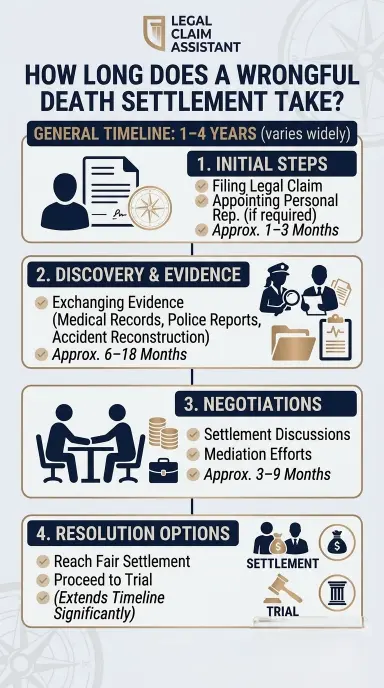
The timeline for a wrongful death settlement can vary widely depending on the complexity of the case and the number of parties involved. Most wrongful death cases take between one and four years to resolve, though some settlements are completed in several months when evidence is clear and liability is uncontested.
The process begins with filing a legal claim and appointing the personal representative if required. Discovery follows, during which both sides exchange evidence such as medical records, police reports, and accident reconstruction reports, especially in car crash or workplace accident cases. Settlement negotiations often take several months, and if the parties cannot agree, the case may proceed to trial, extending the timeline.
Factors such as:
The number of defendants, complexity of evidence, and court schedules all influence how long the settlement takes. Families with strong evidence and skilled legal representation may reach a fair settlement more quickly, ensuring that the financial and emotional support the family needs is provided without unnecessary delay.
Frequently Asked Questions About Wrongful Death Settlements
Here are answers to common questions about wrongful death settlements to help you understand eligibility, compensation, and the legal process.
Who is eligible to receive a wrongful death settlement?
Surviving family members or the decedent’s estate are eligible to receive a wrongful death settlement. This typically includes the spouse, children, and parents. Eligibility varies by state law. In some states, other dependents or the personal representative of the estate may also claim compensation, depending on state laws and the decedent’s financial support obligations.
What is the average settlement for wrongful death?
Wrongful death settlements vary based on age, income, and case details. Most wrongful death settlements paid fall between $500,000 and $1 million, with the average settlement around $973,054 and a median of $294,728.
How is a wrongful death settlement divided among family members?
State laws typically prioritize surviving spouses and children. Courts may intervene if family members cannot agree on distribution. Stepchildren, adopted children, or financially dependent relatives may also be eligible depending on jurisdiction and the personal representative’s guidance.
Are wrongful death settlements taxed?
Compensatory damages for lost income, medical bills, or funeral expenses are generally not taxed. Courts may award punitive damages in cases of egregious negligence or intentional misconduct, and these damages may be subject to taxation.
Do I need a lawyer to get a wrongful death settlement?
Yes. Hiring a skilled wrongful death lawyer is strongly recommended. Attorneys protect legal rights, calculate economic and non-economic damages, negotiate with insurance companies, and ensure the claim complies with legal deadlines. Most wrongful death lawyers offer a free consultation to evaluate your case and explain your options, helping families pursue fair compensation efficiently.
Speak With a Wrongful Death Lawyer
If your loved one died due to someone else’s negligence, speaking with a lawyer early is important. Immediate consultation helps preserve critical evidence such as medical records, police reports, and accident reconstruction, which can directly impact the strength of your wrongful death suit and the potential compensation.
A skilled attorney calculates both economic damages, like lost wages, funeral expenses, and medical bills, and non-economic damages, including emotional pain and loss of companionship. They guide families through complex settlement negotiations, helping families understand whether settlement offers are reasonable based on similar cases and evidence.
Lawyers also handle all legal procedures, confirm the claim is filed within the statute of limitations, and represent the family’s interests in court if the case proceeds to trial. This professional guidance allows families to focus on healing while pursuing fair compensation after a person died due to another party’s negligence.
Navigating the legal system can be confusing and emotionally challenging, particularly for families grieving the loss of a loved one, making the guidance of a skilled wrongful death lawyer essential.
You Deserve Justice. Let Us Help.
Speak with a trusted Wrongful Death Attorney who will stand by your side, protect your rights, and fight for the compensation you deserve.
No Win, No Fee. Let the Best Wrongful Death Attorneys Fight for your Compensation!

Under 1 Minute

100% Free

Expert-Reviewed

Private & Secure
© 2025 Legal Claim Assistant. All Rights Reserved.
Terms of Service | Privacy Policy | Contact Us | Marketing Partners
Related Article

Share this article:


