


Key Takeaways:
Most wrongful death settlements are non-taxable, including compensatory damages for medical expenses, funeral costs, lost wages, and emotional distress tied to physical injury, while punitive damages and accrued interest are taxable.
Properly itemizing and structuring a settlement, with guidance from a wrongful death lawyer and tax professional, helps minimize tax liability and ensures funds are distributed correctly to heirs or the estate.
Working with a wrongful death attorney ensures compliance with IRS rules, maximizes compensation for surviving family members, and provides strategies such as structured settlements to manage taxable portions over time.
Which Parts of a Wrongful Death Settlement Are Taxable?
Punitive damages, emotional distress not tied to physical injury, and accrued interest are taxable, while compensatory damages for medical costs, funeral expenses, and lost income are generally non-taxable.
In a wrongful death lawsuit settlement, understanding which portions are taxable is crucial for family members and heirs. The Internal Revenue Service (IRS) generally does not tax compensatory damages that cover actual losses, but certain parts of the settlement can be considered income and must be reported.
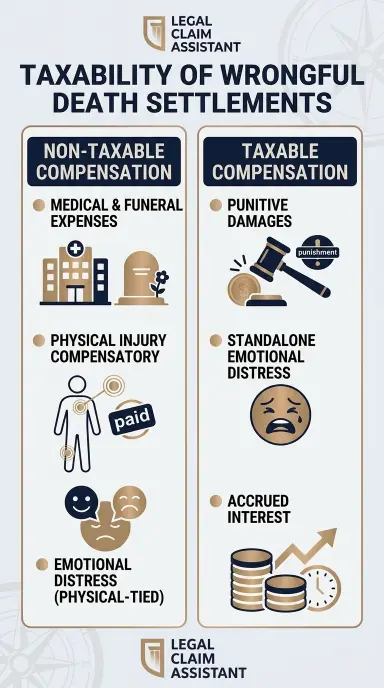
Non-taxable components:
Compensatory damages for physical injury or illness: Payments for medical bills, personal physical injuries, and other expenses directly related to the deceased’s physical condition are generally non-taxable.
Medical expenses and funeral costs: Settlement funds covering burial expenses, out-of-pocket medical expenses, or funeral costs are not considered gross income.
Loss of companionship or emotional distress tied to physical injury: Non-economic losses connected to the deceased’s physical injury, including emotional distress, are typically non-taxable.
Potentially taxable components:
Punitive damages: Money awarded to punish the at-fault party or insurance company for gross negligence is taxable income.
Emotional distress damages not related to physical injury: Compensation for emotional distress or mental suffering unconnected to a personal physical injury may be taxed.
Accrued interest on settlement payments: Post judgment interest or periodic payments earned on settlement funds are taxable.
Previously deducted medical expenses reimbursed: If the family or deceased deducted medical expenses in prior tax returns, reimbursements in the settlement may be considered income.
Proper itemization of the settlement agreement is essential. Clearly labeling compensatory versus taxable portions helps surviving family members avoid mistakes when filing a tax return and ensures the IRS does not misclassify non-taxable damages as income.
Structured settlements can provide periodic payments, allowing taxable portions to be spread over time. This approach can reduce the overall tax impact on a surviving spouse or heirs who might otherwise fall into a higher tax bracket.
Working with a wrongful death attorney or a tax professional ensures that the settlement complies with IRS rules. They can guide the allocation of funds, identify taxable and non-taxable portions, and help minimize taxes on wrongful death settlement money.
Understanding Compensatory and Punitive Damages in Wrongful Death Cases
Damages in wrongful death cases fall into two main categories: compensatory and punitive. Understanding the distinction is key for managing tax implications of a wrongful death lawsuit settlement.
Compensatory damages are designed to compensate survivors for actual losses. This includes medical expenses, funeral costs, lost wages, and lost financial support for family members. Non-economic damages, like emotional distress tied to physical injury or physical sickness, are generally non-taxable. These damages are not considered income by the federal government under the Internal Revenue Code.
Punitive damages, on the other hand, are meant to punish the at-fault party for gross negligence or intentional misconduct. The IRS considers these amounts taxable income, and they must be reported on the decedent’s estate tax return or the surviving spouse’s tax return if the payment is received directly. Accrued interest from a wrongful death insurance settlement is also treated as taxable income.
Proper labeling in the settlement agreement can prevent misclassification of damages, ensuring the IRS does not consider compensatory damages as taxable income. Working with a wrongful death attorney helps structure settlement funds, coordinate with tax professionals, and comply with federal rules, so surviving family members receive maximum compensation while minimizing taxes on wrongful death damages.
This approach makes it clear which settlement money is taxable, the role of compensatory and punitive damages, and the importance of proper allocation in the settlement agreement.
How Tax Treatment Affects Settlement Money Distribution
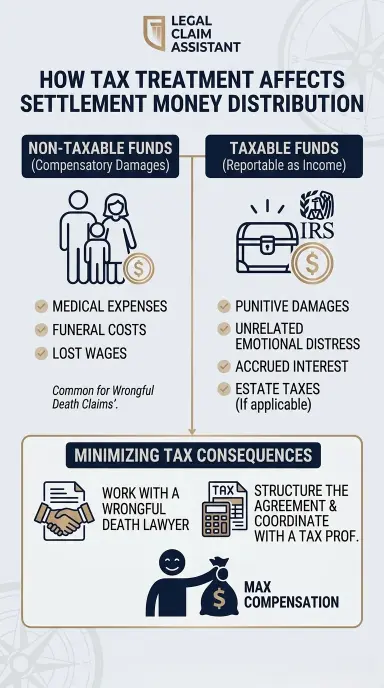
Settlement money covering medical expenses, funeral costs, and lost wages is generally non-taxable, while punitive damages, unrelated emotional distress, and accrued interest are taxable.When a wrongful death claim results in a settlement, how the money is treated for taxes depends on the type of damages awarded. Settlement money meant to cover medical expenses, funeral costs, or lost wages for a loved one is generally non-taxable. These compensatory damages are not considered income by the federal government and typically do not appear on a tax return. Car accident wrongful death settlements often include lost wages and medical expense damages, which are generally non-taxable.
Taxable portions of the settlement, including punitive damages, emotional distress damages not tied to a physical injury, or accrued interest, must be reported as income. If the settlement is paid to the deceased’s estate, the IRS may also apply estate taxes depending on the total value of the deceased’s estate.
Properly distinguishing taxable versus non-taxable settlement portions helps prevent overpayment of taxes and ensures heirs or family members receive the full benefit intended by the court or insurance company.
Working with a wrongful death lawyer is essential. They can help structure the settlement agreement to clearly allocate funds, coordinate with a tax professional, and minimize tax consequences, ensuring that the surviving family receives maximum compensation from the entire settlement amount.
Strategies to Minimize Taxes on Wrongful Death Settlements
Managing taxes on a wrongful death lawsuit settlement requires careful planning. Key strategies include:
Itemize the settlement agreement: Clearly separate taxable and non-taxable portions of the settlement amount, specifying which funds cover medical expenses, funeral costs, lost wages, or punitive damages.
Allocate funds to compensatory damages: When possible, structure the settlement so more money is categorized as compensatory damages rather than punitive damages, which helps avoid paying taxes on the entire settlement.
Consider structured settlements: Spread payments over time through periodic payments to manage gross income and prevent moving into a higher tax bracket.
Work with a wrongful death lawyer: Ensure the settlement agreement follows IRS rules and state regulations, especially for cases involving medical malpractice or personal injury claims.
Consult a tax professional: Complex settlements involving previously deducted medical expenses, out-of-pocket costs, or post-judgment interest require expert guidance to minimize tax consequences.
Implementing these strategies ensures that family members receive maximum financial support for the deceased person while avoiding unnecessary taxes on settlement funds. The timeline for structured settlements may vary depending on case complexity; learn more about how long it takes to settle a wrongful death lawsuit. Proper planning protects heirs, surviving spouses, and the estate from unexpected tax burdens while complying with federal and state tax rules.
How a Wrongful Death Lawyer Can Help You Navigate Tax Implications
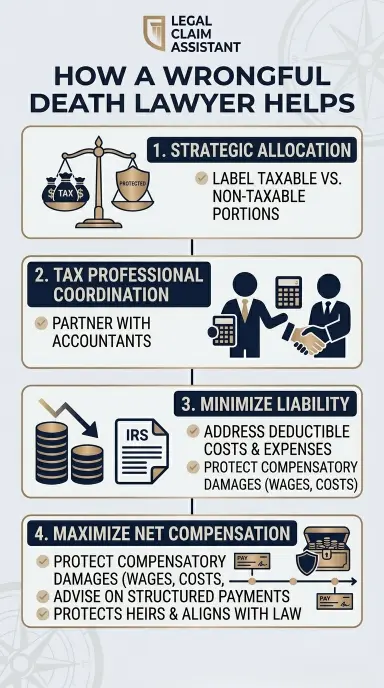
A wrongful death lawyer plays a critical role in managing the tax consequences of a settlement. They help identify which portions of settlement money are taxable and which are non-taxable, ensuring that family members or the deceased’s estate avoid unnecessary taxes. Proper allocation in the settlement agreement prevents IRS misclassification and protects compensatory damages, such as medical expenses, funeral costs, lost wages, and emotional distress tied to physical injury, from being taxed as other income.
A wrongful death lawyer can also:
Draft settlement agreements with clear labeling of taxable and non-taxable portions for IRS compliance.
Coordinate with accountants or tax professionals to handle estate settlements or payments to surviving family members.
Ensure that out-of-pocket expenses and previously deducted medical costs are properly addressed to minimize tax liability.
Maximize compensation for the loved one’s family while reducing exposure to federal taxes.
Advise on strategies for structured or periodic payments to manage income in higher tax brackets.
Hiring a lawyer ensures the settlement process considers all tax rules, protects heirs, and aligns with both federal law and the specifics of intestate succession if applicable.
Frequently Asked Questions About Taxability of Wrongful Death Settlements
Understanding taxes on a wrongful death lawsuit settlement can be complex. These frequently asked questions provide clear guidance for surviving family members on how the IRS treats different portions of a settlement.
Are wrongful death lawsuit settlements taxable?
Most settlements are not taxable. Compensatory damages for medical bills, funeral costs, and lost financial support are generally non-taxable. Punitive damages and accrued interest are taxable and must be reported as income.
Are emotional distress damages taxable?
Emotional distress damages are taxable only if they are not directly related to physical injury or personal physical injuries resulting from the accident date or decedent’s death.
Do medical costs recovered in a settlement affect taxes?
Medical expenses paid for by the settlement are generally non-taxable unless previously deducted on a tax return, in which case they may be considered other income.
Can a lawyer help minimize taxes?
Yes, a wrongful death lawyer can advise on settlement allocation, structure payments, and coordinate with tax professionals to avoid paying taxes on the entire settlement amount.
Is settlement money considered income?
Only the taxable portions, such as punitive damages, emotional distress damages not tied to physical injury, and accrued interest, are considered income by the IRS. Non-taxable portions like compensatory damages for medical bills, funeral costs, and lost wages are not treated as gross income. Similar principles apply to nursing home wrongful death settlements, where non-economic and compensatory damages are generally not taxed.
Speak With a Wrongful Death Lawyer About Your Settlement
Consulting a wrongful death lawyer is essential to ensure your settlement is handled correctly and tax implications are managed effectively. A lawyer can evaluate your claim, calculate compensatory and punitive damages, and guide you on how the settlement funds should be allocated to minimize taxes.
Legal representation helps surviving family members and the deceased’s estate maximize compensation while avoiding unnecessary IRS liability. Most wrongful death attorneys offer free consultations, giving families the opportunity to understand potential recovery, out-of-pocket expenses, and how taxable portions of the settlement may affect gross income.
Acting promptly ensures that the settlement money is distributed correctly, protects the financial interests of your loved one, and provides peace of mind that all aspects of the wrongful death claim, including tax consequences and allocation, are properly managed.
You Deserve Justice. Let Us Help.
Speak with a trusted Wrongful Death Attorney who will stand by your side, protect your rights, and fight for the compensation you deserve.
No Win, No Fee. Let the Best Wrongful Death Attorneys Fight for your Compensation!

Under 1 Minute

100% Free

Expert-Reviewed

Private & Secure
© 2025 Legal Claim Assistant. All Rights Reserved.
Terms of Service | Privacy Policy | Contact Us | Marketing Partners
Related Article


Share this article:


