


Key Takeaways:
Most compensatory damages in wrongful death settlements, like medical bills, funeral costs, and lost income, are not taxable under federal law.
Portions such as accrued interest, previously deducted expenses, or punitive damages may be taxable and must be reported to the IRS.
Clear settlement documentation and guidance from an experienced wrongful death lawyer and tax professional help minimize tax liability and protect the family’s financial recovery.
Are Compensatory Damages in Wrongful Death Cases Taxable Income?
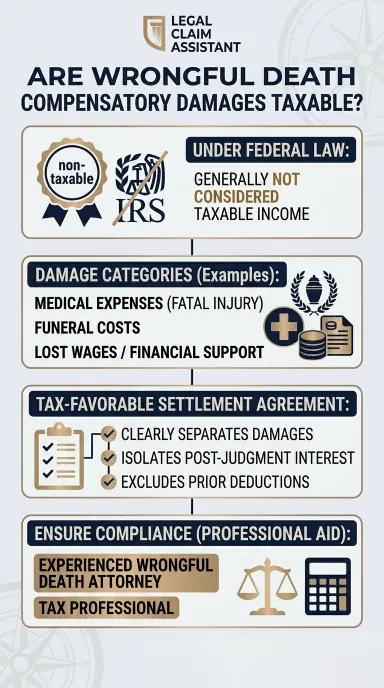
In most wrongful death cases, compensatory damages are not considered taxable income under federal law. These damages are meant to reimburse surviving family members for losses caused by the decedent’s death rather than to provide a profit.
Typical examples include:
Medical expenses incurred from the fatal injury, funeral costs, and lost wages or financial support for a surviving spouse or children. Because these payments restore what was lost rather than create new wealth, the Internal Revenue Service generally excludes them from gross income.
However, the tax treatment depends on how the damages are structured in the settlement agreement. A settlement that clearly separates compensatory damages from taxable portions like post-judgment interest or reimbursements for previously deducted expenses reduces the risk of challenges by the IRS.
Working with an experienced wrongful death attorney or tax professional ensures that the classification of damages in wrongful death lawsuit settlements aligns with federal law and minimizes unexpected tax consequences.
What Parts of Settlement Money in Wrongful Death Cases Are Not Taxable
The following portions of wrongful death lawsuit settlements are typically not subject to federal income taxes:
Medical costs: Payments covering medical bills or treatment related to the decedent’s fatal injury.
Funeral and burial expenses: Reimbursement for funeral costs, burial expenses, or related services.
Lost financial support: Compensation for the loss of income or support for surviving family members.
Non-economic damages tied to the death: Emotional distress damages, pain and suffering, or other non-economic losses directly resulting from the decedent’s death.
Understanding which damages are taxable helps families protect their financial recovery in cases such as hospital wrongful death settlements.
Courts and the Internal Revenue Service generally treat these payments as compensation for harm rather than taxable income. They are meant to restore the family’s financial and emotional position rather than provide additional wealth. Proper documentation in the settlement agreement, handled by an experienced wrongful death lawyer, is crucial to ensure these amounts remain non-taxable and avoid disputes with the IRS.
This approach helps families focus on recovery and financial relief without worrying about paying taxes on core compensatory damages.
How Emotional Distress and Emotional Distress Damages Are Taxed
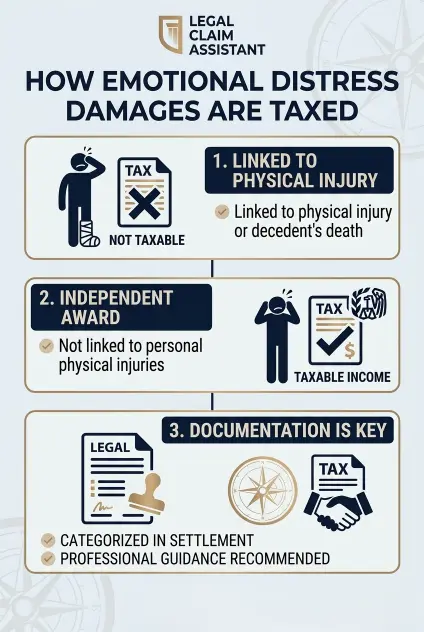
Emotional distress damages in wrongful death claims are generally not taxable when linked to physical injury or the death of a loved one. The tax treatment of emotional distress damages in wrongful death claims depends on their connection to physical injury or the decedent’s death. When emotional distress results directly from a physical injury or the loss of a deceased person, these damages are generally not taxable and are treated like other compensatory damages.
However, if emotional distress damages are awarded independently of personal physical injuries, they may be considered taxable income by the IRS. For example, compensation for emotional suffering not tied to a physical injury or funeral expenses could be subject to taxes, especially if the family is in a higher tax bracket.
The distinction is subtle and depends on how the settlement funds are categorized in the settlement agreement. Clear documentation of what portion of the settlement covers emotional distress, along with guidance from a wrongful death lawyer and a tax professional, is essential to avoid owing taxes on these damages and to ensure compliance with federal law.
When Damages in Wrongful Death Become Taxable
While most compensatory damages in wrongful death cases are not taxable, certain portions of settlement money may create tax liability. These include:
Accrued interest: Interest earned on delayed or structured settlement payments is generally considered taxable income under the Internal Revenue Code. Whether the payout is periodic or a lump sum, any interest portion is treated as gross income and must be reported on your tax return.
Previously deducted expenses: If the decedent’s medical costs, burial costs, or other expenses were deducted on prior tax returns, any reimbursement for those amounts in the settlement may be taxable.
Non-physical or punitive damages: Damages awarded for claims not tied to personal physical injuries, or punitive damages intended to punish the at-fault party, can be taxable under federal law.
For example, if a family receives compensation for medical expenses that were previously claimed as deductions, that portion of the settlement is included in gross income. Similarly, accrued interest on a delayed insurance settlement or structured payment plan is almost always taxable. Compensation for medical costs, funeral expenses, and other damages can also arise from traffic-related incidents, such as wrongful death car accident settlements.
Working with an experienced wrongful death attorney and a tax professional ensures that your settlement agreement is structured properly to minimize taxes and avoid unexpected tax consequences.
Lump Sum vs Structured Settlement Money and Tax Implications
Wrongful death settlement money can be paid either as a lump sum or through structured payments, and understanding the tax implications of each is important for families.
Payout Type | Description | Tax Implications |
|---|---|---|
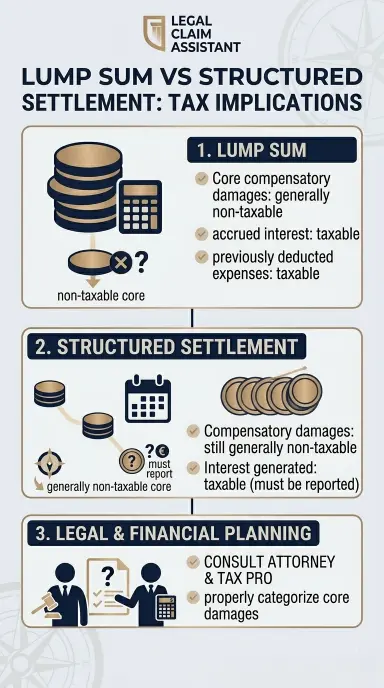
Lump Sum | Paid in one full payment. | Core compensatory damages, like medical costs, funeral expenses, and lost income, remain non-taxable. Any portion representing accrued interest or previously deducted expenses may be taxable. |
Structured Settlement | Paid over time, often in periodic payments. | Compensatory damages are still generally non-taxable. However, interest generated on structured payments is usually considered taxable income and must be reported to the IRS. |
Choosing between a lump sum and structured settlement involves both legal and financial planning. Families should work with an experienced wrongful death attorney and a tax professional to structure the settlement so that compensatory damages are properly categorized, minimizing taxes on wrongful death settlements and ensuring compliance with federal law.
Why Proper Documentation Matters in Wrongful Death Cases
Proper documentation of a wrongful death settlement is essential to avoid paying taxes unnecessarily and to protect the family’s financial recovery. The settlement agreement should clearly define compensatory damages and separate taxable and non-taxable portions. Each payment should be tied to a specific purpose, such as medical costs, funeral expenses, lost income, or emotional distress damages.
Without clear documentation, the Internal Revenue Service may challenge portions of the settlement, creating unexpected tax obligations. Working with a personal representative, an experienced wrongful death lawyer, and a tax professional ensures that the legal process and settlement funds are structured correctly. This approach helps families secure a fair settlement while minimizing tax consequences and protecting the value of the entire settlement amount.
Frequently Asked Questions About Taxes on Wrongful Death Settlements
Families pursuing a wrongful death claim often have questions about how settlement money is taxed. Understanding these tax implications can prevent surprises and help you make informed decisions. Below are answers to the most common concerns regarding taxes on wrongful death damages.
Do you have to report a wrongful death settlement on taxes?
Non-taxable portions of the settlement, such as compensation for medical expenses, funeral costs, and lost income due to the deceased’s death, generally do not need to be reported as income. However, any taxable components, such as accrued interest or reimbursements for previously deducted expenses, must be reported to the Internal Revenue Service (IRS).
Is all settlement money tax-free?
No. While most compensatory damages in personal injury claims or wrongful death cases are not taxable, portions tied to post-judgment interest, punitive damages, or non-physical claims may be subject to federal taxation. This distinction is especially important when the at-fault party was grossly negligent or the settlement includes an insurance company payout that has interest components.
Can you reduce taxes on a wrongful death settlement?
Yes. Proper structuring of the settlement agreement and clear documentation of each settlement portion can minimize tax exposure. Working with an experienced wrongful death attorney and a tax professional ensures that compensatory damages are correctly categorized and that you comply with federal government and IRS requirements.
Can you owe taxes if the wrongful death was caused by someone else’s negligence?
Generally, compensatory damages received for a wrongful death caused by another person’s negligence are not taxable. This includes payments for medical expenses, funeral costs, lost income, and emotional distress directly tied to the decedent’s death. However, any portion representing accrued interest or reimbursements for previously deducted expenses may still be taxable.
Are damages for physical sickness in wrongful death cases taxable?
No. Compensation for physical sickness or injury that contributed to the decedent’s death is typically not taxable. Payments meant to cover medical bills or related expenses are considered restorative, not income. Only amounts that are interest, punitive damages, or not tied to personal physical injuries may be subject to taxation.
Speak With a Lawyer About Wrongful Death Cases and Taxable Income
Navigating taxes on wrongful death lawsuit settlements can be complicated, and families often need professional guidance to protect their financial recovery. An experienced wrongful death lawyer can help structure settlement money in a way that minimizes taxable income, ensuring that compensatory damages like medical expenses, funeral costs, and lost income are properly categorized.
A lawyer can also coordinate with tax professionals to ensure full compliance with IRS rules and federal tax obligations. This is especially important in cases involving gross negligence, insurance company payouts, or structured settlements with accrued interest, where portions of the settlement could otherwise be taxed unexpectedly.
Working with a lawyer early in the legal process allows families to clearly define each settlement portion in the agreement. This careful documentation helps prevent disputes with the Internal Revenue Service and protects the full value of the settlement.
Many law firms offer consultations to explain both the legal and tax implications, giving families clarity and confidence during a difficult time.
You Deserve Justice. Let Us Help.
Speak with a trusted Wrongful Death Attorney who will stand by your side, protect your rights, and fight for the compensation you deserve.
No Win, No Fee. Let the Best Wrongful Death Attorneys Fight for your Compensation!

Under 1 Minute

100% Free

Expert-Reviewed

Private & Secure
© 2025 Legal Claim Assistant. All Rights Reserved.
Terms of Service | Privacy Policy | Contact Us | Marketing Partners
Related Article

When Alcohol Plays a Role in Sexual Assault Claims

Understanding Sexual Assault and Harassment in Legal Claims
Share this article:


