


Key Takeaways:
You can sue a nursing home when abuse, neglect, or unsafe care causes harm. Cases often rely on medical records, witness statements, and proof of negligence.
Common warning signs include bedsores, falls, weight loss, poor hygiene, and behavior changes, which may point to medical neglect or physical abuse.
Families may recover compensation for medical costs, pain and suffering, and other damages, but outcomes depend on facts and documentation.
When You Can Sue a Nursing Facility for Nursing Home Abuse
You may be able to sue a nursing facility when nursing home abuse, nursing home neglect, or unsafe conditions cause harm to nursing home residents in a nursing home or assisted living facility. A nursing home abuse lawsuit is usually based on claims that the facility failed to provide proper care and supervision. Families can also learn more about nursing home abuse liability and how facilities may be held legally responsible.
A nursing home negligence claim can arise in many situations where staff or the facility did not meet basic care standards. These cases often require review of medical records and other documentation to understand what happened and whether the nursing home failed in its duty of care.
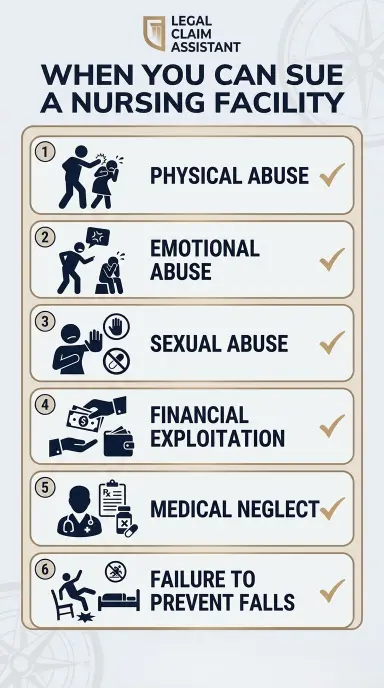
Common legal grounds include:
Physical abuse by staff, including hitting, rough handling, or use of unnecessary restraints
Emotional or psychological abuse, such as threats, humiliation, or isolation
Sexual abuse involving any unwanted contact or behavior
Financial exploitation, including misuse of a resident’s money or property
Medical neglect, such as missed treatment, ignored symptoms, or delayed care
Failure to prevent falls or injuries, especially in high-risk residents
Neglect claims often develop from systemic problems in negligent nursing homes. This can include understaffing, poor supervision, or lack of proper training. In many cases, a nursing home for negligence is held responsible when basic care standards are ignored.
A negligence lawsuit may be possible if evidence shows the facility failed to provide proper care and directly caused harm.
Common Signs of Nursing Home Abuse and Neglect
Recognizing the warning signs of nursing home abuse is important for protecting nursing home residents in a nursing home or assisted living facility. Many cases begin when family members or other nursing home residents notice changes in health, behavior, or living conditions that suggest possible abuse or neglect.
Common warning signs include bedsores or pressure ulcers, which often point to long periods of poor care or lack of movement. Repeated falls or fractures may also signal unsafe conditions or poor supervision within the facility. Unexplained bruises or injuries are another red flag, especially when explanations from staff are unclear or inconsistent.
Sudden weight loss or dehydration can point to nursing home neglect or a failure to provide basic care, while poor hygiene, such as unwashed clothing, body odor, or unsanitary conditions, may also indicate serious concerns. Emotional withdrawal or fearfulness, especially around staff or caregivers, can be a sign of emotional or psychological abuse.
Medical neglect is another serious issue in many nursing home neglect cases. This can include missed medications, untreated infections, or delayed emergency care. These failures can quickly lead to medical expenses, hospitalization, or long-term health complications.
In many situations, families only realize something is wrong after reviewing medical records or noticing a sudden decline in a loved one’s health. If you suspect nursing home abuse or believe a nursing home has failed in its duty of care, it is important to take these concerns seriously and consider speaking with a nursing home abuse attorney or personal injury lawyers.
Legal Grounds for a Nursing Home Negligence Lawsuit
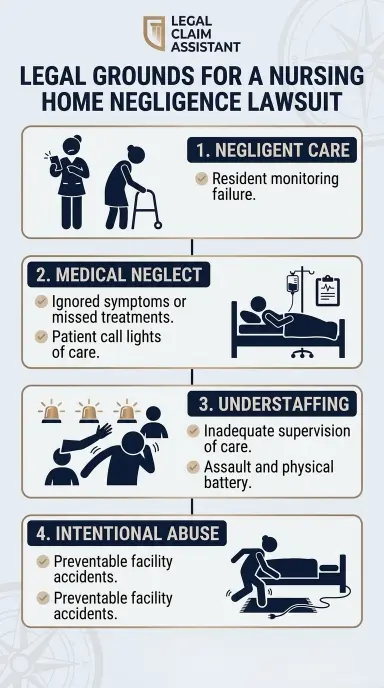
A nursing home negligence lawsuit is based on showing that a nursing facility failed to provide adequate care and caused harm to nursing home residents. Legal grounds explain the specific ways a facility can be held responsible when abuse or neglect leads to physical harm, emotional distress, or financial loss.
Legal Grounds | Example |
|---|---|
Negligent Care | Failure to monitor residents properly, leading to falls or serious injuries |
Medical Neglect | Ignoring infections, missed treatments, or medication errors |
Understaffing | Not enough staff to provide proper supervision and care |
Intentional Abuse | Assault, battery, or sexual abuse by staff or caregivers |
Unsafe Conditions | Preventable accidents, wandering, or unsafe environments in nursing home facilities |
To succeed in a negligence lawsuit, the legal team must prove that the nursing home’s failure to meet the accepted standard of care directly caused harm. This includes showing that the nursing home’s failure led to serious injuries such as broken bones, infections, or worsening health conditions. Systemic issues like inadequate training, poor supervision, and understaffing often play a major role in these cases.
Medical records, witness statements, and documentation of care are key in establishing liability. Nursing home abuse lawyers often work to gather evidence that shows how the facility failed to protect residents or respond to medical needs. In some cases, medical malpractice or repeated neglect can also support legal claims, especially when medical treatment was delayed or improperly handled.
Families may be able to pursue compensation for medical bills, emotional distress, and physical therapy costs through legal action. In severe cases involving wrongful death or long-term harm, a negligence lawsuit may also lead to financial recovery for the family.
How the Legal Process Works When Suing a Nursing Home
A nursing home lawsuit generally involves several steps used to investigate abuse or neglect claims and determine whether the facility may be legally responsible. Nursing home abuse lawyers guide families through each stage of the legal process and help protect their legal rights.
Protect the resident and seek medical care
Immediate medical treatment comes first. This helps address serious injuries, physical harm, or health complications caused by nursing home neglect.Report abuse to state authorities or Adult Protective Services
Report abuse to state authorities, Adult Protective Services, or other agencies responsible for investigating nursing home complaints in your state. Families may also want to understand the role of the abuse coordinator in a nursing home during internal investigations and reporting procedures.Consult a nursing home abuse attorney
An experienced attorney or nursing home lawyer can offer a free consultation or no obligation consultation to review the situation and explain legal options.Investigate and gather evidence
The legal team works to gather medical records, witness statements, and other documentation. This step helps build a strong case and may include reviewing care plans, staffing records, and medical treatment history.File the legal claim against the nursing facility
A formal nursing home neglect lawsuit or nursing home abuse lawsuit is filed in the appropriate court under state law, such as Georgia law or other applicable jurisdictions.Negotiate a settlement or proceed to trial
Most nursing home abuse cases are resolved through settlement negotiations. However, cases involving disputed liability, medical malpractice, or wrongful death lawsuit claims may proceed to trial.
Acting quickly is important because filing deadlines apply in every state. Early legal action helps preserve evidence, protect other residents, and strengthen the claim. With legal support, families may pursue compensation for medical bills, emotional distress, and long-term care needs.
Financial Compensation Available in Nursing Home Abuse Cases
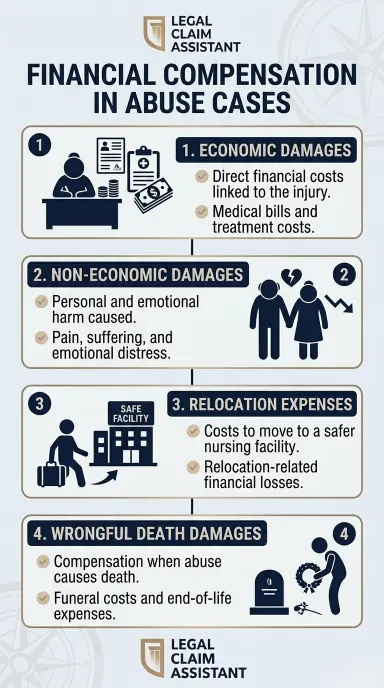
Financial compensation in nursing home abuse cases depends on the severity of harm, the type of neglect, and how the injuries affect daily life. When a legal claim is successful, compensation is meant to cover both financial losses and the emotional impact of abuse or neglect in nursing home facilities.
Economic damages focus on direct financial costs linked to the injury. These may include medical expenses, ongoing medical bills, rehabilitation costs, and physical therapy. They can also include relocation expenses if the resident needs to move to a safer nursing facility or assisted living facility. In some cases, Medicaid services may also be involved in covering care, but a legal claim may still seek recovery for out-of-pocket costs and related losses.
Non-economic damages address the personal and emotional harm caused by abuse. This includes pain and suffering, emotional distress, and loss of dignity. These damages are especially important in cases involving long-term physical injuries or a decline in quality of life for nursing home residents.
If abuse leads to death, surviving family members may pursue wrongful death damages. These can include funeral costs, end-of-life medical expenses, and other related financial losses. These claims are often part of a larger case against the nursing home.
Settlement amounts in nursing home neglect cases vary widely depending on the severity of harm, the evidence, and state law. On average, settlements and verdicts are around $400,000, although each legal claim is different. In some cases involving severe injuries or wrongful death, courts have awarded substantial verdicts based on the specific facts and evidence presented.
Who Can File a Legal Claim Against a Nursing Home
Not everyone can file a legal claim against a nursing home, so eligibility depends on state law and the relationship to the injured resident. A legal claim is usually filed by someone with legal authority to act for the resident.
The following individuals may usually bring legal action:
Nursing home residents who suffered abuse or neglect
Close family members, such as spouses, children, or legal guardians
Individuals holding power of attorney for healthcare or financial decisions
Estate representatives in wrongful death cases
In wrongful death situations, state law often limits claims to immediate family members or legally appointed estate representatives. These rules determine who can seek compensation and what damages may be recovered through legal representation.
A strong case often depends on proper documentation of physical injuries, medical records, and other evidence showing nursing home negligence or abuse.
Why Medical Neglect Is One of the Most Common Reasons Nursing Homes Get Sued
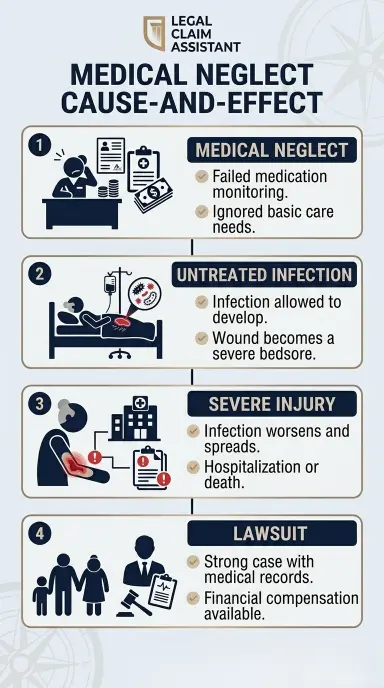
Medical neglect is one of the most common reasons families file a nursing home negligence lawsuit against nursing facilities. It occurs when staff fail to provide proper medical treatment, monitoring, or timely care to nursing home residents in a nursing home setting or assisted living facility.
This type of nursing home abuse often involves clear failures in basic care. Common examples include failing to administer medications correctly, ignoring infections or worsening symptoms, delaying emergency treatment, and failing to prevent bedsores. In many cases, these issues start small but quickly turn into serious health problems.
Medical neglect can lead to severe injuries, long hospital stays, and in some cases, death. When residents do not receive adequate care, conditions like dehydration, infections, or untreated wounds can worsen rapidly. These situations may lead to legal claims when proper care could have prevented the harm.
Medical neglect claims become especially strong when medical records show missed treatments, delayed responses, or repeated failures in care. These records help show a pattern of nursing home negligence and can support a legal case against the facility.
How to Prove Nursing Home Abuse and Hold the Facility Accountable
Proving nursing home abuse requires strong, clear evidence that shows how a facility failed in its duty of care. To hold a nursing facility accountable, attorneys must demonstrate that abuse or neglect occurred and that it directly caused harm to the resident.
Key evidence includes:
Medical records showing injuries, missed treatments, or declining health
Witness testimony from staff, residents, or family members
Photographs of physical injuries such as bruises, bedsores, or wounds
Inspection violations or regulatory reports from state agencies
Care plans and staffing records showing inadequate supervision or understaffing
Attorneys may also rely on medical experts to explain how the facility failed to meet accepted standards of care. These experts help connect the evidence to the harm suffered and clarify whether proper medical treatment was provided.
Why Legal Services Matter in Nursing Home Abuse Cases
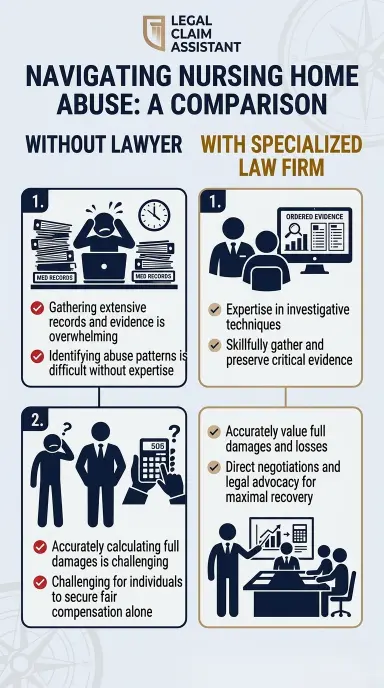
Nursing home abuse cases are complex and often involve large corporate nursing facility operators, insurance companies, and detailed medical evidence. These cases involve medical records, negligence laws, and state and federal regulations.
Experienced legal services help families take the right steps from the start. A skilled legal team can investigate abuse thoroughly, gather medical records, and preserve key evidence before it is lost or altered. They also work with medical professionals to understand the full extent of injuries and identify signs of nursing home abuse or neglect.
Legal professionals also help calculate damages accurately, including medical expenses, ongoing care needs, and emotional harm. This helps families seek fair compensation for both financial losses and physical injuries caused by the nursing facility.
In many cases, nursing home abuse lawyers negotiate directly with insurance companies to reach fair settlements. If needed, they may take the case to trial to seek compensation and hold the facility accountable.
Many nursing home abuse attorneys work on a contingency fee basis, meaning there are no upfront costs. Under many contingency fee agreements, attorney fees are only collected if compensation is recovered. Working with experienced attorneys may help families better understand the legal process and prepare a stronger case.
Frequently Asked Questions About Suing a Nursing Home for Abuse
Families often have urgent questions when they suspect nursing home abuse or nursing home neglect. These answers explain common legal concerns, how a nursing home lawsuit works, and what evidence or conditions may support a legal claim against a nursing facility.
Can you sue a nursing home for bedsores?
Yes. Bedsores are often a sign of neglect and can support a nursing home negligence claim. They may show that a facility failed to provide proper care, monitoring, or repositioning of nursing home residents.
Can you sue a nursing home for falls?
Potentially. A nursing facility may be held responsible if a fall happened due to poor supervision, unsafe conditions, or nursing home negligence. Each case depends on the facts and available evidence.
How hard is it to win a nursing home negligence lawsuit?
The outcome depends on the strength of the evidence. Medical records, witness statements, and documentation of abuse or neglect play a major role in proving that the facility failed to meet the required standard of care.
How much compensation can you recover in a nursing home lawsuit?
Compensation varies widely. It depends on the severity of injuries, level of negligence, medical costs, and emotional impact. Some cases result in modest settlements, while others involving serious harm lead to higher recovery amounts.
Who can file a lawsuit against a nursing facility?
Nursing home residents can file a claim, as well as certain family members or individuals with legal authority such as power of attorney or estate representatives in wrongful death cases.
Speak With a Nursing Home Abuse Attorney About Your Legal Options
If you suspect nursing home abuse or nursing home neglect, speaking with a nursing home abuse attorney can help you understand your legal rights and options. An experienced attorney can review the situation and evaluate whether there may be a valid nursing home abuse case.
A legal team can evaluate whether abuse or neglect occurred, investigate the nursing facility, and gather important evidence such as medical records, witness statements, and care documentation. They can also explain the legal process in simple terms and guide you through each step of a nursing home lawsuit.
Attorneys also help pursue financial compensation for medical expenses, emotional distress, and other damages caused by negligence. Early legal action is important because it helps preserve evidence and strengthens the overall claim against the facility.
You Deserve Justice. Let Us Help.
Speak with a trusted Nursing Home Abuse Attorney who will stand by your side, protect your rights, and fight for the compensation you deserve.
No Win, No Fee. Let the Best Nursing Home Abuse Attorneys Fight for your Compensation!

Under 1 Minute

100% Free

Expert-Reviewed

Private & Secure
© 2025 Legal Claim Assistant. All Rights Reserved.
Terms of Service | Privacy Policy | Contact Us | Marketing Partners
Related Article
Share this article:


