


Key Takeaways:
A nursing home abuse coordinator is responsible for handling abuse reports, investigating concerns, and ensuring residents are protected from abuse or neglect.
Nursing homes must follow reporting rules, investigate allegations quickly, and comply with federal and state laws. Failure to do so can lead to penalties.
Families play an important role in reporting concerns. They may also escalate issues and seek legal help if the facility fails to act.
What Does a Facility Abuse Coordinator Do in Nursing Home Abuse Cases
A facility abuse coordinator is the main point of contact inside a nursing home when concerns about nursing home abuse arise. Families trying to understand who may be legally responsible can also review nursing home abuse liability. This role exists in nursing facilities and assisted living facilities to help manage nursing home abuse allegations and make sure every report is taken seriously. The coordinator works with the nursing home administrator and staff to respond quickly to suspected abuse.
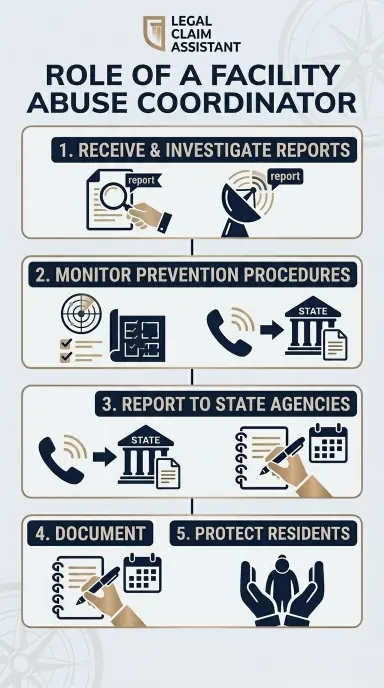
Core responsibilities include:
Receiving and investigating abuse reports
Monitoring prevention procedures
Reporting suspected abuse to state agencies
Documenting incidents
Protecting residents from further harm
These duties apply to many forms of elder abuse, including physical, emotional, sexual, financial, and mental abuse. The role also covers both staff to resident abuse and resident to resident abuse, which can occur between other residents in shared care environments.
In many nursing facilities, a social worker serves as the facility abuse coordinator because of their experience with resident advocacy and elder care. Their job is to respond to complaints, review medical records, and ensure proper care after an incident. If there are signs that a resident has been sexually abused or exposed to emotional distress, the assigned coordinator or responsible staff member must escalate concerns according to facility policy and legal reporting rules.
How Abuse Prevention Coordinators Help Prevent Abuse and Neglect
Abuse prevention coordinators help prevent abuse by training staff, monitoring risks, and improving safety systems. This role is centered on protecting elderly residents and reducing the risk of resident abuse, including physical abuse, emotional abuse, sexual abuse, and financial abuse. Strong prevention systems are essential for reducing nursing home abuse allegations and improving safety inside care environments.
Key responsibilities of an abuse prevention coordinator include:
Training staff members on resident rights, safety, and proper care standards
Creating systems for reporting abuse or neglect and encouraging staff to report abuse without fear
Monitoring interactions between caregivers and residents, including abuse between residents
Identifying staffing problems that increase risk of abuse and neglect
Ensuring compliance with state and federal regulations related to elder abuse prevention
Preventing abuse also involves tracking abuse complaints and reviewing patterns that may signal deeper problems within a facility. When abuse prevention systems fail, residents may suffer serious harm that requires medical treatment, medical care, or even long-term medical expenses. In some cases, abuse can lead to emotional distress, psychological abuse, or severe neglect that requires outside intervention.
Understaffing is one of the leading causes of abuse and neglect in nursing homes. When staff members are overworked or undertrained, they may miss warning signs or fail to respond properly to residents in need. This can increase the risk of physical abuse, emotional abuse, or other forms of harm in nursing home settings.
Types of Nursing Home Abuse the Coordinator Must Investigate
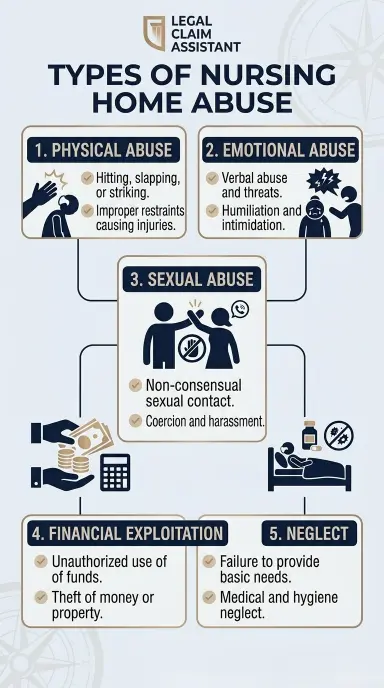
Nursing home abuse can take many forms. A coordinator must review all reports of suspected harm in nursing homes and assisted living facilities. These situations fall under nursing home abuse and often involve abuse and neglect that affects the safety and well being of vulnerable residents.
Common forms of nursing home abuse include physical abuse such as hitting, slapping, or improper restraints that may cause severe injuries or unexplained injuries. Emotional abuse can include verbal abuse, threats, humiliation, or intimidation that leads to fear or emotional distress.
Financial exploitation happens when there is unauthorized use of a resident’s funds or property. Neglect involves failure to provide basic needs like food, hygiene, medical care, or adequate supervision, often leading to poor hygiene, medication errors, or serious health decline.
The abuse coordinator must investigate all abuse allegations quickly and determine whether mandatory reporting rules apply under federal law and state regulations. In many cases, staff members are mandated reporters, meaning they are legally required to report suspected abuse or face consequences. These investigations may involve reviewing medical records, gathering evidence, and speaking with staff members, family members, or other residents who may have witnessed the incident.
Neglect cases are especially common in understaffed facilities where vulnerable residents may not receive proper attention. In these situations, abuse allegations may involve multiple systems failures, including lack of supervision or failure to respond to signs of distress. When abuse occurs, coordination with adult protective services, human services agencies, and other relevant authorities may be required to ensure the resident is protected and the situation is properly reviewed.
How Nursing Homes Must Respond When Abuse Occurs
When abuse occurs in a nursing home setting, federal law and state regulations require facilities to follow a strict response process to protect residents and ensure accountability. These steps are designed to reduce harm, support vulnerable residents, and maintain a safe environment in care facilities.
Federal regulations require nursing homes to develop and implement written policies and procedures that prohibit mistreatment, neglect, and abuse of residents, as well as misappropriation of resident property.
Protect the resident from immediate harm
Staff must act quickly if a resident is in immediate danger. This may include emergency medical care, transferring the resident, or separating them from the source of harm.Document the incident internally
All reported incidents must be recorded. This includes details of abuse allegations, any unexplained injuries, and actions taken by staff members.Notify the abuse coordinator or administrator
The facility abuse coordinator or nursing home administrator must be informed so a complaint investigation can begin without delay.Investigate the allegation promptly
The facility must review medical records, interview staff, and gather evidence to understand what happened. This step helps determine whether abuse and neglect occurred and whether legal responsibility exists.Report findings to state authorities
Nursing homes must report suspected abuse to state survey agencies or other relevant authorities within required time limits. Many staff members are mandated reporters under federal law and must report suspected abuse directly.
Federal law requires nursing homes to have written abuse prevention and reporting procedures. Failure to follow these rules can lead to severe consequences, including fines, loss of license, or civil liability.
Mandatory Reporting Laws and Adult Protective Services
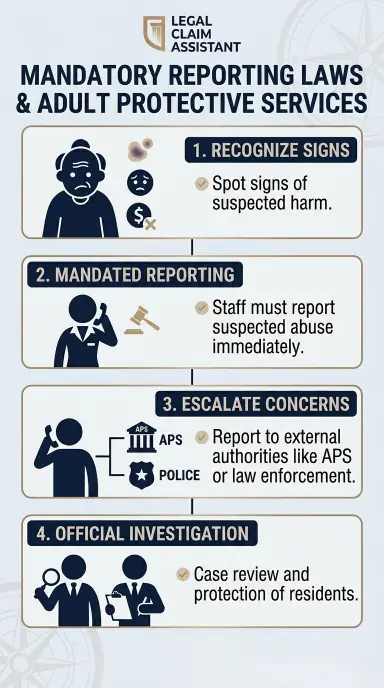
Many states require nursing home staff to act as mandated reporters. This means they have a legal obligation to report suspected abuse or neglect in nursing facilities or assisted living facilities as soon as they become aware of it. These rules apply when there are signs of abuse allegations, including physical abuse, emotional abuse, or financial exploitation involving vulnerable residents.
For example:
Some state laws require nursing home employees to report suspected abuse or neglect immediately, even if they are unsure whether it happened. Failing to report can lead to legal consequences and can also expose a facility to civil claims if harm continues after warning signs appear.
When concerns are not properly addressed inside the facility, family members and staff can escalate the issue to adult protective services, state health departments, the Department of Social and Health Services, or law enforcement agencies. These relevant authorities are responsible for investigating claims, protecting residents, and ensuring safe conditions in care facilities.
The abuse coordinator often works directly with adult protective services during investigations, especially when there is serious harm, emergency room visits, or evidence of ongoing risk. To understand which agencies and authorities may investigate these cases, families can also read about who investigates sexual abuse in a nursing home.
In many cases, advocacy groups also support families who are experiencing abuse or fear retaliation for reporting concerns. These systems are designed to protect residents and help ensure accountability.
Qualifications and Training Required for Abuse Prevention Coordinators
Abuse prevention coordinators play a critical role in protecting residents in nursing homes and assisted living facilities. Most coordinators have backgrounds in healthcare, social work, or elder care, where they gain experience working with vulnerable residents and understanding care standards.
They are typically trained in abuse investigations, resident rights, and reporting procedures. This includes handling situations involving experiencing abuse, reviewing abuse allegations, and responding to suspected cases of abuse or neglect in a timely and appropriate way.
Strong knowledge of federal nursing home regulations and mandatory reporting laws is essential. Coordinators must understand their legal obligation to report concerns and follow proper procedures when abuse is suspected. They also need to be familiar with abuse prevention systems and how to reduce risks inside nursing facilities.
Some states or employers require additional certifications in elder care compliance or long-term care safety. Ongoing training is also important because abuse prevention procedures and legal standards can change over time.
This training is critical because abuse prevention coordinators are responsible for protecting vulnerable residents. Their decisions can directly impact whether residents receive proper care, avoid harm, and stay in a safe environment. When systems fail, families may need to seek justice or pursue compensation with the help of a nursing home attorney or nursing home abuse lawyer through the civil claim process.
What Family Members Should Do if a Nursing Home Ignores Abuse Allegations
If families believe abuse is being ignored, quick action is important to protect the resident. Ignored concerns can lead to ongoing harm, especially when abuse or neglect is still happening inside the facility.
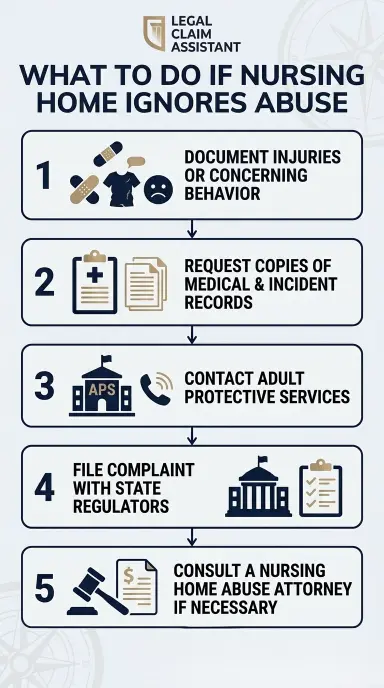
Document injuries or concerning behavior
Take clear notes and photos of unexplained injuries, changes in mood, poor hygiene, or any signs that suggest nursing home abuse.Request copies of medical and incident records
Ask for medical records, care notes, and any incident reports related to the suspected abuse. These records can help show patterns of abuse and neglect.Contact Adult Protective Services
Report concerns to adult protective services so an independent agency can investigate the abuse allegations and check resident safety.File a complaint with state regulators
State agencies that oversee nursing facilities can conduct inspections and review whether the facility is following required standards of care.Consult a nursing home abuse attorney if necessary
A nursing home abuse attorney can review the situation, gather evidence, and explain legal options if the facility continues to ignore concerns.
When nursing homes refuse to investigate or respond to abuse allegations, they may face civil liability and regulatory penalties. In serious cases, families may need to take legal action to seek compensation and pursue justice for the harm caused. When nursing homes refuse to investigate or respond to abuse allegations, they may face civil liability and regulatory penalties. Families may also want to learn whether they can sue a nursing home for abuse.
Acting quickly helps preserve evidence, protect vulnerable residents, and prevent further abuse and neglect.
Why the Abuse Coordinator Role Matters in Nursing Homes
The abuse coordinator helps maintain resident safety and accountability in nursing homes. This position helps oversee how facilities respond to abuse allegations and whether proper steps are taken when concerns are raised.
An effective abuse coordinator helps reduce abuse incidents by ensuring staff members follow proper procedures and understand how to report concerns. They also improve compliance with reporting rules, which helps prevent cases of abuse and neglect from being missed or ignored.
This role strengthens abuse prevention systems by making sure incidents are documented, investigated, and escalated when needed. It also helps ensure residents and family members understand their rights and know how to report concerns safely.
Without proper oversight, abuse and neglect can go unreported, allowing harm to continue inside nursing facilities. This can place vulnerable residents at serious risk, especially in larger care facilities where communication gaps and staffing issues are more common.
Strong coordination and accountability are important for protecting residents, improving care standards, and supporting families who may need to seek compensation or pursue justice after experiencing nursing home abuse.
Frequently Asked Questions About Nursing Home Abuse Coordinators
Families often have urgent questions when they suspect abuse or neglect in a nursing home. Understanding how the abuse coordinator works and where to report concerns can help protect vulnerable residents and guide next steps in the legal process.
Who is the abuse coordinator in a nursing home?
The abuse coordinator is the person responsible for handling abuse allegations, investigations, reporting, and abuse prevention procedures within the facility. This role helps ensure that concerns about nursing home abuse are reviewed and addressed.
What does a facility abuse coordinator do?
A facility abuse coordinator investigates abuse complaints, trains staff members, oversees reporting procedures, and works with outside agencies such as Adult Protective Services. They also help ensure residents receive proper protection and care when abuse or neglect is suspected.
Who should I contact if abuse occurs in a nursing home?
Concerns can be reported to the facility abuse coordinator, Adult Protective Services, or state health regulators. These agencies can review abuse allegations and take action if residents are at risk.
Can a nursing home be sued for failing to prevent abuse?
Yes, in some cases, nursing homes may face lawsuits if they fail to protect residents or respond properly to reports of abuse.
Can family members request an investigation?
Yes. Family members can report concerns to the facility, Adult Protective Services, or state agencies and request a formal complaint investigation.
When to Contact a Nursing Home Abuse Attorney
It may be helpful to contact a nursing home abuse attorney if abuse allegations are ignored, a resident suffers serious injuries, or there are signs that the facility is not responding properly to reports of harm. Delays in action can make it harder to protect evidence and hold the facility accountable.
Legal help is also important when neglect leads to hospitalization, severe medical complications, or death. In these situations, an attorney can investigate what happened, review medical records, and identify whether abuse or neglect occurred.
A nursing home attorney can also help preserve key evidence, communicate with the facility, and guide family members through the legal process. This includes building a case to pursue accountability and seek compensation for medical costs, emotional harm, and other damages related to nursing home abuse.
You Deserve Justice. Let Us Help.
Speak with a trusted Nursing Home Abuse Attorney who will stand by your side, protect your rights, and fight for the compensation you deserve.
No Win, No Fee. Let the Best Nursing Home Abuse Attorneys Fight for your Compensation!

Under 1 Minute

100% Free

Expert-Reviewed

Private & Secure
© 2025 Legal Claim Assistant. All Rights Reserved.
Terms of Service | Privacy Policy | Contact Us | Marketing Partners
Related Article
Share this article:


