


Key Takeaways:
Several agencies may investigate sexual abuse in nursing homes, including Adult Protective Services, police, state health departments, and the long term care ombudsman.
Reporting abuse right away is important. It may lead to criminal charges, fines, or lawsuits if the facility failed to protect residents.
Families should collect evidence quickly, like medical records and witness notes, and contact a lawyer to help protect the resident and seek compensation.
Adult Protective Services and State Agencies That Investigate Elder Abuse in Nursing Facilities
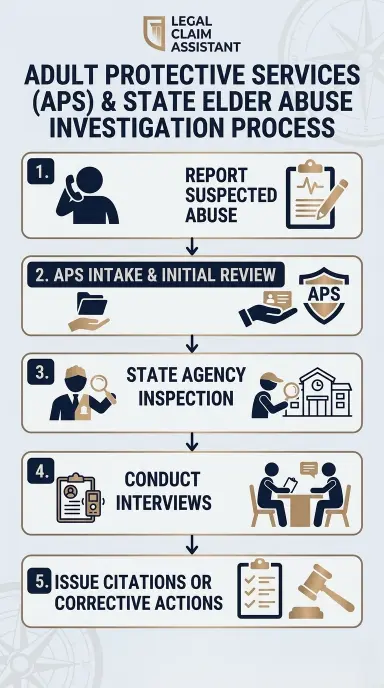
Adult Protective Services (APS) is one of the primary agencies that investigates reports of elder abuse in nursing facilities and assisted living facilities. Families who want to understand broader legal responsibility can also review nursing home abuse liability.
APS focuses on protecting elderly victims when there is concern about abuse, neglect, or exploitation in long term care facilities. When a family member suspects sexual abuse, physical abuse, psychological abuse, or financial exploitation, APS can step in to begin an official review.
APS investigations usually start after a report is made by a family member, nursing staff, healthcare providers, or even other nursing home residents. Once a report is filed, APS may coordinate with other authorities to assess whether the resident is in immediate danger or at risk of further harm.
In addition to APS, state Departments of Health and state survey agencies also investigate nursing facilities. These agencies focus on whether the facility is following safety rules, care standards, and licensing requirements under state law and federal law. They help identify ongoing abuse or negligence in nursing homes.
These agencies may take several actions during an investigation, including:
Inspecting medical records, staffing levels, and care documentation
Interviewing residents, employees, and witnesses
Conducting unannounced inspections of the facility
Issuing citations, fines, or corrective action orders if violations are found
Coordinating with the nursing home ombudsman or family services programs when needed
Together, these agencies help ensure that suspected sexual abuse, physical assault, or other forms of abuse are properly investigated and documented. Their findings may also support future legal action if families choose to pursue compensation or seek compensation through a nursing home abuse case.
When Law Enforcement Investigates Sexual Abuse in Long Term Care Facilities
Law enforcement becomes involved when there is evidence or reasonable suspicion of criminal activity in long term care facilities, especially cases involving sexual abuse or sexual assault. If a family member or staff member suspects sexual abuse, immediate reporting is critical to prevent further harm to elderly victims and protect other nursing home residents.
Police investigate situations that involve sexual abuse, physical assault, psychological abuse, or financial exploitation. These cases may lead to criminal charges against individuals involved in the abuse or responsible conduct depending on evidence. In serious situations, such incidents can also involve coordinated investigations with medical professionals and prosecutors to determine the full extent of harm.
Under federal law, nursing home administrators are required to report suspected crimes within specific timeframes. Failure to report can increase legal liability for the facility and allow further harm to continue. Law enforcement investigations often include collecting forensic evidence, reviewing medical records, interviewing witnesses, and checking surveillance footage from the facility.
These criminal investigations are separate from civil cases. Criminal investigations, APS reviews, and civil lawsuits run on separate timelines. APS and police may act quickly in emergencies, while civil cases often take months or years depending on complexity. Families may still pursue compensation through a civil claim even if criminal charges are filed or still pending.
Administrator During Abuse and Neglect Investigations
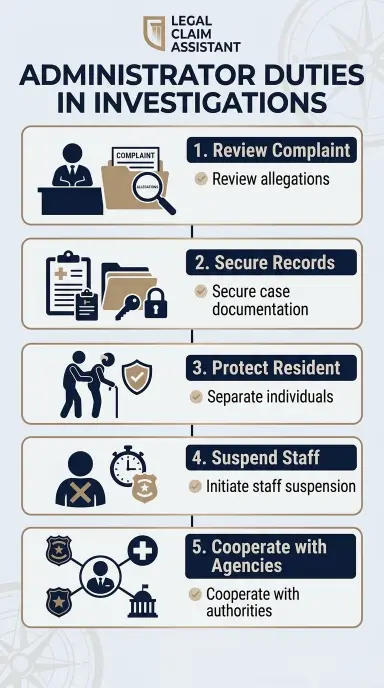
The nursing home administrator must respond immediately to reports of abuse. This includes situations where a resident may have been sexually abused, experienced inappropriate touching, or shown warning signs of physical harm or emotional distress. The administrator must treat every report seriously and begin an internal review without delay to protect residents and ensure a safe facility.
Once a complaint is received, the nursing home administrator must review the abuse allegations, gather statements from staff and witnesses, and secure relevant medical care records or incident documentation. They must also ensure that vulnerable patients are protected during the investigation, especially those with limited mental capacity who may not be able to clearly report what happened. If a staff member is suspected of abuse, the facility should suspend that person while the investigation is ongoing. If another resident is involved, the facility must separate individuals to prevent further harm.
Administrators are also expected to cooperate with other agencies if the case escalates. This may include local police, public health authorities, or other agencies responsible for investigating serious complaints, including potential Medicaid fraud or misuse of Medicaid funds in long term care facilities. Failure to properly investigate abuse and neglect may increase the risk of regulatory action or civil liability if negligence is proven. Families can also learn more about who handles abuse complaints internally by reading about the nursing home abuse coordinator.
How the Long Term Care Ombudsman and Family Services Programs Help Residents
The long term care ombudsman plays an important role in protecting residents in long term care settings, including nursing facilities and assisted living facilities. This program advocates for nursing home residents and helps helps review complaints and advocate for residents and refers serious cases to regulators.
Ombudsmen respond to complaints and concerns raised by residents, family members, or other agencies. They may visit facilities to observe conditions, speak directly with residents, and investigate complaints about poor medical care, warning signs of neglect, or unsafe living conditions. They also review whether residents are being treated with dignity and whether signs of abuse are being ignored.
Key responsibilities of a long term care ombudsman include:
Visiting facilities to check conditions and safety
Interviewing residents confidentially, including those with limited mental capacity
Monitoring how complaints are handled by the facility
Reporting concerns to regulators or other agencies when needed
Helping ensure justice for residents experiencing abuse and neglect
In many states, family services agencies also assist vulnerable adults and their families when abuse is suspected or confirmed. These agencies help connect families with the appropriate agency, provide guidance on reporting abuse, and support investigations involving possible financial exploitation, medical neglect, or emotional harm.
These programs work alongside other agencies to ensure safe care environments in long term care facilities. They help protect residents, support reporting abuse, and ensure that signs of harm are not ignored.
Signs of Sexual Abuse in Nursing Facilities Family Members Should Never Ignore
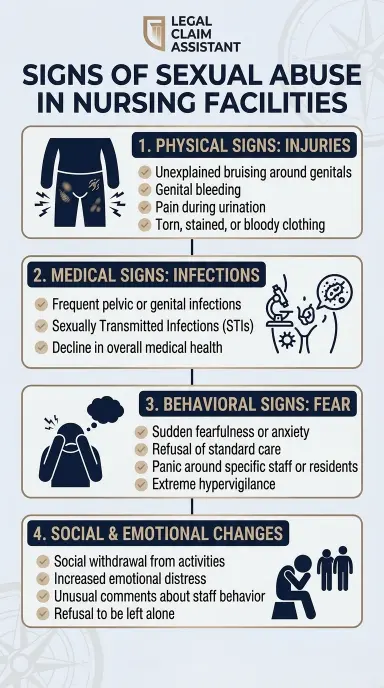
Sexual abuse in nursing facilities is a serious form of elder abuse that can affect nursing home residents in assisted living facilities and long term care settings. Family members should pay close attention to both physical and behavioral changes, especially when a loved one seems fearful, withdrawn, or unable to explain what is happening.
Physical warning signs may include bruising around the genitals or inner thighs, genital bleeding, infections, sexually transmitted infections, or pain during urination. These symptoms may point to inappropriate touching or sexual assault and require immediate medical attention.
Behavioral warning signs are often just as important. A resident may show sudden fearfulness or anxiety, especially around certain staff members or other residents. Other signs include withdrawal from social activities, increased emotional distress, hypervigilance, or unusual comments about staff behavior. Some elderly residents may also show confusion, fear, or refusal to be left alone.
If a family member suspects sexual abuse, it is critical to act quickly. Delays can make it harder to confirm what happened and may allow evidence to disappear. Prompt reporting helps protect the resident and other nursing home residents from further harm.
How to Report Sexual Abuse in a Nursing Home and Preserve Evidence
Sexual abuse in a nursing home should be reported immediately to Adult Protective Services, law enforcement, and the facility administrator while preserving medical records, photographs, and witness information. Taking the right steps quickly can help ensure safety and support any future legal or criminal investigation.
Ensure the resident’s immediate safety
Move your loved one to a safe environment if possible and remove them from any situation where fear or further harm may occur.Report suspected abuse to Adult Protective Services
Contact Adult Protective Services to open an investigation into possible elder abuse or neglect.Call police if you suspect a crime
File a police report if there are signs of sexual assault or other criminal activity. Law enforcement may investigate immediately to protect other residents.Notify the nursing home administrator
Inform the facility so they can take immediate steps to investigate and protect other residents in the facility.Preserve evidence
Keep any relevant photographs, medical records, clothing, written notes, or witness information. This documentation can be important for investigations and legal claims.Request a medical evaluation immediately
A medical exam can help document injuries, identify infections, and support both regulatory and legal investigations.
Strong and timely reporting helps protect residents and supports investigations. It may also help any future legal case.
Medicaid Fraud, Federal Oversight, and Regulatory Investigations in Nursing Homes
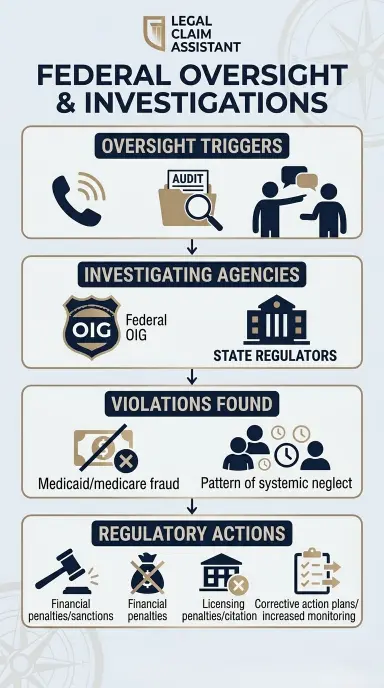
Federal oversight may apply in cases involving fraud, systemic abuse, or regulatory violations. In some situations, investigations go beyond individual incidents and focus on systemic issues that affect nursing home residents across the facility.
The Office of Inspector General investigates serious violations, including medicaid fraud, medicare fraud, and patterns of systemic neglect in nursing homes. These investigations often begin after complaints, audits, or reports from state agencies, staff, or family members who notice warning signs of poor care or misuse of funds.
When violations are confirmed, regulatory agencies can take action against nursing facilities. This may include financial penalties, citations, loss of federal funding, or licensing penalties that affect the facility’s ability to operate. In severe cases, facilities may also be placed under increased monitoring or corrective action plans.
Federal oversight helps ensure that nursing facilities follow resident protection laws and provide safe, appropriate medical care. It also supports accountability when abuse and neglect or financial misconduct impacts vulnerable residents.
Can Victims Sue a Nursing Home for Sexual Abuse and Neglect?
Yes, victims of sexual abuse in nursing homes may be able to file a civil lawsuit if a facility failed to protect residents from abuse and neglect. These cases can involve assisted living facilities, nursing facilities, or other long term care settings where vulnerable residents depend on staff for daily care and safety.
A civil claim allows victims or their family members to seek compensation for the harm caused. This may include medical expenses, mental health treatment, pain and suffering, and emotional trauma damages related to the abuse.
Legal representation is important in these cases because attorneys can investigate staffing failures, review medical records, and determine whether the nursing home facility failed to meet its legal duty of care. They can also identify whether improper supervision, poor hiring practices, or ignored complaints contributed to the abuse.
Civil lawsuits are separate from criminal cases. Even if no criminal charges are filed, a victim may still pursue compensation through the civil legal system. This may help families pursue accountability and financial recovery depending on case facts and legal standards. Families can also learn more about whether they can sue a nursing home for abuse.
Frequently Asked Questions About Nursing Home Sexual Abuse Investigations
Families often have urgent questions when they suspect sexual abuse in nursing facilities or assisted living facilities. These answers explain how investigations work, which agencies are involved, and what steps should be taken to protect nursing home residents and preserve evidence.
Who investigates sexual abuse in a nursing home?
Adult Protective Services, law enforcement, state health departments, and long term care ombudsman programs may all investigate reports of sexual abuse or elder abuse in nursing facilities. Each agency has a different role in reviewing safety, care standards, and possible criminal activity.
Can police investigate nursing home abuse?
Yes. Law enforcement investigates cases involving criminal conduct such as sexual assault, physical assault, or other serious abuse in long term care settings. If there is reasonable suspicion of a crime, police may begin a formal investigation.
What does Adult Protective Services do in nursing home cases?
Adult Protective Services investigates reports of abuse, neglect, and financial exploitation involving vulnerable adults. APS may visit the facility, interview residents, and review medical records to determine whether abuse occurred.
Can a nursing home lose its license for abuse violations?
Yes. Regulatory agencies can impose fines, issue citations, require corrective action, or revoke a facility’s license in serious cases involving repeated abuse and neglect or safety violations.
Should family members report suspected abuse immediately?
Yes. Reporting should be done as soon as possible under state and federal rules. It helps protect residents, reduces risk of further harm, and preserves important evidence that may be needed for investigations or legal action.
Speak With a Nursing Home Abuse Lawyer
A nursing home abuse lawyer can help families take legal action when abuse is suspected in a nursing facility or assisted living facilities. Early legal support can make a significant difference in protecting residents and building a strong case.
An experienced attorney can investigate abuse and facility negligence, review medical records, and preserve key evidence before it is lost. They can also coordinate with Adult Protective Services, law enforcement, and other agencies to help the case is properly handled.
In addition, a legal team can pursue compensation for victims and families affected by abuse and neglect, including medical costs, emotional harm, and other damages. Early legal intervention can help protect residents, strengthen potential legal claims, and support accountability in long term care settings.
You Deserve Justice. Let Us Help.
Speak with a trusted Nursing Home Abuse Attorney who will stand by your side, protect your rights, and fight for the compensation you deserve.
No Win, No Fee. Let the Best Nursing Home Abuse Attorneys Fight for your Compensation!

Under 1 Minute

100% Free

Expert-Reviewed

Private & Secure
© 2025 Legal Claim Assistant. All Rights Reserved.
Terms of Service | Privacy Policy | Contact Us | Marketing Partners
Related Article

Share this article:


