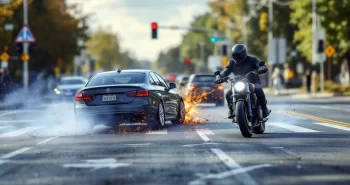
What Percent Of Motorcycle Riders Crash Each Year?
 Fact Checked By Our Attorneys

What percent of motorcycle riders crash each year? If you or a loved one has been involved in a serious motorcycle accident, don’t wait get a free case review with an experienced motorcycle accident attorney today. Our team is here to help you understand your rights and pursue the compensation you deserve. Click the button below now to start your free consultation and take the first step toward justice and recovery.

No Win, No Fee. Let the Best Motor Vehicle Accident Attorneys Fight for your Compensation!
Table of Contents:

What percent of motorcycle riders crash each year
Accurately pinpointing the exact percentage of motorcycle riders who crash each year can be challenging because the data comes from various local, state, and national sources, including the National Safety Council, the Insurance Information Institute, and the Federal Highway Administration. Although some studies suggest that the yearly crash rate is relatively low compared to the total number of registered motorcycles, any motorcycle accident can bring severe consequences when you consider the limited protection a motorcycle offers relative to an enclosed vehicle like a car.
Currently, around 8.8 million motorcycles are licensed in the United States, and motorcycles account for about 3 percent of all registered vehicles in the U.S. Despite representing a small fraction of vehicles, motorcyclists accounted for 14.6 percent of all traffic fatalities in 2022, highlighting the disproportionate risks riders face on the road. These motorcycle accident statistics emphasize why wearing a motorcycle helmet and other proper protective gear is critical.
We have found that many reports group minor incidents with more serious crashes, making it hard to isolate precise figures. Nonetheless, our collective focus should be on preventing any crash from occurring in the first place. If you want to see how fatal motorcycle crashes factor in, you can also review our resource on what percent of motorcycle accidents are fatal. Considering how vulnerable motorcyclists face risks on busy roads, understanding the national crash rate is only part of the solution. Real motorcycle safety comes from defensive riding, reliable gear, and consistent training such as obtaining a motorcycle endorsement and following safety tips.
How many motorcycle riders are involved in minor versus serious crashes
When a crash does occur, the extent of damage can vary widely. Many motorcycle accidents result in minor spills or fender benders in which riders walk away bruised, scraped, and badly shaken, but otherwise not seriously harmed. Minor crashes can still disrupt daily life, especially if a bike suffers extensive damage and requires costly repairs at a repair shop.
However, the potential for life-altering outcomes exists whenever a serious motorcycle accident happens. Serious crashes can cause broken bones, head injury, spinal cord injuries, traumatic brain injuries, internal injuries, or worse. Traumatic brain injuries are one of the most common consequences of motorcycle crashes, and spinal cord injuries occur in about 10% of motorcycle accidents, sometimes leading to paralysis. Lower limb injuries are the most common among non-fatal motorcycle accidents, making up 55% of reported cases. This is why we recommend seeking medical attention and legal advice promptly if you are ever in a motorcycle collision. Even so-called “minor” incidents can result in hidden injuries that show up days or weeks later. A strong sense of caution goes a long way, and so does exploring motorcycle accident claims or motorcycle accident compensation if another party was at fault and you need help to pursue compensation for unexpected costs.
What factors increase the likelihood of a motorcycle crash
Several prominent risk factors raise the odds of being involved in a motorcycle crash. One major risk factor is riding at excessive speeds, which reduces reaction time and increases stopping distance. Speeding is cited in nearly 30% of motorcycle-related fatalities and is the most common primary crash factor. Poor or wet weather conditions add to the difficulty, forcing riders to rely on advanced techniques for maintaining control. Limited visibility caused by weather, traffic congestion, or other vehicles also plays a key role.
Another factor is rider inexperience, but even those with many miles driven must remain vigilant. Distracted driving—whether by the motorcyclist or by another driver—can just as easily lead to an accident. Alcohol consumption significantly increases the risk of motorcycle accidents, with alcohol being a factor in approximately 41% of single-vehicle motorcycle fatalities. Blood alcohol concentration (BAC) above legal limits is a major risk factor. Because of the many potential dangers, we encourage riders to stay aware of their surroundings and to examine which factors lead to more motorcycle crashes than the others. These risk points are not set in stone, and knowing them can reduce your vulnerability on the road.
How do rider experience and skill affect crash rates
Rider experience is often assumed to be the biggest influencer on crash rates. Generally, beginners are more likely to make sudden maneuvers, brake too hard in a corner, or misjudge distances. New riders also lack the ingrained habits that help veterans anticipate hazards like gravel on curves or unpredictable drivers changing lanes.
That said, experienced motorcyclists are not immune to high-risk situations. Routine can breed complacency, and sometimes a seasoned rider can become overconfident. We encourage everyone—whether you have been riding for a month or for decades—to keep refining essential riding skills. Defensive practices like scanning farther up the road and budgeting extra stopping distance in traffic can significantly lower the risk of a crash. Regular checkups of your bike also matter because mechanical failures, even minor ones, may lead to dangerous scenarios.
How do age and demographics influence motorcycle crash risk
Age often aligns with specific risk patterns. Younger riders may have sharper reflexes but are sometimes more inclined toward aggressive riding behaviors like quick acceleration or weaving through traffic. Male riders aged 25–34 represent the highest percentage of motorcycle fatalities (23.2%) and serious injuries (25.6%). Meanwhile, older riders might have greater practical experience yet face physical challenges such as reduced flexibility or slower reaction times. Older riders also account for a significant portion of motorcycle fatalities, emphasizing that risk spans all age groups.
Demographics can also play a role in crash rates. For instance, individuals returning to motorcycles after a lengthy break could misjudge modern bikes’ capabilities. We have noticed that newer, more powerful models are often far different from the ones these riders used in their youth. Staying mindful of your physical condition, mental alertness, and the performance of your chosen bike can add layers of protection regardless of your age or riding background.
What role does alcohol, drugs, or distraction play in crashes
Operating a motorcycle demands full concentration. Riding while impaired by alcohol or drugs increases crash likelihood significantly because it reduces coordination, reaction time, and judgment. Blood alcohol concentration (BAC) above legal limits is a major risk factor. Even prescription medications with drowsiness warnings can raise risks beyond acceptable limits.
Distraction, whether from texting, adjusting a playlist, or glancing at a GPS, is equally hazardous. Losing focus for only a moment could mean missing a sudden obstacle or failing to notice a brake light up ahead. We always encourage riders to pull over safely if they need to answer a call, check directions, or pause for a break. A brief stop is far safer—and cheaper—than dealing with the aftermath of a crash.
No Win, No Fee. Let the Best Motor Vehicle Accident Attorneys Fight for your Compensation!
How do motorcycle type and engine size impact crash frequency
Motorcycles come in an array of styles, from nimble scooters to high-horsepower sport bikes. In general, powerful sport and supersport models account for a notable portion of crashes because they can accelerate quickly, encouraging risky riding habits in certain individuals. Cruisers, touring bikes, and smaller-displacement motorcycles often attract riders who prefer more moderate speeds.
Nevertheless, categorizing a bike by engine size alone does not tell the entire story. Even heavier touring bikes can be difficult to control in tight traffic situations or on challenging roads. As highway safety experts note, choosing a bike that matches skill level is essential. As with any machine, understanding your motorcycle’s handling quirks and staying within your skill range remain essential steps for staying safe. If you ever find yourself in a collision, whether you ride a 300cc bike or a 1500cc cruiser, helpful resources like motorcycle accident injuries can guide you through what to do next.
How can safety gear and training reduce the chance of crashing
Consistent use of proper protective gear is one of the most effective ways to mitigate the risk of injury. Wearing a motorcycle helmet reduces the risk of fatal injury by 37% for riders and 41% for passengers. Using proper protective gear, such as riding boots and knee guards, can help reduce injury severity in motorcycle accidents. Helmet use is especially critical in states with universal helmet laws, as in states without such laws, approximately 57% of killed motorcyclists were not wearing helmets.
Yet gear alone does not prevent the initial impact. That is where ongoing training, such as a motorcycle safety course, comes in. Many riders benefit from refresher courses that focus on advanced maneuvers like emergency braking and cornering. Riding schools often put participants through realistic simulations that mimic on-road challenges. The precision gained from these practical sessions bolsters confidence and helps us handle sudden changes. Below are a few essential items we believe all riders should consider wearing regularly:
- Helmet with face protection or a visor
- Abrasion-resistant jacket and pants
- Sturdy, closed-toe boots
- Impact-resistant gloves
When combined with quality training, these items can significantly cut down on both the frequency and severity of motorcycle crashes, reducing the likelihood of motorcycle fatalities and fatal crashes.
How often are crashes caused by rider error versus other drivers
Rider error remains a contributing factor in many accidents. Overestimating one’s control during a turn or failing to adapt to slick roads can quickly lead to a slide or collision. Poor gap judgment and sudden lane changes also fall under this category. Even small mistakes can have outsized effects when you consider the vulnerability of being on two wheels. Human error is a primary cause of motorcycle accidents, though most motorcycle accidents also involve other vehicles.
Nevertheless, many crashes involve other drivers who simply do not notice motorcycles in their blind spots or who misjudge how fast a motorcycle is traveling. Roughly 66% of motorcycle crashes involving other vehicles occur due to the driver’s violation of the rider’s right-of-way. The other driver is found at fault nearly 60% of the time in crashes involving two vehicles. Left-turning cars account for almost half of all crashes involving cars and motorcycles, and left-turn violations account for nearly 43% of multi-vehicle motorcycle accidents. In two-vehicle crashes, 75% of motorcycles involved in fatal collisions were struck from the front.
Single-vehicle accidents account for approximately 38% to 50% of all motorcycle crashes, and roughly 38% to 48% of motorcycle accidents are single-vehicle incidents. Road hazards like potholes, loose gravel, wet surfaces, and debris are significantly more dangerous for motorcycles than for cars.
Lane splitting can lead to accidents when motorists misjudge the space available between lanes. Reckless driving behaviors such as weaving through traffic and following too closely contribute to motorcycle accidents.
How can understanding crash statistics help riders prevent accidents
Crash statistics function like road signs—they alert us to where dangers commonly arise, so we can navigate around them. When we know that a high percentage of motorcycle crashes happen in intersections, for instance, we can prepare in advance by moving slower and scanning for any sudden movement from cross traffic. Visibility issues often contribute to motorcycle accidents, especially at intersections. Similarly, if data shows frequent rear-end incidents, we can keep greater following distance behind passenger vehicle occupants.
This knowledge also supports proactive maintenance schedules. If most mishaps happen due to tire blowouts, we can prioritize tire checks before every ride. Learning from past patterns is an excellent way to anticipate potential risks. Whether you have been riding for years or are just starting, these insights can refine your approach and effectively lower your chances of having to handle a crash scenario.
Motorcyclists should be extra cautious in urban areas due to higher traffic density and the risk of collisions with vehicles. Urban roads are the site of about two-thirds of fatal motorcycle crashes. Rural roads present their own dangers, often leading to higher speeds and sharp turns. Riders should slow down in areas with high pedestrian traffic and be extra aware in crosswalks. Many motorcycle accidents occur on weekends when more riders are on the road, and crashes are more likely to happen later in the day, particularly in the evening hours. Riding during high-risk times, such as weekends and nighttime, increases the likelihood of accidents. Nighttime riding increases the risk of accidents due to low visibility and potential alcohol impairment.
Riders should avoid truck blind spots and keep a safe distance to enhance safety on the road. Motorcyclists face a 300% higher risk of injury than those in passenger vehicles. Following safety tips and adhering to highway safety regulations can significantly reduce the likelihood of serious injuries and fatalities.
How Legal and Insurance Support Can Help Riders After a Motorcycle Crash
Even with the best preparation, accidents can happen. In such cases, legal and insurance support can be a lifeline. A dedicated and experienced motorcycle accident attorney or motorcycle accident law firm can help you navigate the paperwork, insurance negotiations, and potential motorcycle accident litigation. If you have been hurt in a serious motorcycle accident and suspect another party’s negligence, exploring a motorcycle accident lawsuit can help recover costs for medical treatments, lost wages, and ongoing therapies. At times, a settlement is enough to cover these expenses, while other situations may require a court trial.
If you suffered serious injuries in a motorcycle accident caused by a negligent driver, you will need to retain a knowledgeable motorcycle accident law firm to help you pursue civil justice. Consulting a trusted motorcycle accident attorney can provide legal support in your pursuit of compensation after a motorcycle crash. An experienced motorcycle accident lawyer can help investigate the crash, handle insurance negotiations, and pursue compensation for your injuries or loss. Motorcycle accident lawyers can hold the at-fault driver and their insurance company liable for the damages caused in an accident.
We encourage anyone dealing with a recent accident to research their options. Some riders are unsure if they really need legal representation. If you want more clarity, you might ask yourself, “Should I get a lawyer for a motorcycle accident?.” The support of legal professionals can make the claims process less daunting, especially if you suffered significant injuries such as spinal cord injuries or traumatic brain injuries and require long-term care. These experts clarify the complex legal language, guide you through filing deadlines, and work to maximize what is the average payout for a motorcycle accident. In the end, taking advantage of professional help not only eases stress but often leads to a better financial outcome.
By combining proper riding practices with strong awareness and adherence to speed limits and helmet use, we can all strive to keep fatal crashes and other motorcycle accidents rare events rather than everyday worries. Our hope is that this information helps you stay safe on the highway and know where to turn if you ever need additional support. Ride confidently, and remember that preparation and knowledge are your best allies whenever you hit the road.
No Win, No Fee. Let the Best Motor Vehicle Accident Attorneys Fight for your Compensation!