Can You Claim A Car Accident Without A Police Report?
 Fact Checked By Our Attorneys

Can you claim car accident without police report? Absolutely, and you don’t have to face the challenges alone. If you’ve been injured or suffered car damage in an auto accident without a police report, it’s crucial to act quickly and gather as much evidence as possible to seek compensation. Don’t let the absence of a police report hold you back our experienced car accident attorneys are ready to help you navigate the claims process and fight for your full and fair compensation. Click the button below now for a free case review and get the legal support you deserve!

No Win, No Fee. Let the Best Motor Vehicle Accident Attorneys Fight for your Compensation!
Table of Contents:

Can you claim a car accident without a police report?
In general, yes, you can still pursue compensation for your injuries even without a police report. A police record is an authoritative third party account of the incident. It usually includes details about the accident’s date, time, involved parties, witness statements, and initial observations of fault. Insurance adjusters and attorneys often rely heavily on police reports to confirm critical aspects of a crash. A police report provides credible, third-party evidence that can reduce disputes and support your right to fair compensation. However, its absence is not an automatic dealbreaker.
Failing to report an accident that results in injury or significant damage can lead to fines or license penalties in many states. In many states, you are required to report accidents to the DMV if there is significant damage or injury, even without a police officer present. States may require a personal accident report if damages exceed a certain threshold, such as $1,000, or if there are injuries. If you did not report the accident, you’ll need to take extra steps to protect your rights and strengthen your insurance claim. Consulting with a car accident attorney early can help determine liability and prepare for any personal injury claim or potential personal injury lawsuit.
We understand that failing to secure a police report can happen for many reasons. Sometimes the accident seems too minor to involve police involvement, or perhaps you did not realize you were injured until days later. Other times, the police were contacted, but they were delayed or unable to come to the scene. Whatever the reason, the lack of an accident report does not have to end your hope for financial recovery. Documenting medical expenses and any loss of income is critical in building strong personal injury cases even when a police report is missing.
Your success in a car accident claim will hinge on proving liability and damages. Establishing liability becomes approximately 60% harder without an official assessment of fault. If you can show evidence of who was at fault and document the losses you incurred, insurance companies and courts will often take that information seriously. Photos of the accident scene, medical records that verify an injury, and witnesses who saw or heard the collision can all build a strong foundation for your case. Documentation becomes even more critical when dealing with insurance companies directly in the absence of a police report. Comprehensive documentation includes time-stamped photos and videos, independent witness statements, medical records, and self-reported forms if necessary. Dashcam or surveillance footage can provide indisputable evidence in a car accident claim without a police report. Working with an experienced attorney ensures you understand how to protect your personal injury claim and maximize recovery.
We also encourage you to consider consulting a car accident attorney or car accident law firm to evaluate your unique situation and walk you through the next steps of the legal process. A free consultation with an experienced attorney can clarify your rights and help you determine liability for any damages.
Can you claim a car accident without a police report in Texas?
In Texas, state laws lean toward filing a crash report if the accident caused injury, death, or significant property damage. Nonetheless, a lack of a police report does not strictly prohibit you from pursuing a claim. We have seen individuals in Texas recover settlements and court awards using alternative forms of physical evidence. Although Texas law enforcement agencies generally expect drivers involved in accidents with injuries or major damage to file a report, it is not unusual for some collisions to go unreported.
Insurance companies in Texas still rely on thorough documentation when evaluating fault, but that documentation can come from multiple sources. You might present photographs of your vehicle’s damage, mechanic’s estimates, medical invoices, or detailed records to show the extent of your financial loss. Even if the police were never called, or you never received a written accident report, you may still move forward to file an insurance claim with the at-fault party’s driver’s insurance company or the other driver’s insurance company. This can also support a personal injury claim, including medical expenses and potential settlement for a personal injury lawsuit.
If you are uncertain about the legal obligations for reporting accidents in your area, we encourage you to speak with a specialized car accident legal advice provider or research local statutes further. While specific rules can differ by municipality, the general principle in Texas is that you should file a police report when there is injury, death, or severe damage. That said, if an official report was never made, do not assume that all options for compensation are forever closed. Scheduling a free consultation with a qualified attorney can help you plan the next steps.
Can you file a car accident claim without a police report?
Absolutely. The insurance claim process does not necessarily hinge on the existence of a police report, though police reports provide valuable key evidence and often make things easier. Filing a claim states that you believe you were wronged by another driver or that another party’s negligence led to your injuries. To succeed, you will need to show who caused the crash and demonstrate the harm you suffered. The more proof you have, the stronger your case. An experienced attorney can guide you through this process and help you prepare a personal injury claim or personal injury lawsuit.
When you file a claim without a police report, you should focus on gathering other crucial records. For instance, detailed photographs from the crash scene can help establish how vehicles were positioned and the extent of damage, including skid marks or debris patterns. Documentation should include photos and videos of damaged vehicles, the surrounding area, traffic signals, and visible injuries. If you promptly sought medical attention, test results and hospital bills can provide a clear timeline of how your medical expenses and injuries manifested after the accident occurred.
Remember that insurance adjusters often look for any reason to question or degrade your claim. Without a police report, they may scrutinize your timeline more closely or try to argue that there is insufficient proof. Insurance companies often view claims without police reports with additional scrutiny, making it more challenging to receive compensation. Lack of documentation often results in smaller or no settlement offers from insurers. To protect your interests, you can consult with a car accident law firm or an experienced car accident attorney that specializes in negotiating with insurers. A knowledgeable firm can help prepare your documents and ensure you have a thorough account of all losses and insurance details, supporting personal injury cases effectively.
Do I need to file a police report after a car accident?
Depending on your state’s laws, you may be legally required to file a police report if someone was injured or if property damage reached a certain threshold. In practice, this often means that you should file a report any time someone is transported to the hospital or when damage to either vehicle is substantial. Even if the law does not require it, filing a report can be beneficial for documenting the facts before they fade from memory.
A police report is an official document prepared by responding officers that records the details of a car accident, such as time, location, involved parties, witness statements, and visible damage. A police report can be especially helpful if you end up in court or in a heated dispute with an insurance provider. The responding officer’s observations can act as an objective complement to your own detailed account. However, life is not always that orderly. If you did not file a report in the immediate aftermath of your accident, you can still reach out to the relevant law enforcement agency or police station. Their officers might be able to draft a late report if you promptly provide them with details. In some areas, you can also fill out a driver’s crash report online if law enforcement did not respond. You may still be able to file a late police report if new injuries or damages become apparent after the initial filing.
While having an official statement can save you from future disputes, do not let the absence of a report stop you from pursuing car accident compensation. If you believe the other driver’s actions caused you harm, you still have the right to seek full and fair compensation. Your next steps will involve proving your allegations through other dependable forms of evidence, which we discuss below. Engaging a car accident attorney early can strengthen your personal injury cases and protect your legal rights.
No Win, No Fee. Let the Best Motor Vehicle Accident Attorneys Fight for your Compensation!
What evidence is needed when there is no police report?
In the absence of a police report, you will want to compile credible materials that fill that gap. Strong alternative evidence is required to prove fault and damages to the insurer without a police report. Strong evidence can include:
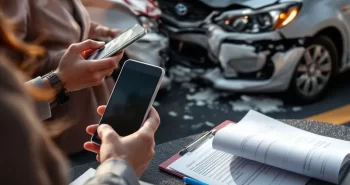
- Photographs or videos: Take or gather images of the accident scene, the vehicles involved, damage to property, and any visible injuries on your body. Security camera footage and traffic cameras may also capture the accident occurred and can be vital pieces of evidence.
- Documentation of expenses: Bills, receipts, pay stubs showing lost wages, medical expenses, and estimates for vehicle repairs can prove your financial losses and support your personal injury claim.
It is also wise to retain any correspondence you had with the other driver, witnesses, or insurance companies. The accuracy and clarity of your records can carry significant weight. If you were a passenger or a not-at-fault driver, consistent documentation of your injuries and property damage can solidify your position. Although it might require more steps compared to a scenario where a police report is readily available, thoroughly gathering evidence and maintaining detailed records can lead to a successful claim. Working with an experienced attorney can guide you through this process efficiently.
How medical records and witness statements support your claim
Official medical documentation is one of the strongest forms of evidence you can have in a car accident injury claim, especially when no police report exists. These records demonstrate the direct connection between the accident and the injuries you sustained. For instance, if you visited a doctor or a car accident chiropractor soon after the collision, you likely have x-rays, treatment notes, or prescriptions that show the nature of your injuries. The earlier you received medical treatment, the easier it becomes to relate those injuries to the crash. Immediate medical records are crucial to proving damages for injuries sustained in an accident and for any personal injury claim.
Witness statements are equally valuable. Someone who saw the accident may be able to confirm how the vehicles moved, the directions each driver was traveling, and any traffic violations that occurred. They might also corroborate your immediate harm, including signs of pain or distress at the scene. Documentation of witness accounts, such as written or recorded statements, provides an additional layer of objectivity. When combined with your medical records, this testimony can leave little room for insurers or opposing counsel to dispute the facts of your case. Experienced attorneys can help collect and organize these records for a personal injury lawsuit.
In situations where your injuries appeared days or even weeks later, medical documentation can show the progression of your symptoms. A consistent, documented treatment plan will explain to insurers why your injury claim is legitimate. We have seen many successful settlements reached on the strength of thorough medical paperwork and credible witness reports alone. Ultimately, these resources help fill the gap left by the absence of a police officer’s observations.
Common challenges when filing without a police report
A missing police report can present hurdles in proving fault or convincing the insurance adjuster that your version of events is correct. One challenge is that without an immediate third party account, details can be forgotten, misplaced, or disputed. Another is that the other driver might give a conflicting account of the crash, forcing you to look for additional ways to show negligence or wrongdoing.
Insurance providers, too, may argue that the lack of a police report raises questions about the severity of your injuries. They might claim that if the crash were serious, law enforcement would have been called. It is essential to be prepared for skepticism from insurance companies and possibly from a court. Insurers may more closely scrutinize claims without police reports, which can complicate the insurance claim process. Insurance companies often view claims without police reports with additional scrutiny.
It is essential to document every detail of the accident as soon as possible, as memories can fade quickly. Precision and consistency are key. If you remain organized and present a coherent set of facts that shows how the other driver caused your injuries, the mere absence of a police record becomes less impactful. An experienced attorney can help you compile these details and prepare your personal injury cases effectively.
Why you could now file without a police report
In some jurisdictions, the rules around insurance claims have evolved to recognize that accidents do not always get reported to local authorities. Technology has also made it easier for us to file photos, repair invoices, and medical documents directly with insurers. Instead of waiting for a police record, most insurance claims will accept credible forms of digital evidence. We have seen parties involved in a t bone car accident, for example, submit smartphone pictures taken right after the crash to show exactly how the vehicles collided.
Legal standards have not necessarily relaxed, but the means of proving a case continue to expand. Video footage from security cameras, statements retrieved via email, or text message exchanges detailing the accident can all bolster your version of events. Even if you did not contact law enforcement immediately, you can still gather such information to build your case later. As long as you act swiftly and preserve evidence with thorough documentation, filing a claim is very much within reach. Consulting an experienced attorney can ensure you meet all deadlines and properly file a personal injury claim.
Moreover, courts and insurance adjusters generally prioritize evidence that is credible, consistent, and supported by corroboration. It means that if you produce a robust archive of incident-related details, a formal police report can be helpful but is not the one absolute factor determining the outcome.
How Legal Claim Assistants connect you with the right attorney
If you have been involved in a recent car accident and are worried about the absence of a police report, we understand your concerns. Our primary goal is to help you navigate this challenging situation by connecting you with an attorney who specializes in your type of case. We focus on ensuring you receive the right legal representation to pursue full and fair compensation effectively.
Our process starts with an initial discussion of your accident details, injuries, and any documents you currently possess. We look at key information, such as medical records, records of lost income, and any photographic evidence you may have captured. Based on these insights, we then connect you with an attorney who understands how to secure a fair settlement even in scenarios that lack a police report. Whether you are dealing with mild injuries or more severe harm, such as head trauma from car accident, our network can recommend experienced professionals for a free consultation.
Ultimately, our mission is to remove the uncertainty many people feel when they do not have a police report. By pairing you with a legal team adept at working with alternative forms of documentation, we aim to help you stand on solid ground. If you want to learn more about steps to take when you are not at fault, consider reading our article on what to do after a car accident not your fault. When you are ready, reach out, and we will help you find the support you need to pursue the compensation you deserve.
No Win, No Fee. Let the Best Motor Vehicle Accident Attorneys Fight for your Compensation!