Can I Sue For A Truck Crash?
 Fact Checked By Our Attorneys
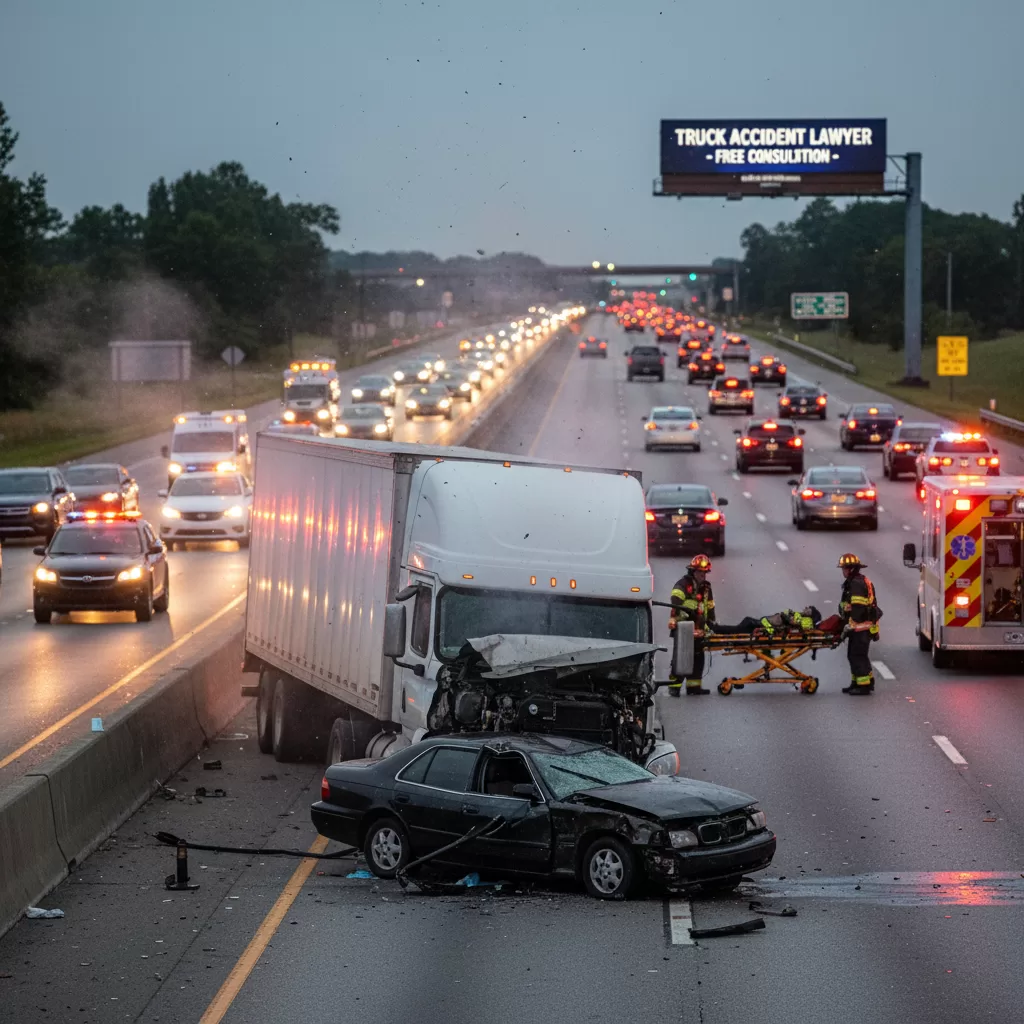
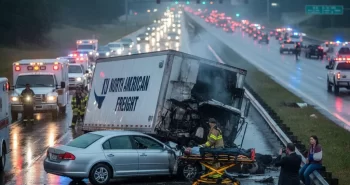
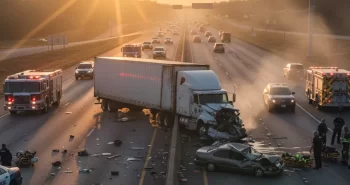
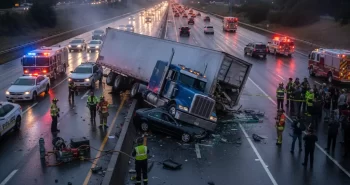
Can I sue for a truck crash depends on whether your accident meets specific legal requirements under state and federal law. Truck accident lawsuits focus on liability, negligence, and financial damages caused by a commercial vehicle collision. This page explains when a truck crash qualifies for a lawsuit, who may be held legally responsible, and what factors determine eligibility for compensation. If your case meets these criteria, legal action may be available. Many victims pursue legal action after a commercial truck accident when serious injuries and financial losses make recovery difficult.

No Win, No Fee. Let the Best Truck Accident Attorneys Fight for your Compensation!
Table of Contents:

When you are legally allowed to sue after a truck crash
Before deciding to pursue a truck accident lawsuit, it is important to clarify your legal standing to file a personal injury claim. In most truck accident cases, you may be entitled to sue if you sustained catastrophic injuries or experienced significant losses because of the at-fault party’s negligence. This may include property damage, loss of income, and other legally recoverable financial damages.
Eligibility is often evaluated based on documented damages, liability evidence, and compliance with statutory claim requirements and following up with necessary treatments. This includes documenting your medical expenses and ensuring all treatments are properly recorded to support your claim. If you meet state-specific thresholds for bodily injury or financial losses, then your case may qualify for legal action. Generally, if your medical bills and other damages exceed your state’s threshold (if it has one), you have the legal right to file a lawsuit. That said, fault alone is not enough. You also need to prove negligence by showing the other party’s duty of care and how their breach of this duty directly caused your severe injuries.
In any motor vehicle accident involving a large truck, establishing negligence and liability can require detailed investigation and professional analysis.
Each state has a statute of limitations for filing personal injury lawsuits, typically ranging from one to four years. These strict state deadlines, commonly ranging from one to three years, must be adhered to when filing a truck accident lawsuit, due to the statute of limitations. Failing to file before the deadline could bar you from recovery altogether, which is why it is essential to contact an attorney as soon as possible after a truck accident to preserve evidence and your ability to bring a claim for compensation.
Federal law mandates that general freight carriers maintain at least $750,000 in insurance coverage as of January 1, 2026. Trucking companies must comply with federal regulations regarding driver training, vehicle maintenance, and hours of service. These regulations play a critical role in establishing liability and ensuring safe driving practices. Violating these safety rules may represent a serious legal obligation breach that can strengthen your case.
Determining who is liable in a truck accident
Understanding liability is crucial for building a successful truck accident claim. We often see multiple responsible parties involved: the truck driver, the trucking company, the truck’s manufacturer, or even the cargo loaders. This web of potentially liable parties can complicate the legal process, but it also widens the pool of possible compensation sources.
A thorough investigation usually examines factors like driver logs, trucking company policies, vehicle maintenance records, and whether the truck driver’s negligence caused the crash. In a semi truck accident case, investigators may also analyze mechanical issues and electronic driving data to determine what caused the collision. Violations of federal motor carrier safety regulations, such as exceeding mandated hours of service, can strengthen your case. If you want a more detailed look into how liability is established, explore our resource on who is liable in a truck accident.
Truck accidents often involve complex legal issues due to the involvement of multiple parties and regulations. Filing a lawsuit after a truck accident involves navigating these complex state and federal regulations to establish liability and seek compensation. In some crashes, brake failure or poor maintenance may be a major contributing factor that must be thoroughly investigated.
Common parties you can file a claim against
Truck accident cases involve more than just a driver and a victim. Depending on your specific circumstances, you may have the option to pursue a claim against:
- A truck driver who acted negligently or violated safe driving practices, including distracted driving
- A trucking company that failed to enforce federal regulations or background checks
- A parts manufacturer that sold defective brakes, tires, or machinery, subject to product liability laws
- A third-party mechanic who performed substandard repairs, leading to mechanical failures
- Negligent cargo loaders who improperly secured the cargo
Pursuing any of these parties requires critical evidence. You should be able to link each defendant’s actions (or lack thereof) directly to the incident. This is where a skilled truck accident attorney or a truck accident law firm can be invaluable. They have the resources to gather evidence, including accident reports and witness statements, and pinpoint where the negligence occurred. Police reports often provide important details about how the crash occurred and which parties may be responsible.
Types of compensation available in truck crash cases
Once liability is established, you can explore various forms of compensation, often called “damages.” These damages can generally be divided into two main categories: economic and non-economic.
Economic damages are the tangible, quantifiable losses you have encountered. They include medical bills, surgery or rehabilitation costs, vehicle repairs, and lost wages during your recovery period. Compensation may also cover the cost to repair or replace a damaged passenger vehicle following a serious truck crash. In more severe cases, future lost earnings may also be factored in, especially if you are unable to return to your previous line of work.
Non-economic damages cover losses that are more difficult to calculate but every bit as real. This may include compensation for emotional distress and reduced quality of life caused by the accident. Non-economic damages may be available when permitted under state law and supported by legal evidence. In egregious situations where a defendant’s actions are especially reckless, you might even pursue punitive damages. These damages aim to punish the wrongdoer and prevent similar future behavior.
Many people wonder, “How much are most truck accident settlements?” The answer varies significantly based on each case’s unique circumstances. Our experience shows that thorough documentation and a willingness to fight for your rights often result in higher settlement offers from insurance companies, leading to a fair settlement.
How fault and shared responsibility affect your claim
Sometimes multiple parties share fault in a semi truck accident, or you might share a portion of the blame yourself. In legal terms, this is known as the concept of comparative negligence. If the court finds that you bear a percentage of fault, it can reduce your damages by that proportion.
For example, if you are found 20% responsible for the crash, and your total damages amount to $100,000, you might only be eligible for $80,000. The exact approach to shared responsibility differs by state. Some states use pure comparative negligence rules, while others follow a modified version that bars you from recovering compensation if your share of fault crosses a certain threshold. Being aware of these rules early on can help you negotiate more confidently with insurers and other parties.
No Win, No Fee. Let the Best Truck Accident Attorneys Fight for your Compensation!
Key evidence needed to support a truck accident lawsuit
Gathering strong evidence is pivotal in establishing liability and securing a favorable settlement or court judgment. The more precise and organized you are, the greater your chances of recovering maximum damages. Below are some specific forms of critical evidence you will want to preserve early in the process:
- Accident reports, which include the responding officer’s account of who was at fault
- Documentation supporting the extent of damages and the causal link between the crash and financial losses
- Photos or videos of the accident scene, vehicle damage, and injuries sustained
- Witness statements that can verify timing, weather conditions, and driving behavior
- Electronic log data or GPS records in cases involving professional trucking operations, maintained under carrier safety administration FMCSA rules
Medical records are also essential for proving the severity of injuries suffered by the injured party and linking them directly to the accident. In many cases, investigators may review data from the truck’s electronic control module to determine speed, braking patterns, and driver behavior before impact.
We recommend staying diligent here because valuable evidence can vanish. For instance, driver log data may be overwritten more quickly than you think. Keeping digital and physical copies of all relevant documents can substantially strengthen your case. If you need more guidance, read our detailed resource on what to do after a truck accident for a comprehensive list of next steps.
How a truck accident lawyer can help you sue
Winning a truck accident litigation battle usually requires understanding how the legal system works, what evidence matters most, and which legal arguments carry the most weight. An experienced truck accident attorney or a skilled truck accident attorney can play a pivotal role in gathering hard-to-find documents, consulting with accident reconstruction experts, and negotiating with insurance companies on your behalf. You may wish to contact a truck accident lawyer today to understand your options and protect your legal rights.
We often see people hesitate to seek legal counsel because they believe it may be too expensive. However, many firms—including our recommended network—operate on contingency fee arrangements. This means you typically pay legal fees only if you receive fair compensation. Most firms also offer a free consultation so you can evaluate your options before committing to legal representation. You can also learn about costs beforehand by checking out our guide on how much does a truck accident lawyer cost. In most cases, the attorney’s ability to strengthen your claim more than offsets any fees you may incur.
If settlement negotiations fail in a truck accident lawsuit, your attorney must file a formal complaint in civil court listing the defendants and requesting compensation. Your attorney will guide you through the process of filing a claim after a truck accident and negotiate with insurance companies on your behalf to secure a fair settlement.
Real case studies showing successful truck crash lawsuits
Real-life examples can be incredibly helpful for understanding how these cases unfold. For instance, there was a scenario in which a delivery truck driver was texting at the time of collision. The legal team uncovered phone records proving the driver was distracted, leading to a settlement that covered substantial documented damages and loss of income tied to the at-fault party’s negligence.
Another driver had ignored mandatory rest breaks and falsified their log, violating federal motor carrier safety regulations enforced by the motor carrier safety administration. Once that was discovered, it became much easier to negotiate a higher truck accident settlement, given the gravity of the trucking company’s regulatory violation. Each case underlines how critical specific evidence and strong legal representation are for a successful claim outcome.
Important filing deadlines and statute of limitations
We cannot stress enough the importance of taking swift action. Every state operates under strict filing deadlines, known as statutes of limitations, which limit the amount of time you have to bring a truck accident lawsuit. These time frames vary from state to state—some allow two years, while others give you only one year from the date of the accident or the date you discovered your injury.
Failing to file before the deadline could bar you from recovery altogether. This is why we encourage you to consult with an experienced attorney as soon as possible, even if liability or damages are still being evaluated. By acting promptly, you preserve critical evidence and protect your right to seek compensation should you decide to move forward.
How Legal Claim Assistant connects you with the right lawyer
One of the toughest aspects of pursuing legal action is finding a qualified attorney who aligns with your needs. Our team at Legal Claim Assistant streamlines this process by connecting you to a network of vetted personal injury lawyers who specialize in truck accident cases. We focus on matching you with professionals who have proven results, specialized knowledge, and a commitment to transparent, client-centered legal support.
It is natural to want firm answers and a path forward after a stark event like a truck crash. If you meet the eligibility requirements and can show that another party’s truck driver’s negligence harmed you, then yes, you can sue for a truck crash. By taking proactive steps and working with the right legal team, you stand a strong chance of receiving fair compensation for physical recovery, financial stability, and peace of mind.
Additionally, it’s important to note that truck crashes often have devastating consequences that go beyond typical car accidents. Unlike a typical car accident, collisions involving commercial trucks can result in catastrophic injuries and complex liability issues due to the size and weight of these vehicles.
Unsafe practices such as ignoring hours of service regulations or improper cargo loading can increase the risk of accidents. Furthermore, government entities may sometimes be liable if poorly maintained roads or inadequate signage contribute to the crash.
In tragic cases involving fatalities, families may pursue claims for wrongful death to seek justice and compensation for their loss. Having a skilled truck accident attorney familiar with these nuances is crucial to navigating the legal process effectively.
No Win, No Fee. Let the Best Truck Accident Attorneys Fight for your Compensation!