


Key Takeaways:
Medical malpractice causes patient injury, and if it leads to death, a wrongful death claim can also be filed.
Damages, case outcomes, and filing deadlines vary by state, making early legal consultation critical.
Combining both claims with experienced legal representation maximizes compensation and ensures all losses are addressed.
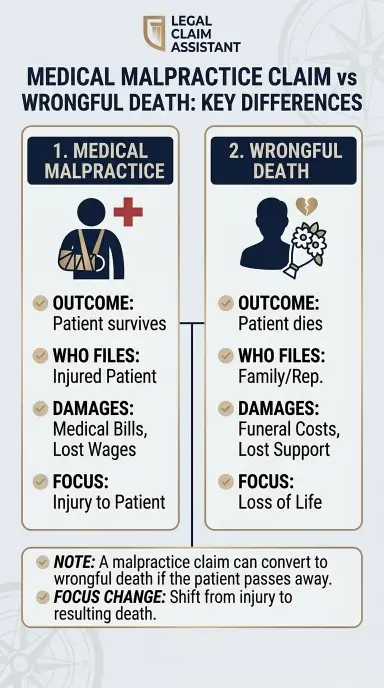
Medical Malpractice Claim vs Wrongful Death: Key Differences
A medical malpractice claim and a wrongful death claim address different outcomes from medical negligence, but they are closely connected. Understanding the differences helps families determine the proper legal action.
Feature | Medical Malpractice Claim | Wrongful Death Claim |
|---|---|---|
Definition | Negligence by a healthcare professional causing injury to a patient | Death caused by medical negligence or misconduct |
Outcome | Patient survives | Patient dies |
Who Files | Injured patient | Personal representative or surviving family members |
Damages | Medical bills, lost wages, pain and suffering | Funeral expenses, lost income, loss of companionship, emotional suffering |
Legal Focus | Breach of medical standard of care | Death caused by negligence |
A medical malpractice claim can turn into a wrongful death suit if the patient dies as a result of the medical provider’s negligent act. While a malpractice claim addresses injuries sustained by the patient, a wrongful death claim focuses on the resulting death and the losses suffered by surviving family members.
Both types of claims require proving medical negligence. This involves establishing that the healthcare professional owed a duty of care, breached that duty, caused harm or death, and that measurable damages resulted. Without clear evidence of these elements, neither claim is likely to succeed.
Liability may extend beyond the individual medical provider. Hospitals, doctors, nurses, and other medical professionals involved in the patient’s care can be held responsible, especially if the negligent act occurred within the scope of their employment or duties.
Filing a wrongful death claim is generally done by a personal representative of the deceased person’s estate. This ensures that surviving family members, such as a spouse or children, can recover damages for medical expenses, funeral costs, lost income, and emotional suffering.
What Is Medical Malpractice and How It Leads to Wrongful Death
Medical malpractice occurs when a healthcare professional fails to meet accepted medical standards, and when this negligence results in a patient’s death, it can lead to a wrongful death claim. Common examples of medical errors include surgical errors, misdiagnosis or delayed diagnosis, medication mistakes, and improper or incomplete medical treatment.
When such negligence results in the patient’s death, the case may include a wrongful death component. Not every wrongful death results from medical malpractice, but when it does, families can pursue a wrongful death claim to recover damages.
Hospitals and medical providers may also be liable for the negligence of their staff, including nurses, technicians, or other healthcare professionals, depending on their employment relationship.
Strong evidence is essential to prove medical malpractice and its connection to the decedent’s death. This includes medical records, expert testimony from qualified medical experts, documentation of medical bills incurred, and proof of a negligent act.
A legal team experienced in medical malpractice and wrongful death cases can help families file a wrongful death lawsuit, seek compensation for medical expenses, funeral costs, lost income, and emotional suffering, and navigate statutes of limitations for timely filing.
Proper legal representation ensures that families of the deceased person can pursue justice, hold negligent medical professionals accountable, and maximize wrongful death damages in civil lawsuits.
When You Can File a Wrongful Death Claim After Medical Malpractice
You can file a wrongful death claim when specific conditions are met, linking the medical provider’s negligence to the patient’s death.
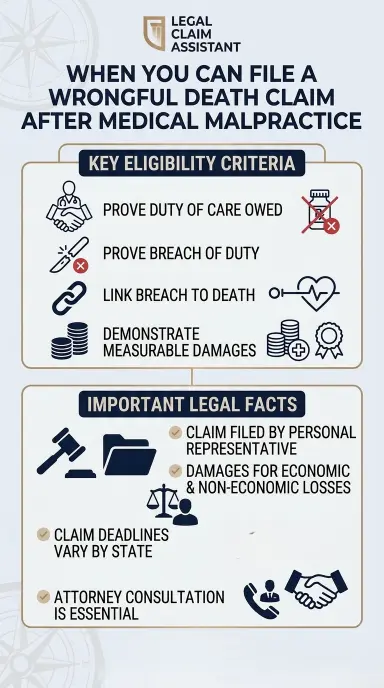
The main eligibility criteria include:
A healthcare provider owed a duty of care to the patient.
That duty was breached through medical negligence, such as surgical errors, misdiagnosis, medication mistakes, or improper treatment.
The breach directly caused the patient’s death.
Measurable damages resulted, including medical expenses, funeral costs, lost income, and emotional suffering for surviving family members.
Additional legal facts:
The personal representative of the decedent’s estate usually files the claim on behalf of surviving family members, such as a spouse or children.
Wrongful death actions allow family members to seek damages for both economic and non-economic losses caused by the wrongful act.
The wrongful death statute varies by state, typically ranging from 1 to 3 years from the decedent’s death or the discovery of the medical negligence. Missing deadlines can permanently bar such a claim.
Consulting a qualified attorney is essential to navigate the legal process, determine whether a medical malpractice lawsuit also applies, and file timely actions.
Filing a wrongful death claim based on death and medical malpractice ensures families can seek justice, recover compensation, and hold negligent healthcare professionals accountable. Learn the difference between survival action and wrongful death to understand which claim fits your situation.
Damages in Medical Malpractice and Wrongful Death Cases
Damages in medical malpractice and wrongful death cases are intended to compensate families for both economic losses and non-economic suffering. Economic damages cover costs that can be quantified financially. These typically include medical expenses incurred from patient injuries or hospital visits before death, funeral expenses, and lost future income or financial support the deceased would have provided to their surviving family members.
Non-economic damages address losses that are more personal and subjective. This includes pain and suffering experienced by the deceased before death, emotional distress, and loss of companionship for surviving spouses, children, or other family members. In cases of gross negligence, punitive damages may also be awarded to punish the healthcare provider and deter similar misconduct.
State-specific laws can significantly impact the total damages recoverable. For example:
California caps non-economic damages in medical malpractice wrongful death cases at $650,000, while Maryland may allow up to $1,150,000. Settlement amounts vary widely based on the severity of the wrongful act, the strength of evidence, and the specific circumstances of the deceased person. Many wrongful death lawsuits exceed $500,000, with average settlements approaching $973,054.
Working with a qualified attorney ensures that all damages, including medical malpractice results, medical expenses, and emotional suffering, are fully documented and properly claimed. Understanding the types of damages and state-specific limits allows families to make informed decisions about filing a wrongful death claim and pursuing maximum compensation.
Key Factors That Affect Medical Malpractice Results and Wrongful Death Outcomes
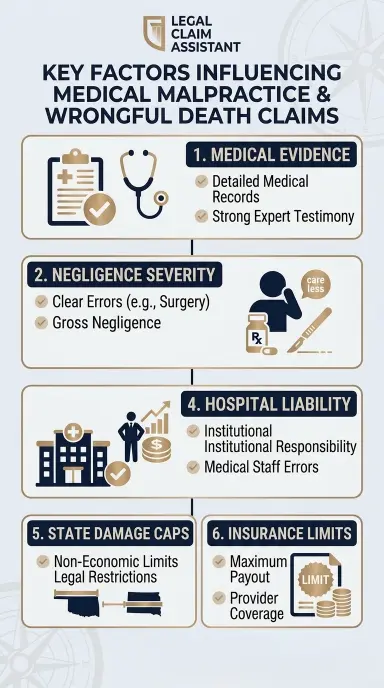
Several factors influence the results of medical malpractice cases and wrongful death lawsuits. Understanding these can help families and legal teams anticipate case value and success.
Key factors include:
Strength of medical evidence and expert testimony: Detailed medical records, hospital visits documentation, and testimony from qualified medical experts significantly impact outcomes.
Severity of negligence: Clear, grossly negligent acts, such as surgical errors or medication mistakes, often result in higher compensation.
Age and earning potential of the deceased: Younger patients with higher future income potential usually increase economic damages.
Hospital liability and staff involvement: Hospitals may be held responsible for errors made by doctors, nurses, or other medical staff in a medical setting.
State-specific damage caps: Some states limit non-economic damages, affecting the total award in wrongful death and medical malpractice cases.
Insurance policy limits: Coverage of the healthcare provider or hospital can set the maximum payout.
Most settlements allocate the largest portion to lost future income. Cases with clear negligence, well-documented injuries, and strong expert testimony tend to achieve higher compensation.
Statute of Limitations and Filing Deadlines
The statute of limitations for medical malpractice and wrongful death claims sets strict deadlines for filing a claim. Missing these deadlines usually results in automatic dismissal, making timely action essential. The exact timeframe varies by state and by the type of claim.
For example, in Texas, the statute of limitations for a wrongful death or medical malpractice claim is typically two years from the date of injury. In Florida, it is generally two years from the date the injury or wrongful act was discovered. California has a more complex system: claims must be filed within one year from discovery or within three years from the patient’s death, whichever comes first.
Because deadlines are strict and exceptions are rare, families should consult medical experts and a qualified attorney as soon as possible. Early legal consultation, including a free consultation, helps ensure that personal injury cases, wrongful death lawsuits, and medical malpractice claims are filed properly and within the applicable statute of limitations.
Can You File Both Medical Malpractice and Wrongful Death Claims Together
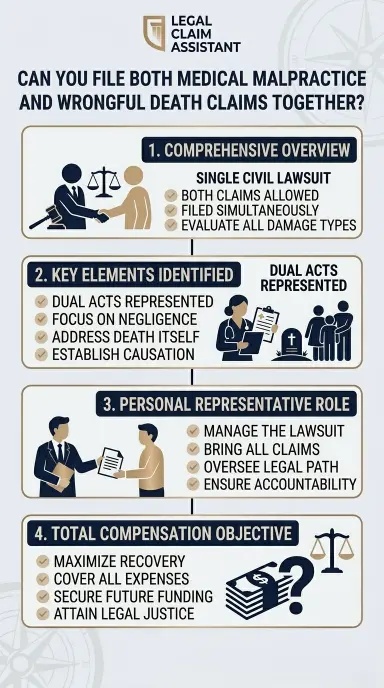
Yes, it is often possible to pursue both a medical malpractice claim and a wrongful death claim together. A medical malpractice claim focuses on the negligence or wrongful act of the healthcare provider that caused patient injuries, while a wrongful death claim addresses the death itself and the resulting damages to surviving family members. A combined lawsuit follows the general wrongful death litigation process.
In practice, the personal representative of the deceased person’s estate may bring both claims in a single civil lawsuit. Courts will evaluate the evidence of negligence alongside the resulting damages simultaneously.
This dual approach ensures that medical malpractice and wrongful death actions are fully accounted for, allowing families to seek compensation for medical expenses, funeral costs, lost income, and emotional suffering. Combining the claims can maximize recovery and provide a clearer legal path for justice.
Why Legal Representation Is Critical in Malpractice and Wrongful Death Cases
Medical malpractice and wrongful death cases are highly complex and require strong legal expertise. Navigating personal injury claims, understanding wrongful death vs medical malpractice distinctions, and calculating damages from workplace incidents, slip and fall accidents, car accidents, or fall accidents demand specialized knowledge.
An experienced attorney can:
Gather medical evidence and consult medical experts to prove negligence and causation.
Evaluate economic and non-economic damages, including the possibility to award punitive damages.
Navigate state laws, including Georgia law or other local statutes, and manage statute of limitations deadlines.
Negotiate settlements with insurance companies or represent the family in court.
Most attorneys work on contingency, meaning no upfront fees, so families can pursue justice without financial risk. Legal representation significantly increases the likelihood of a favorable outcome and ensures that all losses, from medical bills to emotional suffering, are properly documented and claimed.
Frequently Asked Questions About Medical Malpractice and Wrongful Death
Families and patients often have questions about medical malpractice and wrongful death claims. This FAQ addresses common concerns to help you understand your rights, the legal process, and what to expect if pursuing a claim.
What is the difference between medical malpractice and wrongful death?
Medical malpractice involves negligence by a healthcare professional that causes injury to a patient. Wrongful death applies when that negligence results in the patient’s death, allowing surviving family members to seek damages.
Can a hospital be held liable for wrongful death?
Yes. Hospitals may be held responsible for the negligent actions of their staff, including doctors, nurses, and technicians, depending on the employment relationship and scope of duty.
What is the average payout for medical malpractice wrongful death?
Payouts vary depending on the severity of the negligence, damages, and state laws. Many wrongful death cases exceed $500,000, with averages around $973,054. Some states have caps on non-economic damages, which can affect the total award.
How long does a wrongful death case take?
Most cases resolve within 1–3 years. Many are settled before trial, but complex cases involving extensive medical evidence or disputes over damages may take longer.
Can settlements cover both medical malpractice damages and wrongful death damages?
Yes. Settlements can combine compensation for medical bills, lost income, funeral expenses, and emotional suffering, ensuring families receive full compensation for all losses.
Speak With an Attorney for a Free Consultation
If you believe you have a case involving medical malpractice or wrongful death, consulting an experienced attorney is critical.
A qualified legal team can:
Evaluate whether the case qualifies as a medical malpractice claim, a wrongful death claim, or both.
Determine liability and calculate potential damages, including medical expenses, lost income, funeral costs, and emotional suffering.
Handle filings, deadlines, and navigate the legal process efficiently.
Negotiate with insurance companies or represent your family in court to maximize compensation.
Most law firms offer a free consultation, allowing you to understand your legal options without financial risk. Seeking legal representation early ensures your claim is filed correctly, evidence is properly documented, and your family’s rights are protected.
You Deserve Justice. Let Us Help.
Speak with a trusted Wrongful Death Attorney who will stand by your side, protect your rights, and fight for the compensation you deserve.
No Win, No Fee. Let the Best Wrongful Death Attorneys Fight for your Compensation!

Under 1 Minute

100% Free

Expert-Reviewed

Private & Secure
© 2025 Legal Claim Assistant. All Rights Reserved.
Terms of Service | Privacy Policy | Contact Us | Marketing Partners
Related Article


Share this article:


