How Long Does a Rear End Collision Settlement Take
 Fact Checked By Our Attorneys
When you’re wondering how long does a rear end collision settlement take, every day of uncertainty can feel overwhelming. Don’t wait in the dark get a free case review now and connect with an experienced car accident attorney who will fight for the fair compensation you deserve. Click the button below to take the first step toward resolving your claim faster and with confidence.

No Win, No Fee. Let the Best Motor Vehicle Accident Attorneys Fight for your Compensation!
Table of Contents:

How Long Does a Rear End Collision Settlement Take
When people search for “how long does a rear end collision settlement take,” they are usually looking for a realistic range, not a vague answer.
In typical situations:
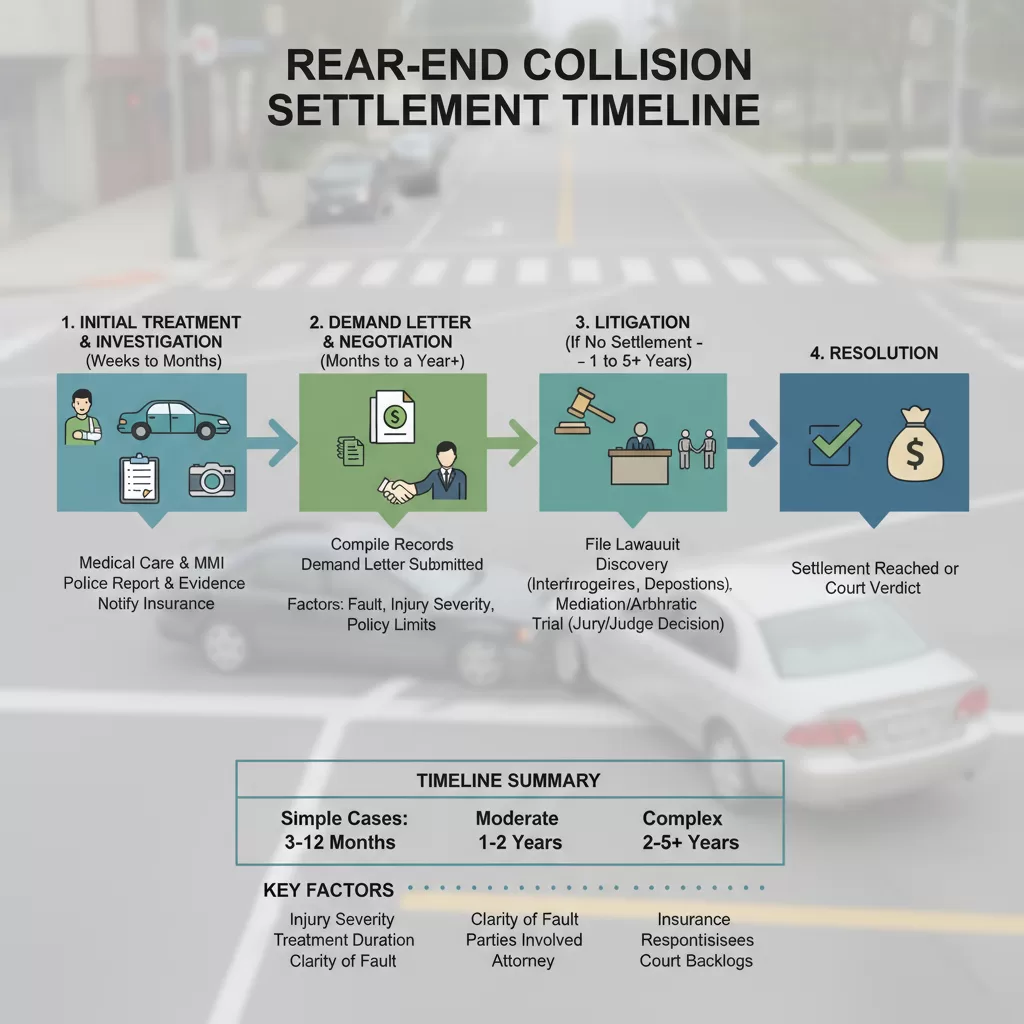
- Minor rear end accident cases with soft tissue injuries can settle in about 3 to 6 months
- Moderate injury personal injury claims often take 6 to 12 months
- Severe injury or disputed liability cases can take 12 to 24 months or more, especially if a car accident lawsuit is filed
These are general timeframes, not promises. Your personal injury lawyer may find your case moves faster or slower depending on how quickly your injuries stabilize, how clear fault is, and how reasonable the insurance companies involved are in negotiations. We will break down those moving pieces in the sections that follow.
The settlement process for a rear-end accident typically involves collecting medical records, witness statements, and other relevant documentation. Gathering comprehensive evidence, such as photos of the accident scene and medical reports, is crucial to expedite the settlement process. Documenting all medical treatments and related expenses is essential for establishing the value of your claim after a rear-end collision.
Common Factors That Impact Settlement Timelines
Several core issues usually determine how long a rear end accident settlement will take.
First, the severity of injuries and the length of medical treatment are key. Insurance companies want to see a complete picture of your medical bills, prognosis, and any lasting limitations before they consider a full settlement offer. Settling too early risks leaving future medical costs uncovered. Medical treatment duration is a critical factor in determining the full extent of damages before settling.
Second, liability must be reasonably clear. Rear end collisions are often straightforward because the at fault driver is usually presumed negligent, but there are exceptions. To establish liability in a rear-end collision, it is essential to determine who was at fault for the accident, which often rests with the driver behind. If the insurer believes you braked suddenly, had non-working brake lights, or share some responsibility due to comparative fault, they may investigate longer, which slows the entire settlement process. Disputes over fault, multiple involved parties, or lack of evidence can delay proceedings in rear-end collision claims. The presence of multiple parties in a car accident can complicate and lengthen the settlement process.
Third, insurance company behavior matters. Some carriers respond quickly and negotiate in good faith. Others delay, question every treatment, and use low initial offers to test whether you will simply accept less. Insurance companies often use delaying tactics to minimize payouts, which can prolong the settlement process. Initial low-ball offers from insurance companies can prolong negotiations in rear-end collision claims. We address this dynamic in more detail below.
Outstanding medical liens must be resolved before a final payout can be made in rear-end collision claims. Medical costs can add up quickly following a car accident, and the at-fault party may be responsible for covering your past, present, and future medical bills. Lost wages and the ability to work are significant components of potential damages following a rear-end collision.
Severity of Injuries and Medical Treatment Duration
The more serious your injuries, the more time your personal injury case typically needs before it is ready to settle.
For minor sprains, strains, or whiplash, treatment might last a few weeks to a few months. Once you are close to your pre-accident baseline and medical professionals do not expect more treatment beyond routine follow up, your car accident attorney can gather records and make a settlement demand. If you are still dealing with back or neck pain, resources like our guide on how long does back pain last after a rear end collision can help you understand the medical side while you wait.
With moderate injuries such as herniated discs, fractures, or significant soft tissue damage, treatment may include physical therapy, injections, or minor surgery. Doctors may want to see how you respond over several months before they offer a final prognosis. Your legal team will usually wait for that stability, sometimes called “maximum medical improvement,” so that any settlement accounts for future limitations and costs.
In severe cases, including spinal cord injuries, traumatic brain injuries, wrongful death, or multiple surgeries, the timeline expands further. Long-term disability, inability to return to prior work, and the need for ongoing care all increase the value of the claim, but also require more documentation and expert input. Rushing to settle in these circumstances can be financially devastating.
The settlement amount for a rear-end accident typically considers total medical expenses, lost wages, and pain and suffering. Settlements typically consider the total medical expenses, lost wages, and an additional amount for pain and suffering. Pain and suffering damages are usually calculated by multiplying the total economic damages by a number between 1-5, depending on the severity of the injuries.
Proving Fault and Liability in Rear End Collisions
Proving fault affects how long a rear end accident settlement takes, even though these crashes are often seen as straightforward.
In many states, the trailing driver is presumed negligent if they hit the car in front. However, insurers may still investigate to see if they can shift blame. They might argue you cut in suddenly, stopped without reason, or failed to maintain working lights. This kind of disputed liability can add weeks or months to the process.
Gathering evidence is what keeps your case on solid ground. A strong file often includes the police report, photos of vehicle damage at the accident scene, road and weather conditions, dash cam or surveillance footage when available, and witness statements. If you are still at the stage of sorting out what to do next, our overview of what to do after a rear end collision can help you protect your rights from the start.
If liability is genuinely contested, or if multiple parties are involved, your attorney may bring in accident reconstruction experts. That work lengthens the case, but it often pays off in a clearer allocation of fault and a higher settlement.
The Role of the Insurance Company in Settlement Timing
The insurance companies involved have a major influence on how long your car accident settlement take.
Insurance adjusters are trained to protect their company’s bottom line. Common tactics that slow timelines include requesting duplicate records, questioning every treatment as “excessive,” delaying responses, or making very low initial settlement offers in the hope you accept quickly. Some insurers will not give their best number until they see that you and your lawyer are prepared to file claims or a car accident lawsuit.
At the same time, insurance policies create certain timing rules. For example, adjusters usually have internal deadlines to acknowledge an insurance claim, review basic documents, and respond to settlement demands, though these are not uniform across states or carriers. Knowing those rules helps your personal injury attorney push back on unreasonable delays.
If you are pursuing a not at fault collision claim through your own insurer, such as under personal injury protection or underinsured motorist coverage, similar dynamics apply. Your company still acts as an opposing party when it comes to paying you insurance money, and it can affect how long your settlement takes.
How Settlement Timelines Differ With a Lawyer
Working with an experienced attorney will not guarantee a specific settlement date, but it almost always changes the timeline in your favor.
Hiring personal injury attorneys is crucial as they bring experience in negotiating with insurance companies and understanding the legal nuances of car accident cases. A personal injury lawyer plays a vital role in maximizing the settlement for a car accident victim by accurately valuing all damages and negotiating with insurance adjusters. Consulting with a personal injury attorney can help assess all aspects of your case and ensure you receive a settlement that fully covers your expenses and compensates for your suffering.
Personal injury lawyers who handle car accident claims every day know what documentation insurers actually need, and they move quickly to collect it so the file remains active. They understand when it is time to wait for medical updates and when it is time to push for answers. They also help you avoid the missteps that commonly cause month-long delays, such as incomplete forms or inconsistent statements.
A rear end accident lawyer can also spot when an insurer is stalling without good reason and respond with more formal pressure, including a lawsuit if that is in your best interest. That credible threat alone often speeds up meaningful negotiation, even though some cases still go all the way through litigation.
Having an experienced attorney can help streamline the settlement process by handling negotiations and legal complexities effectively.
Steps That Can Expedite a Rear End Collision Settlement
You cannot control everything, but there are clear steps that help keep a rear end accident claim moving.
Prompt medical care is the first. When you are evaluated within days of the collision and you follow through with recommended treatment, it is easier to prove your injuries are tied to the crash. Gaps in care often lead to questions and delays.
Next, keep your documentation organized. Save medical bills, wage loss notes from your employer, receipts for out-of-pocket costs, and any communication from insurance companies involved. Share these promptly with your lawyer so they do not need to chase missing pieces when it is time to make a demand.
Cooperating with your legal team also matters. Respond to requests for information, attend appointments, and provide honest updates about your recovery. This practical partnership helps your personal injury attorney build a complete picture quickly and argue for fair compensation without unnecessary back-and-forth.
Mistakes That Can Delay Your Settlement
Just as good habits speed things up, common mistakes can add months to your timeline.
Delaying medical treatment or skipping appointments is one of the most harmful. Insurers will argue that if you were truly hurt, you would have sought consistent care. That argument not only reduces the value of your claim, it also pushes your case into longer investigation.
Giving recorded statements to an insurance adjuster without legal advice can also create problems. Offhand comments or guesses about pain levels, prior injuries, or how the crash happened can be used to dispute your case later. Correcting those issues takes time and, in some cases, expert testimony.
Finally, posting about the collision or your injuries on social media can trigger delays. When adjusters find posts that appear to conflict with your reported limitations, they may pause negotiations to investigate or demand additional records. Closed accounts and careful communication help protect both your privacy and your timeline.
No Win, No Fee. Let the Best Motor Vehicle Accident Attorneys Fight for your Compensation!
Typical Settlement Timelines for Minor, Moderate, and Severe Injuries
Although every case is unique, it helps to think about timelines in three broad categories.
Minor injury cases often involve soft tissue damage, bruises, or short-term neck and back pain without lasting impairment. Treatment might last a few weeks to a few months, and once records are complete, a lawyer may be able to negotiate a settlement within another one to three months.
Moderate injury cases can include more persistent pain, structural injuries like herniated discs, or fractures that heal but leave some limitations. These claims usually require several months of treatment and monitoring. Settlement negotiations might begin around the 6 to 9 month mark and resolve by 12 months, though that can vary.
Severe injury cases, including permanent disability or major surgery, typically take the longest. Doctors need time to assess long-term impact, future medical needs, and work restrictions. It is not unusual for these claims to take 18 months or longer, and sometimes several years, particularly if they go to court. Because the stakes are higher, understanding the average rear end collision settlement in your situation can help set expectations.
When a Case Goes to Litigation or Court
Filing a car accident lawsuit often lengthens a rear end collision timeline, but sometimes it is the only way to move a stubborn claim forward.
Litigation starts when your lawyer files a formal complaint in court. After that, both sides enter discovery, where they exchange documents, answer written questions, and take depositions under oath. Courts also set deadlines and hearing dates, which can stretch over many months because of crowded dockets.
Most rear end collision lawsuits still settle before trial. Mediation and settlement conferences are common stages where insurers become more realistic about the risk of a jury verdict. If your case does go to trial, your attorney will prepare you carefully so you understand each step. For other collision types, such as a serious head on collision, this same litigation structure often applies, and specialized counsel like a head on collision lawyer can be vital.
How Long After a Settlement Agreement Do You Receive Payment
Once you agree to a final settlement amount, you are not paid instantly, but you are usually much closer to the end.
Once a settlement is finalized, payment is typically required within 30 to 60 days. Final settlement payments are commonly received within 2-4 weeks after finalization. The settlement process usually takes 2-6 weeks after signing a release form. Once the settlement check arrives, it is usually made payable to you and your law firm. The firm deposits it into a client trust account, pays approved medical liens or outstanding bills, deducts agreed attorney fees and case costs, and then releases your net share to you. This internal processing can add a short additional delay, but it ensures all obligations tied to your claim are properly resolved.
Can You Speed Up a Rear End Collision Settlement?
You cannot control every factor, but you can meaningfully influence how long a rear end collision settlement takes.
Proactive medical care, organized records, and early legal guidance are three of the most effective ways to avoid unnecessary delays. Saying yes to reasonable requests for information and remaining reachable for questions also keeps negotiations from stalling.
At the same time, it is important not to speed things up so much that you accept less than you deserve. Fast is not always fair. The real goal is a settlement that arrives as efficiently as possible while still fully addressing your medical needs, wage loss, pain and suffering, and any long-term impact on your life.
How a Lawyer Can Help You Achieve a Faster, Fairer Settlement
A skilled car accident lawyer balances two priorities: resolving your claim in a reasonable timeframe and maximizing the value of your recovery.
We see lawyers add speed by knowing exactly which records to request, which specialists to consult, and when an insurer is simply stalling. They use experience from prior cases to set realistic expectations and to time settlement demands for when your damages picture is strongest.
At the same time, a lawyer fights for fairness. They calculate not only current bills, but also future medical expenses, reduced earning capacity, and non-economic damages. If the crash involved a larger vehicle or a commercial defendant, such as in cases handled by a truck collision attorney, they also look for all applicable insurance coverage so you do not leave money on the table.
What to Expect From the Insurance Company During the Settlement Process
When you pursue a rear end accident claim, your experience with the insurance company will usually follow a series of predictable stages.
First, the insurer opens a claim file, assigns an adjuster, and may request a statement and basic documents like the police report and repair estimates. They will also likely evaluate the nature of the collision itself, sometimes using definitions similar to those in general resources on what is a collision and what does collision mean.
Next, as medical records come in, the insurer will assess liability, the extent of your injuries, and your damages. This is where they might question certain treatments or suggest that some care was unrelated or excessive. These arguments often require legal pushback and, in some cases, supporting opinions from your medical professional.
Finally, the insurer will respond to your lawyer’s settlement demand letter with an offer. Negotiation often involves several rounds of counteroffers. If the insurer refuses to reach a fair number, your lawyer may recommend filing a lawsuit. Throughout this process, you should expect your own lawyer to handle most direct communication with the adjuster so that you can focus on your recovery instead of back-and-forth disputes.
Examples of Rear End Collision Settlements and Their Timelines
Real-world examples help illustrate how different facts lead to different settlement timelines.
A low-speed rear end crash with modest bumper damage and a few weeks of chiropractic care might resolve in roughly four to six months. Once treatment ends and records are collected, an insurer may quickly agree to pay medical bills, some lost wages, and a modest amount for pain and suffering.
In a more serious example, a car accident victim hit at highway speed who suffers a herniated disc and misses several months of work may need physical therapy, injections, and perhaps surgery. That case may not be ready for a full settlement until 9 to 12 months after the crash, once doctors better understand long-term limitations.
Complex cases, including collisions involving multiple parties or commercial defendants, can require litigation and expert testimony. Those claims may take several years to resolve, but they can also result in significantly higher recoveries. If you want to see how this plays out in practice, our rear end collision settlement examples offer more detailed scenarios and outcomes.
How Legal Claim Assistant Can Connect You With the Right Collision Lawyer
Legal Claim Assistant exists to make this process easier and more predictable for accident victims.
We help you understand whether you have a viable personal injury claim, what kind of timeline to expect, and which type of personal injury attorney is best suited to your situation. If your crash involved a standard passenger vehicle, that may mean connecting you with an auto collision law firm that regularly handles rear end cases in your state. For more complex crashes, we look for attorneys with specific experience that matches your facts.
Most importantly, we connect you with lawyers who offer a free case evaluation, so you can get answers about timing, potential compensation, and the next steps without upfront cost. If your accident happened in the last year, you received medical care soon after, and you were not at fault, we encourage you to reach out. The sooner you understand your options, the sooner you can move toward a fair resolution and away from the uncertainty that follows a rear end collision.
No Win, No Fee. Let the Best Motor Vehicle Accident Attorneys Fight for your Compensation!