What Is a Collision and When It Becomes a Legal Issue
 Fact Checked By Our Attorneys
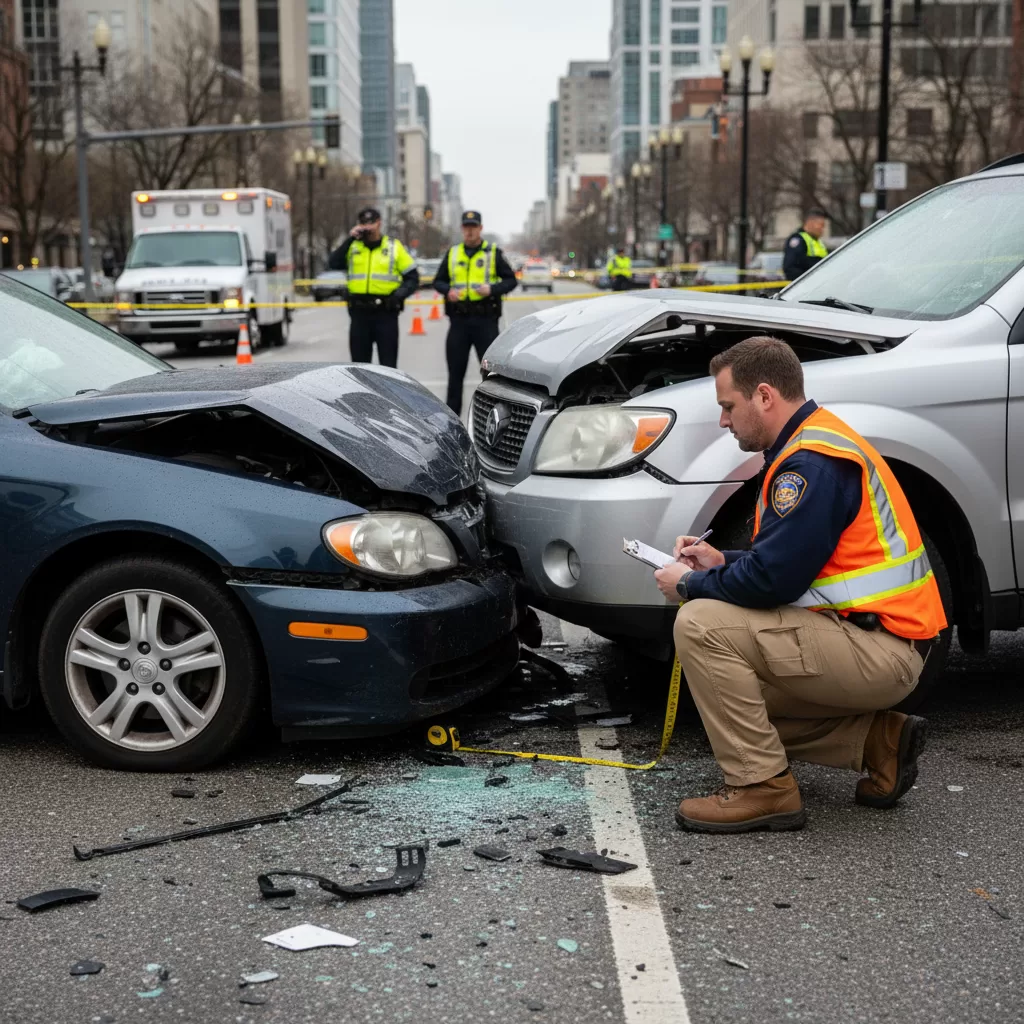
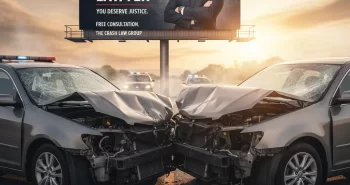
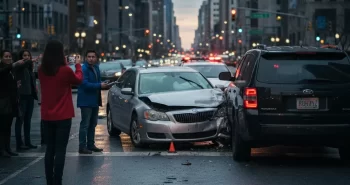
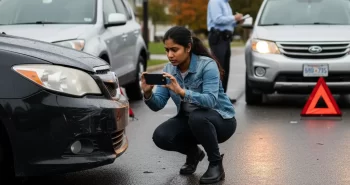
When people search for “what is a collision,” they’re often facing the aftermath of a car crash or car accident and wondering what steps to take next. If you’ve been involved in a collision that caused injury or damage, don’t wait get a free case review now to understand your rights and how you can pursue compensation. A collision refers to any event where two or more objects, such as two cars or a vehicle hits a stationary object, collide with force causing harm and potential legal consequences. Motor vehicle collisions can involve distracted drivers, drunk drivers, or reckless behavior, which may increase the severity of damages and bodily injuries.
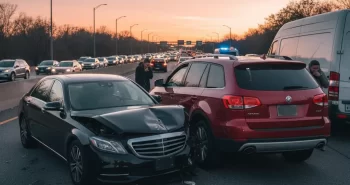
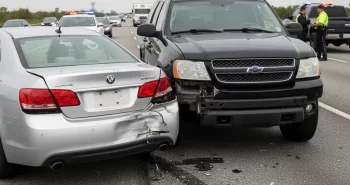
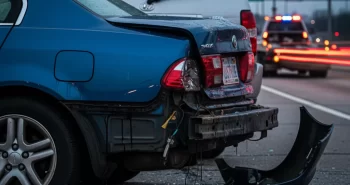
In motor vehicle accident (MVA) cases, collisions usually involve at least one moving vehicle and an impact that was not intentional. Whether it’s a rear end collision, a side impact at an intersection, or a serious head on collision, the key is that contact occurred, harm resulted, and someone may be legally responsible especially when negligence is involved. If you are unsure how to navigate the insurance claim process, a personal injury attorney can help protect your rights and ensure you are fairly compensated.
If you were a passenger or driver not at fault and sought medical treatment within two weeks of the crash, now is the time to take action. Click the button below for your free case review and find out if you qualify for compensation under personal injury law.

No Win, No Fee. Let the Best Motor Vehicle Accident Attorneys Fight for your Compensation!
Table of Contents:

How collisions are classified in practice
When we talk with injured people, we often discover that they have a general sense that “a crash happened,” but they are not sure how that event fits into legal or insurance categories. Classification matters because it affects fault arguments, policy coverage, and potential settlement value.
From a practical perspective, collisions can be grouped by what or who was struck, how the vehicles made contact, and what the circumstances were. Many of these categories are explained in more detail in related guides such as types of collisions and what does collision mean, but a brief overview can help you place your own crash in context.
At a high level, a collision may involve:
- Vehicle versus vehicle impacts, such as rear end collision, T-bone (also known as side-impact or broadside crashes), sideswipe, or head on collision, where two or more bodies or two cars collide and exchange momentum and energy.
- Vehicle versus fixed object impacts, such as poles, guardrails, walls, or parked cars, where a moving object hits a stationary object, resulting in inelastic collision with loss of kinetic energy.
- Vehicle versus pedestrian or bicyclist impacts, involving colliding bodies of different nature.
- Multi-vehicle chain reactions that start with one crash and trigger others, involving multiple colliding bodies and complex momentum exchanges.
Within each of these, we also look at factors like speed, visibility, traffic control devices, bad weather, and driver behavior. For example, a low-speed rear end collision in stop-and-go traffic will be evaluated differently from a high-speed impact on a highway ramp. Distracted drivers, drunk drivers, or reckless behavior are common contributing factors. Those details shape how insurers respond and how an attorney builds a case around negligence involved.
It is important to understand that all collisions conserve momentum, meaning the total momentum of the system remains unchanged during the collision process. However, collisions can be classified as elastic or inelastic. In an elastic collision, mechanical energy is conserved, so the total kinetic energy after the collision equals the total kinetic energy before the collision. Conversely, in an inelastic collision, such as during most car crashes, the total kinetic energy after the collision differs from the initial total kinetic energy, with some energy lost to deformation, sound, and heat. A perfectly elastic collision is an idealized case rarely seen in everyday vehicle collisions, but collisions between gas molecules in an ideal gas are generally considered perfectly elastic.
The coefficient of restitution is a key concept that quantifies the degree to which a collision is elastic or inelastic, ranging from zero (perfectly inelastic) to one (perfectly elastic). For example, in a perfect inelastic collision, the colliding particles coalesce and move together afterward, with the final velocity determined using conservation of momentum.
The velocities of colliding bodies can change only during the short collision process, which takes place over a brief time interval. Understanding these physics principles, including initial velocities and final velocities of two particles or bodies, helps explain the forces involved, colliding objects, and the resulting damage. Even a collision involving a simple object, like a bowling ball hitting a vehicle, can demonstrate the same energy transfer principles.
When a collision becomes a legal issue
Not every minor bump in a parking lot turns into a legal dispute. A collision becomes a legal issue when three elements begin to come together: someone was negligent, that negligence caused the crash, and the crash caused real damages like bodily injuries, medical bills, or lost income.
Negligence and fault
In most motor vehicle cases, we are looking at whether one or more drivers acted unreasonably under the circumstances. Common examples include:
- Following too closely, which is a frequent cause of rear end collision claims
- Speeding or driving too fast for conditions
- Ignoring traffic signals or stop signs
- Texting, using a phone, or other distractions
- Driving while impaired by drugs, alcohol, or fatigue
When these behaviors contribute to a collision that injures someone else, the at-fault driver can be legally responsible for the resulting losses, including legal consequences under personal injury law. Even in a complex truck collision scenario that might involve a commercial driver, an employer, or a maintenance company, the central question is the same: whose decisions created an unreasonable risk that led to the crash.
Determining fault and liability is important after collisions, as they often have a cause that could potentially have been avoided. The terminology used to describe incidents matters greatly in legal and insurance claims. Insurance companies will make a distinction between a true unavoidable accident and a preventable collision. Collisions indicate some degree of fault and liability, while accidents do not assign blame. Accidents are unplanned, unintentional events that cause damage or injury and are outside of anyone’s control, whereas collisions can sometimes result from negligence, recklessness, or intent.
Injury and financial harm
A collision becomes a legal issue when it creates real consequences for your health or finances. Many of the people who contact Legal Claim Assistant fit a similar pattern. The crash happened within the last 12 months, they sought medical assessment and treatment within two weeks, and their symptoms did not simply disappear after a day or two.
You might be dealing with:
- Back and neck pain
- Concussions or other head injuries
- Broken bones or joint damage
- Ongoing physical therapy or chiropractic care
If you were hurt in a rear impact, questions like how long does back pain last after a rear end collision can be especially important. Medical records that document both your diagnosis and your follow-up care often become core evidence in a legal claim handled by a personal injury attorney.
Disputes about responsibility or coverage
Legal issues also surface when there is disagreement about fault or insurance coverage. Sometimes another driver admits responsibility at the scene, then later tells their insurer a different story. In other cases, an insurer may accept that their driver caused the crash but dispute how badly you were hurt or how much medical treatment you really needed.
These disputes are often when people turn to resources like Legal Claim Assistant. We help you understand whether your situation is likely to meet legal thresholds in your state, and we connect you with a car collision lawyer or other personal injury attorney who can review your case in detail.
No Win, No Fee. Let the Best Motor Vehicle Accident Attorneys Fight for your Compensation!
The role of collision in insurance and coverage
When people ask “what is a collision,” they are sometimes also trying to understand insurance terms on their policy. Collision coverage is a specific part of an auto policy that pays for damage to your own vehicle after an impact, regardless of who was at fault, subject to your deductible and your policy limits.
It is different from comprehensive coverage, which usually applies when your vehicle is damaged by events like theft, vandalism, fire, hail, bad weather, or hitting an animal. If you want to explore this distinction further, resources such as what is the difference between comprehensive and collision insurance provide a detailed comparison.
From a legal perspective, several types of coverage may come into play after a collision:
- The at-fault driver’s liability coverage, which should pay for your bodily injuries and property damage
- Your own collision coverage, which can pay for repairs even while fault is still being investigated
- Uninsured or underinsured motorist coverage, which can step in if the at-fault driver lacks adequate insurance
If the other driver denies fault, leaves the scene, or turns out to be uninsured, your own policy may be the first line of recovery. Even then, your insurance company is still a business that aims to minimize payouts, so a claim can still evolve into a legal matter that benefits from professional guidance.
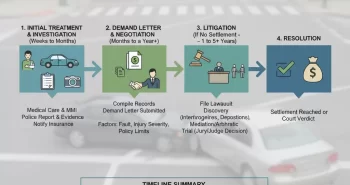
Filing a collision claim involves notifying your insurance company about the accident and providing necessary documentation. Insurance companies often require a police report to process a collision claim effectively. Legal rights and responsibilities must be understood when filing a collision claim to avoid potential pitfalls. Many individuals choose to hire a personal injury attorney after a collision to ensure they receive fair compensation for their injuries and damages. Legal representation is important in collision claims to navigate the complexities of fault determination, repair process, and liability.
No Win, No Fee. Let the Best Motor Vehicle Accident Attorneys Fight for your Compensation!