Head On Collision Lawyer and Legal Options After a Crash
 Fact Checked By Our Attorneys
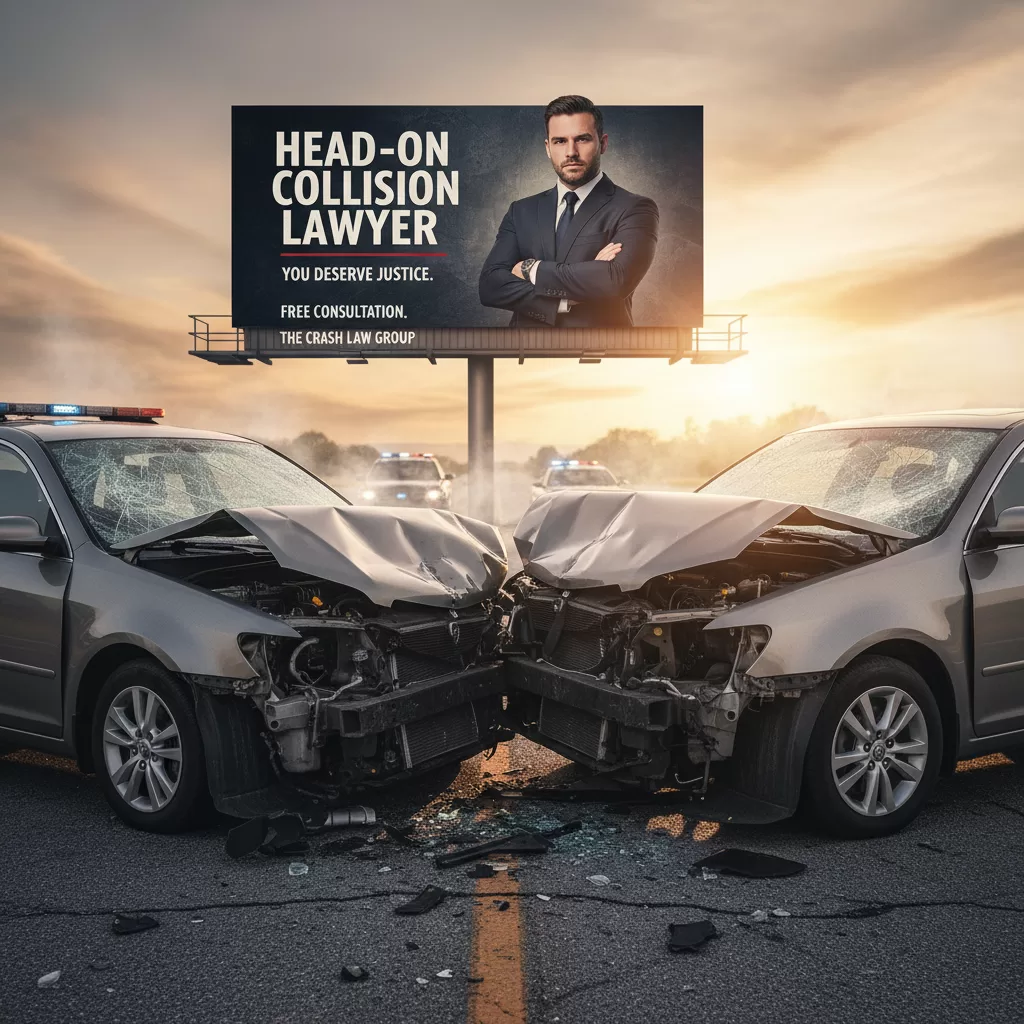
A head on collision lawyer can be your strongest ally after a devastating car crash. If you’ve been injured in a head-on collision caused by another driver, don’t wait get the expert help you deserve. Click the button now to get a free case review and discover how an experienced car accident attorney can fight for your maximum compensation. Let us connect you with trusted legal professionals who will stand by your side every step of the way.

No Win, No Fee. Let the Best Motor Vehicle Accident Attorneys Fight for your Compensation!
Table of Contents:

What is a head-on collision accident and why these cases are different
A head on collision happens when the front end of one vehicle strikes the front end of another vehicle traveling from the opposite direction. Among the types of collisions, these crashes are often the most severe because both vehicles’ speeds combine at impact. If each car is moving at 40 miles per hour, the crash impact can resemble hitting a solid object at much higher speed. Due to the severity of injuries involved, head-on collision claims often involve six- or seven-figure settlements. Head on accidents frequently result in catastrophic injuries and sometimes tragic outcomes that can lead to a wrongful death claim.
Head on collisions are different from a typical rear end collision in several ways. Injuries tend to be more serious, fault is often strongly contested, and there may be multiple insurance policies in play. These cases can involve complex crash reconstruction, disputed police reports, and higher potential settlement values, which is why having a car accident lawyer who regularly handles head on collisions account can be critical. Lawyers play a critical role in head-on collision claims by proving liability, documenting damages, and fighting for maximum compensation.
If you want a deeper background on collisions in general, you can review what a head on collision is and what does collision mean in insurance and legal language.
Who should speak with a head on collision lawyer
We encourage you to speak with a head on collision lawyer if any of the following are true:
You were a driver or passenger injured in a car in a head on crash within the last 12 months. You were not primarily at fault, or you are not sure how fault will be assigned. You sought medical evaluation within about two weeks of the accident, even if it was only urgent care or an emergency room visit. You have ongoing symptoms, follow up treatment, or missed work related to the crash. This is especially important in a serious accident where head trauma or catastrophic injuries may not be immediately visible.
You may also benefit from a legal consult if you have a police report, photos, or insurance details, but the insurance company or insurance provider is minimizing your injuries, pressuring you to settle quickly, or blaming you for part of the crash. A short conversation with a personal injury lawyer can clarify your options and help you avoid mistakes that weaken your personal injury claim. Claimants who hire lawyers are statistically more likely to win and obtain better results than those who do not hire legal representation. A car accident lawyer can protect your rights and push back against insurance companies that try to minimize payouts, including in cases that could involve a wrongful death claim.
Common injuries from a head-on collision accident
Head on collisions tend to send the body forward with significant force. Even with seat belts and airbags, this can cause a wide range of car accident injuries, some obvious and some delayed. Head trauma is particularly common in these situations and can lead to long-term cognitive or physical impairments.
Crash victims frequently report neck and back injuries, including whiplash, herniated discs, and soft tissue damage. Many also suffer fractures to the arms, wrists, ribs, legs, or facial bones from contact with the steering wheel, dashboard, or airbag. Traumatic brain injuries are common as well, ranging from concussions to more serious brain trauma. Catastrophic injuries can permanently affect daily life and may require long-term care.
Internal injuries are a particular concern in head on crashes. The seat belt that saves your life can still bruise internal organs or cause abdominal injuries. Chest trauma can affect the lungs and heart. Psychological injuries, including anxiety, depression, and post traumatic stress, also frequently follow a high impact collision and are important to recognize and treat. These severe injuries often require extensive medical expenses such as hospital bills, rehabilitation costs, and future medical care.
Medical treatment that strengthens a head-on collision claim
The best way to protect your health and your legal options is to get medical care as soon as possible after the crash and to follow through with recommended treatment. Insurance companies often argue that a delay in treatment means you were not really hurt or that something else caused your symptoms.
When you see a doctor shortly after the accident, you create a clear record tying your injuries to the vehicle collision. Emergency room visits, urgent care notes, primary care follow ups, imaging like X rays or MRIs, and referrals to specialists all become part of the evidence that supports your car accident claim. Consistent physical therapy, chiropractic care, or pain management can also show the severity and duration of your injuries, strengthening any serious accident claim. Thorough documentation is especially important for conditions like whiplash, back pain, or head trauma that may not show up immediately on scans. Legal representation can help ensure that you are evaluated by trusted medical and economic experts who can accurately calculate your total losses.
Who is at fault in most head-on collision accidents
In many head on collisions, fault is linked to one vehicle crossing into the oncoming lane. This might happen because a driver is distracted, impaired by drunk driving, drowsy, speeding, or trying to pass improperly. In some cases, a driver loses control due to bad weather or road conditions, but even then, they may still be legally responsible if they were driving too fast for conditions or violating traffic laws.
There are situations where more than one party shares fault. For example, one driver might drift over the center line while the other driver was speeding and could not avoid the crash. Some states apply comparative negligence rules, which means your compensation can be reduced by your percentage of fault. A head on collision lawyer will look closely at the circumstances surrounding the crash to push back against unfair fault assignments. In North Carolina, anyone who contributes to a car accident can be liable for resulting damages, even slightly. In New Mexico, the person at fault for the accident will be financially responsible for everyone else’s damages. In Connecticut, the at-fault driver may be responsible for the victim’s medical bills and property damage.
How fault is proven in a head-on collision case
To prove fault in a head on collision case, auto accident attorneys gather and analyze many different types of evidence. Police crash reports or accident reports are a starting point, but they are not the final word. An experienced car accident attorney often digs deeper to correct errors or fill in missing details.
Evidence in these cases may include:
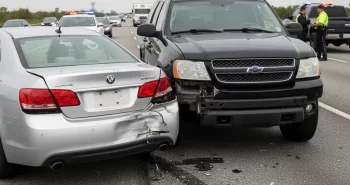
- Scene photographs, skid marks, and vehicle damage patterns showing property damage
- Witness statements from passengers, bystanders, or nearby drivers
- Traffic camera or dash cam footage, if available
- Cell phone records if distracted driving is suspected
- Vehicle data recorders that capture speed, braking, and steering input
Lawyers sometimes work with accident reconstruction experts who use this data to model how the collision occurred. Medical records and timelines also help show that your injuries match the type of crash you experienced. All of this is used to build a compelling legal claim that shows the other driver’s negligence and how that negligence caused your damages. Law firms should have access to expert accident reconstructionists and medical experts for head-on collision cases. Lawyers quickly secure time-sensitive evidence like police reports, dashcam footage, and witness statements in head-on collision cases.
Head-on collision settlement factors lawyers evaluate
No two head on collision settlements are exactly alike, but there are consistent factors that lawyers and insurance adjusters review. The severity of your physical injuries, the length and type of medical treatment, and your long term prognosis are foundational. For example, a fracture that heals fully in a few months will have a different settlement range than a spinal injury that leads to ongoing pain or surgery. Catastrophic injuries and head trauma often increase the settlement significantly.
Lost wages and reduced earning capacity are also key. If you missed weeks or months of work or can no longer perform the same job, those financial losses should be part of your claim. Non economic damages such as pain and suffering, loss of enjoyment of life, and emotional distress are considered as well. Pain and suffering damages are assessed based on the severity and permanence of injuries, as well as the impact on the victim’s life. Crash victims can pursue two primary kinds of damages: economic and non-economic. Economic damages cover current and future financial losses associated with an injury, including medical expenses and lost wages. Non-economic damages are designed to compensate for subjective losses such as pain and suffering, emotional distress, and loss of enjoyment of life. Punitive damages may be awarded in cases of gross negligence or intentional harm, such as drunk driving incidents.
Attorneys calculate comprehensive damages from head-on collisions including medical bills, lost wages, and pain and suffering. Head-on collision cases may require high-value settlements due to the potential for long-term disability or wrongful death. The total compensation amount can vary based on the severity of injuries, the impact on the victim’s life, and the actions of the defendant.
Policy limits can cap how much you can recover from a particular insurance company. In some cases there may be multiple policies to pursue, such as the at fault driver’s insurance liability policy, your own uninsured motorist coverage, or policies issued to a commercial vehicle owner.
Real head-on collision case example from our experience
Consider a common scenario. A driver is heading home from work on a two lane road when another vehicle crosses the center line while attempting to pass in a no passing zone. The impact is head on. Our driver suffers a fractured wrist, a concussion, and lumbar disc injuries that lead to months of physical therapy and time off work. This type of serious accident could also involve head trauma that affects cognitive functions temporarily.
Initially, the insurance company offers a quick settlement that barely covers the emergency room visit and a few therapy sessions. The adjuster downplays the concussion symptoms and argues that the back issues were pre existing. After the driver speaks with a head on collision lawyer, the attorney gathers full medical records, sends the client for a specialist evaluation, and obtains a statement from a coworker about the driver’s post accident limitations.
The lawyer also retains an accident reconstruction expert who confirms the other driver’s unsafe passing maneuver and shows that our driver had no reasonable chance to avoid the collision. After presenting this evidence and preparing for trial, the attorney negotiates a substantially higher settlement that covers all medical bills, lost wages, and a significant amount for pain and suffering. This type of outcome is common when a strong car accident case is fully documented and pressed. Insurance companies tend to offer more favorable settlements to lawyers who are prepared for trial. A wrongful death claim could also arise in extreme scenarios involving fatalities.
No Win, No Fee. Let the Best Motor Vehicle Accident Attorneys Fight for your Compensation!
Questions to ask a head on collision lawyer before hiring
Before you hire a personal injury attorney, it is appropriate to ask direct questions so you understand their experience and approach. You might ask how many head on or serious front impact collision auto accident cases they have handled in the last few years and what kinds of results they achieved. It is also helpful to ask whether your case will be handled by a senior attorney or passed primarily to staff.
We also suggest asking how the lawyer communicates with clients, how often you can expect updates, and whether you will have input on settlement decisions. Another key area is fees. Most car accident lawyers operate on a contingency fee basis, which means they are only paid if they recover money for you, but you should confirm the percentage, what case costs you might be responsible for, and how those are handled at the end of the case. A good car accident lawyer should have a proven track record of successful verdicts and settlements. It’s important to confirm that the attorney communicates clearly and is easy to reach. You should understand the fee structure of the lawyer you choose and avoid upfront costs. Using a free consultation can help assess trust, fit, and responsiveness of the lawyer.
Red flags when choosing a head-on collision lawyer
There are warning signs that a particular lawyer or firm may not be the right fit for your head on collision case. Be cautious if someone pressures you to sign paperwork before they have listened to your story or reviewed basic documents. High pressure tactics are rarely a good sign in a professional relationship that may last many months.
Other red flags include promises of a specific dollar amount before anyone has reviewed your medical records, lack of experience with serious auto collisions, or difficulty getting clear answers about fees and communication. If you feel like just another file in a large volume practice that advertises heavily but spends little time with each client, it may be wise to keep looking. A head on collision claim is too important to trust to a firm that does not take your concerns seriously.
Situations a head-on collision lawyer usually cannot take
There are situations where even a skilled head on collision lawyer may decide not to accept a case. If the statute of limitations in your state has expired, courts will typically bar your car accident lawsuit. This deadline can be as short as one or two years in some places, so timing matters. If too much time has passed and key evidence is lost, it may be difficult to prove fault or damages.
Lawyers may also decline cases where injuries are very minor, there was no real medical treatment, or liability is overwhelmingly against the potential client. For example, if the police report, witness statements, and physical evidence all show that you crossed into oncoming traffic while intoxicated, an attorney may not be able to help. Even in these situations, it can still be useful to speak briefly with a legal professional to be sure you understand your position. Hiring a lawyer can help ensure that you do not make mistakes that could limit your recovery. Head on accidents with minor injuries may still have legal value but are often not taken if the potential recovery is limited.
What to do before contacting a head-on collision lawyer
You do not need to have everything perfectly organized to talk with a lawyer. However, a few simple steps before your first call can make the conversation more productive. If you have a police report, gather it along with any photos of the vehicles, the accident scene, and your visible injuries. Having your insurance card and any claim numbers handy is helpful as well.
Collect basic medical information such as the names of hospitals, clinics, and doctors you have seen, along with approximate dates of visits. Make a short list of how the accident has affected your work, daily activities, and sleep. If you are unsure about the broader legal process after a crash, our resource on what to do after a car collision gives a clear step by step overview. Taking these small steps can help your legal team quickly identify issues and potential opportunities in your case. A lawyer can help you understand your legal rights and options after a car accident. A lawyer can help you navigate the complexities of car accident laws in your state.
Frequently asked questions about head-on collision claims
People involved in head on collisions tend to ask similar questions. Many want to know if they can still pursue a claim if they were a passenger or if the driver of their own vehicle was at fault. In many cases, passengers have strong claims against the driver who caused the crash, even if it was a friend or family member, and the claim typically goes through insurance rather than directly out of that person’s pocket.
Others ask whether they can recover compensation if they had a prior injury that the crash made worse. The law usually allows you to recover for aggravation of a pre existing condition, as long as there is medical evidence showing how the collision increased your symptoms or limitations. A final common question is whether you should give a recorded statement to the other driver’s insurance company. It is generally safer to speak to a personal injury attorney first so you do not accidentally say something that can be used against you later. These claims can include head trauma or other catastrophic injuries sustained in a serious accident.
How long do head-on collision cases take to resolve
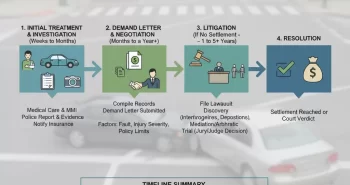
The timeline for a head on collision claim can vary widely. Cases with clear fault and moderate injuries sometimes settle within several months once your medical treatment has stabilized. More complex claims involving serious injuries, disputed liability, or multiple insurance policies can take a year or more and may require filing a personal injury lawsuit.
Just like with questions such as how long does a rear-end collision settlement take, a big part of the schedule depends on how quickly you complete medical treatment, how cooperative the other party is, and whether insurance companies engage in fair negotiations. If a trial is required, the process can take longer but often results in higher compensation for catastrophic injuries or wrongful death claims.
Next steps to protect your rights after a head-on collision
If you were injured in a head-on collision, don’t wait to take action. Seek medical attention immediately, gather all available evidence, and contact a qualified car accident attorney experienced with head on collisions account. Document your injuries, follow up on medical care, and keep track of how the accident affects your life. This documentation will strengthen your case if you pursue a settlement or trial.
Reach out to a trusted head on collision lawyer to schedule a free consultation. Ask about their experience with serious accidents, catastrophic injuries, head trauma, and wrongful death claims. The sooner you speak to an attorney, the sooner they can begin gathering evidence, preserving your rights, and advising you on how to proceed. Acting promptly is critical to ensure the strongest possible outcome and maximum compensation.
No Win, No Fee. Let the Best Motor Vehicle Accident Attorneys Fight for your Compensation!