


A rear end collision can turn your life upside down with serious injuries, mounting medical bills, and insurance hassles. If you’ve suffered injuries in a rear end collision caused by another driver, don’t wait get the help you deserve now. At Legal Claim Assistant, we connect you with top car accident lawyers who offer a free case review to assess your claim and fight for maximum compensation. Click the button below to see if you qualify for a free consultation and take the first step toward protecting your rights after this rear end accident.
What is a rear end collision
A rear end collision happens when one vehicle strikes the back of another. It is one of the most common types of collisions and often occurs in stop and go traffic, at red lights, or in highway slowdowns.
In most cases, the trailing driver either follows too closely (tailgating), drives too fast for conditions, or gets distracted—such as texting, phone calls, eating, or using GPS—leading to reduced reaction time and failure to brake in time. It is recommended to maintain a 3–4 second following distance to prevent rear-end collisions. Sudden stops by the front driver, poor weather conditions that reduce traction, or mechanical failures like brake failure can also contribute. Drunk driving significantly impairs a driver’s reaction time and judgment, increasing the risk of rear-end collisions. Road rage and aggressive driving behaviors are additional causes that can lead to rear-end collisions.
Even at lower speeds, the sudden impact can whip the body forward and back, causing neck, back, and head injuries, including spinal cord injuries and traumatic brain injury. Whiplash is the most common injury suffered by the front car driver in a rear-end crash. It can lead to neck and back injuries that may require extensive therapy or surgical intervention. Tragically, up to 40 percent of people who suffer whiplash may never fully recover from it. Traumatic brain injuries can occur from whiplash when the head snaps forward and the brain impacts the skull. Other common injuries include soft tissue damage, back and spinal cord injuries, fractures, facial injuries, broken bones, internal injuries, and even burns if a fuel tank explodes or fuel leaks and ignites. Injuries from rear-end collisions can range from minor cuts and bruises to serious injuries and fatalities. The severity of injuries often depends on factors such as speed, body position, and use of safety belts. Even minor rear-end collisions can lead to severe and catastrophic injuries that may not be immediately detected.
If you are unsure how a rear end wreck fits within broader collision categories, you can read more about what is a collision and what does collision mean.
When is a rear end collision not your fault
Many drivers assume that the rear driver is always the at fault driver. In reality, fault still depends on specific facts, and there are situations where you clearly are not at fault.
If you were stopped at a light, slowing for traffic, or following the rules of the road and you were struck from behind, responsibility usually rests with the driver who hit you. You are also typically not at fault if the other driver was texting, impaired, speeding beyond speed limits, or failed to maintain a safe distance.
There are also cases where a third party shares or holds fault. For example, a driver who cuts abruptly into your lane and slams on the brakes might cause the following vehicle to hit them, even if that rear driver tried to stop. If the front driver engages in reckless behavior, such as brake-checking, they may be held liable for the rear-end collision. Brake failure, defective brake lights, or hazardous road conditions can pull in additional parties, like a vehicle owner or a public agency. Weather conditions, such as rain or ice, can contribute to rear-end collisions by affecting a driver’s ability to stop in time. Poor road conditions, such as potholes or construction zones, can also contribute by forcing drivers to stop suddenly. A lawyer will look carefully at the facts, police report, and any video or witness statements from the accident scene before determining fault.
If you were a passenger, you are almost never considered at fault and can usually pursue a claim against the responsible driver’s insurance, and in some cases against your own uninsured or underinsured motorist coverage.
Who’s at fault in a rear end collision
Fault in a rear end collision is based on negligence. In simple terms, an insurer or court asks whether a driver failed to act as a reasonably careful person would under similar circumstances.
In many rear impact crashes, the trailing driver is presumed at fault because traffic laws require leaving enough space to stop safely. Tailgating, distracted driving, driver fatigue, reckless driving, aggressive driving, or speeding all support this presumption. That said, fault can be shared. Some states apply comparative negligence rules, which means your compensation can be reduced if the insurer argues that you were partly responsible, for example by braking suddenly for no reason or having nonfunctioning brake lights.
Multi-vehicle pileups can complicate fault determination in rear-end collisions, as the initial impact may not be the fault of the rear driver. Hazardous road conditions can shift liability away from the rear driver in a rear-end collision. Comparative negligence laws allow for the division of fault among multiple drivers in a rear-end collision.
We often see insurers and insurance adjusters try to shift partial blame even when the facts clearly point to their insured. An experienced rear end collision attorney or car collision lawyer can collect evidence, reconstruct what happened, and push back against unfair fault arguments so that your insurance claim reflects the true cause of the crash.
Common injuries from rear end collisions
Rear end crashes frequently cause soft tissue injuries, spinal cord injuries, whiplash, back injuries, and shoulder injuries. The body is thrown forward and then snapped back against the seat, which puts intense stress on muscles, ligaments, and discs.
People often suffer whiplash, neck strain, upper and lower back pain, bulging or herniated discs, shoulder injuries, and headaches. Even if the vehicles involved show only minor visible vehicle damage, the force transferred through the body can be significant. Many victims also suffer concussions, jaw pain, or worsening of prior conditions like degenerative disc disease.
Back and neck pain can linger far longer than many drivers expect. If you are wondering how long does back pain last after a rear end collision, the answer depends on the severity of the impact, your age, and how quickly you receive appropriate medical attention. Some people heal in weeks. Others need months of therapy, injections, or even surgery.
Medical treatment requirements that strengthen a claim
Medical care is central to both your health and your legal claim. Insurers look closely at how soon you sought treatment, how consistent that treatment has been, and what your providers documented about your symptoms and restrictions.
If you were evaluated within the first few days or weeks and followed through with recommended care, it is easier to connect your accident injuries to the rear end collision. Gaps in treatment, missed appointments, or long delays before the first doctor visit create openings for insurers to argue that you were not seriously hurt or that something else caused your pain.
Seeking medical attention promptly after a collision is crucial to create a medical record linking injuries to the accident. You should seek medical attention after a rear-end collision, even if injuries seem minor initially. Keeping detailed records also helps. Save hospital and urgent care reports, physical therapy notes, imaging results, and receipts for prescriptions or medical equipment. If your doctor instructed you to limit lifting, take time off work, or avoid certain activities, be sure that is written clearly in your chart. Comprehensive documentation supports not only your injury claim, but also your request for lost wages and future medical costs.
You should keep track of additional evidence, such as medical reports, after a rear-end collision.
Real case examples from our experience
Every rear end collision has unique facts, but certain patterns appear again and again. We see many clients who initially thought their rear end wreck was “minor” because they could walk away, only to wake up the next day with severe neck or back pain. Once they seek care and get imaging, they often learn that they have soft tissue injuries or disc damage that will take time and treatment to heal.
We also see passengers who did nothing wrong but are caught between insurance companies pointing fingers at each other. In those cases, a dedicated auto collision law firm can coordinate claims, ensure deadlines are met, and pursue all available coverage so that medical bills do not fall on the victim.
Some collisions are more complex, such as a rear end crash involving a commercial truck. The weight difference between a passenger car and a tractor trailer often leads to more serious trauma, higher medical costs, and larger policy limits. A truck collision attorney can investigate logbooks, maintenance records, and company safety practices to determine whether the trucking company shares responsibility.
What is the average payout for a rear end collision
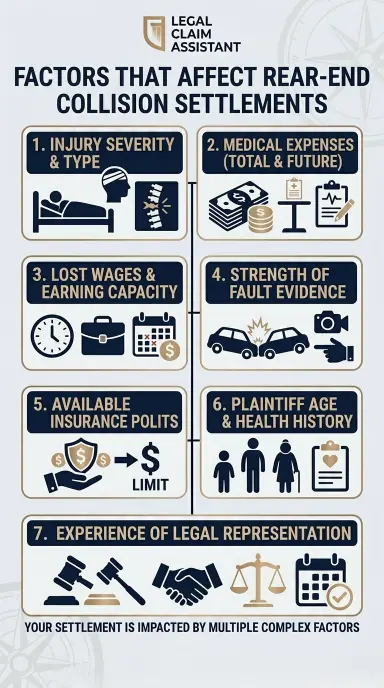
There is no single “standard” settlement for a rear end collision, because payouts depend on the specific injuries, how long recovery takes, and the amount of available insurance. However, we can talk about the core factors that influence value so you can better understand where your case might fall.
Key influences include the severity and type of injuries, total medical expenses, expected future care, time off work, impact on your daily activities, and any permanent injuries or scarring. Pain and suffering for chronic neck or back problems can significantly increase the value of a claim, especially if doctors expect ongoing flare ups.
Economic damages in rear-end collision cases can include medical expenses, lost wages, and property damage. Victims of rear-end collisions may also seek compensation for rehabilitation costs and emotional distress. Non-economic damages may be claimed for pain and suffering resulting from injuries sustained in a rear-end collision. Punitive damages may be sought in cases where the at-fault driver acted with gross negligence or intentional misconduct.
Insurance companies consider various factors when determining compensation amounts for rear-end collisions. The amount of compensation can also depend on the driver’s insurance coverage and the determination of fault.
To see how these pieces fit together, you can review more detailed information on the average rear end collision settlement and specific rear end collision settlement examples. Those resources show how different fact patterns can lead to very different results, even when the crash type is similar.
Mistakes that reduce rear end collision claims
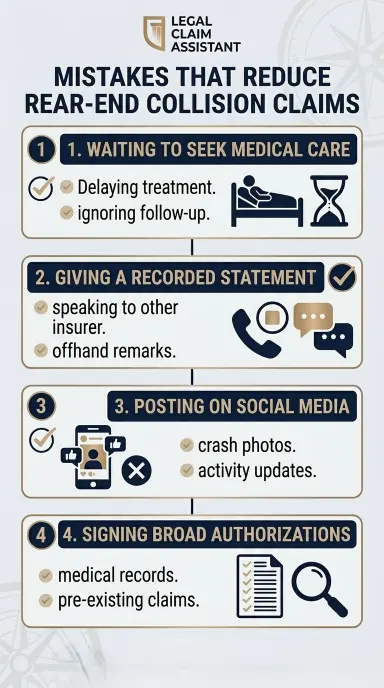
Certain decisions can unintentionally weaken a strong case. Insurers rely on common mistakes to justify lower offers or outright denials.
One frequent issue is waiting too long to seek medical care or ignoring follow up instructions. Another is giving a recorded statement to the other driver’s insurer before you fully understand your injuries. Claims adjusters are trained to ask questions that minimize what you are going through, and offhand remarks can later be used against you.
Posting about the crash or your physical activities on social media is another trap. Photos or updates taken out of context can be cited as proof that you are “not really hurt.” Signing broad medical authorizations also gives insurers access to your entire health history, which they may use to argue that your pain was pre existing. Speaking with a lawyer before you sign or record anything is often the safest option.
Questions to ask a rear end collision lawyer
When you talk with a lawyer after a rear end collision, it helps to come prepared with focused questions that get you clear answers about experience, process, and expectations. Consider asking how often they handle rear impact cases, how they assess fault in situations like yours, and whether there are any challenges they see right away.
You might also ask what they believe your claim could be worth based on the information available so far, how long a settlement might take, and what you can do in the short term to protect your claim value. For example, you can read more about how long does a rear end collision settlement take to set realistic expectations about timelines.
It is also reasonable to ask who will handle your case day to day, how you will be updated, and whether the attorney is prepared to file a lawsuit if negotiations stall. Reputable lawyers are comfortable with these questions and will explain their answers in plain language.
A good rear end collision attorney should give you clarity, not confusion. You should leave the conversation with a clear understanding of next steps and how they plan to pursue your claim.
How Legal Claim Assistant can connect you with the right collision lawyer
Legal Claim Assistant exists to bridge the gap between injured people and experienced attorneys. Many crash victims are unsure whether they have a strong claim, what kind of lawyer they need, or how to compare options. We help remove that uncertainty.
When you reach out to us, we ask a few key questions about your rear end collision, your injuries, and any medical treatment you have received. Based on your answers, we connect you with a lawyer who focuses on motor vehicle collisions and understands rear impact cases in your state. This might be a rear end collision attorney, a broader car collision lawyer, or a specialized head on collision lawyer if your case also involves other crash types like a head on collision.
Our goal is not simply to match you with any attorney, but with the right one for your specific circumstances, at no upfront cost to you. The consultation is free, and you remain in control of whether to move forward.
Next steps after a rear end collision
What you do in the days and weeks after a rear end collision can have a lasting impact on your health and your claim. If your crash just happened, medical care comes first. Get evaluated promptly, follow your doctor’s recommendations, and keep copies of all records. For a more detailed checklist, you can review what to do after a rear end collision and the broader guidance on what to do after a car collision.
If you were not at fault, consider starting a not at fault collision claim through the responsible driver’s insurer, or through your own coverage if the other driver is uninsured. Avoid giving recorded statements or signing releases until you understand your rights.
Finally, reach out to Legal Claim Assistant so we can help you understand your eligibility for compensation and connect you with an attorney who can review your case for free. If your rear end collision occurred in the last 12 months and you received medical care within two weeks, you may have a stronger claim than you realize.
Additionally, it is important to photograph the scene and vehicle damage thoroughly with high-resolution photos and videos from multiple angles, including vehicle damage and surrounding road signs. You should always call 911 to report an accident and request medical aid if necessary, even for minor accidents. You should notify your insurance company within 24 hours of an accident and provide only factual information. It is advisable not to admit fault or apologize at the scene of an accident to avoid potential issues with claims. You should never admit fault at the scene of a rear-end collision, even if you feel pressured to do so. Gathering strong evidence is essential to proving your case if you believe you were not at fault in a rear-end collision. You may also need to provide a police report as evidence in your case after a rear-end collision.
If you have been involved in a rear-end collision, you should contact an experienced car accident lawyer to discuss your legal options. Consulting a motor vehicle accident lawyer can help you assess the compensation you deserve from a rear-end collision.
You Deserve Justice. Let Us Help.
Speak with a trusted Collsions lawyer who will stand by your side, protect your rights, and fight for the compensation you deserve.
No Win, No Fee. Let the Best Collsions lawyers Fight for your Compensation!

Under 1 Minute

100% Free

Expert-Reviewed

Private & Secure
© 2025 Legal Claim Assistant. All Rights Reserved.
Terms of Service | Privacy Policy | Contact Us | Marketing Partners
Related Article
Should I Get a Lawyer After a Drunk Driving Accident?

When Does a Drunk Driving Accident Lawsuit Make Sense?
Share this article:


