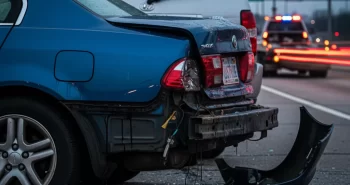
What To Do After a Car Collision to Protect Your Claim
 Fact Checked By Our Attorneys
Knowing what to do after a car collision is crucial to protect your health and secure the compensation you deserve. Don’t let confusion or missed steps jeopardize your car accident claim take control now. Click the button below to get your free case review and find out how Legal Claim Assistant can connect you with the right attorney to fight for your rights and maximize your settlement.

No Win, No Fee. Let the Best Motor Vehicle Accident Attorneys Fight for your Compensation!
Table of Contents:

What to Do After a Car Collision
When we think about what to do after a car collision, we are really talking about two goals. First, we want to protect safety and health. Safety is the first priority after a car accident. Second, we want to preserve evidence and follow the right procedures so that any future car insurance claim is supported by facts.
That means checking for injuries, involving police authorities, documenting the scene, seeking medical care to cover medical expenses, and following through with your insurance provider and legal guidance. Promptly contacting your insurance company after an accident is key to recovering costs and ensuring repairs. Even if we already know about the different types of collisions, the process after impact follows the same core steps, whether it is a rear end collision, a head on collision, or a multi vehicle pileup.
Immediate Steps at the Accident Scene
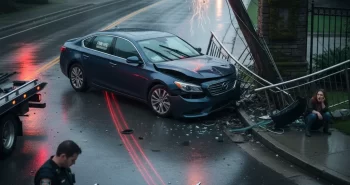
The first few minutes after an auto accident matter. If vehicles are drivable and it is safe, we should move them out of traffic to prevent a second collision. Turn on hazard lights and, if available, set out warning triangles or reflective triangles. You should wait for help and turn on your hazard lights to alert other drivers.
We also want to quickly assess who is involved and whether anyone is trapped or unresponsive. Check for injuries to yourself and passengers first after a car accident. Avoid discussing fault or apologizing. At this stage, our priority is to stabilize the situation, call 911, and start creating a clear record of what happened.
If we stay calm, call for help, and document the basics, we have already taken important steps to protect any future claim with your insurance.
Checking for Injuries and Ensuring Safety
Right after a collision, adrenaline can hide pain. We should not assume we are uninjured just because we can stand or walk. Ask each person in the vehicle, including other passengers, simple questions about pain, dizziness, numbness, or confusion.
If anyone has severe pain, visible bleeding, difficulty breathing, or possible neck and back injuries, avoid moving them unless there is immediate danger like fire. Let paramedics handle that. Even with what seems like minor discomfort, it is wise to be evaluated at the scene or at an emergency or urgent care clinic soon after. Early medical records tie injuries directly to the crash, which becomes important if we later pursue a not at fault collision claim.
Seek medical care promptly after an accident, even if no immediate symptoms are evident. Seeking medical attention after a car accident is crucial for identifying hidden injuries. Common injuries after a car accident can include back pain, neck pain, and concussions. Even if you feel fine after an accident, it is important to seek medical attention to check for injuries that may not be immediately apparent. Seeing a doctor after a car accident helps to build a record of your injuries for any future claims. Medical documentation is essential for any personal injury claims resulting from a car accident.
Calling the Police and Filing an Accident Report
Whenever we are involved in a collision that causes injuries or significant damage, we should call the police officers or police authorities. The officer’s accident report often becomes a key piece of evidence for insurance companies and attorneys. It usually records statements from both drivers, witness names, badge number of the responding officers, diagrams of the scene, and sometimes an initial assessment of legal liability.
We should provide accurate, factual information, but avoid guessing about details we do not know. If we are unsure about speeds, distances, or the exact sequence of events, it is fine to say we are not certain. Later, we should obtain a copy of the police report for our records and share it with our attorney if we decide to seek legal help.
You should call the police to report the accident.
Exchanging Insurance and Contact Information
After everyone is safe and police have been called, we should exchange information with the other driver. This step can feel routine yet it is crucial. At a minimum, we should record:
- Full name and contact details of all drivers
- Driver’s license numbers, license plate numbers, and vehicle descriptions
- Insurance company name and policy number for each vehicle
- Contact information for the vehicle owner if different from the driver, including vehicle registration details
Exchange names, driver’s license numbers, license plate numbers, vehicle registration, and insurance information with all drivers involved in the accident.
Keep the conversation polite and brief. We should not admit fault, argue about blame, or make promises about not contacting insurance. Those issues will be handled through the claims process and legal process involving the other driver’s insurance company and your own insurance provider. Avoid discussing fault or saying sorry at the scene of a car accident to prevent liability issues.
Taking Photos and Documenting the Scene
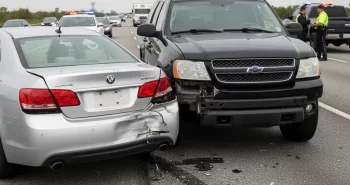
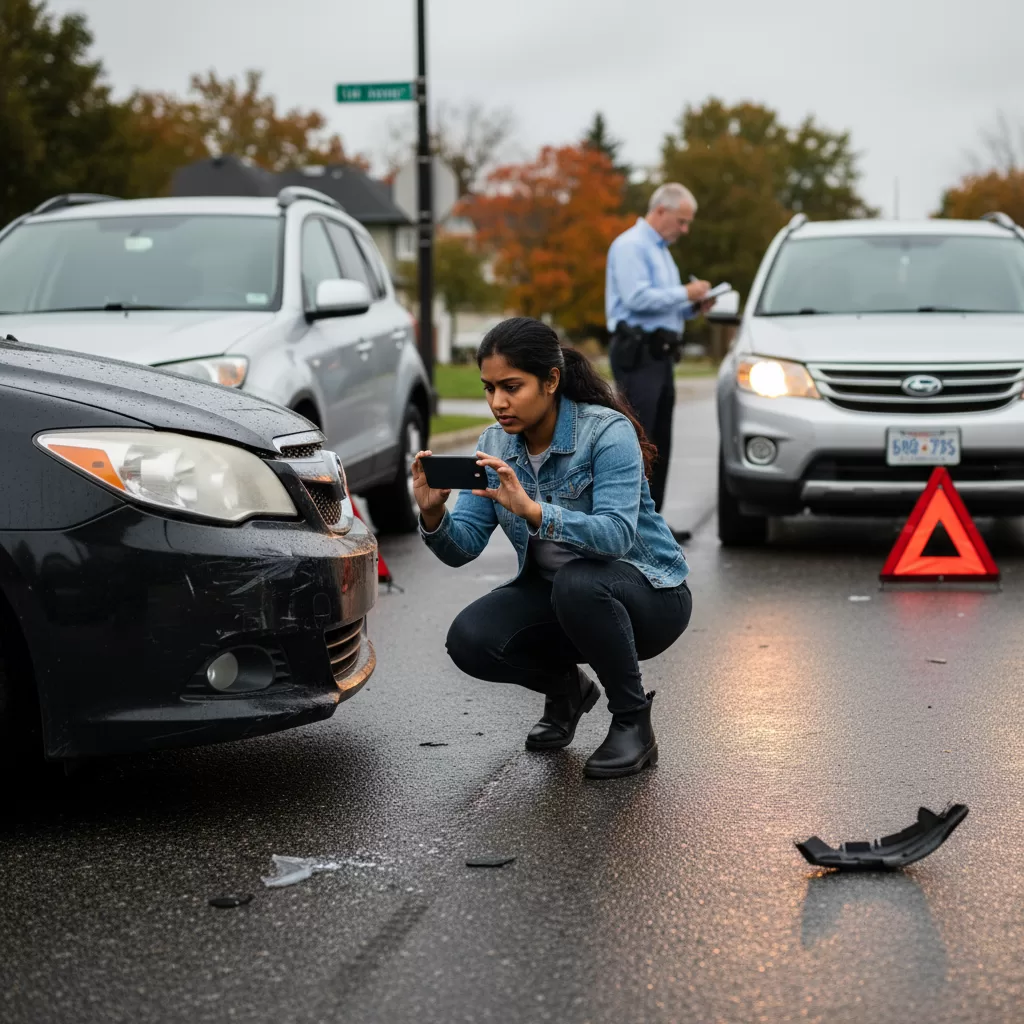
Accident scenes change quickly once vehicles move and debris is cleared. We can preserve vital details by using our phone to take wide and close-up photos and videos from multiple angles. Capture each vehicle’s damage, skid marks, traffic lights and signs, road conditions, and any visible injuries.
You should document the car accident scene by taking photos and videos.
If we were in a specific type of crash, such as a rear end collision or head on collision, try to photograph anything that shows how the impact occurred, like the position of vehicles, broken glass, or damage patterns. These images can later help insurance adjusters, accident reconstruction experts, and support a fair evaluation of damages, including the average rear end collision settlement or similar comparisons.
Document the accident scene with photos and witness information to support your claim.
Collecting Witness Information
Neutral witnesses often carry significant weight in contested claims. If anyone stopped to help or clearly saw what happened, we should politely ask for their name, phone number, and email address. We do not need them to give a full statement on the spot.
Instead, we simply want to ensure we or our attorney can contact them later. Insurance companies often put more stock in witnesses who are not related to any of the drivers. Their observations can support our version of events and help establish legal liability.
Collect contact information from witnesses at the scene of the accident, as their statements can be valuable.
Seeking Medical Attention After a Collision
Even if we walked away from the scene, it is important to seek medical attention as soon as possible, ideally within the first 24 to 48 hours. Many common collision injuries such as whiplash, concussions, and soft tissue damage do not fully appear until hours or days later. Delays in treatment give insurers room to argue that our pain is unrelated to the crash.
We should be honest and detailed with medical providers about every symptom, even minor ones. When doctors and therapists document our complaints, diagnoses, and treatment plans, they create a timeline that ties our medical expenses and injuries to the collision. This documentation is vital if we later work with a car collision lawyer, rear end collision attorney, or truck collision attorney.
No Win, No Fee. Let the Best Motor Vehicle Accident Attorneys Fight for your Compensation!
What to Do After a Minor Car Collision
Many people assume a “fender bender” is not worth documenting. In reality, what seems minor at the scene can lead to chronic pain or higher repair costs later. The steps after a minor collision are similar, just scaled to the situation.
We should still exchange information, take photos, and make a brief report to our own insurance company, even if we think we were only slightly shaken. If our crash involved a specific scenario, such as a low speed rear impact, it can help to review resources on what to do after a rear end collision and how long symptoms like back pain may last. The same principles apply to questions about what does collision mean and what is a collision in insurance or legal terms.
Following Up With Your Insurance Company
Once we are safe and have initial medical care, we should notify our own insurance agent or insurance provider, even if the other driver was clearly at fault. Many insurance policies require prompt notice, and some benefits, such as medical payments coverage, can help with early bills regardless of fault.
Notify your insurance company about the accident as soon as possible and provide them with all necessary details and documentation.
When we speak with insurers, we should stick to factual information about time, location, vehicles, and basic injuries. We should avoid guessing, accepting blame, or downplaying pain. Recorded statements for the at fault driver’s carrier or other driver’s insurance company can be risky if we do not yet know the full extent of our injuries, so it is often wise to get legal advice first, especially for a not at fault collision claim.
Maintain a dedicated file for all accident-related documents including medical records and insurance correspondence.
Your insurance company will contact you for detailed information regarding the loss after you file a claim.
An adjuster will inspect your vehicle for damage to help determine fault and repair costs.
Keep all receipts and records to support your injury claim and any property damage claims.
Stay in contact with your insurance provider to track the claims process.
If the other driver’s insurance company contacts you, be careful when speaking with their adjusters.
Review your insurance policy to understand your coverage before filing a claim.
Your insurance policy will guide what coverage you have for medical expenses and repair costs.
If your vehicle is deemed a total loss, check your policy for options to recover costs.
Keeping Track of Medical Records and Treatment
Strong claims rest on clear, consistent documentation. We can help ourselves by creating a simple file or digital folder that includes medical records, bills, imaging reports, and referrals. Keeping notes about missed work, activity limits, and pain levels over time will also help quantify our losses.
If we need physical therapy, chiropractic care, or specialist visits, it is important to attend consistently and follow the treatment plan. Gaps in care or missed appointments give insurers ammunition to argue that we have recovered or that our injuries are not serious. Later, an auto collision law firm can use this record to present a complete picture of our damages.
Documenting your medical treatment and expenses is important for supporting your injury claim with your insurance company.
Avoiding Common Mistakes That Can Hurt Your Claim
Certain missteps after a collision can significantly weaken our car accident claim. Common problems include not seeking prompt medical care, minimizing pain in early records, posting about the crash or our activities on social media, and accepting a quick low settlement before we understand the full impact of our injuries.
We should also be careful with written or recorded statements, releases, and medical authorizations requested by the at fault insurer. Signing broad forms can give them access to years of unrelated medical history. Before agreeing to anything, especially if we are dealing with questions about what is the difference between comprehensive and collision insurance, it often helps to have a lawyer review the paperwork.
How Fault and Liability Affect Your Claim
Fault and legal liability determine which insurance company pays, how much they pay, and whether we can recover at all in some states. Police reports, witness statements, physical evidence, and sometimes expert analysis all contribute to this determination. In a straightforward rear end collision, for example, the trailing driver is often presumed at fault, although there can be exceptions.
Understanding local laws on comparative or contributory negligence is also important. In some places, we can still recover even if we were partly at fault, while in others, any share of blame can reduce or prevent recovery. This is one reason many people seek help from a car collision lawyer who can explain how fault rules apply to their specific situation and to any related issues, such as a potential classic collision lawsuit.
A lawyer can help you understand liability and pursue compensation for your medical bills and vehicle damage after a car accident.
If there are serious injuries or significant property damage, seeking legal advice from a car accident attorney is essential.
If you are served with a lawsuit as a result of an accident, you should notify your agent and insurance company immediately.
Subrogation and Other Legal Considerations
Subrogation is the right of the insurance company to recover from a third party the amount of damages it paid to you.
If the insurance company does not pursue subrogation, they are required to advise you so that you may pursue your deductible on your own.
Case Studies: How Proper Steps Protected Claims
We regularly see how taking the right steps after a collision leads to better outcomes. In one case, a passenger in a rear end crash sought medical care the same day, followed up with her doctor, and kept copies of every bill. When she later worked with a lawyer, her consistent documentation helped secure a settlement aligned with typical rear end collision settlement examples, rather than the much lower first offer from the insurer.
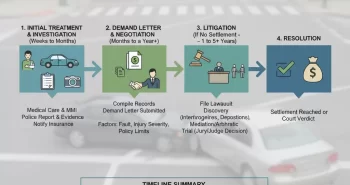
In another case, a driver in a serious head on crash took extensive photos, collected witness contacts, and obtained the police report. This evidence helped his attorney counter an attempt by the other driver’s insurance company to shift blame. Because the record was clear, his claim resolved more quickly and avoided some of the delays that often arise when we ask how long does a rear-end collision settlement take or similar timing questions for complex cases.
When to Contact a Lawyer for Your Collision Claim
If we have significant injuries, lasting pain, lost income, or disputes about fault, it is usually time to speak with an attorney. Early legal guidance can prevent costly mistakes and help us avoid saying or signing something that limits our rights. This is especially true when commercial vehicles or multiple cars are involved, where a truck collision attorney or similar specialist may be needed.
We do not have to wait until we are overwhelmed by bills to seek help. Many firms, including any experienced auto collision law firm, offer free consultations and work on a contingency fee basis. That means we usually do not pay legal fees unless they recover money for us.
How Legal Claim Assistant Can Connect You With the Right Collision Lawyer
Navigating all of this on our own can feel daunting. At Legal Claim Assistant, our role is to listen to what happened, review basic details like timing, injuries, and insurance, and help determine whether we may qualify for compensation. We then connect accident victims with a collision lawyer who fits the specifics of their situation, from a head on collision lawyer to a rear end collision attorney or broader car collision lawyer.
If you were injured in a collision in the last 12 months, received medical care within the first couple of weeks, and have a police report or insurance information, you may be eligible for a free case review. By taking the right steps now, both at the scene and afterward, we can protect our health, strengthen our claim, and move closer to the compensation and closure we deserve.
No Win, No Fee. Let the Best Motor Vehicle Accident Attorneys Fight for your Compensation!