


Key Takeaways:
Wrongful death beneficiaries are family members or dependents entitled to compensation for financial and emotional losses.
The personal representative manages the lawsuit and ensures the surviving spouse, children, parents, and other eligible dependents receive their share.
Speaking with a wrongful death lawyer early can help protect your rights, meet deadlines, and guide your case.
What Are Wrongful Death Beneficiaries in a Wrongful Death Claim
Wrongful death beneficiaries are family members or dependents entitled to compensation after a loved one dies due to another party’s negligence or wrongful act. A wrongful death claim is a legal action filed when a person dies due to another party’s wrongful act, negligence, or medical malpractice. These beneficiaries can recover compensation for financial and emotional losses.
Only individuals with a qualifying relationship to the deceased are considered wrongful death beneficiaries, and eligibility is determined under state law or the relevant wrongful death statute.
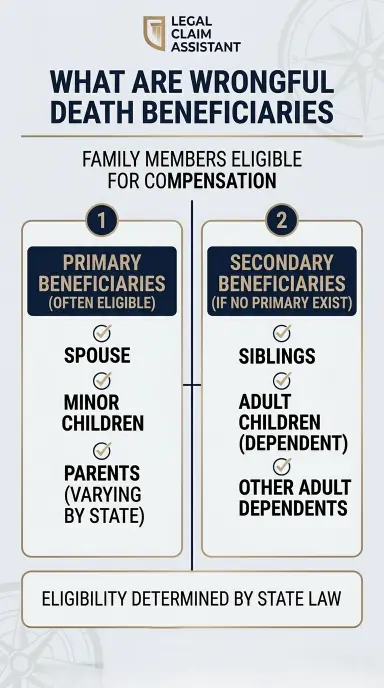
Primary beneficiaries often include a spouse, children, and sometimes parents, depending on state law. Secondary beneficiaries may include siblings, adult children, or other dependents who relied on the deceased for financial support.
Beneficiaries may recover economic damages such as lost wages, medical bills, funeral expenses, and loss of household services. They can also recover non-economic damages for pain and suffering, emotional trauma, and loss of companionship. In some cases, punitive damages may be awarded if the wrongful act involved gross negligence or intentional misconduct.
Who Can Receive Compensation in a Wrongful Death Lawsuit
Compensation in a wrongful death lawsuit is paid to eligible beneficiaries, including primary family members such as a spouse, children, or parents, and sometimes secondary dependents or extended relatives, depending on state law.
Primary beneficiaries are family members who usually have the legal right to file a wrongful death lawsuit. This group typically includes:
Surviving spouse or domestic partner of the deceased person
Surviving children, including minor children
Surviving parents, especially if the deceased was a minor
Secondary beneficiaries may be eligible if they were financially dependent on the deceased. This group can include:
Adult children
Siblings or surviving brothers and sisters
Grandparents or other lineal descendants
Other dependents recognized under state law
If no immediate family members exist, extended relatives or other eligible dependents may pursue a claim based on intestate succession or state statutes. Courts often prioritize beneficiaries hierarchically, with primary beneficiaries receiving compensation first, followed by secondary beneficiaries.
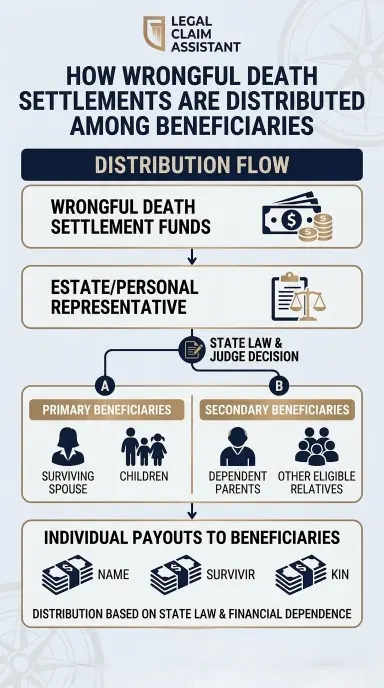
Compensation recovered in a wrongful death lawsuit may be divided among beneficiaries through a settlement or jury award. A decedent’s personal representative or estate representative usually manages the distribution to help make sure funds are allocated fairly under state law.
The Role of the Personal Representative in a Wrongful Death Action
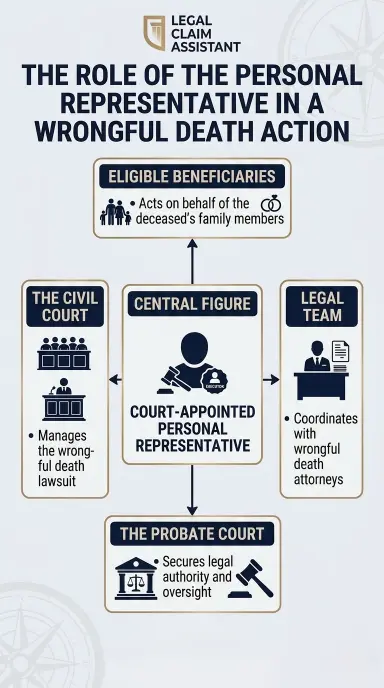
In many states, only a court-appointed personal representative has the legal authority to file a wrongful death action. This individual acts on behalf of all eligible beneficiaries, including a surviving spouse, children, or other relatives financially dependent on the deceased. The personal representative may be named in the decedent’s will as an executor or appointed by the court if no will exists.
The personal representative manages the wrongful death lawsuit by gathering evidence, such as medical records, accident reports from a car accident, or documents related to defective products. They file legal documents, coordinate with the legal team, and handle the litigation process on behalf of the beneficiaries.
Once a wrongful death settlement or jury award is reached, the personal representative oversees the distribution of funds according to state law, helping make sure each eligible beneficiary receives their share under state law.
Wrongful Death Action vs Survival Action
Wrongful death actions and survival actions are distinct legal claims, though they may arise from the same incident and sometimes are filed together in a single wrongful death case.
Feature | Wrongful Death Action | Survival Action |
|---|---|---|
Purpose | Compensates family members for losses caused by the decedent’s death | Compensates the decedent’s estate for damages suffered before death |
Who files | Personal representative or eligible family members | Personal representative of the estate |
Damages | Loss of support, companionship, and emotional suffering | Medical expenses, pain and suffering, or lost wages incurred before death |
Who receives the money | Eligible beneficiaries such as surviving spouse, children, or other relatives | The decedent’s estate, distributed through a will or intestacy law |
A wrongful death action allows surviving family members to recover wrongful death damages for emotional suffering, loss of financial support, and injury caused by the wrongful act. A survival action claim, on the other hand, focuses on compensating the estate for medical expenses or pain and suffering the decedent endured before death.
Understanding the difference is essential when filing a lawsuit to ensure all damages are properly recovered.
How Wrongful Death Settlements Are Distributed Among Beneficiaries
Once a wrongful death settlement is reached, the funds are distributed according to state law and the wrongful death statute. The personal representative or estate representative typically oversees this process, ensuring each eligible beneficiary receives their share. Distribution depends on the relationship to the deceased, financial dependence, and losses suffered.
If beneficiaries cannot agree on how to divide the wrongful death lawsuit payout, a judge may decide how to divide the funds. Settlements are often paid directly to the surviving spouse, children, or other survivors, or deposited into the decedent’s estate for distribution.
In some cases, the funds are shared equally among beneficiaries, while in others, state law prioritizes primary beneficiaries over secondary ones.
Types of Compensation Beneficiaries Receive in a Wrongful Death Case
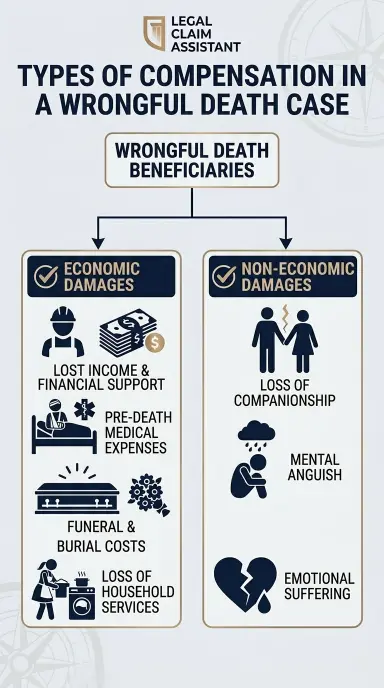
Wrongful death beneficiaries may recover two main types of compensation: economic damages and non-economic damages.
Economic damages include:
Lost income and financial support from the decedent
Medical expenses incurred before death
Funeral and burial costs
Loss of household services provided by the deceased
Non-economic damages include:
Loss of companionship
Mental anguish
Emotional suffering
The total amount depends on how much the beneficiary relied on the deceased for support. Courts also consider the age, earning potential, and family relationships of the surviving family members.
The personal representative helps make sure the compensation is allocated fairly under state law.
What Happens If One of the Wrongful Death Beneficiaries Dies
If a wrongful death beneficiary dies before the case is resolved, their portion of the compensation may pass to their estate. State law determines how these funds are redistributed, and in some situations, the share may pass to the beneficiary’s heirs under intestacy rules. If the beneficiary dies after the wrongful death lawsuit is settled, their portion becomes part of their estate.
The personal representative helps make sure the compensation is distributed according to state law, whether it goes to the decedent’s spouse, children, or other relatives.
Because laws vary between states, courts may handle each case differently, making legal guidance essential to protect the rights of all persons related to the deceased.
Statute of Limitations for Filing a Wrongful Death Claim
Every state sets a statute of limitations that limits how long a family can file a wrongful death suit. Filing after this period can prevent beneficiaries from recovering damages. Deadlines vary by state and case type, and exceptions may apply. Common deadlines include:
State | Typical Deadline |
|---|---|
California | 2 years from the date of death |
Texas | 2 years from the date of death |
Washington | 3 years from the date of death |
Some states allow extensions under the discovery rule if the cause of the decedent’s death was not immediately known. Government-related cases may have shorter deadlines.
Consulting an attorney early can help eligible family members file on time and protect their rights.
How a Wrongful Death Lawyer Helps Protect Beneficiaries
A wrongful death lawyer helps make sure eligible beneficiaries are considered for compensation under state law. The attorney investigates the fatal incident, gathers medical records, accident reports, and other key evidence, and identifies who has the legal authority to file the wrongful death lawsuit.
They confirm which family members or dependents are entitled to recover damages and work with the personal representative if the decedent leaves an estate. Lawyers negotiate with insurance companies to pursue a fair settlement. If necessary, they represent beneficiaries in court to protect their rights.
Legal guidance is important because wrongful death laws vary by state, and the attorney works to make sure all survivors, including the decedent’s spouse, children, and other relatives, are properly represented.
Frequently Asked Questions About Wrongful Death Beneficiaries
These FAQs explain who can recover in a wrongful death case, how compensation is distributed, and what legal steps families should take. Understanding these points helps ensure eligible beneficiaries protect their rights, receive fair compensation, and avoid missing critical deadlines.
What are wrongful death beneficiaries?
Wrongful death beneficiaries are individuals legally entitled to receive compensation after a loved one dies due to another party’s negligence, misconduct, or wrongful act. This usually includes a surviving spouse, children, parents, or other dependents recognized under state law. Eligibility is determined by each state’s wrongful death statute.
Who gets money from a wrongful death lawsuit?
Eligible wrongful death beneficiaries may receive the settlement or jury award, typically managed by the personal representative of the decedent’s estate. Primary beneficiaries, such as a spouse, children, or parents, are prioritized under state law, with secondary beneficiaries receiving compensation if allowed.
What happens if a beneficiary dies before the wrongful death case is resolved?
If a beneficiary dies before the case is settled, their share usually passes to their estate, and the funds are distributed according to state intestacy laws. The personal representative helps make sure the remaining settlement is allocated correctly.
Can extended family members or dependents recover if no immediate family exists?
Yes. Extended family or other dependents may be eligible for compensation under state law if there are no primary beneficiaries. Courts often follow intestacy rules to determine distribution when a decedent leaves no spouse, children, or parents.
What is the maximum payout for wrongful death?
There is no fixed maximum payout for wrongful death claims. Compensation depends on financial losses, medical bills, funeral expenses, lost income, emotional suffering, and the strength of liability evidence. Some cases result in multimillion-dollar settlements, while others resolve for smaller amounts.
How much is a life worth in a wrongful death lawsuit?
Courts do not assign a specific monetary value to life. Compensation is based on economic damages, such as medical bills, lost wages, and funeral costs, and non-economic damages, including grief, emotional suffering, and loss of companionship for dependents.
Speak With a Wrongful Death Lawyer
If you believe you may qualify as a wrongful death beneficiary, consulting an experienced wrongful death lawyer is an important first step.
A lawyer can evaluate whether a claim is valid, determine which family members qualify as beneficiaries, and calculate potential damages, including medical expenses, funeral costs, lost income, and emotional suffering.
An attorney also guides families through the legal process, ensuring the claim is filed within the statute of limitations, which varies by state and can range from one to three years from the date of death. In cases involving minor children, the lawyer can help appoint a representative if the surviving spouse does not pursue the claim. They also assist with distributing any settlement fairly, in line with state laws or court guidance, so all eligible family members receive the compensation they are entitled to.
You Deserve Justice. Let Us Help.
Speak with a trusted Wrongful Death Attorney who will stand by your side, protect your rights, and fight for the compensation you deserve.
No Win, No Fee. Let the Best Wrongful Death Attorneys Fight for your Compensation!

Under 1 Minute

100% Free

Expert-Reviewed

Private & Secure
© 2025 Legal Claim Assistant. All Rights Reserved.
Terms of Service | Privacy Policy | Contact Us | Marketing Partners
Related Article

Share this article:


