


Key Takeaways:
The filing deadline varies by state, usually between one and three years. Missing the deadline can prevent families from getting compensation.
Special circumstances like the discovery rule, fraudulent concealment, or minor beneficiaries can extend or pause the filing deadline, making early legal guidance critical.
Acting quickly allows families and attorneys to gather evidence, pursue compensation, and ensure claims are filed correctly, protecting both financial and emotional interests after a loved one’s death.
What Is the Statute of Limitations for Wrongful Death Claims
The statute of limitations for wrongful death claims sets the legal deadline for filing a lawsuit, typically 1–2 years from the date of death depending on state law. These limitations for wrongful death are set by state law and determine how long surviving family members have to pursue compensation from the responsible party. If you miss the deadline, courts usually dismiss the case.
Families may pursue compensation for several types of damages. These often include funeral expenses, burial costs, medical bills related to the final injury or illness, and the loss of financial support the deceased would have provided. Courts may also recognize emotional distress, loss of companionship, and other non economic losses experienced by a surviving spouse, children, or other financially dependent relatives.
The purpose of these strict deadlines is to promote judicial efficiency and ensure that courts rely on reliable evidence. Over time, documents can be lost and witnesses may forget critical details about the wrongful death accident.
Filing a wrongful death claim within the limitations period allows attorneys to collect medical records, accident reports, and other evidence while it is still available. Early legal guidance from a wrongful death attorney can help families understand their options and pursue financial recovery.
When the Statute of Limitations Begins After a Loved One’s Death
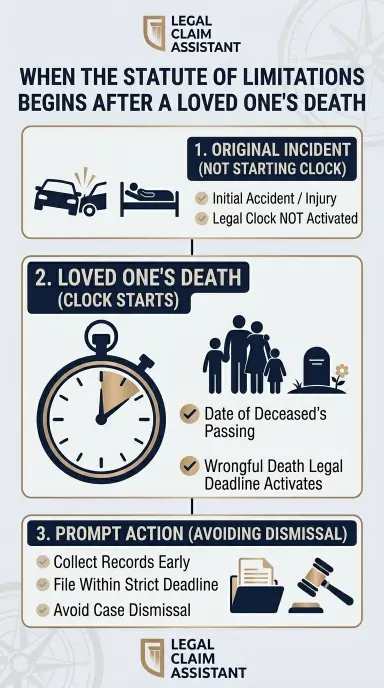
The statute of limitations for wrongful death typically begins on the date the deceased person dies, not when the original accident or injury occurred. This rule applies even when the original event happened earlier. For example, a person may suffer severe injury in a car accident, workplace accident, or medical malpractice incident and later die from those injuries weeks or months afterward. In those situations, the legal clock typically starts on the date the person dies.
This matters because the deadline is based on the date of death. Families pursuing legal action must understand exactly when the limitations begins to avoid limitations losing issues that could prevent them from seeking compensation. Courts enforce these deadlines strictly, and filing even one day late may result in the case being dismissed as time barred.
Because wrongful death laws impose strict deadlines, surviving family members should act quickly after a loved one’s death. Early action allows a wrongful death lawyer or law firm to gather evidence, obtain accident reports, collect medical records, and investigate whether negligence contributed to the fatal incident. These steps are critical when proving that the at fault party caused the victim’s death.
Some exceptions, like the discovery rule or fraud, may apply in certain cases, depending on state law.
For example:
If medical malpractice caused the death but the wrongdoing was not immediately discovered, the court may consider when the negligence was reasonably identified. However, these exceptions depend on state law and are applied carefully by courts.
Because the legal process can involve probate filings, insurance claims, and investigation of the wrongful act, families should contact a wrongful death attorney immediately for legal guidance.
Time Limits for Wrongful Death Claims by State
The statute of limitations for wrongful death claims varies across the United States because each state sets its own legal rules. These limitations for wrongful death determine how long a family has to file a wrongful death action after a person’s death. Deadlines vary by case type and exceptions, so actual filing time may differ from these general examples.
Most states allow about two years, but some provide shorter or longer deadlines depending on state law and the circumstances of the case.
State Example | Typical Deadline to File |
|---|---|
California | 2 years |
New York | 2 years |
Florida | 2 years |
Pennsylvania | 2 years |
Missouri | Up to 5 years |
Kentucky | 1 year |
Louisiana | 1 year |
Tennessee | 1 year |
These time limits apply to many types of wrongful death cases, including fatal car accidents, workplace safety violations, and medical malpractice cases where a patient dies because of negligence. In some situations, additional legal rules may affect the filing deadline.
For example:
Claims involving a government entity often require an administrative claim to be filed before a lawsuit can proceed. The deadline may also depend on factors such as the cause of death, the defendant, or the type of claim.
Because limitations exist for every state and missing the deadline can prevent families from seeking justice, surviving family members or the personal representative of the estate should verify the applicable timeline before they file a wrongful death claim.
Special Situations That May Change the Wrongful Death Deadline
Tolling is the temporary suspension of the statute of limitations for wrongful death claims under specific legal circumstances. Several legal doctrines may modify the statute of limitations in wrongful death cases. These exceptions are rare and depend on state law.
Discovery rule: The discovery rule allows the statute of limitations to begin when the plaintiff discovers that the death was caused by wrongful conduct rather than when the death occurred. This situation often appears in medical malpractice cases where negligence may not be immediately clear. If medical records later reveal that malpractice contributed to the patient’s death, the court may calculate the deadline from the time the wrongdoing was discovered.
Fraudulent concealment: Fraudulent concealment occurs when a responsible party intentionally hides evidence of wrongdoing. If a defendant conceals safety violations, alters records, or withholds critical information related to the person’s death, a court may extend the filing deadline. This rule prevents defendants from avoiding liability by hiding evidence of negligence.
Minor beneficiaries: For minor beneficiaries, the statute of limitations may be paused until the individual reaches the age of majority, typically 18 years old. This exception protects financially dependent children who may rely on compensation after the loss of a parent or guardian.
Defendant outside the state: If the responsible party leaves the state and cannot be served with legal papers, the statute of limitations may be temporarily paused until the defendant returns or becomes reachable through the court system.
These exceptions are uncommon and courts apply them carefully. Families pursuing a wrongful death claim should seek legal guidance early to determine whether any exception applies and to ensure the claim is filed within the required deadline.
Medical Malpractice and Other Cases With Different Time Limits
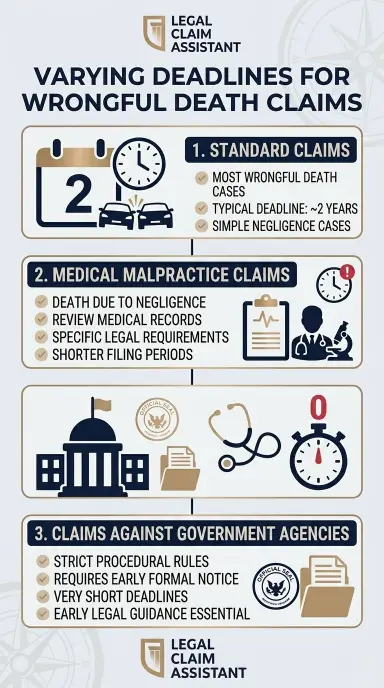
Some wrongful death cases have different deadlines depending on the situation. While many states allow about two years to file a claim, certain cases, such as death, medical malpractice or claims against public agencies may require faster action.
Medical malpractice cases often have strict procedural rules. When a patient dies due to medical negligence, families may need to review medical records, confirm the cause of death, and comply with specific legal requirements before filing a personal injury claim related to the wrongful death.
In some jurisdictions, these cases may have shorter filing periods or additional steps under state law, including rules that vary by state, such as in California. Claims against government entities often have much shorter and strict filing deadlines compared to private parties, making early legal guidance essential.
Cases against government agencies often have shorter deadlines. Families may be required to submit a formal notice or administrative claim before filing a lawsuit in court. Missing this early notice deadline can prevent a wrongful death case from moving forward.
Intentional acts, such as homicide or other criminal conduct that leads to a person’s death, may also follow separate civil statutes depending on the jurisdiction.
Why Acting Quickly Matters After a Loved One’s Wrongful Death
Acting quickly after a loved one’s wrongful death can affect the strength of a wrongful death claim. Early action allows families and attorneys to gather evidence needed to prove that another party’s negligence caused the death.
Important evidence may include medical records, accident reports, witness statements, and documentation showing medical expenses or financial losses. When families act quickly, attorneys can preserve this information before it is lost or becomes difficult to obtain.
Delays can create serious challenges. Evidence may disappear, witnesses may forget critical details, and insurance companies may dispute the facts of the case. Filing a claim early also helps prevent disputes about whether the lawsuit was filed within the statute of limitations.
Prompt legal action allows families to pursue compensation for financial losses such as lost income, medical bills, and burial costs. It also gives attorneys time to build a strong case so surviving family members and financial dependents can obtain compensation and hold the responsible party accountable.
Evidence You Must Gather Within the Deadline
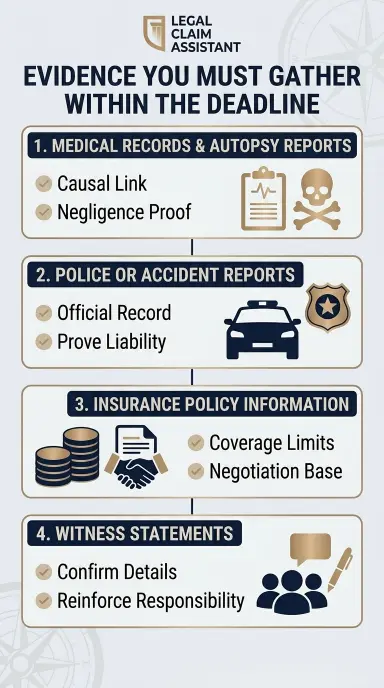
To build a strong wrongful death claim, collecting key evidence promptly is essential. Acting quickly ensures nothing is lost and strengthens your case for compensation.
Medical records and autopsy reports: These documents establish the causal link between the deceased’s death and the responsible party’s actions, including cases of medical malpractice.
Police or accident reports: For car accidents or other incidents involving someone else’s negligence, these reports provide an official record of the events and help prove liability.
Insurance policy information: Knowing the at-fault party’s coverage limits is critical for determining potential compensation and negotiating settlements.
Witness statements: Eyewitness accounts or statements from those involved can confirm details of the incident and reinforce responsibility.
Gathering this evidence early helps your attorney build a strong case and helps meet the legal deadline.
What Happens if You Miss the Wrongful Death Statute of Limitations
If a wrongful death lawsuit is filed after the statute of limitations expires, courts usually dismiss the case. This means surviving family members lose the legal right to pursue compensation for medical expenses, burial costs loss, lost income, or emotional distress caused by the injured person’s death.
Defendants often use the expired statute as a complete defense, arguing the claim is time-barred. Because these deadlines are strictly enforced, families should contact a law office immediately to verify the limitations for wrongful death and begin the legal process. Prompt legal services ensure the claim is filed correctly and may improve the chances of obtaining compensation.
Frequently Asked Questions About the Wrongful Death Statute of Limitations
These frequently asked questions address key concerns about the wrongful death statute of limitations. Learn how long you have to file a claim, when the clock starts, and what exceptions may apply, helping you act quickly and protect your right to seek compensation after a loved one’s death.
Is there a statute of limitations for wrongful death?
Yes. Every state has a statute of limitations that sets the deadline for filing a wrongful death lawsuit. These deadlines exist to ensure timely legal proceedings and preserve critical evidence.
Can the statute of limitations ever be extended?
In limited situations, courts may allow extensions under doctrines like the discovery rule or fraudulent concealment. These exceptions are rare and depend on state law and the specific circumstances of the injury and death.
Does the statute of limitations start when the accident happens?
In most cases, the countdown begins on the date the injured person dies rather than the date of the incident. This distinction is crucial for meeting deadlines and avoiding limitations losing the right to pursue a claim.
How long do families have to file a wrongful death lawsuit?
Most states allow one to three years from the date of death, though some states provide longer or shorter deadlines. Early legal services from an experienced law office can help families understand and meet these deadlines while gathering evidence and pursuing justice.
Who can file a wrongful death lawsuit if the deadline is approaching?
Eligible family members such as a surviving spouse, children, or parents, or the estate’s personal representative, can file before the statute of limitations expires. Early action ensures the claim is not barred by time limits.
Speak With a Wrongful Death Attorney About Filing a Wrongful Death Claim
Families who believe a loved one’s wrongful death resulted from someone else’s negligence should contact an experienced wrongful death attorney immediately. A skilled attorney can determine the correct statute of limitations, investigate the circumstances of the death, and gather critical evidence such as medical records, accident reports, and witness statements to prove negligence.
The attorney helps ensure the wrongful death lawsuit is filed before the legal deadline, protecting your family’s right to pursue compensation for medical expenses, funeral costs, lost income, and emotional distress.
Acting promptly preserves evidence, strengthens the case, and helps families navigate the legal process efficiently while seeking justice.
You Deserve Justice. Let Us Help.
Speak with a trusted Wrongful Death Attorney who will stand by your side, protect your rights, and fight for the compensation you deserve.
No Win, No Fee. Let the Best Wrongful Death Attorneys Fight for your Compensation!

Under 1 Minute

100% Free

Expert-Reviewed

Private & Secure
© 2025 Legal Claim Assistant. All Rights Reserved.
Terms of Service | Privacy Policy | Contact Us | Marketing Partners
Related Article

Share this article:


