What To Do After a Rear End Collision Step by Step
 Fact Checked By Our Attorneys

Knowing what to do after a rear end collision is crucial not only to protect your health and finances but also to ensure you get the compensation you deserve. Don’t wait until it’s too late: get a free case review now to see if you qualify for legal help. From the first moments after a rear end accident to navigating insurance claims and possible lawsuits, we guide you step by step and connect you with experienced personal injury attorneys ready to fight for your rights. Click the button below to start your free consultation today and take the first step toward justice and fair compensation.

No Win, No Fee. Let the Best Motor Vehicle Accident Attorneys Fight for your Compensation!
Table of Contents:

What to Do After a Rear End Collision
When we think about what to do after a rear end collision, it helps to divide the process into three stages. First, we prioritize safety and manage the accident scene. Second, we document injuries, property damage, and expenses. Third, we protect our legal rights by being careful with the driver’s insurance company and seeking legal advice when needed.
Rear end crashes are a specific type of motor vehicle accident, one of many types of collisions. In most rear end collisions, the trailing driver is presumed to be the at fault driver, but that does not mean the at fault driver’s insurance will automatically pay what our claim is worth. Our goal is to build a clear record from day one that shows what happened, how distracted driving or aggressive driving may have played a role, how we were hurt, and how the accident changed our daily life.
First Steps at the Accident Scene
Right after the impact, our priorities are simple. We get the vehicle out of immediate danger by moving to a safe location if we can, we check on everyone involved, and we call for emergency services. If the car still moves, we pull to the shoulder or a nearby parking lot. We turn on hazard lights and, if we have them, set out cones or flares to prevent further accidents.
We should avoid admitting fault at the scene, even if we feel partly responsible or unsure about what happened. Rear end collisions can unfold in seconds, and issues like sudden stops, broken brake lights, or traffic signs can shift legal responsibility. We let the accident report and the official investigation speak for itself later.
Checking for Injuries and Ensuring Safety
Once the vehicle is stable, we check ourselves and our passengers for injuries. It is important to check yourself and any passengers for injuries after the crash, as rear end collision injuries often include whiplash, back pain, headaches, dizziness, or numbness in the arms or legs. These symptoms might be mild at first because adrenaline masks early pain.
If anyone has serious injuries such as difficulty breathing, severe neck or back pain, loss of consciousness, or inability to move arms or legs, we call 911 and do not move them unless they are in immediate danger. For less urgent injuries, we still ask for medical evaluation at the scene if emergency responders arrive. We also note if a child, pregnant person, or older adult is in the car, since they can be more vulnerable to impact forces in any collision.
Calling the Police and Filing an Accident Report
Calling the police is one of the most important steps after a rear end collision, even if the damage looks minor. A police report serves as valuable evidence for insurance claims and legal proceedings after a rear-end collision. It becomes a neutral, time stamped record of the crash. It often includes diagrams, statements from both drivers, and any citations issued. Insurance providers and accident attorneys rely heavily on this report when evaluating fault and damages.
When officers arrive, we explain clearly what happened in our own words. We avoid guessing about speed or distance if we are not sure. We also double check how our name, contact details, insurance policy, and the vehicle information appear on the report. Before leaving, we ask how to obtain a copy of the report later and write down the report number.
Exchanging Insurance and Contact Information
Next, we exchange information with the other driver. At a minimum, we should obtain their full name, phone number, address, driver’s license number, license plate, and the name and policy number of their other driver’s insurer. If the vehicle belongs to someone else, we note the owner’s information too.
We share our information as well, but we keep the conversation factual and brief. We do not discuss how badly we think we are hurt, we do not apologize, and we do not debate blame. Our only job at this stage is to gather accurate details so we and our car accident attorney can pursue a claim if appropriate.
Documenting the Accident: Photos, Damage, and Witnesses
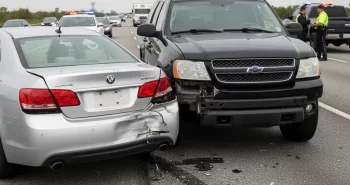
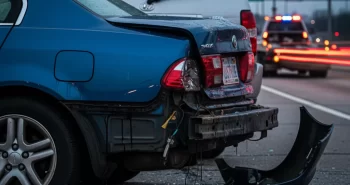
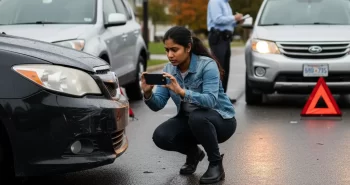
Thorough documentation at the scene can make a major difference later. Documenting the scene of a rear-end collision is crucial for supporting insurance claims and legal cases. If it is safe, we use our phone to take wide and close up photos of both vehicles, focusing on the rear damage to our car and the front damage to the at fault vehicle. Taking photographs of both vehicles, the surrounding area, and any visible damages is an important part of documenting the scene.
We capture skid marks, debris, the intersection or roadway, traffic signs, and any weather or visibility issues. Writing down a description of what happened, including weather and road conditions, is essential for documentation.
We also photograph license plates and the surrounding area from different angles. If there are bystanders who saw the collision, we ask politely for their names and contact details. Collecting contact information from witnesses can provide valuable evidence in determining fault after a rear-end collision. Witness statements can help confirm that our vehicle was stopped, that we had a green light, or that the other driver appeared distracted. We store all this in one place, since it later supports an injury claim or a consultation with a car collision lawyer.
Seeking Medical Attention for Rear-End Collision Injuries
Even if we walk away from the crash, we should still see a medical professional as soon as possible, ideally within 24 to 72 hours. Injuries from rear-end collisions may not show symptoms immediately, making it important to seek medical attention even if you feel fine. Prompt medical care after a rear-end collision can lead to better health outcomes and provide documentation for legal cases.
Many rear end collision injuries, especially soft tissue damage and back injuries, worsen over time. Prompt treatment both protects our health and creates a clear link between the collision and our symptoms. That link is vital if insurance adjusters later question whether the accident caused our pain.
We explain to the provider that we were in a rear end collision and describe every symptom, even if it feels minor. Neck stiffness, headaches, ringing in the ears, trouble concentrating, or new anxiety can all be signs of injury. Delayed symptoms such as persistent headaches, neck or shoulder stiffness, and dizziness may indicate injuries related to a rear-end collision. If we wonder how long does back pain last after a rear end collision, the honest answer is that it varies widely, which is another reason to follow through on recommended follow up visits and imaging.
Common injuries from rear-end collisions include whiplash and neck injuries caused by rapid back-and-forth head motion during a rear-end collision, straining the cervical spine; back injuries such as herniated discs, pulled muscles, or spinal misalignment; head trauma from hitting a headrest or window, potentially causing concussions or closed head injuries; shoulder and arm pain from bracing against the impact, leading to tears or inflammation; and knee and leg injuries from impact with the dashboard, causing bruises or joint injuries.
What to Check After a Rear End Collision: Damage, Injuries, and Documentation
In the days after the crash, we check three main areas. First, we review vehicle repairs. Modern bumpers and sensors can hide serious structural harm behind what looks like a small crack. A professional body shop inspection can uncover frame damage, alignment problems, or safety system issues that affect the value of our claim.
Second, we track our physical condition and pain levels. We note whether pain radiates, whether we lose range of motion, or whether we have trouble sleeping or working. We keep copies of all medical records, test results, prescriptions, and referral notes.
Third, we organize documentation about the accident itself. This includes the police report, photos, witness information, repair estimates, and any communications with insurance companies. Understanding what does collision mean in an insurance context can also help us navigate which insurance coverage applies, such as collision coverage, personal injury protection, or uninsured motorist benefits.
No Win, No Fee. Let the Best Motor Vehicle Accident Attorneys Fight for your Compensation!
How to Track Expenses, Treatment, and Lost Wages
A rear end collision claim is only as strong as the evidence of our losses. That means we need a simple system to track every cost and impact. Many people use a notebook, spreadsheet, or a folder on their phone or computer.
We record medical bills, co pays, physical therapy costs, prescription receipts, and mileage to and from appointments. We also save car repair invoices, rental car bills, and towing receipts. For income loss, we keep pay stubs, timesheets, or a letter from our employer confirming missed work days and reduced hours. Even if we expect the insurer to pay quickly, documenting early protects us if negotiations drag on and out of pocket expenses arise.
Documenting all expenses and losses related to the accident is crucial for calculating damages and pursuing compensation. You should keep detailed records of all expenses and losses related to the accident to support your claim.
How to Win a Rear End Collision Case: Legal Strategies
Winning a rear end collision case is not about being aggressive, it is about being prepared. Legally, most rear end collisions start with a presumption that the rear driver is at fault, but insurers may still argue that our injuries are minor, pre existing, or unrelated. Our strategies focus on closing those gaps.
We avoid giving recorded statements to the other driver’s insurance company before we understand our rights. When reporting the accident to your insurance company, stick to the facts and avoid admitting fault. Insurance companies often aim to minimize payouts, so it’s important to be cautious during communications with them.
Many insurance companies will make a low initial offer for personal injury claims, which can be problematic if injuries require more treatment than initially believed. We do not accept early low settlement offers that arrive before we know the full extent of our serious injuries and future treatment. We let our accident attorney handle evidence gathering, negotiation, and, if needed, litigation. Most personal injury claims are filed against the insurance policy of the at-fault driver after a rear-end collision.
Consulting with an attorney who specializes in rear-end auto accidents can be key in receiving fair compensation for your damages and injuries following a rear-end collision. Consulting with a personal injury attorney can help you navigate the insurance claims process after a rear-end collision and help you navigate the complexities of filing a personal injury lawsuit if negotiations with insurance companies fail.
When to Hire a Lawyer for Your Rear-End Collision
We do not need an attorney for every fender bender, but we should strongly consider legal help if our injuries required emergency care, follow up treatment, or time off work. The same is true if liability is disputed, if multiple vehicles are involved, or if a commercial truck or rideshare driver hit us. In more complex cases, a truck collision attorney or specialized rear end collision attorney can be crucial.
We also benefit from a lawyer if an insurance adjuster delays, denies, or undervalues our claim, or if we feel pressured to settle quickly. Rear end cases can overlap with other serious accident types, such as a head on collision, and in those situations, a head on collision lawyer may also be needed to address the full scope of harm. An early consultation usually costs nothing and can prevent mistakes that are hard to fix later.
Common Mistakes That Can Hurt Your Claim
Several avoidable errors can weaken a rear end collision claim. One of the biggest is delaying medical care or skipping follow up appointments, which lets insurers argue that we were not truly hurt. Another is posting about the accident or our injuries on social media. Avoiding discussions about the accident on social media can protect your case from misinterpretation. Casual posts or photos can be taken out of context and used to challenge our credibility.
Accepting a quick settlement without understanding the long term impact of injuries is another frequent mistake. Once we sign a release, we typically cannot go back for more money, even if we later need surgery or cannot return to our old job. Not getting legal advice, or trying to handle a complex case alone, can also cost us far more than an attorney fee would.
How Much Does a Rear End Collision Cost: Medical and Legal Considerations
The true cost of a rear end collision goes far beyond a bumper repair. Medical expenses can include emergency room visits, diagnostic tests, physical therapy, chiropractic care, pain management, and, in serious cases, surgery or long term rehabilitation. For many people, the largest financial hit comes from missed work, reduced hours, or the need to change jobs due to chronic pain.
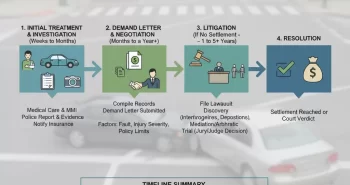
According to data summarized by sources like the Insurance Information Institute and the National Highway Traffic Safety Administration, even “minor” injury crashes often result in thousands of dollars in combined medical and productivity losses. When we consider potential long term effects, such as ongoing back pain, anxiety in traffic, or reduced mobility, it becomes clear why settlement values vary widely and why how long does a rear-end collision settlement take is an important question. An experienced attorney can estimate a fair range by comparing to rear end collision settlement examples and related case law, sometimes including a classic collision lawsuit as a reference point.
Case Studies: Rear-End Collisions and Successful Settlements
Real world examples help us see how the claims process works. In many successful claims, the injured person did three things consistently. They reported the accident promptly, followed medical advice, and documented their pain and limitations over time. Their attorney then used this record to negotiate from a position of strength.
For instance, a worker rear ended on the way home from a shift kept all therapy records and a daily pain journal. Our legal partner used those details, plus repair bills and wage records, to secure a settlement that covered medical care and several months of lost income. In another case, a passenger hit from behind by a delivery truck worked with a truck collision attorney who uncovered company policy violations, which helped increase the final recovery. These outcomes do not guarantee future results, but they show how preparation and strong legal support can change the result.
Questions to Ask a Lawyer About Rear-End Collision Claims
When we meet with an accident attorney, we should treat it as a chance to interview them as well. Helpful questions include how often they handle rear end collision cases, what they see as the strengths and challenges of our claim, and how they communicate updates. We can also ask who will actually work on our case, how fees and costs are handled, and whether they have experience taking rear end cases to trial if needed.
We might also ask how they evaluate the value of a claim, what a realistic time frame looks like, and how similar cases have resolved in the past. Knowledge about what is the difference between comprehensive and collision insurance can also matter, so it is reasonable to ask how our own insurance policy coverages such as collision, medical payments, or uninsured motorist insurance may factor into our recovery.
How Legal Claim Assistant Can Connect You With the Right Collision Lawyer
Legal Claim Assistant exists to make this process easier. We help rear end collision victims understand their eligibility for fair compensation and connect them with the right attorney for a free case review. Instead of searching on our own and guessing who has the right experience, we use our network to match each case with a lawyer or auto collision law firm that regularly handles rear end crashes, including complex matters that might overlap with what to do after a car collision in general.
If we were a driver or a passenger, if the accident happened within the last year, and if we sought medical care within two weeks, we may qualify for a claim even if the damage seemed modest at first. By reaching out to Legal Claim Assistant, we can get clear answers about our rights, next steps, and the strength of our case. That way, we focus on healing while a qualified attorney focuses on protecting our future.
No Win, No Fee. Let the Best Motor Vehicle Accident Attorneys Fight for your Compensation!