Not At Fault Collision Claim and Your Right to Compensation
 Fact Checked By Our Attorneys

If you have a not at fault collision claim and want to ensure you receive the compensation you deserve, don’t wait get a free case review today. Our experienced car accident lawyers are ready to evaluate your situation, guide you through the legal process, and fight for your rights. Click the button now to connect with a trusted car accident attorney for your free consultation and take the first step toward fair compensation.
Many victims begin by pursuing a car accident claim to recover losses after the accident occurred and to hold the at-fault party accountable.

No Win, No Fee. Let the Best Motor Vehicle Accident Attorneys Fight for your Compensation!
Table of Contents:

What Is a Not At Fault Collision Claim?
A not at fault collision claim is a formal request for payment after an auto accident where another party is responsible for causing the crash. In most cases, the claim is made against the at fault driver’s insurance, specifically their liability coverage. Liability insurance typically covers damages caused by the at-fault driver, including medical expenses and property damage. If that driver is uninsured or underinsured, the claim may go through your own uninsured or underinsured motorist coverage included in your auto insurance policy, which often includes collision coverage. Collision coverage can help pay for repairs to your vehicle after an accident, regardless of who is at fault.
These insurance claims often include compensation for both vehicle damage and bodily injury resulting from the collision.
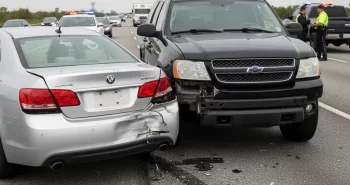
This type of claim applies to many crash types. It can involve a rear end collision, a head on collision, a sideswipe, or another impact described in our overview of types of collisions. What matters is not the specific collision type, but that the evidence shows you did not cause it and that you suffered real harm.
When you file a not at fault collision claim, you are asking to be compensated for economic losses such as medical bills and lost wages and for non-economic losses such as pain, emotional distress, and reduced quality of life if your state allows those damages. The at-fault driver is typically responsible for covering the costs of medical bills, property damage, lost wages, and other related expenses. This claim may also be referred to as a personal injury claim or a third party claim since it involves the other driver’s insurer or the fault driver’s insurance company.
What Does a Not At Fault Collision Claim Mean?
Being “not at fault” is a legal conclusion, not just a feeling that the other driver made a mistake. It usually means that, under your state’s traffic laws and evidence from the accident scene, another party bears full or primary responsibility for the crash. Police reports, witness statements, vehicle damage, and traffic camera footage can all be used in the thorough investigation for determining fault.
The meaning of a not at fault collision claim for you is twofold. First, your own insurance coverage and auto insurance premiums may be protected, since insurers generally should not raise rates due to a crash you did not cause. You should inform your own insurance company even if you plan to use the other driver’s insurance. You can file your insurance claim either with your own insurance company or with the at-fault driver’s insurer. Filing directly with the other party’s insurance may help you avoid paying a deductible, but the other party’s insurance company will need to verify the details of the accident and damages with their insured before handling your claim. If you file with your own insurer, you will pay your deductible upfront, which could be refunded later if your company recovers costs from the other driver’s insurer. Your primary financial recovery can come from the at fault driver’s insurer or, if needed, other liable parties such as employers in commercial vehicle cases.
In many situations, you or your attorney may need to communicate directly with the other insurance company to resolve disputes about liability or damages.
Fault also interacts with your state’s negligence rules. Some states are no fault states where your own insurance coverage pays for medical expenses regardless of fault, while others follow pure comparative negligence, modified comparative negligence, or contributory negligence. In comparative negligence states, you may still recover compensation even if you share a portion of the blame, although your award is reduced by your percentage of fault. As of January 1, 2026, Louisiana follows a 51% modified comparative fault standard for liability in accidents. This is one reason a clear, well supported not at fault collision claim can make a significant difference in your outcome.
Common Scenarios for Not-At-Fault Collisions
Many people are unsure whether their collision counts as “not at fault.” In practice, several patterns appear again and again in successful not at fault claims.
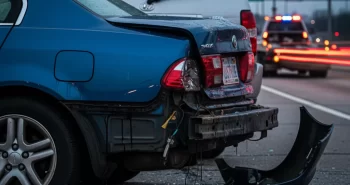
One common example is a typical rear end impact at a stop light or in slow traffic. In many jurisdictions, a following driver has a legal duty to maintain a safe distance. When that duty is violated, the injured person often has a strong not at fault collision claim, as we discuss in more detail in our resources on average rear end collision settlement and rear end collision settlement examples.
Other frequent scenarios include head on crashes where the opposing driver drifts across the center line, distracted driving accidents caused by texting, failure to yield at intersections, and collisions with commercial trucks. If you want more context about the mechanics of different collisions, you can review what is a collision and what does collision mean for clear definitions.
Passengers often have some of the strongest not at fault claims because they did not control either vehicle. If you were riding as a passenger and were injured, your claim may be against the at fault driver of another car, the driver of the car you were in, or both.
The party determined to be legally responsible for the crash is typically required to compensate injured victims for their losses.
Gathering Evidence After a Not-At-Fault Accident
Strong evidence is central to any not at fault collision claim. Insurance companies and the other party’s insurance company look for reasons to dispute responsibility or minimize the extent of your injuries. The more objective support you can gather, the harder it becomes for them to downplay your losses.
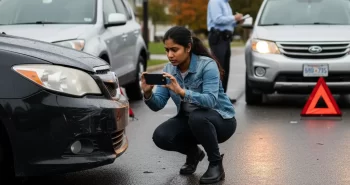
Gathering evidence at the scene of the accident is crucial for proving your case to the insurance companies. If it is safe and you are physically able, photograph the accident scene from multiple angles, including vehicle positions, skid marks, broken glass, traffic signs, and any nearby surveillance cameras. Capture close ups of damage as well as wide shots that show the overall layout. Make note of weather, lighting, and road conditions in case they become relevant later.
Documenting the scene includes gathering photos, witness contacts, and the other driver’s insurance details. Names and contact details for witnesses are also valuable. Many bystanders leave once police arrive, and their accounts can corroborate your version of events. Always file a police report to create an official record of the accident. You should contact the police to file a report after the accident. The police report can influence the insurance company’s decision on fault.
Finally, seek prompt medical care, even if you believe your injuries are minor. Medical records from the first hours and days after a crash often carry significant weight because they link your symptoms to the collision, rather than to some later event. Seek medical help immediately after the accident, even if you do not feel injured.
Reporting the Accident: Police and Insurance
Timely reporting is both a legal requirement in many jurisdictions and a practical step to protect your not at fault collision claim. In most injury claims, you should call law enforcement to the scene so that an officer can prepare an official report. That report usually includes diagrams, statements, citations, and an initial assessment of fault that the insurance provider and insurance adjusters will review.
Once the immediate emergency has passed, you generally need to notify your own insurance company within the time frame set by your auto insurance policy. You should notify your own insurance company about the accident as soon as possible. You should report the accident to both your insurance company and the at-fault driver’s insurance company. When you speak with any insurer, stick to the facts, avoid guessing about accident details you do not know for certain, and do not admit fault or downplay your pain or limitations. You should never admit fault at the scene of the accident, as this can jeopardize your claim. It is usually wise to avoid providing recorded statements to the other driver’s insurance company before speaking with a car accident lawyer or car accident attorney.
You can file a third-party claim directly with the other driver’s insurance when not at fault. Filing a third-party claim with the at-fault driver’s insurer may be a good option when liability is clear and uncontested. If the at-fault driver’s insurance company denies liability, you have several options, including submitting additional evidence or consulting a lawyer. If your claim is denied, you have several options, including submitting additional evidence to the insurance company.
No Win, No Fee. Let the Best Motor Vehicle Accident Attorneys Fight for your Compensation!
Key Documentation to Protect Your Claim
Documentation is the backbone of a not at fault collision claim. Without a clear paper trail, fault driver’s insurance or other insurers may argue that your injuries were pre-existing or that your losses are exaggerated. We recommend keeping a dedicated folder, either physical or digital, so you can organize detailed records in one place.
Useful records typically include the police report, all medical records and bills, prescriptions, imaging results, and therapist or specialist notes. You should also retain repair estimates, towing and rental car receipts, pay stubs, employer letters about missed work, and any correspondence with insurers. If you saw multiple providers for follow up care over several months, make sure each visit is documented and accessible.
A simple injury journal can add context that does not appear in formal records. A few lines each day describing your pain levels, sleep quality, mobility, and activities you had to skip can help demonstrate the real human impact of the collision. In rear impact cases with lingering symptoms, this type of documentation is often important when insurers ask questions like how long does back pain last after a rear end collision.
Steps to Take Immediately After a Not-At-Fault Collision
The first minutes and days after a crash are often confusing and emotional, yet your choices in this window can have long term effects on your not at fault collision claim. Your top priority is safety, so move to a secure area if possible and call 911 for any suspected injury.
Remain calm at the scene of the accident and check for injuries. Exchange information with the other driver, but keep the conversation limited. Do not admit fault or apologize, and do not agree to “handle it between ourselves” without involving insurance. Take photos, gather witness details, and obtain the responding officer’s name and report number before you leave the accident scene.
As soon as you can, get a full medical evaluation, even if you walked away from the crash. Many injuries, including soft tissue damage and some head injuries, are not immediately apparent. Prompt treatment both protects your health and supports your claim. After that, notify your insurer, start collecting documentation, and consider speaking with a car collision lawyer or auto collision law firm to understand your rights.
In an accident where you are not at fault, you are entitled to choose your own repair shop. You typically have a set period to file a lawsuit if a settlement cannot be reached after an accident.
How to Ensure Full Compensation for a Not-At-Fault Collision
Maximizing compensation in a not at fault collision claim requires a combination of medical follow through, careful communication, and strategic legal representation. Insurers often focus on quick, low settlements, especially early in the claims process before the full scope of your injuries is clear.
Continue all recommended medical care and attend follow up appointments. Gaps in treatment are frequently used to argue that your injuries resolved quickly or were not serious. Be honest and detailed about your symptoms, including how they affect your work, family responsibilities, and daily activities.
When settlement discussions begin, you should account not only for past medical expenses and lost income, but also for projected future treatment, diminished earning capacity, and non economic damages such as pain and loss of enjoyment of life where allowed by law. Different collision types can have different recovery patterns and typical outcomes, which is why we provide focused resources like head on collision lawyer, rear end collision attorney, and truck collision attorney for more specialized situations.
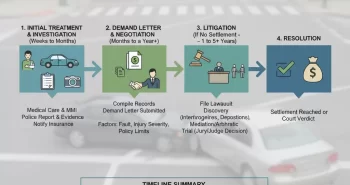
An experienced car accident lawyer understands how to value these elements and how long resolution may take. For instance, people often ask how long does a rear-end collision settlement take. There is no single answer, but a lawyer can explain realistic timelines based on your injuries, treatment length, and the insurer’s posture.
An experienced attorney can gather additional evidence, request video footage, and negotiate with insurance companies on your behalf. Hiring a lawyer strengthens your ability to prove liability and hold the at-fault driver responsible. Consulting a car accident attorney can help you navigate the complexities of liability and ensure your rights are protected. Having legal representation can significantly improve your chances of receiving fair compensation from insurance companies.
A strong not at fault collision claim is built, not assumed. It grows out of consistent medical care, careful documentation, and a clear legal strategy tailored to your specific collision and injuries.
Common Mistakes That Can Hurt a Not-At-Fault Claim
Even in clear not at fault situations, certain missteps can weaken or delay your claim. One of the most common is delaying medical care or stopping treatment early once you feel “good enough.” Insurers may interpret this as proof that you were not seriously hurt or that any ongoing symptoms are unrelated to the crash.
Another frequent problem is casual communication with insurance adjusters. Offhand comments such as “I am okay now” or guesses about your speed or actions can later be used to dispute liability or damages. Posting about the collision on social media can backfire for similar reasons, especially if photos or comments appear inconsistent with your reported limitations.
Accepting the first settlement offer without understanding your long term needs can also be costly. Once you sign a release, you generally cannot return for more compensation, even if your condition worsens. Before making that decision, we recommend at least a brief consultation with counsel that regularly handles motor vehicle collisions and understands issues like what is the difference between comprehensive and collision insurance and how these coverages interact with liability claims.
How Legal Claim Assistant Can Connect You With the Right Collision Lawyer
Navigating a not at fault collision claim on your own can feel overwhelming, especially while you are trying to heal. Our role at Legal Claim Assistant is to help you understand whether you may qualify for compensation and then connect you with a lawyer whose experience matches your situation.
We look at key facts such as when the crash occurred, what type of collision it was, whether you sought prompt medical care, and what insurance information is available. Whether your case resembles a straightforward rear end impact, a complex truck crash, or a more contested scenario like a classic collision lawsuit, we use this information to match you with an experienced attorney for a free case review.
From there, you and the attorney decide how to move forward. The goal is to turn a confusing and stressful event into a structured legal path, so that your not at fault collision claim is presented clearly, supported by evidence, and focused on the full compensation you may deserve. This process can also help expedite repairs and avoid paying unnecessary costs upfront. Additionally, your attorney can guide you through the process called subrogation, where your insurer seeks reimbursement from the other driver’s insurer if you initially paid your deductible.
Having an experienced attorney on your side is invaluable when dealing with insurance companies and navigating the complexities of car insurance work after an accident. They ensure that the insurance company’s decision is challenged if unfair and that you receive fair compensation for your losses, even in cases involving an uninsured driver or when the other driver does not have enough insurance.
Ultimately, knowing your rights and having proper legal support can make all the difference in how your car is repaired, your medical bills are covered, and your claim is resolved based on the accident’s circumstances and the other driver’s fault.
No Win, No Fee. Let the Best Motor Vehicle Accident Attorneys Fight for your Compensation!